Reading RPLS is free for the whole profession. Members post, reply, and get the members-only rooms.

Notifications
Clear all

Topic starter
Translate
▼
English
Spanish
French
German
Italian
Portuguese
Russian
Chinese
Japanese
Korean
Arabic
Hindi
Dutch
Polish
Turkish
Vietnamese
Thai
Swedish
Danish
Finnish
Norwegian
Czech
Hungarian
Romanian
Greek
Hebrew
Indonesian
Malay
Ukrainian
Bulgarian
Croatian
Slovak
Slovenian
Serbian
Lithuanian
Latvian
Estonian
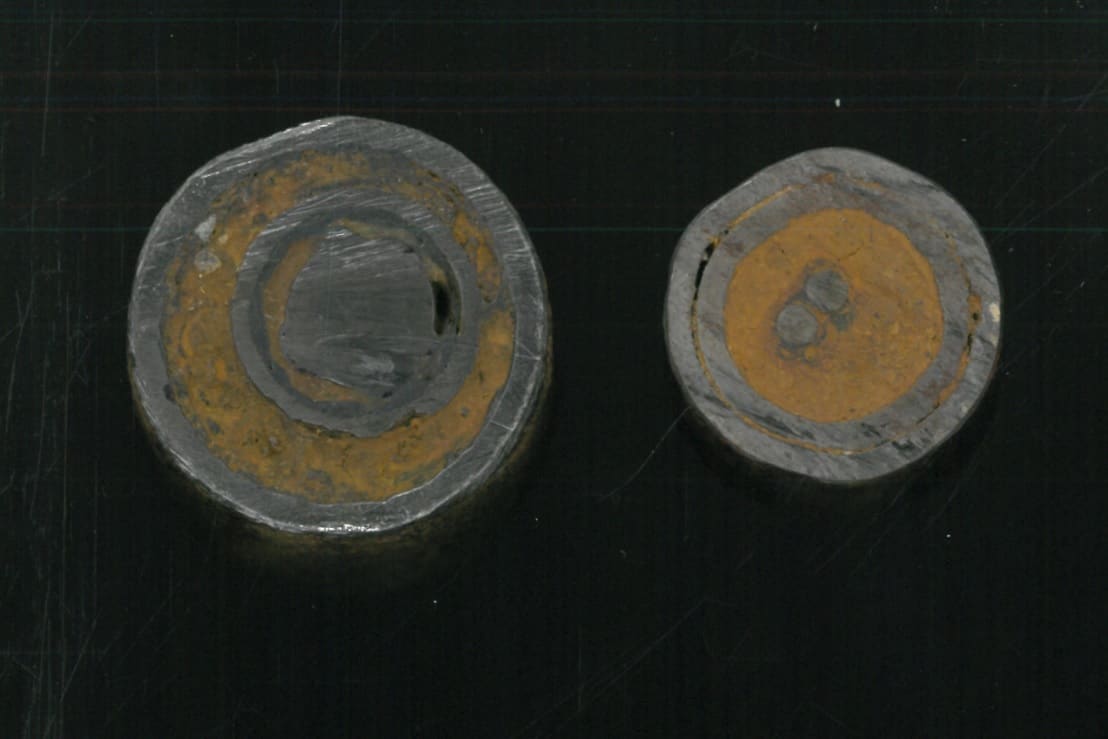
- 5/8" rebar inside a 3/4" ID pipe inside a 1 3/8" ID pipe.
- Two 16d nails inside a 7/8" ID pipe inside a 1 1/8" ID pipe.
Posted : August 1, 2017 7:34 am

Translate
▼
English
Spanish
French
German
Italian
Portuguese
Russian
Chinese
Japanese
Korean
Arabic
Hindi
Dutch
Polish
Turkish
Vietnamese
Thai
Swedish
Danish
Finnish
Norwegian
Czech
Hungarian
Romanian
Greek
Hebrew
Indonesian
Malay
Ukrainian
Bulgarian
Croatian
Slovak
Slovenian
Serbian
Lithuanian
Latvian
Estonian
If it's a vote, I'm voting no, no pincushion there, now if there were dimples.........
Posted : August 1, 2017 7:48 am

Translate
▼
English
Spanish
French
German
Italian
Portuguese
Russian
Chinese
Japanese
Korean
Arabic
Hindi
Dutch
Polish
Turkish
Vietnamese
Thai
Swedish
Danish
Finnish
Norwegian
Czech
Hungarian
Romanian
Greek
Hebrew
Indonesian
Malay
Ukrainian
Bulgarian
Croatian
Slovak
Slovenian
Serbian
Lithuanian
Latvian
Estonian
Just "ZOOMING" in to the point!
Posted : August 1, 2017 7:58 am

Translate
▼
English
Spanish
French
German
Italian
Portuguese
Russian
Chinese
Japanese
Korean
Arabic
Hindi
Dutch
Polish
Turkish
Vietnamese
Thai
Swedish
Danish
Finnish
Norwegian
Czech
Hungarian
Romanian
Greek
Hebrew
Indonesian
Malay
Ukrainian
Bulgarian
Croatian
Slovak
Slovenian
Serbian
Lithuanian
Latvian
Estonian
Those are just extra insurance to make sure a pinfinder can find them, or reinforcement in case of a tractor.
Posted : August 1, 2017 8:07 am

Translate
▼
English
Spanish
French
German
Italian
Portuguese
Russian
Chinese
Japanese
Korean
Arabic
Hindi
Dutch
Polish
Turkish
Vietnamese
Thai
Swedish
Danish
Finnish
Norwegian
Czech
Hungarian
Romanian
Greek
Hebrew
Indonesian
Malay
Ukrainian
Bulgarian
Croatian
Slovak
Slovenian
Serbian
Lithuanian
Latvian
Estonian
The rebar presents no problem, but [SARCASM]OMG! Which nail do I measure?[/SARCASM]
Posted : August 1, 2017 9:29 am

Translate
▼
English
Spanish
French
German
Italian
Portuguese
Russian
Chinese
Japanese
Korean
Arabic
Hindi
Dutch
Polish
Turkish
Vietnamese
Thai
Swedish
Danish
Finnish
Norwegian
Czech
Hungarian
Romanian
Greek
Hebrew
Indonesian
Malay
Ukrainian
Bulgarian
Croatian
Slovak
Slovenian
Serbian
Lithuanian
Latvian
Estonian
LOL, put a 6" pipe and disk over them all with no dimple.;)
Posted : August 1, 2017 10:26 am

Translate
▼
English
Spanish
French
German
Italian
Portuguese
Russian
Chinese
Japanese
Korean
Arabic
Hindi
Dutch
Polish
Turkish
Vietnamese
Thai
Swedish
Danish
Finnish
Norwegian
Czech
Hungarian
Romanian
Greek
Hebrew
Indonesian
Malay
Ukrainian
Bulgarian
Croatian
Slovak
Slovenian
Serbian
Lithuanian
Latvian
Estonian
That's not a pincushion, that's someone playing pin the monument on the corner!
Posted : August 1, 2017 12:25 pm

Translate
▼
English
Spanish
French
German
Italian
Portuguese
Russian
Chinese
Japanese
Korean
Arabic
Hindi
Dutch
Polish
Turkish
Vietnamese
Thai
Swedish
Danish
Finnish
Norwegian
Czech
Hungarian
Romanian
Greek
Hebrew
Indonesian
Malay
Ukrainian
Bulgarian
Croatian
Slovak
Slovenian
Serbian
Lithuanian
Latvian
Estonian
surveyor_a, post: 439643, member: 1194 wrote: That's not a pincushion, that's someone playing pin the monument on the corner!
or is it "pin the corner on the monument?"
Posted : August 1, 2017 3:54 pm

Translate
▼
English
Spanish
French
German
Italian
Portuguese
Russian
Chinese
Japanese
Korean
Arabic
Hindi
Dutch
Polish
Turkish
Vietnamese
Thai
Swedish
Danish
Finnish
Norwegian
Czech
Hungarian
Romanian
Greek
Hebrew
Indonesian
Malay
Ukrainian
Bulgarian
Croatian
Slovak
Slovenian
Serbian
Lithuanian
Latvian
Estonian
Those guys made it pretty tough to mark the true position.
Posted : August 1, 2017 9:34 pm

Translate
▼
English
Spanish
French
German
Italian
Portuguese
Russian
Chinese
Japanese
Korean
Arabic
Hindi
Dutch
Polish
Turkish
Vietnamese
Thai
Swedish
Danish
Finnish
Norwegian
Czech
Hungarian
Romanian
Greek
Hebrew
Indonesian
Malay
Ukrainian
Bulgarian
Croatian
Slovak
Slovenian
Serbian
Lithuanian
Latvian
Estonian
That's an impressive exhibit. The typical pattern I see is that where a monument was set that lacked an exact center for the purposes of centering an instrument over it +/- 1mm or so, it isn't uncommon to find some subordinate thing marking that center on the monument. The two 60d nails, neither of which appear to be at the center of either of the larger pipes within which they were set, look more just like something to tie flagging to, though.
The opposite exhibit would be the intact original cedar stake (with tack) in original rock mound, both from 1913, that some field party tore apart ninety years later as if they were looking for gold coins, wanting to find a #4 rebar or maybe just a 60d nail. By comparison, adding a 60d nail (that is easy to remove) to a pipe is fairly benign.
Posted : August 2, 2017 12:04 am

Translate
▼
English
Spanish
French
German
Italian
Portuguese
Russian
Chinese
Japanese
Korean
Arabic
Hindi
Dutch
Polish
Turkish
Vietnamese
Thai
Swedish
Danish
Finnish
Norwegian
Czech
Hungarian
Romanian
Greek
Hebrew
Indonesian
Malay
Ukrainian
Bulgarian
Croatian
Slovak
Slovenian
Serbian
Lithuanian
Latvian
Estonian
How many angels can fit on the point of a pin?
Posted : August 2, 2017 5:16 am

Translate
▼
English
Spanish
French
German
Italian
Portuguese
Russian
Chinese
Japanese
Korean
Arabic
Hindi
Dutch
Polish
Turkish
Vietnamese
Thai
Swedish
Danish
Finnish
Norwegian
Czech
Hungarian
Romanian
Greek
Hebrew
Indonesian
Malay
Ukrainian
Bulgarian
Croatian
Slovak
Slovenian
Serbian
Lithuanian
Latvian
Estonian
The monument is the corner, the entire monument, not just some theoretical pinprick. Monuments are more powerful than measurement technology.
Posted : August 2, 2017 6:18 am

Translate
▼
English
Spanish
French
German
Italian
Portuguese
Russian
Chinese
Japanese
Korean
Arabic
Hindi
Dutch
Polish
Turkish
Vietnamese
Thai
Swedish
Danish
Finnish
Norwegian
Czech
Hungarian
Romanian
Greek
Hebrew
Indonesian
Malay
Ukrainian
Bulgarian
Croatian
Slovak
Slovenian
Serbian
Lithuanian
Latvian
Estonian
I nearly did that one time. We had completed the traverse, computed the "missing" corner (no signal from dip needle in the middle of a gravel drive) and went back to set the corner. Since it was in a driveway I was going to countersink +/- 6". I beat and dug down and began to drive the rebar, it was like driving into concrete. I dug and dug some more when CLINK, something doesn't sound right. I dug some more and there was a 2" pipe down about a foot. I know, I know, I should have dug deeper earlier but there was NO indication on the dip needle. It always looks better to be able to put "Iron Pipe Found" instead of pin set anyway.
Andy
Posted : August 2, 2017 8:06 am
Translate
▼
English
Spanish
French
German
Italian
Portuguese
Russian
Chinese
Japanese
Korean
Arabic
Hindi
Dutch
Polish
Turkish
Vietnamese
Thai
Swedish
Danish
Finnish
Norwegian
Czech
Hungarian
Romanian
Greek
Hebrew
Indonesian
Malay
Ukrainian
Bulgarian
Croatian
Slovak
Slovenian
Serbian
Lithuanian
Latvian
Estonian
Kent McMillan, post: 439732, member: 3 wrote: That's an impressive exhibit. The typical pattern I see is that where a monument was set that lacked an exact center for the purposes of centering an instrument over it +/- 1mm or so, it isn't uncommon to find some subordinate thing marking that center on the monument. The two 60d nails, neither of which appear to be at the center of either of the larger pipes within which they were set, look more just like something to tie flagging to, though.
The opposite exhibit would be the intact original cedar stake (with tack) in original rock mound, both from 1913, that some field party tore apart ninety years later as if they were looking for gold coins, wanting to find a #4 rebar or maybe just a 60d nail. By comparison, adding a 60d nail (that is easy to remove) to a pipe is fairly benign.
I kind of feel like, as if, I were a land owner and I hired a surveyor to mark things for me, I could run a string line from the center of the 4"x4" hub they set and be ok, but then again I might be misunderstanding accuracy expectations of tools being used and the purpose they were being set for. 🙂
Posted : August 2, 2017 7:28 pm