Reading RPLS is free for the whole profession. Members post, reply, and get the members-only rooms.

Notifications
Clear all

Topic starter
Translate
▼
English
Spanish
French
German
Italian
Portuguese
Russian
Chinese
Japanese
Korean
Arabic
Hindi
Dutch
Polish
Turkish
Vietnamese
Thai
Swedish
Danish
Finnish
Norwegian
Czech
Hungarian
Romanian
Greek
Hebrew
Indonesian
Malay
Ukrainian
Bulgarian
Croatian
Slovak
Slovenian
Serbian
Lithuanian
Latvian
Estonian
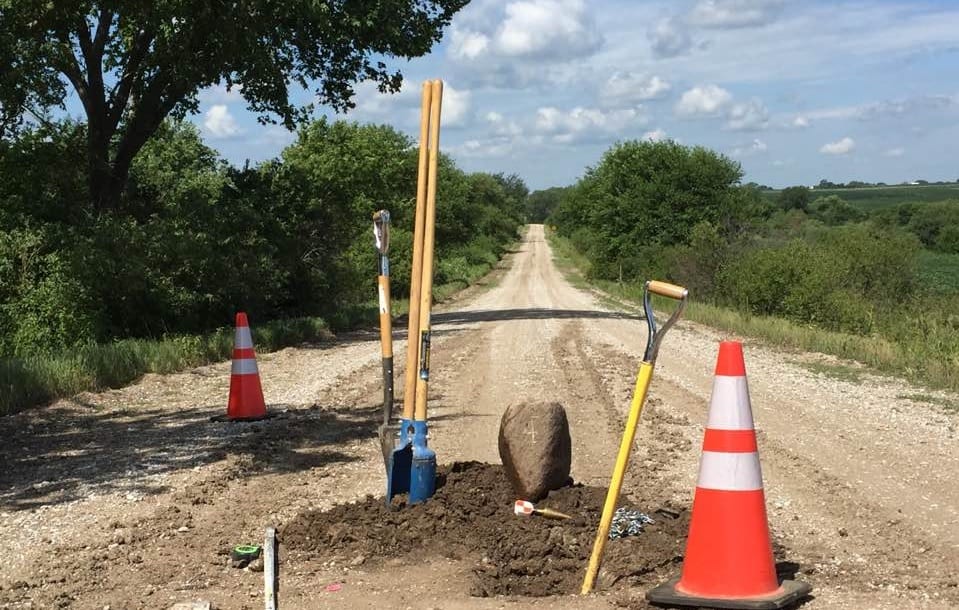
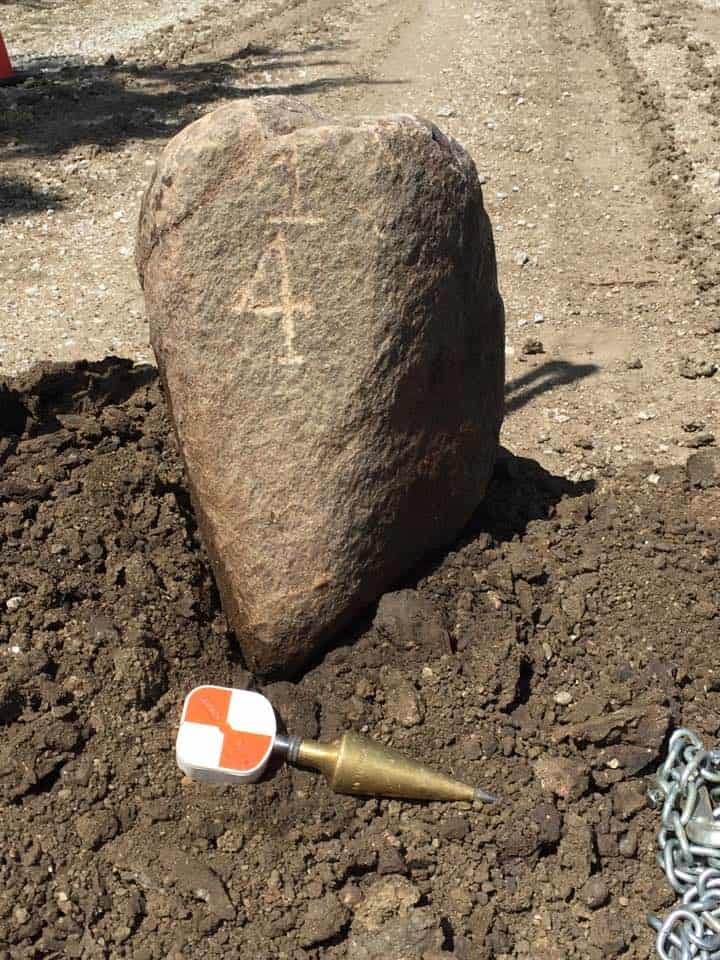
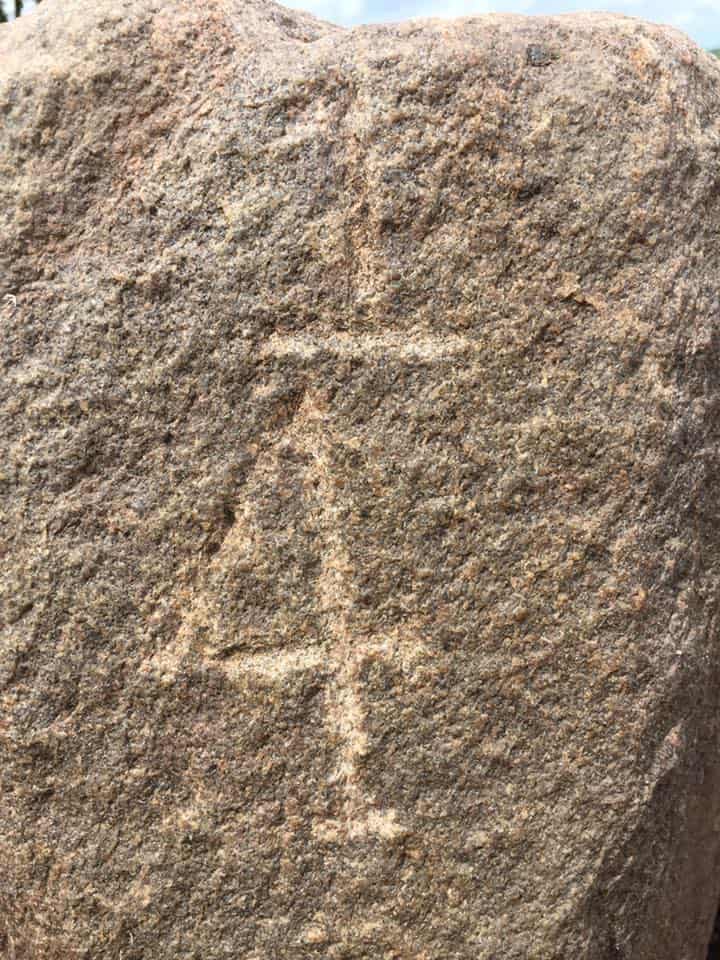
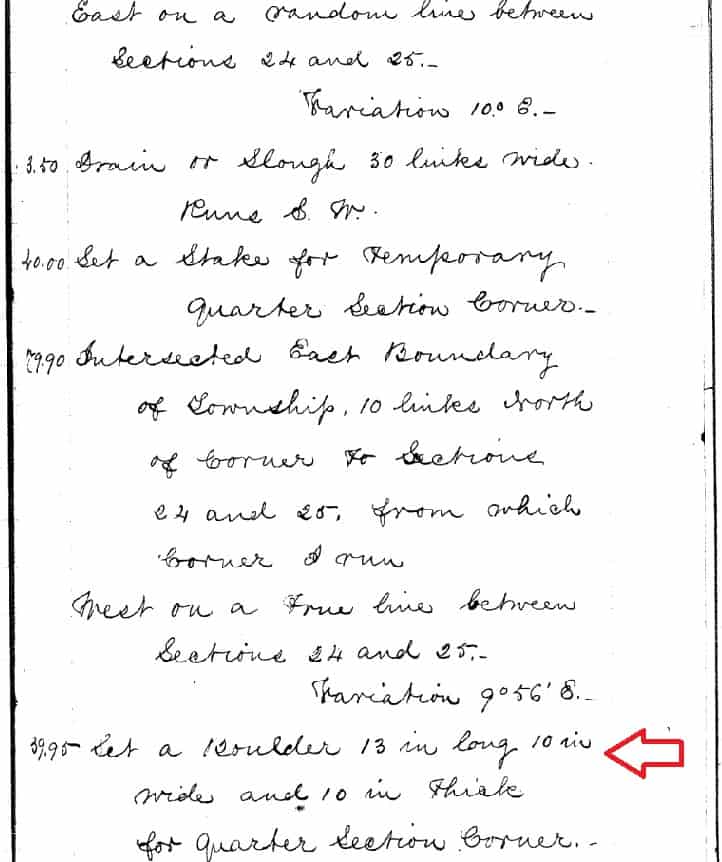
A recent find in east-west gravel road about 2' down. The 1/4 was correctly on the north face, but the longer side of the stone was oriented north-south instead of east-west along the measured line. I measured 15"x10"x9" and GLO notes state 13"x10"x10". June 18, 1857.
Posted : August 1, 2017 2:11 pm

Translate
▼
English
Spanish
French
German
Italian
Portuguese
Russian
Chinese
Japanese
Korean
Arabic
Hindi
Dutch
Polish
Turkish
Vietnamese
Thai
Swedish
Danish
Finnish
Norwegian
Czech
Hungarian
Romanian
Greek
Hebrew
Indonesian
Malay
Ukrainian
Bulgarian
Croatian
Slovak
Slovenian
Serbian
Lithuanian
Latvian
Estonian
Jerry,
What is the practice these days for accessories? Back in the 1970s it was common to set crossed nails in fence posts or power poles. A gneissly chiseled stone.
That picture could be of anywhere in rural Lancaster County.
Posted : August 1, 2017 2:33 pm
Topic starter
Translate
▼
English
Spanish
French
German
Italian
Portuguese
Russian
Chinese
Japanese
Korean
Arabic
Hindi
Dutch
Polish
Turkish
Vietnamese
Thai
Swedish
Danish
Finnish
Norwegian
Czech
Hungarian
Romanian
Greek
Hebrew
Indonesian
Malay
Ukrainian
Bulgarian
Croatian
Slovak
Slovenian
Serbian
Lithuanian
Latvian
Estonian
Gene Kooper, post: 439673, member: 9850 wrote: Jerry,
What is the practice these days for accessories? Back in the 1970s it was common to set crossed nails in fence posts or power poles. A gneissly chiseled stone.
That picture could be of anywhere in rural Lancaster County.
Pipe and rebar for reference ties. It's been a long time since I have seen cross nails, but that used to be the standard. Kind of like setting chair nails for bench marks.
Posted : August 1, 2017 2:59 pm

Translate
▼
English
Spanish
French
German
Italian
Portuguese
Russian
Chinese
Japanese
Korean
Arabic
Hindi
Dutch
Polish
Turkish
Vietnamese
Thai
Swedish
Danish
Finnish
Norwegian
Czech
Hungarian
Romanian
Greek
Hebrew
Indonesian
Malay
Ukrainian
Bulgarian
Croatian
Slovak
Slovenian
Serbian
Lithuanian
Latvian
Estonian
Outstanding, seeing finds like this, is what makes surveying fun and exciting!
Posted : August 1, 2017 3:06 pm

Translate
▼
English
Spanish
French
German
Italian
Portuguese
Russian
Chinese
Japanese
Korean
Arabic
Hindi
Dutch
Polish
Turkish
Vietnamese
Thai
Swedish
Danish
Finnish
Norwegian
Czech
Hungarian
Romanian
Greek
Hebrew
Indonesian
Malay
Ukrainian
Bulgarian
Croatian
Slovak
Slovenian
Serbian
Lithuanian
Latvian
Estonian
It looks like it is right in the CL of the road. Whoever is responsible for that road has been doing a good job.
Posted : August 1, 2017 4:24 pm

Translate
▼
English
Spanish
French
German
Italian
Portuguese
Russian
Chinese
Japanese
Korean
Arabic
Hindi
Dutch
Polish
Turkish
Vietnamese
Thai
Swedish
Danish
Finnish
Norwegian
Czech
Hungarian
Romanian
Greek
Hebrew
Indonesian
Malay
Ukrainian
Bulgarian
Croatian
Slovak
Slovenian
Serbian
Lithuanian
Latvian
Estonian
We typically find undisturbed stones to be a bit larger than the stated dimensions. If it says three inches it is probably a strong four inches. If it says 12 inches it may be closer to 14 inches.
Posted : August 1, 2017 5:54 pm

Translate
▼
English
Spanish
French
German
Italian
Portuguese
Russian
Chinese
Japanese
Korean
Arabic
Hindi
Dutch
Polish
Turkish
Vietnamese
Thai
Swedish
Danish
Finnish
Norwegian
Czech
Hungarian
Romanian
Greek
Hebrew
Indonesian
Malay
Ukrainian
Bulgarian
Croatian
Slovak
Slovenian
Serbian
Lithuanian
Latvian
Estonian
Holy Cow, post: 439706, member: 50 wrote: We typically find undisturbed stones to be a bit larger than the stated dimensions. If it says three inches it is probably a strong four inches. If it says 12 inches it may be closer to 14 inches.
That was actually one item for a question on the "State Specific" exam I took for Oklahoma licensure. The notes stated a 12" x 14" x 3" stone was set at a specific location and a 15" x 19" x 4" was discovered during a retracement with the appropriate marks. The question was whether you would accept it as existing or not.
Posted : August 1, 2017 7:31 pm

Translate
▼
English
Spanish
French
German
Italian
Portuguese
Russian
Chinese
Japanese
Korean
Arabic
Hindi
Dutch
Polish
Turkish
Vietnamese
Thai
Swedish
Danish
Finnish
Norwegian
Czech
Hungarian
Romanian
Greek
Hebrew
Indonesian
Malay
Ukrainian
Bulgarian
Croatian
Slovak
Slovenian
Serbian
Lithuanian
Latvian
Estonian
Holy Cow, post: 439706, member: 50 wrote: We typically find undisturbed stones to be a bit larger than the stated dimensions. If it says three inches it is probably a strong four inches. If it says 12 inches it may be closer to 14 inches.
You have to account for the growth of the stone in that place.
Posted : August 1, 2017 7:34 pm
Translate
▼
English
Spanish
French
German
Italian
Portuguese
Russian
Chinese
Japanese
Korean
Arabic
Hindi
Dutch
Polish
Turkish
Vietnamese
Thai
Swedish
Danish
Finnish
Norwegian
Czech
Hungarian
Romanian
Greek
Hebrew
Indonesian
Malay
Ukrainian
Bulgarian
Croatian
Slovak
Slovenian
Serbian
Lithuanian
Latvian
Estonian
paden cash, post: 439714, member: 20 wrote: That was actually one item for a question on the "State Specific" exam I took for Oklahoma licensure. The notes stated a 12" x 14" x 3" stone was set at a specific location and a 15" x 19" x 4" was discovered during a retracement with the appropriate marks. The question was whether you would accept it as existing or not.
Was there an option c) insufficient information to accept or reject the monument?
Posted : August 1, 2017 7:36 pm
Translate
▼
English
Spanish
French
German
Italian
Portuguese
Russian
Chinese
Japanese
Korean
Arabic
Hindi
Dutch
Polish
Turkish
Vietnamese
Thai
Swedish
Danish
Finnish
Norwegian
Czech
Hungarian
Romanian
Greek
Hebrew
Indonesian
Malay
Ukrainian
Bulgarian
Croatian
Slovak
Slovenian
Serbian
Lithuanian
Latvian
Estonian
Gene Kooper, post: 439717, member: 9850 wrote: Was there an option c) insufficient information to accept or reject the monument?
There was evidence of original accessories also. I remember none of them were exact. A cedar was mentioned as a BT in the original notes and the test question revealed a rotted stump within 2 or 3 links of the originally reported distance.
btw - it was an essay question. If I remember I accepted the stone mainly because of its relationship to two or three other monuments mentioned. And none of them were exact either.
Posted : August 1, 2017 7:44 pm

Translate
▼
English
Spanish
French
German
Italian
Portuguese
Russian
Chinese
Japanese
Korean
Arabic
Hindi
Dutch
Polish
Turkish
Vietnamese
Thai
Swedish
Danish
Finnish
Norwegian
Czech
Hungarian
Romanian
Greek
Hebrew
Indonesian
Malay
Ukrainian
Bulgarian
Croatian
Slovak
Slovenian
Serbian
Lithuanian
Latvian
Estonian
That is some cool stuff. I am not from the PLLS part of the country, so excuse my ignorance when I ask this question. Is it common practice to dig up these stones?
Sent from my iPhone using Tapatalk
Posted : August 2, 2017 7:25 am
Translate
▼
English
Spanish
French
German
Italian
Portuguese
Russian
Chinese
Japanese
Korean
Arabic
Hindi
Dutch
Polish
Turkish
Vietnamese
Thai
Swedish
Danish
Finnish
Norwegian
Czech
Hungarian
Romanian
Greek
Hebrew
Indonesian
Malay
Ukrainian
Bulgarian
Croatian
Slovak
Slovenian
Serbian
Lithuanian
Latvian
Estonian
BushAxe, post: 439767, member: 11897 wrote: That is some cool stuff. I am not from the PLLS part of the country, so excuse my ignorance when I ask this question. Is it common practice to dig up these stones?
Sent from my iPhone using Tapatalk
If the monument is in danger of being damaged it's pretty common to document their location and "lower" them if possible. I know there are those that feel this is "disturbing" their original location. The simple fact is those stones were probably near finished grade originally and lowered by the county surveyor when they put in the road. It was a fairly common practice to "bury" the stones deeper than the motor patrol's ability to grade them out.
And I will argue with anyone that Mr. Penry does an exemplary job when it comes to locating, documenting and restoring the corners he finds.
Posted : August 2, 2017 7:35 am

Translate
▼
English
Spanish
French
German
Italian
Portuguese
Russian
Chinese
Japanese
Korean
Arabic
Hindi
Dutch
Polish
Turkish
Vietnamese
Thai
Swedish
Danish
Finnish
Norwegian
Czech
Hungarian
Romanian
Greek
Hebrew
Indonesian
Malay
Ukrainian
Bulgarian
Croatian
Slovak
Slovenian
Serbian
Lithuanian
Latvian
Estonian
paden cash, post: 439714, member: 20 wrote: That was actually one item for a question on the "State Specific" exam I took for Oklahoma licensure. The notes stated a 12" x 14" x 3" stone was set at a specific location and a 15" x 19" x 4" was discovered during a retracement with the appropriate marks. The question was whether you would accept it as existing or not.
The most extreme case I've ever found was a stone in the notes described as something like 24"x18"x5". This was a township corner. What was found was, if I remember correctly, was a 5"x3"x2" stone, with most of the 24 notches still visible. It wasn't a chip off the original, it was the whole thing, about the size of a thick cell phone.
Needless to say, I pay some attention to the size of the stones in the record, and if the stars align and they match then I figure it's one of those cosmic coincidence things.
Posted : August 2, 2017 7:57 am
Translate
▼
English
Spanish
French
German
Italian
Portuguese
Russian
Chinese
Japanese
Korean
Arabic
Hindi
Dutch
Polish
Turkish
Vietnamese
Thai
Swedish
Danish
Finnish
Norwegian
Czech
Hungarian
Romanian
Greek
Hebrew
Indonesian
Malay
Ukrainian
Bulgarian
Croatian
Slovak
Slovenian
Serbian
Lithuanian
Latvian
Estonian
MightyMoe, post: 439773, member: 700 wrote: The most extreme case I've ever found was a stone in the notes described as something like 24"x18"x5". This was a township corner. What was found was, if I remember correctly, was a 5"x3"x2" stone, with most of the 24 notches still visible. It wasn't a chip off the original, it was the whole thing, about the size of a thick cell phone.
Needless to say, I pay some attention to the size of the stones in the record, and if the stars align and they match then I figure it's one of those cosmic coincidence things.
There is at least one county here in Central OK that maintains availability of three "corner ledgers" that were maintained by all the county surveyors from conception. While they are not particularly descriptive, they are a treasure of info on, at least, a cursory level. There are some entries as late as the late '50s and early '60s, but they sadly stop about that time.
From about 1890 (when the territorial counties were established) these notes document stone replacements and restorations, mostly from the original accessories. Up until about 1930 it was common to replace a missing stone with a...well..stone. Some of the notes do NOT state the size of the replacement although most of them state they are marked in accordance with GLO instructions and the available BTs were documented.
I have to chuckle when I work in the area and have obtained a filed Corner Reference that proudly proclaims a "found original" stone monument (with vary discrepancy concerning dimensions). A quick look through the monument volumes indicates the stone was actually a re-set from 1921.
Not all surveyors know those volumes exist and you have to ask the clerk to take you "in the back" to view them. I kinda like it that way. 😉
Posted : August 2, 2017 8:12 am
Translate
▼
English
Spanish
French
German
Italian
Portuguese
Russian
Chinese
Japanese
Korean
Arabic
Hindi
Dutch
Polish
Turkish
Vietnamese
Thai
Swedish
Danish
Finnish
Norwegian
Czech
Hungarian
Romanian
Greek
Hebrew
Indonesian
Malay
Ukrainian
Bulgarian
Croatian
Slovak
Slovenian
Serbian
Lithuanian
Latvian
Estonian
paden cash, post: 439776, member: 20 wrote: There is at least one county here in Central OK that maintains availability of three "corner ledgers" that were maintained by all the county surveyors from conception. While they are not particularly descriptive, they are a treasure of info on, at least, a cursory level. There are some entries as late as the late '50s and early '60s, but they sadly stop about that time.
From about 1890 (when the territorial counties were established) these notes document stone replacements and restorations, mostly from the original accessories. Up until about 1930 it was common to replace a missing stone with a...well..stone. Some of the notes do NOT state the size of the replacement although most of them state they are marked in accordance with GLO instructions and the available BTs were documented.
I have to chuckle when I work in the area and have obtained a filed Corner Reference that proudly proclaims a "found original" stone monument (with vary discrepancy concerning dimensions). A quick look through the monument volumes indicates the stone was actually a re-set from 1921.
Not all surveyors know those volumes exist and you have to ask the clerk to take you "in the back" to view them. I kinda like it that way. 😉
There was some of that here also, one interesting subtext to that practice were stones that were marked 1/8th stones. Most of the originals that I found of those were set "upside down" with the 1/8 on the bottom. Later someone set stones ontop of some of them, these stones were marked 1/16. So if you find a 1/16 stone at one of the 1/8 stone's position, you needed to pull that one and dig down to find the actual stone.
As far as the above township corner, that was the original for sure, the surveyor in that township was having problems finding large enough stones, some along the township lines were tiny, marked but tiny, the notes were clearly phony. They had a minimum allowable volume, they must have figured who is actually going to come out there and check them.
Posted : August 2, 2017 8:32 am
Topic starter
Translate
▼
English
Spanish
French
German
Italian
Portuguese
Russian
Chinese
Japanese
Korean
Arabic
Hindi
Dutch
Polish
Turkish
Vietnamese
Thai
Swedish
Danish
Finnish
Norwegian
Czech
Hungarian
Romanian
Greek
Hebrew
Indonesian
Malay
Ukrainian
Bulgarian
Croatian
Slovak
Slovenian
Serbian
Lithuanian
Latvian
Estonian
I have four townships in my area where the sizes are generally correct, but they are all noted as "limestones". There was no limestone in this part of the county and field stones are what were used. I find lots of appropriately marked stones in these areas that are anything but limestone. My guess is that the deputy told the monument crews to keep track of size, but the type never got recorded, so someone later just called them all limestone.
Here is an interesting article I authored way back for the first issue of The American Surveyor when the type of stone was brought into question.
Posted : August 2, 2017 1:46 pm
Translate
▼
English
Spanish
French
German
Italian
Portuguese
Russian
Chinese
Japanese
Korean
Arabic
Hindi
Dutch
Polish
Turkish
Vietnamese
Thai
Swedish
Danish
Finnish
Norwegian
Czech
Hungarian
Romanian
Greek
Hebrew
Indonesian
Malay
Ukrainian
Bulgarian
Croatian
Slovak
Slovenian
Serbian
Lithuanian
Latvian
Estonian
That beats the heck out of:
40.00 marked 6" tan oak for quarter section corner.
Posted : August 2, 2017 2:58 pm
Translate
▼
English
Spanish
French
German
Italian
Portuguese
Russian
Chinese
Japanese
Korean
Arabic
Hindi
Dutch
Polish
Turkish
Vietnamese
Thai
Swedish
Danish
Finnish
Norwegian
Czech
Hungarian
Romanian
Greek
Hebrew
Indonesian
Malay
Ukrainian
Bulgarian
Croatian
Slovak
Slovenian
Serbian
Lithuanian
Latvian
Estonian
Dave Karoly, post: 439834, member: 94 wrote: That beats the heck out of:
40.00 marked 6" tan oak for quarter section corner.
Dave,
No chance of that happening. The part of the Nebraska Territory that is now the State of Nebraska was devoid of trees except for the Pine Ridge area. Here's a nice 1897 photo in Haskell County, KS that is representative of the "prairie" horizon in The Great American Desert. The depression is an old buffalo wallow.
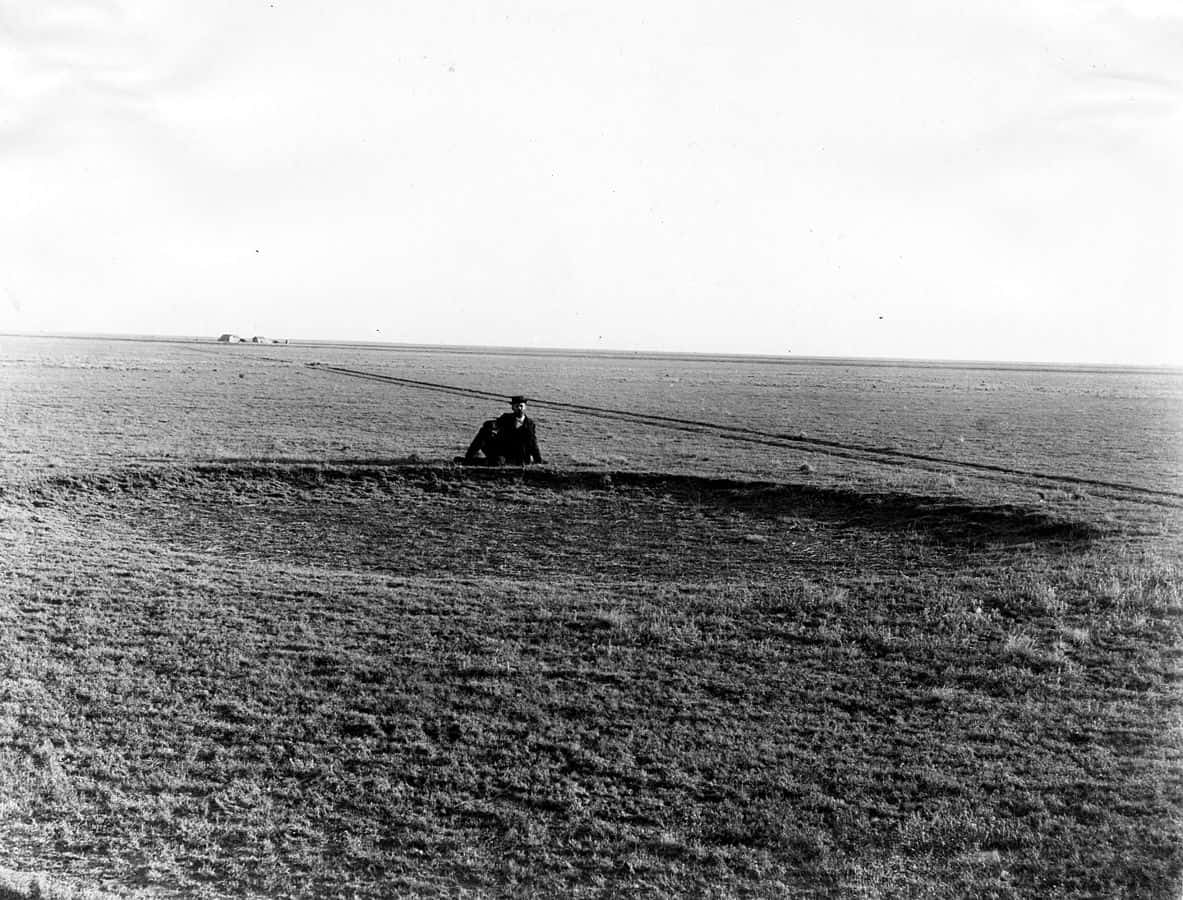
(Attribution: By Willard Drake Johnson - U.S. Geological Survey Photographic Library, http://libraryphoto.cr.usgs.gov/ , Public Domain, https://commons.wikimedia.org/w/index.php?curid=5538595 )
Posted : August 2, 2017 3:24 pm

Translate
▼
English
Spanish
French
German
Italian
Portuguese
Russian
Chinese
Japanese
Korean
Arabic
Hindi
Dutch
Polish
Turkish
Vietnamese
Thai
Swedish
Danish
Finnish
Norwegian
Czech
Hungarian
Romanian
Greek
Hebrew
Indonesian
Malay
Ukrainian
Bulgarian
Croatian
Slovak
Slovenian
Serbian
Lithuanian
Latvian
Estonian
MightyMoe, post: 439773, member: 700 wrote: The most extreme case I've ever found was a stone in the notes described as something like 24"x18"x5". This was a township corner. What was found was, if I remember correctly, was a 5"x3"x2" stone, with most of the 24 notches still visible. It wasn't a chip off the original, it was the whole thing, about the size of a thick cell phone.
Needless to say, I pay some attention to the size of the stones in the record, and if the stars align and they match then I figure it's one of those cosmic coincidence things.
An interesting side discussion, is in regards to how GLO field notes were taken. Surely there were considerable variances based on era, etc etc.
Probably the biggest discrepancy I have encountered was when I recovered a large cedar marked as a corner tree for a 1/4 corner. There was no doubt as to the markings being for a corner tree, and the ring count was spot on. Problem was, the field notes called out a mound of stone and a yellow pine BT along with a black oak BT.
No doubt that the original surveyor marked a corner tree, but the field notes were obviously a mixup.
I've heard that the field notes were at times cobbled together, at least in part from memory, at night back in camp.
Posted : August 2, 2017 6:31 pm
Translate
▼
English
Spanish
French
German
Italian
Portuguese
Russian
Chinese
Japanese
Korean
Arabic
Hindi
Dutch
Polish
Turkish
Vietnamese
Thai
Swedish
Danish
Finnish
Norwegian
Czech
Hungarian
Romanian
Greek
Hebrew
Indonesian
Malay
Ukrainian
Bulgarian
Croatian
Slovak
Slovenian
Serbian
Lithuanian
Latvian
Estonian
clearcut, post: 439854, member: 297 wrote: An interesting side discussion, is in regards to how GLO field notes were taken. Surely there were considerable variances based on era, etc etc.
Probably the biggest discrepancy I have recovered was finding a large cedar marked as a corner tree for a 1/4 corner. There was no doubt as to the markings being for a corner tree, and the ring count was spot on. Problem was, the field notes called out a mound of stone and a yellow pine BT along with a black oak BT.
No doubt that the original surveyor marked a corner tree, but the field notes were obviously from some other memory.
I've heard that the field notes were at times cobbled together, at least in part from memory, at night back in camp.
Posted : August 2, 2017 6:31 pm
Page 1 / 2
Next