Reading RPLS is free for the whole profession. Members post, reply, and get the members-only rooms.

Notifications
Clear all

Topic starter
Translate
▼
English
Spanish
French
German
Italian
Portuguese
Russian
Chinese
Japanese
Korean
Arabic
Hindi
Dutch
Polish
Turkish
Vietnamese
Thai
Swedish
Danish
Finnish
Norwegian
Czech
Hungarian
Romanian
Greek
Hebrew
Indonesian
Malay
Ukrainian
Bulgarian
Croatian
Slovak
Slovenian
Serbian
Lithuanian
Latvian
Estonian
Here is a question: What is a land surveyor? Is it the guy figuring out the boundary, or the guy just taking measurements, or both?
I've been asked to provide information to the US Department of Labor and statistics regarding surveyors and surveying. What kind of work we do, how we do it, etc. It has me wondering about some things.
Obviously the state says a surveyor is licensed, but I've seen many technicians call themselves surveyors, and most non surveyors i know think a field tech is a surveyor.
What say you? Does it matter? I'm very curious to hear what you all think.
Sent from my LG-D321 using Tapatalk
Posted : July 25, 2015 11:52 am

Translate
▼
English
Spanish
French
German
Italian
Portuguese
Russian
Chinese
Japanese
Korean
Arabic
Hindi
Dutch
Polish
Turkish
Vietnamese
Thai
Swedish
Danish
Finnish
Norwegian
Czech
Hungarian
Romanian
Greek
Hebrew
Indonesian
Malay
Ukrainian
Bulgarian
Croatian
Slovak
Slovenian
Serbian
Lithuanian
Latvian
Estonian
I make a distinction between a Land Surveyor, and a "Professional" Land surveyor.
A land surveyor, takes a deed, and puts it on the ground. A professional Land Surveyor Also looks at the adjoining title, and at all the related monuments, and makes a PROFESSIONAL judgement call, and documents his work.
A land Surveyor Surveys land. Gets a solution, and publishes it.
A professional Land surveyor land surveyor looks at ALL the possible solutions, and chooses the BEST answer.
A land surveyor writes descriptions. A professional land surveyor writes descriptions, with details, that make it reliable, retractable, and permanent.
Just my musings.
N
Posted : July 25, 2015 12:22 pm

Translate
▼
English
Spanish
French
German
Italian
Portuguese
Russian
Chinese
Japanese
Korean
Arabic
Hindi
Dutch
Polish
Turkish
Vietnamese
Thai
Swedish
Danish
Finnish
Norwegian
Czech
Hungarian
Romanian
Greek
Hebrew
Indonesian
Malay
Ukrainian
Bulgarian
Croatian
Slovak
Slovenian
Serbian
Lithuanian
Latvian
Estonian
A surveying technician does all sorts of things related to the world of surveying but under the guidance of a surveryor.
A land surveyor is a person licensed to do and be ultimately responsible for all of those things.
Posted : July 25, 2015 12:28 pm

Translate
▼
English
Spanish
French
German
Italian
Portuguese
Russian
Chinese
Japanese
Korean
Arabic
Hindi
Dutch
Polish
Turkish
Vietnamese
Thai
Swedish
Danish
Finnish
Norwegian
Czech
Hungarian
Romanian
Greek
Hebrew
Indonesian
Malay
Ukrainian
Bulgarian
Croatian
Slovak
Slovenian
Serbian
Lithuanian
Latvian
Estonian
The people that hold State license to legally do Land Surveying are Professional Land Surveyors.
Everybody else works for a surveyor in some capacity or knows a surveyor that they help, have helped or have watched.
Then there are all those construction guys that either find or put 3D points everywhere something is or is going to be.
:beer:
Posted : July 25, 2015 3:20 pm

Translate
▼
English
Spanish
French
German
Italian
Portuguese
Russian
Chinese
Japanese
Korean
Arabic
Hindi
Dutch
Polish
Turkish
Vietnamese
Thai
Swedish
Danish
Finnish
Norwegian
Czech
Hungarian
Romanian
Greek
Hebrew
Indonesian
Malay
Ukrainian
Bulgarian
Croatian
Slovak
Slovenian
Serbian
Lithuanian
Latvian
Estonian
I think that survey techs, party chiefs and chainmen are all surveyors, I make a distinction as a Licensed Surveyor or LS as appropriate. If the work is entirely free of boundary it can be handy to throw another qualifier in such as construction, geodetic, seismic, hydrographic etc.
Posted : July 25, 2015 3:59 pm

Translate
▼
English
Spanish
French
German
Italian
Portuguese
Russian
Chinese
Japanese
Korean
Arabic
Hindi
Dutch
Polish
Turkish
Vietnamese
Thai
Swedish
Danish
Finnish
Norwegian
Czech
Hungarian
Romanian
Greek
Hebrew
Indonesian
Malay
Ukrainian
Bulgarian
Croatian
Slovak
Slovenian
Serbian
Lithuanian
Latvian
Estonian
Paul, post: 329068, member: 624 wrote: Here is a question: What is a land surveyor? Is it the guy figuring out the boundary, or the guy just taking measurements, or both?
I've been asked to provide information to the US Department of Labor and statistics regarding surveyors and surveying. What kind of work we do, how we do it, etc. It has me wondering about some things.
Obviously the state says a surveyor is licensed, but I've seen many technicians call themselves surveyors, and most non surveyors i know think a field tech is a surveyor.
What say you? Does it matter? I'm very curious to hear what you all think.
Sent from my LG-D321 using Tapatalk
Ask yourself this, "what is a doctor, lawyer, engineer, architect? Do those in their charge usually get referred to as such or are they nurses, interns, physician assistants, paralegals, and so on?
While it may not take a licensed surveyor to lay out building footprints, develop contour drawings, gather data for cross sectioning strip mines, or produce CAD drawings, it does take a licensed surveyor to render professional judgments regarding boundary issues.
I have no disdain for those who work in other disciplines, such as construction staking, deformation monitoring, or the like. These are necessary endeavors and require high degrees of learning and application. My hat's off to those who do these types of work. They have my respect. But for a technician, cad or otherwise, party chief, instrument man/woman, or rodperson to represent themselves as a land surveyor is misleading.
Posted : July 26, 2015 8:44 am

Translate
▼
English
Spanish
French
German
Italian
Portuguese
Russian
Chinese
Japanese
Korean
Arabic
Hindi
Dutch
Polish
Turkish
Vietnamese
Thai
Swedish
Danish
Finnish
Norwegian
Czech
Hungarian
Romanian
Greek
Hebrew
Indonesian
Malay
Ukrainian
Bulgarian
Croatian
Slovak
Slovenian
Serbian
Lithuanian
Latvian
Estonian
Alan Cook, post: 329116, member: 43 wrote: ..While it may not take a licensed surveyor to lay out building footprints, develop contour drawings, gather data for cross sectioning strip mines, or produce CAD drawings, it does take a licensed surveyor to render professional judgments regarding boundary issues.
I have no disdain for those who work in other disciplines, such as construction staking, deformation monitoring, or the like. These are necessary endeavors and require high degrees of learning and application. My hat's off to those who do these types of work. They have my respect. But for a technician, cad or otherwise, party chief, instrument man/woman, or rod person to represent themselves as a land surveyor is misleading.
I agree with you Alan. But I see evidence of a pattern with some replies that place a heavy emphasis on boundary location as possibly the only thing that separates professional land surveyors from others in our field. In my opinion that train of though could actually be damaging to our profession.
In Oklahoma our statutes also address areas, elevations, geodetic control for GIS, rights of way and topographical or volumetric surveys:
5. "Professional land surveyor" or "land surveyor" means a person who has been duly licensed as a professional land surveyor pursuant to Section 475.1 et seq. of this title and the regulations issued by the Board pursuant thereto; and is a person who, by reason of special knowledge in the technique of measuring land and use of the basic principles of mathematics, the related physical and applied sciences and the relevant requirements of law for
adequate evidence and all requisite to surveying of real property, acquired by education and experience, is qualified to engage in the practice of land surveying.
7. a. "Practice of land surveying" means any service or work, the adequate performance of which involves the application of special knowledge of the principles of mathematics, methods of measurement, and the law for the determination and preservation of land boundaries.
"Practice of land surveying" includes, without limitation:
(1) restoration and rehabilitation of corners and boundaries in the United States Public Land Survey System or the subdivision thereof,
(2) obtaining and evaluating evidence for the accurate determination of land boundaries,
(3) determination of the areas and elevations of land parcels for a survey,
(4) monumenting the subdivision of land parcels into smaller parcels and the preparation of the descriptions in connection therewith,
(5) measuring and platting underground mine workings,
(6) preparation of the control portions of geographic information systems and land information systems,
(7) establishment, restoration, and rehabilitation of land survey monuments and bench marks,
(8) preparation of land survey plats, condominium plats, monument records, and survey reports,
(9) surveying, monumenting, and platting of easements, and rights-of-way,
(10) measuring, locating, or establishing lines, angles, elevations, natural and man-made features in the air, on the surface of the earth, within underground workings, and on the beds of bodies of water for the purpose of determining areas and volumes for a survey,
(11) geodetic surveying, and
(12) any other activities incidental to and necessary for the adequate performance of the services described in this paragraph.
These statutes are particularly enforced in Oklahoma if any of these types of "surveying" mentioned above are paid for with public monies.
Posted : July 26, 2015 9:25 am
Translate
▼
English
Spanish
French
German
Italian
Portuguese
Russian
Chinese
Japanese
Korean
Arabic
Hindi
Dutch
Polish
Turkish
Vietnamese
Thai
Swedish
Danish
Finnish
Norwegian
Czech
Hungarian
Romanian
Greek
Hebrew
Indonesian
Malay
Ukrainian
Bulgarian
Croatian
Slovak
Slovenian
Serbian
Lithuanian
Latvian
Estonian
I have seen many non licensed surveyors serve the role of "the guy figuring out the boundary".
I take issue with reducing field work to being "just taking measurements". I personally believe that a lot of what "surveying" is happens in the field, when licensed folks forget that they do so at the detriment to the profession.
Posted : July 26, 2015 1:19 pm

Translate
▼
English
Spanish
French
German
Italian
Portuguese
Russian
Chinese
Japanese
Korean
Arabic
Hindi
Dutch
Polish
Turkish
Vietnamese
Thai
Swedish
Danish
Finnish
Norwegian
Czech
Hungarian
Romanian
Greek
Hebrew
Indonesian
Malay
Ukrainian
Bulgarian
Croatian
Slovak
Slovenian
Serbian
Lithuanian
Latvian
Estonian
A "land surveyor" and "land surveying" are whatever they are defined as in your state or provincial statutes. Anyone practicing surveying within these definitions must be licensed. The terms "surveyor", "land surveyor", and "land surveying" are likely also protected by statute. They are in this jurisdiction under the Alberta http://www.qp.alberta.ca/1266.cfm?page=L03.cfm&leg_type=Acts&isbncln=9780779754052&apos ;">Land Surveyors Act.
Posted : July 26, 2015 2:44 pm

Translate
▼
English
Spanish
French
German
Italian
Portuguese
Russian
Chinese
Japanese
Korean
Arabic
Hindi
Dutch
Polish
Turkish
Vietnamese
Thai
Swedish
Danish
Finnish
Norwegian
Czech
Hungarian
Romanian
Greek
Hebrew
Indonesian
Malay
Ukrainian
Bulgarian
Croatian
Slovak
Slovenian
Serbian
Lithuanian
Latvian
Estonian
Listen to us; we're arguing about the same thing; just using different definitions...
We can't even agree on a conclusion; how do you think the general public sees this?
How many times has a client said; I had it surveyed; or, he had it surveyed; or he surveyed it; and what they really meant was: They knew a guy once that used to hold a rod for a couple summers on a highway crew and he showed them where their boundaries were.
how many times has a client said; I have a "plat map" and when they show it to you; it's the copy of the assessors map they got when they bought the place.
The general public is clueless; it's our job to educate them. how can we do that; if we can't even agree on a definition among ourselves?
Posted : July 26, 2015 2:57 pm
Translate
▼
English
Spanish
French
German
Italian
Portuguese
Russian
Chinese
Japanese
Korean
Arabic
Hindi
Dutch
Polish
Turkish
Vietnamese
Thai
Swedish
Danish
Finnish
Norwegian
Czech
Hungarian
Romanian
Greek
Hebrew
Indonesian
Malay
Ukrainian
Bulgarian
Croatian
Slovak
Slovenian
Serbian
Lithuanian
Latvian
Estonian
RADAR, post: 329161, member: 413 wrote: Listen to us; we're arguing about the same thing; just using different definitions...
Radar, the same thing happens within the confines of a land surveying office or an Association meeting. Not that long ago I worked for a very large corporation that employed more than 40 land surveyors. Trying to get three or more agree to a process change or plan template update was often a tragically comic exercise. Or was that "comically tragic"? I'll have to confer with my professional colleagues for consensus...oh wait...
Posted : July 26, 2015 3:06 pm

Translate
▼
English
Spanish
French
German
Italian
Portuguese
Russian
Chinese
Japanese
Korean
Arabic
Hindi
Dutch
Polish
Turkish
Vietnamese
Thai
Swedish
Danish
Finnish
Norwegian
Czech
Hungarian
Romanian
Greek
Hebrew
Indonesian
Malay
Ukrainian
Bulgarian
Croatian
Slovak
Slovenian
Serbian
Lithuanian
Latvian
Estonian
RADAR, post: 329161, member: 413 wrote: The general public is clueless; it's our job to educate them. how can we do that; if we can't even agree on a definition among ourselves?
You can't educate them. But it's not because we can't agree on the definition of a Land Surveyor, it's because they have to be the ones to initiate it. You can't educate someone who doesn't want to be educated.
Posted : July 26, 2015 3:22 pm
Translate
▼
English
Spanish
French
German
Italian
Portuguese
Russian
Chinese
Japanese
Korean
Arabic
Hindi
Dutch
Polish
Turkish
Vietnamese
Thai
Swedish
Danish
Finnish
Norwegian
Czech
Hungarian
Romanian
Greek
Hebrew
Indonesian
Malay
Ukrainian
Bulgarian
Croatian
Slovak
Slovenian
Serbian
Lithuanian
Latvian
Estonian
James Fleming, post: 329164, member: 136 wrote: You can't educate them. But it's not because we can't agree on the definition of a Land Surveyor, it's because they have to be the ones to initiate it. You can't educate someone who doesn't want to be educated.
No; but we can try....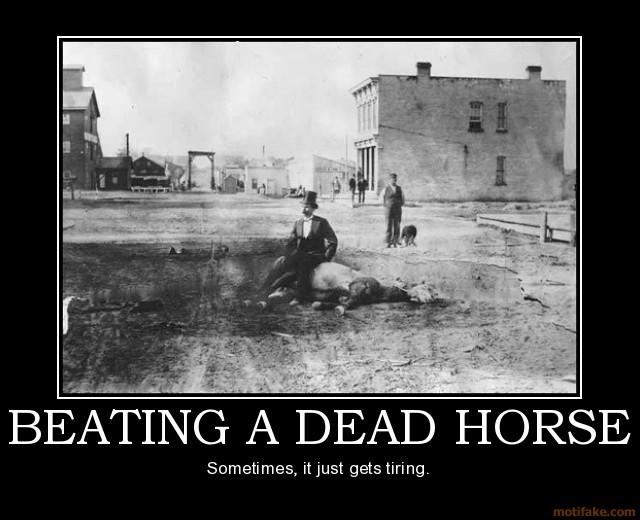
Posted : July 26, 2015 4:15 pm

Translate
▼
English
Spanish
French
German
Italian
Portuguese
Russian
Chinese
Japanese
Korean
Arabic
Hindi
Dutch
Polish
Turkish
Vietnamese
Thai
Swedish
Danish
Finnish
Norwegian
Czech
Hungarian
Romanian
Greek
Hebrew
Indonesian
Malay
Ukrainian
Bulgarian
Croatian
Slovak
Slovenian
Serbian
Lithuanian
Latvian
Estonian
ÛÏThe Rights, Duties and Responsibilities of Surveyors,Û by H.G. Martin presented to the Arkansas Society of Engineers, Architects and Surveyors, November [hl]1889[/hl]
After considering the above from my personal knowledge and experience, and reading all I could find bearing on the subject, I have concluded to give you what F. Hodgman, of Climax, Mich., says in his most valuable little book, *ÛÏA Manual of Land Surveying:Û
ÛÏSurveyors, by the consent and acquiescence of the parties concerned, are usually the arbiters of disputed boundaries, and their decisions, when thus acquiesced in by the parties, become in time as binding, and as much respected by the authorities, as the decisions of juries and courts of the law.
It is probable that at least 99 percent of all questions of disputed boundaries are thus settled by the interested parties themselves, in accordance with the decision of the surveyor.
Surveyors, from constantly exercising this seeming authority, come, at least in many cases, to believe it to be absolute and final, something which must be respected; overlooking the fact that the only force their decisions have comes from the consent of the parties. When that consent is withheld, the case goes to the courts for settlement; and thus the courts have in some cases felt called upon to define the surveyorÛªs standing before the law. They say:
-
First ÛÒ Surveyors have no more authority than other men to determine boundaries of their own motion. All bounds and starting points are questions of fact to be determined by testimony. Surveyors may or may not have in certain cases means of judgment not possessed by others, but the law cannot and does not make them arbiters of private rights. Cronin v. Gore, 38 Mich., 381.
-
Second ÛÒ The law recognizes surveyors as useful assistants in doing the mechanical work of measurement and calculation, and also allows such credit to their judgment as belongs to any experience which may give it value in cases where better means of information do not exist. But the determination of facts belongs exclusively to the courts and juries. Where a section line or other starting point actually exists is always a question of fact, and cannot be left to the opinion of an expert for final decision. And where, as is generally the case in an old community, boundaries have been fixed by long use and acquiescence, it would be contrary to all reason to have them interfered with on any abstract notion of science. Stewart v. Carleton, 31 Mich., 273; Gregory v. Knight 50 Mich., 61.
-
Third ÛÒ New surveys disturbing old boundaries are not to be encouraged. Toby v. Secor, Wis., N.W. Reporter, Vol. 19, p. 79.
-
Fourth ÛÒ Lines long unquestioned ought not to be disturbed upon a mere disagreement among surveyors, especially when the last survey made is under the unfavorable circumstances of corner posts and witness trees being gone, which it is probable to suppose were in existence at the time of the first survey. Case v. Trapp, 49 Mich., 59.
[hl]When a man has had a training in one of the exact sciences, where every problem within its purview is supposed to be susceptible of accurate solution, he is likely to be not a little impatient when he is told that under some circumstances he must recognize inaccuracies, and govern his action by facts which lead him away from the results which theoretically he ought to reach. Observation warrants us in saying that this remark may frequently be made of surveyors.[/hl]
In resurveying, and in construing the descriptions in deeds, etc.
In making resurveys the surveyor is called upon:
- First. To construe description in deeds.
- Second. To find the location of corners and boundary lines.
- Third. To renew corner monuments, and make anew boundary lines.
In construing the descriptions in deeds:
- First. The describing of boundaries in a deed is to be taken most strongly against the grantor.
- Second. A deed must be construed according to the condition of things at the date thereof.
- Third. Written descriptions of property are to be interpreted in the light of the facts known to and in the minds of the parties at the time. Wiley v. Sanders, 36 Mich., 60.
- Forth. And should be construed with reference to any plats, facts and monuments on the ground referred to in the instrument. Bowen v. Fearl, 28 Mich., 538.
- Fifth. A conveyance by metes and bounds will carry all the land included within them, although it be more or less than is stated in the deed. Butler v. Widger, 7 Cw. (N.Y.), 723.
- Sixth. The mention of quantity of acres after a definite description by metes and bounds, or by the aliquot parts of a section, is a matter of description only, and quantity being the least certain, does not control. Martin v. Carlin 19 Wis., 454.
*A MANUAL OF LAND SURVEYING.
This is the first and only text-book on land surveying to recognize the facts; that a great majority of all the surveys now made are re-surveys; that the perplexing questions with the surveyor has to deal with are not mathematical questions at all, but questions of law and practice.
The old text-books give us the mathematics of surveying; this gives in addition, the law and the practice. The law is from the statute books of the statute books of the United States, and about 160 decisions from the highest courts in the land; the practice is from best authorities.
DDSM:beer:
Posted : July 27, 2015 9:01 am
Topic starter
Translate
▼
English
Spanish
French
German
Italian
Portuguese
Russian
Chinese
Japanese
Korean
Arabic
Hindi
Dutch
Polish
Turkish
Vietnamese
Thai
Swedish
Danish
Finnish
Norwegian
Czech
Hungarian
Romanian
Greek
Hebrew
Indonesian
Malay
Ukrainian
Bulgarian
Croatian
Slovak
Slovenian
Serbian
Lithuanian
Latvian
Estonian
So, now that there are several responses, I'll add my two cents:
I think a surveyor is the guy resolving the boundary and/or reviewing a techs work and stamping it.
I also think the other professions have done a much better job of defining what they are. Not that the public actually understands any better than they do us, but they understand that it is important.
The lack of a true name that everyone uses for our techs and other associates makes it really hard for the public to understand who is who.
Also, i think it is vitally important to the survival of the profession that we make these distinctions. Otherwise, the world won't understand why we are important and why they should encourage their kids to go into surveying.
I also think that surveyors should be wearing the same clothes (when in the office) as their engineering and attorney counterparts, and conduct themselves accordingly.
My first boss was probably the most dedicated researcher and surveyor I've ever known. Unfortunately, no one knew that because he wore suspenders and cruddy clothes all the time, drove crappy old trucks, and railed against surveyors who didnt do the same. His saying always was "the hat doesnt matter, it is what is under the hat that matters". He was correct (he usually was). However, the public never knew that, his lack of marketing skills (and surveyors in general assured that they never knew).
Just because we think surveying is the most important thing in the world, and that everyone should spend their time learning about it and why it is important, doesn't make it so. People need something to tell them it is important. They need US to tell them it is important, by our actions, and to define it for them. If we cant come up with a definitive name that no one else is, then how can we expect their respect?
Sent from my LG-D321 using Tapatalk
Posted : July 27, 2015 9:53 am

Translate
▼
English
Spanish
French
German
Italian
Portuguese
Russian
Chinese
Japanese
Korean
Arabic
Hindi
Dutch
Polish
Turkish
Vietnamese
Thai
Swedish
Danish
Finnish
Norwegian
Czech
Hungarian
Romanian
Greek
Hebrew
Indonesian
Malay
Ukrainian
Bulgarian
Croatian
Slovak
Slovenian
Serbian
Lithuanian
Latvian
Estonian
It depends on why the real question is. Some possible real questions are:
What activities is a typical licensed land surveyor likely to perform during the course of a year?
What activities are illegal for a person to do unless the person is a licensed land surveyor or falls under an exemption in the laws of the State of ______?
What activities count toward the experience requirement to become a licensed land surveyor in the State of ____?
What activities serve to differentiate a non-exempt employee and an exempt employee in the field of land surveying?
Posted : July 27, 2015 11:56 am