Reading RPLS is free for the whole profession. Members post, reply, and get the members-only rooms.

Notifications
Clear all

Topic starter
Translate
▼
English
Spanish
French
German
Italian
Portuguese
Russian
Chinese
Japanese
Korean
Arabic
Hindi
Dutch
Polish
Turkish
Vietnamese
Thai
Swedish
Danish
Finnish
Norwegian
Czech
Hungarian
Romanian
Greek
Hebrew
Indonesian
Malay
Ukrainian
Bulgarian
Croatian
Slovak
Slovenian
Serbian
Lithuanian
Latvian
Estonian
Perhaps the last survey project before the snow.
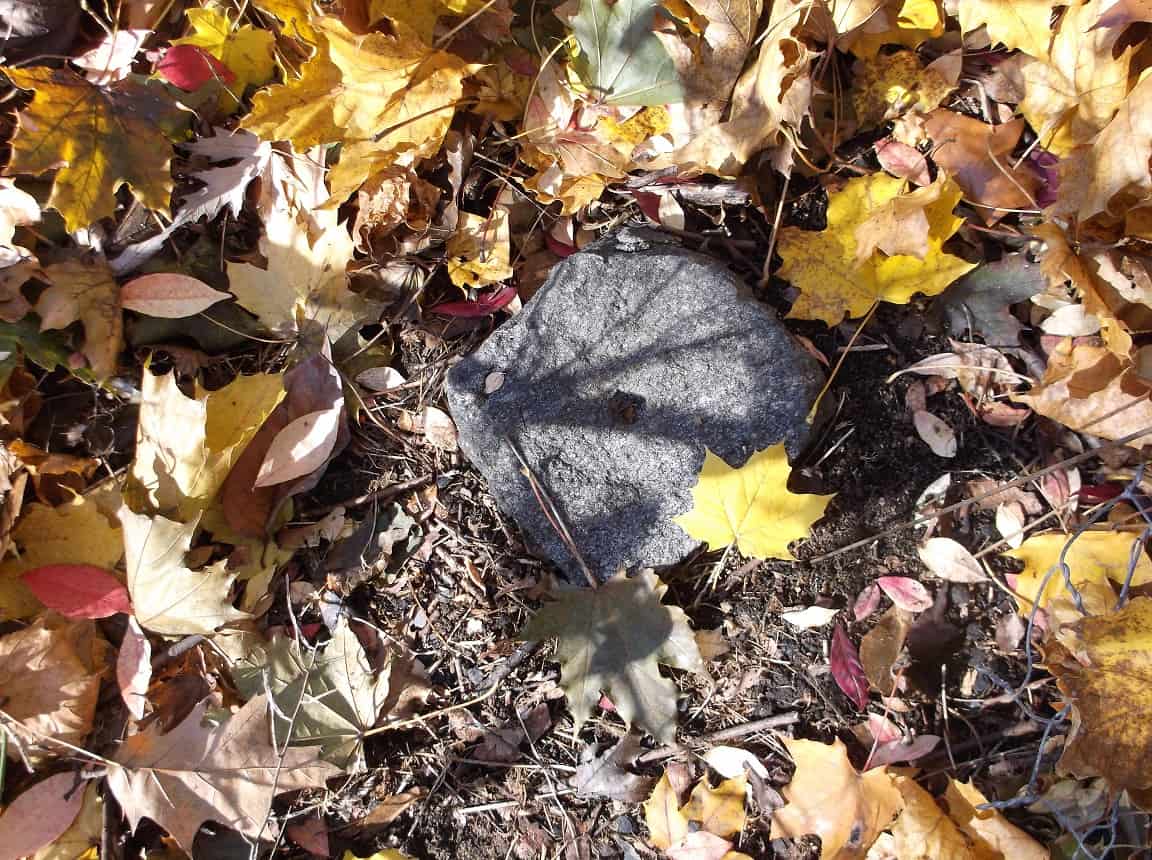
Here is a very good granite stone corner found circa.1870 and a corner set with a nice survey campfire surrounding it.
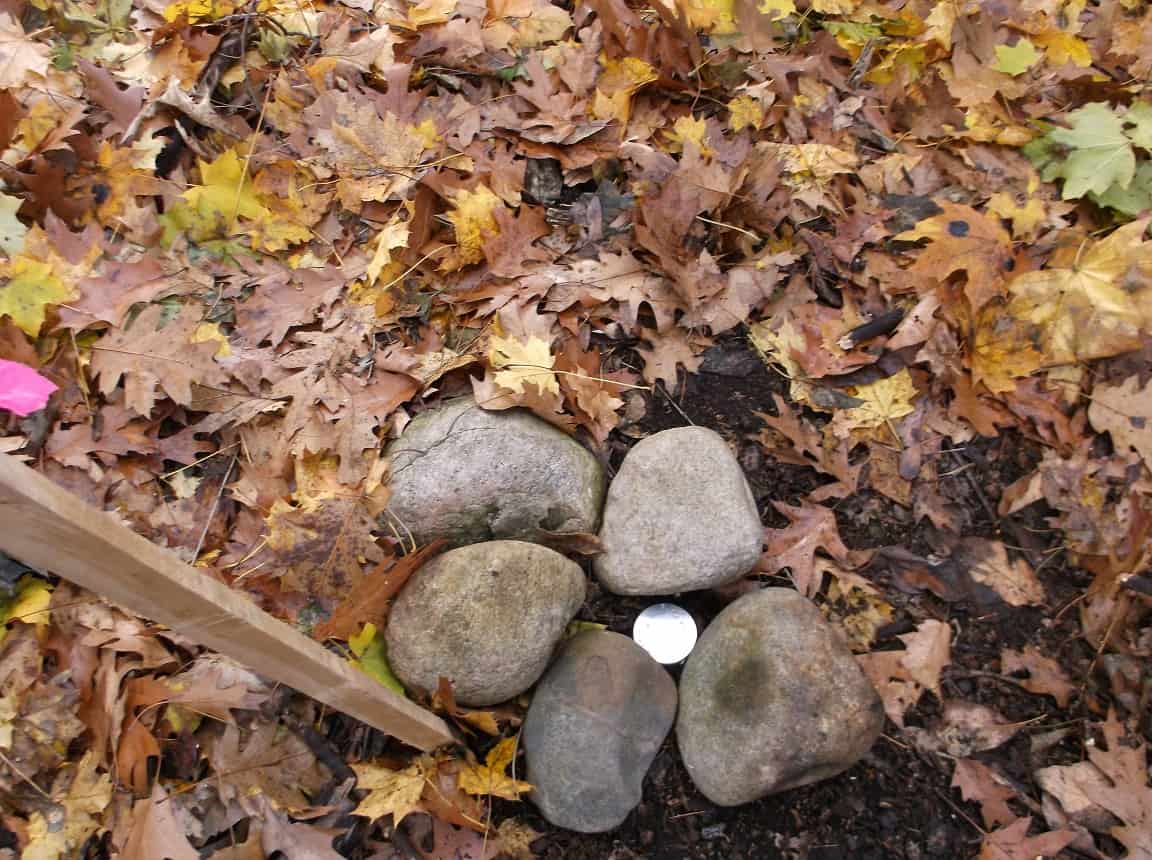
The set corner is a 5/8" or number 5 steel reinforcing rod that is three feet long with aluminum cap (disk?) bearing my name, license number and a punch mark.
Historic boundaries and conservation efforts.
Posted : November 28, 2016 4:42 pm

Translate
▼
English
Spanish
French
German
Italian
Portuguese
Russian
Chinese
Japanese
Korean
Arabic
Hindi
Dutch
Polish
Turkish
Vietnamese
Thai
Swedish
Danish
Finnish
Norwegian
Czech
Hungarian
Romanian
Greek
Hebrew
Indonesian
Malay
Ukrainian
Bulgarian
Croatian
Slovak
Slovenian
Serbian
Lithuanian
Latvian
Estonian
3 feet? Wow, in this area, that would leave most corners sticking a foot out of the ground. 5/8 x 20" is fairly typical around here.
For a deformation monitoring survey in northern Canada, we did set 1-1/4"x6' solid iron rods...... In winter..... At ground level.... And set Lots of them......
Posted : November 28, 2016 11:09 pm

Translate
▼
English
Spanish
French
German
Italian
Portuguese
Russian
Chinese
Japanese
Korean
Arabic
Hindi
Dutch
Polish
Turkish
Vietnamese
Thai
Swedish
Danish
Finnish
Norwegian
Czech
Hungarian
Romanian
Greek
Hebrew
Indonesian
Malay
Ukrainian
Bulgarian
Croatian
Slovak
Slovenian
Serbian
Lithuanian
Latvian
Estonian
I'm glad we don't have to survey in the snow. Serious question. How do you locate stones in the snow? If it is a ferrous monument is one thing, but stones?
Andy
Posted : November 29, 2016 7:50 am
Topic starter
Translate
▼
English
Spanish
French
German
Italian
Portuguese
Russian
Chinese
Japanese
Korean
Arabic
Hindi
Dutch
Polish
Turkish
Vietnamese
Thai
Swedish
Danish
Finnish
Norwegian
Czech
Hungarian
Romanian
Greek
Hebrew
Indonesian
Malay
Ukrainian
Bulgarian
Croatian
Slovak
Slovenian
Serbian
Lithuanian
Latvian
Estonian
Thank you for the comments.
The metal rod is long enough to be stable through twenty-five years according to the board rules. They don't specify a length, but, three feet is very tough to remove. It can be tough to install too. Sometimes digging to remove boulders that have inconveniently placed themselves where the rod is being driven.
Surveying in winter with snow is not practical unless there is advanced reconnaissance. It is necessary to secure the work far enough in advance to be able to place some signals at the monuments or features you will need to measure under the snow. Otherwise as you have written it is too difficult to find them and you risk submitting a survey work with missing information someone else will later find in better weather. A risk of your reputation that is not worth the time and trouble.
Otherwise I like surveying in the snow. As long as I have the fall to flag up the boundary.
Historic boundaries and conservation efforts.
Posted : November 29, 2016 8:55 am

Translate
▼
English
Spanish
French
German
Italian
Portuguese
Russian
Chinese
Japanese
Korean
Arabic
Hindi
Dutch
Polish
Turkish
Vietnamese
Thai
Swedish
Danish
Finnish
Norwegian
Czech
Hungarian
Romanian
Greek
Hebrew
Indonesian
Malay
Ukrainian
Bulgarian
Croatian
Slovak
Slovenian
Serbian
Lithuanian
Latvian
Estonian
The Iron Pins we use here, western canada, for legal purposes are about 30" in length and an inch thick. For most applications, we use a sledge hammer to drive them into the ground, and then counter sink them about 6" or so. In winter time, especially gravel road/ drive ways it is especially difficult. Often we use a gas powered jack hammer, like a Cobra or a Pionjar. However, these break down often (least the archaic ones I used) so back to the sledge. 15 minutes of taking turns pounding one into the ground isn't uncommon. The tops of them look like mushrooms afterwards. I remember one particular cold day, finally thought we had a stubborn one into the ground after about 30 minutes. Then, felt something under my foot. The Pin hit a large rock or something under the ground, and turned back to the surface. What I felt was the end of the pin coming back up under the ground, basically became a huge horseshoe. So. Had to dig that out.
Posted : November 30, 2016 10:26 am

Translate
▼
English
Spanish
French
German
Italian
Portuguese
Russian
Chinese
Japanese
Korean
Arabic
Hindi
Dutch
Polish
Turkish
Vietnamese
Thai
Swedish
Danish
Finnish
Norwegian
Czech
Hungarian
Romanian
Greek
Hebrew
Indonesian
Malay
Ukrainian
Bulgarian
Croatian
Slovak
Slovenian
Serbian
Lithuanian
Latvian
Estonian
Andy Bruner, post: 401474, member: 1123 wrote: I'm glad we don't have to survey in the snow. Serious question. How do you locate stones in the snow? If it is a ferrous monument is one thing, but stones?
Andy
You have to get lucky:)
Posted : November 30, 2016 12:32 pm
Topic starter
Translate
▼
English
Spanish
French
German
Italian
Portuguese
Russian
Chinese
Japanese
Korean
Arabic
Hindi
Dutch
Polish
Turkish
Vietnamese
Thai
Swedish
Danish
Finnish
Norwegian
Czech
Hungarian
Romanian
Greek
Hebrew
Indonesian
Malay
Ukrainian
Bulgarian
Croatian
Slovak
Slovenian
Serbian
Lithuanian
Latvian
Estonian
That is a great story Mitch. Thank you.
Historic boundaries and conservation efforts.
Posted : November 30, 2016 12:40 pm

Translate
▼
English
Spanish
French
German
Italian
Portuguese
Russian
Chinese
Japanese
Korean
Arabic
Hindi
Dutch
Polish
Turkish
Vietnamese
Thai
Swedish
Danish
Finnish
Norwegian
Czech
Hungarian
Romanian
Greek
Hebrew
Indonesian
Malay
Ukrainian
Bulgarian
Croatian
Slovak
Slovenian
Serbian
Lithuanian
Latvian
Estonian
MightyMoe, post: 401730, member: 700 wrote: You have to get lucky:)
Grab your snow shovel and dig.
Posted : November 30, 2016 10:34 pm
Translate
▼
English
Spanish
French
German
Italian
Portuguese
Russian
Chinese
Japanese
Korean
Arabic
Hindi
Dutch
Polish
Turkish
Vietnamese
Thai
Swedish
Danish
Finnish
Norwegian
Czech
Hungarian
Romanian
Greek
Hebrew
Indonesian
Malay
Ukrainian
Bulgarian
Croatian
Slovak
Slovenian
Serbian
Lithuanian
Latvian
Estonian
Andy Bruner, post: 401474, member: 1123 wrote: I'm glad we don't have to survey in the snow. Serious question. How do you locate stones in the snow? If it is a ferrous monument is one thing, but stones?
Andy
Sometimes a stone prob will work too. oddly while working on a big boundary survey in a lot of snow, we realized mag locators don't work well through deep dense snow.
Posted : November 30, 2016 10:36 pm

Translate
▼
English
Spanish
French
German
Italian
Portuguese
Russian
Chinese
Japanese
Korean
Arabic
Hindi
Dutch
Polish
Turkish
Vietnamese
Thai
Swedish
Danish
Finnish
Norwegian
Czech
Hungarian
Romanian
Greek
Hebrew
Indonesian
Malay
Ukrainian
Bulgarian
Croatian
Slovak
Slovenian
Serbian
Lithuanian
Latvian
Estonian
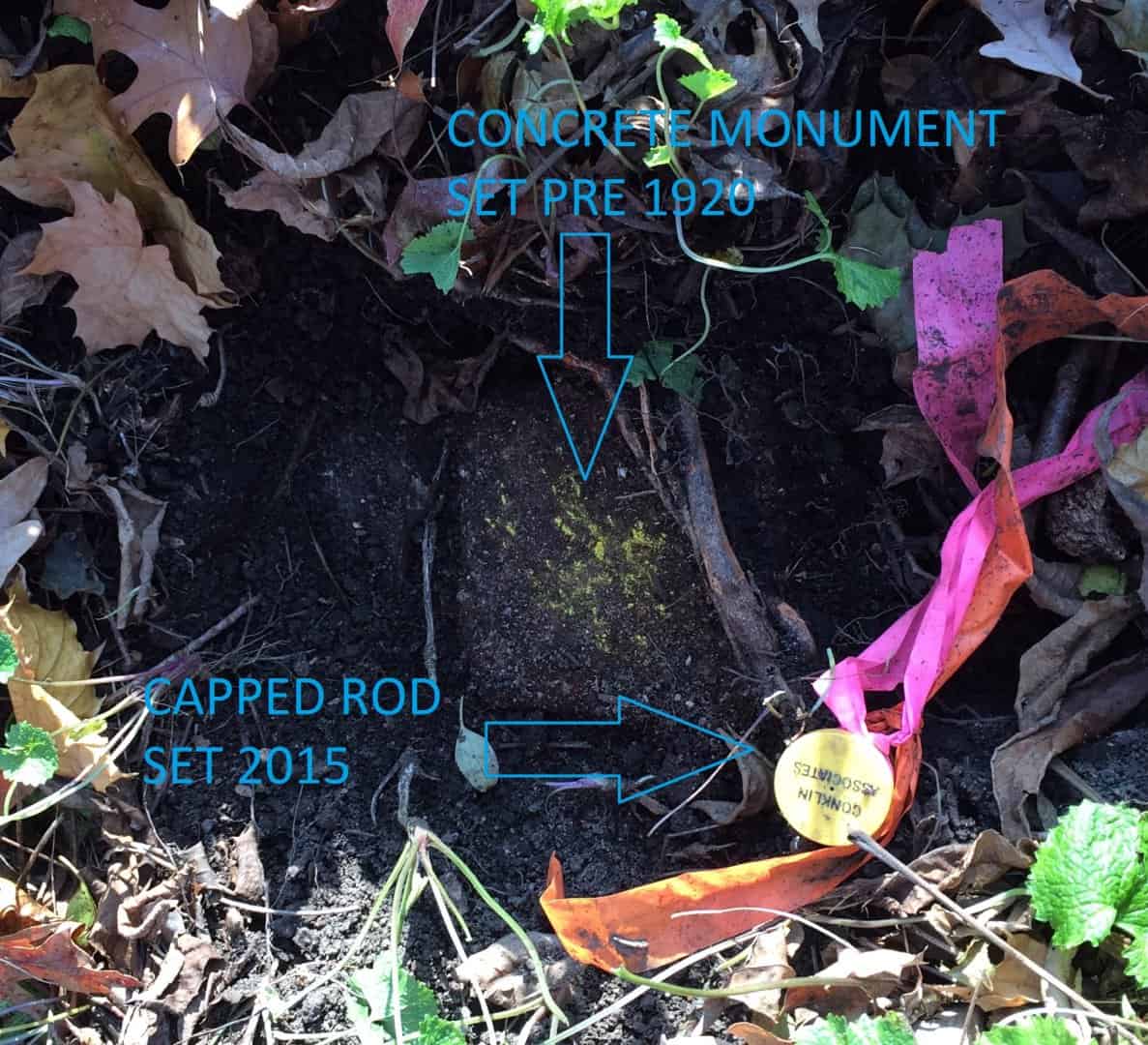
I like to epoxy a small ceramic magnet to stone monuments and concrete monuments with out metal. Especially monuments that are buried.
I'm running into more and more field crews that only use their metal detector .
Posted : December 1, 2016 9:47 am

Translate
▼
English
Spanish
French
German
Italian
Portuguese
Russian
Chinese
Japanese
Korean
Arabic
Hindi
Dutch
Polish
Turkish
Vietnamese
Thai
Swedish
Danish
Finnish
Norwegian
Czech
Hungarian
Romanian
Greek
Hebrew
Indonesian
Malay
Ukrainian
Bulgarian
Croatian
Slovak
Slovenian
Serbian
Lithuanian
Latvian
Estonian
Didn't get a reading on the locator, so just set a pin. They're not getting paid to look around the area. I'll bet they even moved the pin a little because the point fell on the edge of a big rock!
Posted : December 1, 2016 10:08 am

Translate
▼
English
Spanish
French
German
Italian
Portuguese
Russian
Chinese
Japanese
Korean
Arabic
Hindi
Dutch
Polish
Turkish
Vietnamese
Thai
Swedish
Danish
Finnish
Norwegian
Czech
Hungarian
Romanian
Greek
Hebrew
Indonesian
Malay
Ukrainian
Bulgarian
Croatian
Slovak
Slovenian
Serbian
Lithuanian
Latvian
Estonian
Spent close to a hour digging for this one day.
Posted : December 1, 2016 10:31 am
Translate
▼
English
Spanish
French
German
Italian
Portuguese
Russian
Chinese
Japanese
Korean
Arabic
Hindi
Dutch
Polish
Turkish
Vietnamese
Thai
Swedish
Danish
Finnish
Norwegian
Czech
Hungarian
Romanian
Greek
Hebrew
Indonesian
Malay
Ukrainian
Bulgarian
Croatian
Slovak
Slovenian
Serbian
Lithuanian
Latvian
Estonian
Jon Collins, post: 401823, member: 11135 wrote: Sometimes a stone prob will work too. oddly while working on a big boundary survey in a lot of snow, we realized mag locators don't work well through deep dense snow.
There is so much on this page i really don't understand, in regards to the survey methods employed in the USA. Thankfully, I am glad we don't have these headaches. For Legal monuments (In Saskatchewan where I am based) there are only 4 accepted ones that I can think of offhand. A 30" iron pin (square head with straight sides for marking); a brass CAP (not Disc :P) used for Section corners ( no longer required since the 80's I think); a cross cut for concrete work in cities; and a small iron pin for lot corners. In the original dominion survey (125 years) 4 pits and a mound was also used. Being a new province (territory at the time of the survey) they had established rules for what constitutes a legal monument. Axles, or stones, or other objects doesn't fly here.
And the reason we no longer use the brass caps, is because of winter. They were mounted on a pin, with another plate at the bottom to act as an anchor against frost heave. So, you had to dig a hole 2 feet deep and then fill it back up. When its -40 (which is the same on both scales) you don't want to be outside at all, let alone digging.
Posted : December 1, 2016 10:46 am

Translate
▼
English
Spanish
French
German
Italian
Portuguese
Russian
Chinese
Japanese
Korean
Arabic
Hindi
Dutch
Polish
Turkish
Vietnamese
Thai
Swedish
Danish
Finnish
Norwegian
Czech
Hungarian
Romanian
Greek
Hebrew
Indonesian
Malay
Ukrainian
Bulgarian
Croatian
Slovak
Slovenian
Serbian
Lithuanian
Latvian
Estonian
Dan Dunn, post: 401865, member: 911 wrote: I like to epoxy a small ceramic magnet to stone monuments and concrete monuments with out metal. Especially monuments that are buried.
I'm running into more and more field crews that only use their metal detector .
Until last year I never even had a metal detector. I probed for stone monuments.
Goes two ways... now I know how many pipes and pins I missed not using a detector.
Posted : December 1, 2016 4:20 pm