Reading RPLS is free for the whole profession. Members post, reply, and get the members-only rooms.

Notifications
Clear all
Education & Training
26
Posts
16
Users
0
Reactions
1,871
Views

Topic starter
Translate
▼
English
Spanish
French
German
Italian
Portuguese
Russian
Chinese
Japanese
Korean
Arabic
Hindi
Dutch
Polish
Turkish
Vietnamese
Thai
Swedish
Danish
Finnish
Norwegian
Czech
Hungarian
Romanian
Greek
Hebrew
Indonesian
Malay
Ukrainian
Bulgarian
Croatian
Slovak
Slovenian
Serbian
Lithuanian
Latvian
Estonian
This TED talk from 2010 speaks to a problem that comes up often in a different context on this board. It's also one that my colleagues and i grappled with almost daily during my teaching career. On this board, the context is button pushers on surveys and in the classroom it was over-use of calculators (although Wolfram moves far past that.)
To me, one question is this: Just how much do you need to know before you learn which buttons to push? A second one is, if you can't do it by hand, how can you trust the computer do it correctly? And do you need to understand the computation in order to trust the computer?
One of Wolfram's examples, expanding a polygon to approach a circle, illustrates a Common Core Math concept. Common Core strove to introduce concepts early and then reintroduce them when students had learned the math to use them. That was without requiring a computer, but many teachers found (or wrote) software to illustrate those concepts.
Anyway, what's your perspective? Should we teach students to rely on software to answer questions or should we continue on our current path?
Posted : September 17, 2017 11:43 am

Translate
▼
English
Spanish
French
German
Italian
Portuguese
Russian
Chinese
Japanese
Korean
Arabic
Hindi
Dutch
Polish
Turkish
Vietnamese
Thai
Swedish
Danish
Finnish
Norwegian
Czech
Hungarian
Romanian
Greek
Hebrew
Indonesian
Malay
Ukrainian
Bulgarian
Croatian
Slovak
Slovenian
Serbian
Lithuanian
Latvian
Estonian
MathTeacher, post: 447088, member: 7674 wrote: To me, one question is this: Just how much do you need to know before you learn which buttons to push? A second one is, if you can't do it by hand, how can you trust the computer do it correctly? And do you need to understand the computation in order to trust the computer?
An excellent series of questions.
My short answers are:
Q1. ENOUGH to grasp the overall concepts and understanding WHY these concepts are important to what you are doing.
Q2. Well...there are probably some things that I "taught" the computer to do (my own software), that would be a PITA to duplicate in the field with a pencil. In fact, some of the things that go on behind the curtain, stretch my limited mathematical skills near the breaking point to start with. That is one of the [serious] limitations of being essentially self taught.
Q3. That's a tough one...Yes, No, Maybe, Sometimes. I believe that IF YOU don't have a pretty good idea what the answer is BEFORE pushing the button, then you are REALLY at the mercy of machine. NOT all answers burped out by the Black Box, are correct, this is especially true when you in effect asked the wrong question, configured the Software WRONG, or just screwed up to start with.
So I guess that I agree with YOU.
Loyal
Posted : September 17, 2017 12:31 pm
Translate
▼
English
Spanish
French
German
Italian
Portuguese
Russian
Chinese
Japanese
Korean
Arabic
Hindi
Dutch
Polish
Turkish
Vietnamese
Thai
Swedish
Danish
Finnish
Norwegian
Czech
Hungarian
Romanian
Greek
Hebrew
Indonesian
Malay
Ukrainian
Bulgarian
Croatian
Slovak
Slovenian
Serbian
Lithuanian
Latvian
Estonian
As I ponder this thread, it brings back memories of portable hand crank Monroe and Curta calculators, 9 place sine/cosine/tangent/cotangent tables, and late nights "figger'n" out what we did that day. Also even darker nights under Coleman Lanterns with nothing but a pencil, field book, and some Forest Service Traverse Tables.
The good ol' days...I dunno.
The first REAL [good] calculators for surveyors, were the HP-35s that showed up in the early 70s. And with the introduction of the HP-3800 about the same time, things got a LOT more interesting...
Loyal
Posted : September 17, 2017 2:55 pm

Translate
▼
English
Spanish
French
German
Italian
Portuguese
Russian
Chinese
Japanese
Korean
Arabic
Hindi
Dutch
Polish
Turkish
Vietnamese
Thai
Swedish
Danish
Finnish
Norwegian
Czech
Hungarian
Romanian
Greek
Hebrew
Indonesian
Malay
Ukrainian
Bulgarian
Croatian
Slovak
Slovenian
Serbian
Lithuanian
Latvian
Estonian
I was thinking about this a couple of days ago. My anecdotal experiences suggest that there are less mechanical survey errors in today's work than that of 20 or 30 years ago. I think button pushing has some to do with that. It seems that the poorer quality surveyors here would pencil whip a closure rather than find the error in the field. Data collectors have likely reduced this even for the poorer quality surveyors of today. That's with conventional total station work. RTK is a different animal. Button pushers are dangerous in bad environments.
Most of the errors I see in today's work can be traced back to the court house.
Posted : September 17, 2017 3:04 pm

Translate
▼
English
Spanish
French
German
Italian
Portuguese
Russian
Chinese
Japanese
Korean
Arabic
Hindi
Dutch
Polish
Turkish
Vietnamese
Thai
Swedish
Danish
Finnish
Norwegian
Czech
Hungarian
Romanian
Greek
Hebrew
Indonesian
Malay
Ukrainian
Bulgarian
Croatian
Slovak
Slovenian
Serbian
Lithuanian
Latvian
Estonian
I've mulled it over in my mind for a while also. I can't really say if I could answer the op intelligently though. I've had employees that were darned good surveyor material...but fell short of the depth of understanding I have for the math and the geometrics. The reason being they depend on the software in the dc and the CAD.
So I'll answer a question with a question. Can we produce surveyors nowadays with as high a level of technical professionalism without the discipline of good old pencil and paper theory?
I believe we can. I didn't say I liked it, but I believe we can.
Posted : September 17, 2017 3:08 pm
Translate
▼
English
Spanish
French
German
Italian
Portuguese
Russian
Chinese
Japanese
Korean
Arabic
Hindi
Dutch
Polish
Turkish
Vietnamese
Thai
Swedish
Danish
Finnish
Norwegian
Czech
Hungarian
Romanian
Greek
Hebrew
Indonesian
Malay
Ukrainian
Bulgarian
Croatian
Slovak
Slovenian
Serbian
Lithuanian
Latvian
Estonian
Shawn Billings, post: 447103, member: 6521 wrote: Most of the errors I see in today's work can be traced back to the court house.
I dunno Shawn, I believe that most of the errors that I see, originate between the ears of those surveyors who not only don't do the proper research in the court house, but don't know how to FIND corners, let alone how to determine where the LOST corners ARE (and need to be re-established).
Drive-by-court-house-research is probably as old as the Magna Carta, and quick-n-dirty field work (and the calculations thereof), ain't much newer!
But I do agree, that modern technology has probably helped more than it has hindered the mechanics of surveying.
Loyal
Posted : September 17, 2017 3:12 pm
Translate
▼
English
Spanish
French
German
Italian
Portuguese
Russian
Chinese
Japanese
Korean
Arabic
Hindi
Dutch
Polish
Turkish
Vietnamese
Thai
Swedish
Danish
Finnish
Norwegian
Czech
Hungarian
Romanian
Greek
Hebrew
Indonesian
Malay
Ukrainian
Bulgarian
Croatian
Slovak
Slovenian
Serbian
Lithuanian
Latvian
Estonian
Yeah. I think CAD does a lot of the heavy lifting that some surveyors of the past struggled with, such as curve calculations. I agree that I don't like it and it's dangerous because the operator has no way to check the software or determine a realistic estimate of what the software should report.
Posted : September 17, 2017 3:14 pm

Translate
▼
English
Spanish
French
German
Italian
Portuguese
Russian
Chinese
Japanese
Korean
Arabic
Hindi
Dutch
Polish
Turkish
Vietnamese
Thai
Swedish
Danish
Finnish
Norwegian
Czech
Hungarian
Romanian
Greek
Hebrew
Indonesian
Malay
Ukrainian
Bulgarian
Croatian
Slovak
Slovenian
Serbian
Lithuanian
Latvian
Estonian
This reminds me when I went for an interview very early in my career. I had about 2-3 years of experience progressing to junior PC with a couple of evening survey classes under my belt at the time. The owner asked me to take a test and even though I didn't know this would happen, I had brought my calculator. However, many of the questions asked how to derive the formulas to solve triangles and curves rather than actually solving a solution. Fortunately I was taught well by my mentors and paid attention in class, so I was able to explain how each formula was derived and why. I sometimes wonder how many today could do that.
Posted : September 17, 2017 3:28 pm

Translate
▼
English
Spanish
French
German
Italian
Portuguese
Russian
Chinese
Japanese
Korean
Arabic
Hindi
Dutch
Polish
Turkish
Vietnamese
Thai
Swedish
Danish
Finnish
Norwegian
Czech
Hungarian
Romanian
Greek
Hebrew
Indonesian
Malay
Ukrainian
Bulgarian
Croatian
Slovak
Slovenian
Serbian
Lithuanian
Latvian
Estonian
In my past, I have encountered more people that could not keep their jobs without a calculator, DC, computer or whatever gadget it takes to think,record and record data, than the number of people that can.
Many students need a calculator to keep up with the overloaded out of classroom assignments and have time to sleep.
Posted : September 17, 2017 3:36 pm
Topic starter
Translate
▼
English
Spanish
French
German
Italian
Portuguese
Russian
Chinese
Japanese
Korean
Arabic
Hindi
Dutch
Polish
Turkish
Vietnamese
Thai
Swedish
Danish
Finnish
Norwegian
Czech
Hungarian
Romanian
Greek
Hebrew
Indonesian
Malay
Ukrainian
Bulgarian
Croatian
Slovak
Slovenian
Serbian
Lithuanian
Latvian
Estonian
paden cash, post: 447104, member: 20 wrote: So I'll answer a question with a question. Can we produce surveyors nowadays with as high a level of technical professionalism without the discipline of good old pencil and paper theory?
I believe we can. I didn't say I liked it, but I believe we can.
Wolfram would agree. Does it matter whether you teach someone the right buttons to push and then the theory or teach him the theory first and then the right buttons to push?
Posted : September 17, 2017 4:01 pm

Translate
▼
English
Spanish
French
German
Italian
Portuguese
Russian
Chinese
Japanese
Korean
Arabic
Hindi
Dutch
Polish
Turkish
Vietnamese
Thai
Swedish
Danish
Finnish
Norwegian
Czech
Hungarian
Romanian
Greek
Hebrew
Indonesian
Malay
Ukrainian
Bulgarian
Croatian
Slovak
Slovenian
Serbian
Lithuanian
Latvian
Estonian
In today's world, with clients expecting "2 day shipping like they get from Amazon" there is very little margin for overhead anymore. Its a rare employer/PC/manager in today's world of surveying, that can afford to show the young surveyors the pencil & paper methods.
So what do we do? unless the new hire was very strong in math from high school, is it the employers duty to teach math?
Or is the point of being in business... To be in business?
I bring these contrarian views not to argue that every new surveyor should have a fundamental basis in math a geometries. I bring this view only to point out there is a very real cost associated with a fundamental math education.
I propose the following: a more structured educational tool for employees, that minimizes the loss of "productivity."
if we identify the areas of weakness, then we the practitioners should have a tool to turn to, to assist in getting employees up to speed.
Yes pencil and paper is the best foundation. Yes the employee with a good solid math foundation will be a more productive employee. No... Sending an employee to the typical "class" for a day isn't the solution.
Sent from my iPad using Tapatalk
Posted : September 17, 2017 6:18 pm
Translate
▼
English
Spanish
French
German
Italian
Portuguese
Russian
Chinese
Japanese
Korean
Arabic
Hindi
Dutch
Polish
Turkish
Vietnamese
Thai
Swedish
Danish
Finnish
Norwegian
Czech
Hungarian
Romanian
Greek
Hebrew
Indonesian
Malay
Ukrainian
Bulgarian
Croatian
Slovak
Slovenian
Serbian
Lithuanian
Latvian
Estonian
MathTeacher, post: 447116, member: 7674 wrote: Wolfram would agree. Does it matter whether you teach someone the right buttons to push and then the theory or teach him the theory first and then the right buttons to push?
From an educational perspective it may do well to show the button pushing first then dig deeper over time. He sees the application then learns the theory. Since we're speaking, most likely, of on the job training, professional ethics come into play.
What expectation does the employer have on the trainee? Is he expected to paint by numbers, following a defined sequence? Or is he expected to apply formulae to scenarios on his own?
Posted : September 17, 2017 6:48 pm

Translate
▼
English
Spanish
French
German
Italian
Portuguese
Russian
Chinese
Japanese
Korean
Arabic
Hindi
Dutch
Polish
Turkish
Vietnamese
Thai
Swedish
Danish
Finnish
Norwegian
Czech
Hungarian
Romanian
Greek
Hebrew
Indonesian
Malay
Ukrainian
Bulgarian
Croatian
Slovak
Slovenian
Serbian
Lithuanian
Latvian
Estonian
I am all for using tools to save time and reduce errors.At the same time, if you do not understand what a tool is doing you shouldn't use it.
Posted : September 17, 2017 8:43 pm
Translate
▼
English
Spanish
French
German
Italian
Portuguese
Russian
Chinese
Japanese
Korean
Arabic
Hindi
Dutch
Polish
Turkish
Vietnamese
Thai
Swedish
Danish
Finnish
Norwegian
Czech
Hungarian
Romanian
Greek
Hebrew
Indonesian
Malay
Ukrainian
Bulgarian
Croatian
Slovak
Slovenian
Serbian
Lithuanian
Latvian
Estonian
MathTeacher, post: 447116, member: 7674 wrote: Wolfram would agree. Does it matter whether you teach someone the right buttons to push and then the theory or teach him the theory first and then the right buttons to push?
It does matter, and I believe theory should always be understood prior to an attempt at any performance.
I do a lot of geometric "construction" on a screen. Some calcs can be a bitch with a pencil and pad. The mathematics built into the CAD software is phenomenal. But one can only appreciate what we can do on the screen by understanding the theory behind it I believe.
Posted : September 17, 2017 8:59 pm

Translate
▼
English
Spanish
French
German
Italian
Portuguese
Russian
Chinese
Japanese
Korean
Arabic
Hindi
Dutch
Polish
Turkish
Vietnamese
Thai
Swedish
Danish
Finnish
Norwegian
Czech
Hungarian
Romanian
Greek
Hebrew
Indonesian
Malay
Ukrainian
Bulgarian
Croatian
Slovak
Slovenian
Serbian
Lithuanian
Latvian
Estonian
Many years ago I had an engineering professor explain how important it is to have a sense as to whether or not a result is viable. An easy example was related to temperature. We know what 30 F feels like compared to 100 F. We know the difference between 20 pounds and 2000 pounds. We might eventually learn 80 lumens versus 800 lumens. But, most units we use in science are difficult to recognize, such as dynamic viscosity and kinematic viscosity. As surveyors, we may get fairly talented at eyeballing 800 feet versus 900 feet but how about 800 feet versus 820 feet. Probably not. Likewise, area is even tougher, especially if any side is curvilinear. That is why we were taught how to do quick approximations. In days of old, when slide rules were advanced technology, we had to keep track of how to adjust the decimal point before writing down the answer. Today's button pushers have no training in sensing whether or not an answer could possibly be correct.
Posted : September 17, 2017 10:03 pm
Translate
▼
English
Spanish
French
German
Italian
Portuguese
Russian
Chinese
Japanese
Korean
Arabic
Hindi
Dutch
Polish
Turkish
Vietnamese
Thai
Swedish
Danish
Finnish
Norwegian
Czech
Hungarian
Romanian
Greek
Hebrew
Indonesian
Malay
Ukrainian
Bulgarian
Croatian
Slovak
Slovenian
Serbian
Lithuanian
Latvian
Estonian
Holy Cow, post: 447142, member: 50 wrote: That is why we were taught how to do quick approximations. In days of old, when slide rules were advanced technology, we had to keep track of how to adjust the decimal point before writing down the answer. Today's button pushers have no training in sensing whether or not an answer could possibly be correct.
When I worked for an asphalt producer/ highway construction outfit one of my responsibilities was to estimate "quantities on hand" of stockpiled materials at three asphalt plants on a monthly basis. This meant measuring 15 to 20 stockpiles for volume and applying lab results to determine moisture content for reduction of volume to tonnage. After a few years of level and TS surveys there were times I measured the piles (x,y,z) with merely a rag tape by myself.
I was also able to cross-check my "walking guesses" several times. I got to where I could usually get within 10% of a "precise" average end area determination with instruments just by dragging the tape. A few times I was within 5%.
Scientific Wild Ass Guessing should be taught more in higher educational settings. 😉
Posted : September 18, 2017 3:55 am

Translate
▼
English
Spanish
French
German
Italian
Portuguese
Russian
Chinese
Japanese
Korean
Arabic
Hindi
Dutch
Polish
Turkish
Vietnamese
Thai
Swedish
Danish
Finnish
Norwegian
Czech
Hungarian
Romanian
Greek
Hebrew
Indonesian
Malay
Ukrainian
Bulgarian
Croatian
Slovak
Slovenian
Serbian
Lithuanian
Latvian
Estonian
I'm very much in favor of educational programs doing a lot of the math by hand the old fashioned way maybe upto about 75% of the work with the tail end of most subjects using the handhelds that people use daily. Problem solving skills are in short supply and knowing the core of how the math works is a good foundation.
Posted : September 18, 2017 4:54 am

Translate
▼
English
Spanish
French
German
Italian
Portuguese
Russian
Chinese
Japanese
Korean
Arabic
Hindi
Dutch
Polish
Turkish
Vietnamese
Thai
Swedish
Danish
Finnish
Norwegian
Czech
Hungarian
Romanian
Greek
Hebrew
Indonesian
Malay
Ukrainian
Bulgarian
Croatian
Slovak
Slovenian
Serbian
Lithuanian
Latvian
Estonian
MathTeacher, post: 447088, member: 7674 wrote: A second one is, if you can't do it by hand, how can you trust the computer do it correctly?
When is "doing it by hand" really "doing it by hand"? Everyone has used the tools at their disposal, and everyone's tools were more powerful than the tools of their ancestors. If you give up the tractor to farm with draft horses you're in the thrall of technology to a man who plows with oxen.

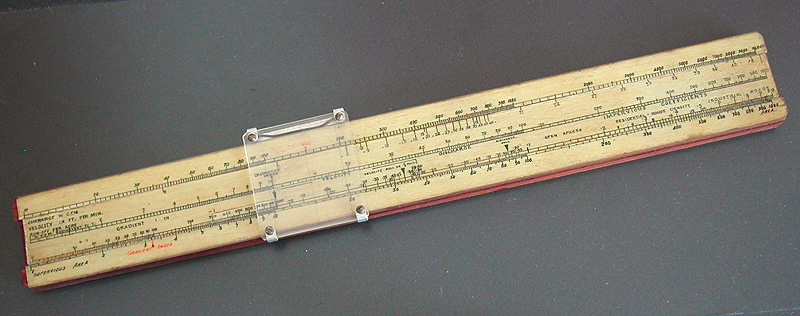
When I quit my first real job after college and was looking around a career that had some meaning to me I was really interested in woodworking and seriously though about finding a furniture maker to apprentice to. At the time (1987-ish) there was an ongoing debate in the letters section of Fine Woodworking magazine between furniture makers who used hand tools because that was the traditional way and those who used power tools. I still remember one repose stating (paraphrasing here) "the reason Thomas Chippendale didn't use a router is because he didn't have one, not because hand planes had any intrinsic value or virtue assigned to them."
Now, whether the availability of the technology, or the concept of progress in and of itself, is a moral good or not is more of an ethical rather than practical question; but this search for the point of purity is a person, philosophical question, rather than a generalized cultural one. Of course, at the same time as mentioned above (1987-ish) I also seriously considered becoming a https://en.wikipedia.org/wiki/Trappists&apos ;">Trappist, so you can see where I stand on modernity 😉
BTW - if anyone is interested in the nexus of technology and moral philosophy, this is a great journal
http://www.thenewatlantis.com/
Posted : September 18, 2017 6:35 am

Translate
▼
English
Spanish
French
German
Italian
Portuguese
Russian
Chinese
Japanese
Korean
Arabic
Hindi
Dutch
Polish
Turkish
Vietnamese
Thai
Swedish
Danish
Finnish
Norwegian
Czech
Hungarian
Romanian
Greek
Hebrew
Indonesian
Malay
Ukrainian
Bulgarian
Croatian
Slovak
Slovenian
Serbian
Lithuanian
Latvian
Estonian
James Fleming, post: 447173, member: 136 wrote: Now, whether the availability of the technology, or the concept of progress in and of itself, is a moral good or not is more of an ethical rather than practical question; but this search for the point of purity is a person, philosophical question, rather than a generalized cultural one. Of course, at the same time as mentioned above (1987-ish) I also seriously considered becoming a https://en.wikipedia.org/wiki/Trappists&apos ;">Trappist, so you can see where I stand on modernity 😉
Posted : September 18, 2017 6:43 am

Translate
▼
English
Spanish
French
German
Italian
Portuguese
Russian
Chinese
Japanese
Korean
Arabic
Hindi
Dutch
Polish
Turkish
Vietnamese
Thai
Swedish
Danish
Finnish
Norwegian
Czech
Hungarian
Romanian
Greek
Hebrew
Indonesian
Malay
Ukrainian
Bulgarian
Croatian
Slovak
Slovenian
Serbian
Lithuanian
Latvian
Estonian
I'll give Mr Ctbailey's reply a thumbs up for originality and analysis of the topic.
Everyone tends to pigeonhole types that they find to have shortcomings. "One of those types"
Everyone has a different channel to achieve learning. Your way worked for you. Your anecdotal tale doesn't remedy the situation. Formal or non formal education can have similarities or not depending the person. There are cognitive learning factors.
Classes,mentors,books,seminaronline courses, videos work on various personalities following traditional or autodidactic avenues of knowledge.
Good post
Posted : September 18, 2017 12:39 pm
Page 1 / 2
Next