Reading RPLS is free for the whole profession. Members post, reply, and get the members-only rooms.


Notifications
Clear all
Software, CAD & Mapping
9
Posts
7
Users
0
Reactions
1,938
Views

Topic starter
Translate
▼
English
Spanish
French
German
Italian
Portuguese
Russian
Chinese
Japanese
Korean
Arabic
Hindi
Dutch
Polish
Turkish
Vietnamese
Thai
Swedish
Danish
Finnish
Norwegian
Czech
Hungarian
Romanian
Greek
Hebrew
Indonesian
Malay
Ukrainian
Bulgarian
Croatian
Slovak
Slovenian
Serbian
Lithuanian
Latvian
Estonian
Running adjustments on individual sections of a control network, I find that the "Chi-Squared Upper and Lower Bounds" ranges vary widely. Sometimes it's tighter, like .835-1.165. Other times it's much larger. What controls how big this "acceptable" range is?
Btw, A joyous and peaceful Christmas to all.:-)
Posted : December 25, 2015 9:01 am

Translate
▼
English
Spanish
French
German
Italian
Portuguese
Russian
Chinese
Japanese
Korean
Arabic
Hindi
Dutch
Polish
Turkish
Vietnamese
Thai
Swedish
Danish
Finnish
Norwegian
Czech
Hungarian
Romanian
Greek
Hebrew
Indonesian
Malay
Ukrainian
Bulgarian
Croatian
Slovak
Slovenian
Serbian
Lithuanian
Latvian
Estonian
chi sq = vS sq/ residuals sq
recommended reading; adjustment computations by ghilani and wolf. bonus is the book includes a good set of LSQ software, not as easy to use as star net, but you can compute bigger networks than the star net demo (10)
good Christmas to you as well
Posted : December 25, 2015 9:24 am

Translate
▼
English
Spanish
French
German
Italian
Portuguese
Russian
Chinese
Japanese
Korean
Arabic
Hindi
Dutch
Polish
Turkish
Vietnamese
Thai
Swedish
Danish
Finnish
Norwegian
Czech
Hungarian
Romanian
Greek
Hebrew
Indonesian
Malay
Ukrainian
Bulgarian
Croatian
Slovak
Slovenian
Serbian
Lithuanian
Latvian
Estonian
The range generally will be larger for small data sets.
Posted : December 25, 2015 9:41 am

Translate
▼
English
Spanish
French
German
Italian
Portuguese
Russian
Chinese
Japanese
Korean
Arabic
Hindi
Dutch
Polish
Turkish
Vietnamese
Thai
Swedish
Danish
Finnish
Norwegian
Czech
Hungarian
Romanian
Greek
Hebrew
Indonesian
Malay
Ukrainian
Bulgarian
Croatian
Slovak
Slovenian
Serbian
Lithuanian
Latvian
Estonian
What Mark said.
Wollf & Ghilani Elementary Surveying also has enough discussion to help in the chapter on least squares.
To further explain:
The limits for 95% confidence are found from the Chi squared probability distribution, which is a lopsided bell curve, with nothing on the negative x axis, a bump at moderate x values, and a long tail. If your error distribution meets the assumptions as to being unbiased gaussian-normal with known standard errors, then this is the shape of the distribution of a summary of your errors. The test is trying to show whether ithe summary number fits well enough to have confidence that your assumptions were realistic.
r = degrees of freedom (how many redundant measurements you have). Larger r results in a tighter distribution of the error summary and so has tighter limits to pass the test.
Chisq0.025 = x value which has 2.5% of the Chi-squared distribution to the left.
Chisq0.975 = x value which has 97.5% of the distribution to the left and 2.5% in the tail to the right.
These values are tabulated in most any statistics book.
The sigma0 is that reported number that should be in the neighborhood of 1.0 if your standard errors are realistic. It is computed by looking at the residuals, the difference between your measurement and the fitted value, and summing over all your measurements:
sigma0 = sqrt(sum(residual/std err))
Then if the assumptions are true, the result will fall in this range for 95% of the cases:
sqrt(Chisq0.025 / r) < sigma0 < sqrt(Chisq0.975 /r)
If your result falls outside of this range, then we don't have enough confidence that your assumptions and standard errors were realistic.
Hope that helps.
Posted : December 25, 2015 11:54 am

Translate
▼
English
Spanish
French
German
Italian
Portuguese
Russian
Chinese
Japanese
Korean
Arabic
Hindi
Dutch
Polish
Turkish
Vietnamese
Thai
Swedish
Danish
Finnish
Norwegian
Czech
Hungarian
Romanian
Greek
Hebrew
Indonesian
Malay
Ukrainian
Bulgarian
Croatian
Slovak
Slovenian
Serbian
Lithuanian
Latvian
Estonian
Moe Shetty, post: 350604, member: 138 wrote: chi sq = vS sq/ residuals sq
recommended reading; adjustment computations by ghilani and wolf. bonus is the book includes a good set of LSQ software, not as easy to use as star net, but you can compute bigger networks than the star net demo (10)good Christmas to you as well
Is Ghilani & Wolf the best reference you're aware of on LSQ adjustment or is there another you'd recommend? The latest edition appears to be #5. Would there be any reason to buy an earlier edition?
Thanks.
Posted : December 28, 2015 2:07 pm

Translate
▼
English
Spanish
French
German
Italian
Portuguese
Russian
Chinese
Japanese
Korean
Arabic
Hindi
Dutch
Polish
Turkish
Vietnamese
Thai
Swedish
Danish
Finnish
Norwegian
Czech
Hungarian
Romanian
Greek
Hebrew
Indonesian
Malay
Ukrainian
Bulgarian
Croatian
Slovak
Slovenian
Serbian
Lithuanian
Latvian
Estonian
PentaxBob, post: 350900, member: 9494 wrote: Is Ghilani & Wolf the best reference....?
Probably. But if you are just starting out on studying LS I'm not sure it would be best to shell out that kind of money straight off the top. There is some good free or low cost stuff available you should look into first. The Trimnet manual has some really good chapters. The StarNet manual contains some worthy tidbits. Washington State's http://file.dnr.wa.gov/publications/eng_plso_relative_accuracy_guidebook.pdf&apos ;">PLSO has some documents. Ghilani's Elementary Surveying contains a good chapter on LS, and if you dig deeply enough on the internet it's available on line. Etc. Etc. Anyway, I'd dig into that first. If that doesn't quench your thirst then, by all means, go for the plunge.
Posted : December 28, 2015 5:45 pm
Translate
▼
English
Spanish
French
German
Italian
Portuguese
Russian
Chinese
Japanese
Korean
Arabic
Hindi
Dutch
Polish
Turkish
Vietnamese
Thai
Swedish
Danish
Finnish
Norwegian
Czech
Hungarian
Romanian
Greek
Hebrew
Indonesian
Malay
Ukrainian
Bulgarian
Croatian
Slovak
Slovenian
Serbian
Lithuanian
Latvian
Estonian
Norman Oklahoma, post: 350932, member: 9981 wrote: Probably. But if you are just starting out on studying LS I'm not sure it would be best to shell out that kind of money straight off the top. There is some good free or low cost stuff available you should look into first. The Trimnet manual has some really good chapters. The StarNet manual contains some worthy tidbits. Washington State's http://file.dnr.wa.gov/publications/eng_plso_relative_accuracy_guidebook.pdf&apos ;">PLSO has some documents. Ghilani's Elementary Surveying contains a good chapter on LS, and if you dig deeply enough on the internet it's available on line. Etc. Etc. Anyway, I'd dig into that first. If that doesn't quench your thirst then, by all means, go for the plunge.
I am recommending this text to RFC for these reasons: not only to cultivate the understanding of LSQ, network design, etc., but to have a software that does not limit the user to ten stations, as the star net demo module does
Posted : December 29, 2015 5:15 am

Translate
▼
English
Spanish
French
German
Italian
Portuguese
Russian
Chinese
Japanese
Korean
Arabic
Hindi
Dutch
Polish
Turkish
Vietnamese
Thai
Swedish
Danish
Finnish
Norwegian
Czech
Hungarian
Romanian
Greek
Hebrew
Indonesian
Malay
Ukrainian
Bulgarian
Croatian
Slovak
Slovenian
Serbian
Lithuanian
Latvian
Estonian
Problem with Ghilani, Adjustment Computations 5th edition and, well, the fourth, was the typos. At least you can find errata and corrections for the 4th edition online.
Still the book to have though.
Posted : December 29, 2015 5:26 am
Translate
▼
English
Spanish
French
German
Italian
Portuguese
Russian
Chinese
Japanese
Korean
Arabic
Hindi
Dutch
Polish
Turkish
Vietnamese
Thai
Swedish
Danish
Finnish
Norwegian
Czech
Hungarian
Romanian
Greek
Hebrew
Indonesian
Malay
Ukrainian
Bulgarian
Croatian
Slovak
Slovenian
Serbian
Lithuanian
Latvian
Estonian
For example;
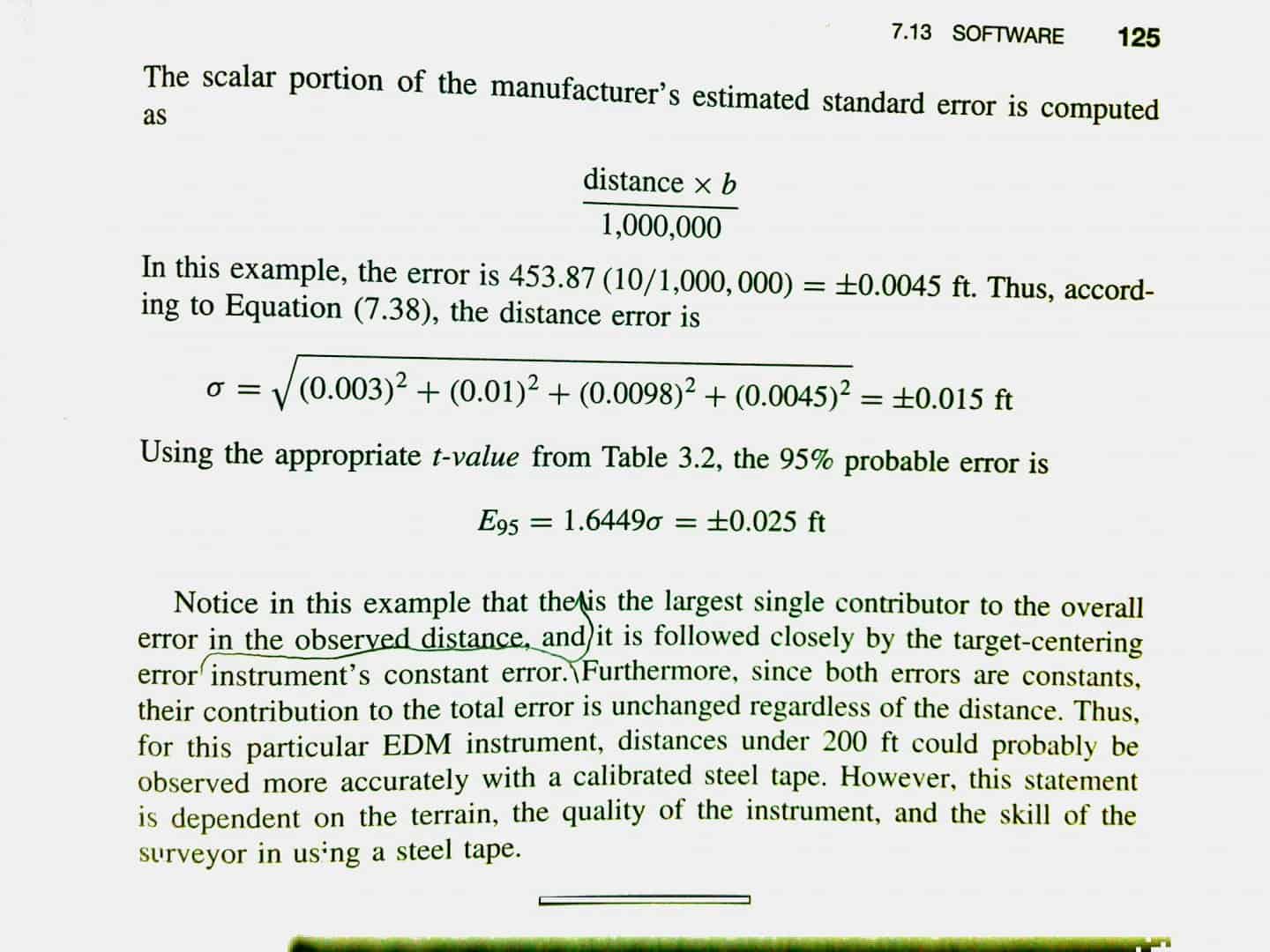
That kinda crap will drive you batty...
Posted : December 29, 2015 8:04 am