Reading RPLS is free for the whole profession. Members post, reply, and get the members-only rooms.

Notifications
Clear all

Topic starter
Translate
▼
English
Spanish
French
German
Italian
Portuguese
Russian
Chinese
Japanese
Korean
Arabic
Hindi
Dutch
Polish
Turkish
Vietnamese
Thai
Swedish
Danish
Finnish
Norwegian
Czech
Hungarian
Romanian
Greek
Hebrew
Indonesian
Malay
Ukrainian
Bulgarian
Croatian
Slovak
Slovenian
Serbian
Lithuanian
Latvian
Estonian
Utah Supreme Court Feb 16, 2016:
We therefore hold that the boundary by acquiescence doctrine
confers title by operation of law at the time the elements of the
doctrine are satisfied and that a judicial adjudication of a boundary
dispute does not grant title, but merely recognizes the title that has
already vested. The decision of the court of appeals is affirmed.
Hopefully this will put to sleep the BS that the line isn't fixed until the judge says so! Can't hide behind that anymore! THE TITLE COMPANIES HATE THIS, that's almost the best part.
Also, this is not new law just clearly stating what has been in place yet mostly ignored.
Here is the link:
http://www.utcourts.gov/opinions/supopin/Q-2%20v.%20Hughes20160216.pdf&apos ;">Q-2 v. HUGHES
Posted : February 20, 2016 8:23 pm

Translate
▼
English
Spanish
French
German
Italian
Portuguese
Russian
Chinese
Japanese
Korean
Arabic
Hindi
Dutch
Polish
Turkish
Vietnamese
Thai
Swedish
Danish
Finnish
Norwegian
Czech
Hungarian
Romanian
Greek
Hebrew
Indonesian
Malay
Ukrainian
Bulgarian
Croatian
Slovak
Slovenian
Serbian
Lithuanian
Latvian
Estonian
In Teague v. Canfield, 2014 Ark. App. 712, at 5 (citations omitted), this court held:
A boundary by acquiescence may arise when adjoining landowners tacitly accept a fence, or other monument, as the visible evidence of a property boundary and apparently consent to it. A boundary by acquiescence that is inferred from landownersÛª conduct over many years can imply the existence of an agreement about the location of the boundary line. This boundary line may exist without prior dispute. Neither the mere existence of a fence, nor one partyÛªs subjective belief that a fence is a boundary line will sustain a finding of acquiescence. An express recognition or agreement between the parties is not necessary. Tacit acceptance may suffice if a mutual recognition of the boundary line can be inferred from the partiesÛª conduct over a period of years.
No mention of actions of a Court...only actions of the land owners.
DDSM:beer:
Posted : February 20, 2016 8:37 pm

Translate
▼
English
Spanish
French
German
Italian
Portuguese
Russian
Chinese
Japanese
Korean
Arabic
Hindi
Dutch
Polish
Turkish
Vietnamese
Thai
Swedish
Danish
Finnish
Norwegian
Czech
Hungarian
Romanian
Greek
Hebrew
Indonesian
Malay
Ukrainian
Bulgarian
Croatian
Slovak
Slovenian
Serbian
Lithuanian
Latvian
Estonian
Here's what IN has to say...
Huntington v. Riggs, 862 NE 2d 1263 - Ind: Court of Appeals 2007
I wish to emphasize my view that acquiescence is not a separate theory for acquiring ownership of another person's real property not by providing compensation, but instead by openly using the land as if her or she was the true owner. It does not stand with the doctrine of adverse possession as an alternate theory to be applied in the same circumstances as adverse possession. Rather, acquiescence applies only when a specific set of circumstances exists ÛÓ circumstances in which adverse possession does not apply. That set of circumstances is this: Two adjoining property owners (1) share a good-faith belief concerning the location of the common boundary line that separates their properties and, (2) although the agreed-upon location is not in fact the actual boundary, (3) use their properties as if that boundary was the actual boundary (4) for a period of at least twenty years. It is the original agreement between the adjoining owners that takes this and all other "acquiescence" cases out of the realm of adverse possession.
This is a pretty major case in Indiana. Acquiescence has not been invoked in many cases in Indiana. There is a lot to take away from this case.
I've included it here: https://scholar.google.com/scholar_case?case=1178801056502733769&q=huntington+riggs&hl=en&as_sdt=800006&apos ;">Huntington v. Riggs
Posted : February 20, 2016 8:39 pm

Translate
▼
English
Spanish
French
German
Italian
Portuguese
Russian
Chinese
Japanese
Korean
Arabic
Hindi
Dutch
Polish
Turkish
Vietnamese
Thai
Swedish
Danish
Finnish
Norwegian
Czech
Hungarian
Romanian
Greek
Hebrew
Indonesian
Malay
Ukrainian
Bulgarian
Croatian
Slovak
Slovenian
Serbian
Lithuanian
Latvian
Estonian
I'm reading Milller & Starr California Real Estate Chapter 18-Adverse Possession right now. I figured out how to print whole Chapters to PDF using WestLaw at the Law Library. They just added Lexis Advance but I haven't used it much. WestLaw seems to have better printing options. They are offering a class in Lexis Advance in March but I don't know if I'll be able to make it.
I printed all of Cal Jur Evidence in two PDFs, about 2000 pages, just for reference.
Adverse Possession is not much use in boundary cases but it helps to be educated in it so maybe the expert can gently persuade the Attorney from driving the train into a legal swamp instead of staying on the main track to the correct doctrine given the fact pattern in the case.
Posted : February 20, 2016 8:48 pm

Translate
▼
English
Spanish
French
German
Italian
Portuguese
Russian
Chinese
Japanese
Korean
Arabic
Hindi
Dutch
Polish
Turkish
Vietnamese
Thai
Swedish
Danish
Finnish
Norwegian
Czech
Hungarian
Romanian
Greek
Hebrew
Indonesian
Malay
Ukrainian
Bulgarian
Croatian
Slovak
Slovenian
Serbian
Lithuanian
Latvian
Estonian
We therefore hold that the boundary by acquiescence doctrine
confers title by operation of law at the time the elements of the
doctrine are satisfied and that a judicial adjudication of a boundary
dispute does not grant title, but merely recognizes the title that has
already vested. The decision of the court of appeals is affirmed.
Hopefully this will put to sleep the BS that the line isn't fixed until the judge says so! Can't hide behind that anymore! THE TITLE COMPANIES HATE THIS, that's almost the best part.
Also, this is not new law just clearly stating what has been in place yet mostly ignored.
This is not a shock or a surprise to anyone who understands the boundary establishment doctrines. If the agreed/acquiesced boundary is binding on succeeding owners (with notice), how could have the title not been perfected at the time the elements of the doctrines are satisfied?
OK, we have definitively established the fact that the agreed/acquiesced line IS the "deed" line:
When such an agreement is executed and actual possession is taken under it, the parties and those claiming under them are bound thereby. In such circumstances, an agreement fixing the boundary line is not regarded as a conveyance of any land from one to the other, but merely the location of the respective existing estates and the common boundary of each of the parties. Downing v. Boehringer, 349 P.2d 306 (1960)
A boundary line established by agreement, between tracts of conterminous owners, followed by acquiescence and possession for the full statutory period of time required to acquire title by prescription, operates to establish, determine and fix the true line or division separating, and the location of, the respective estates of such conterminous owners. Mulder v. Stands, 71 Idaho 22, 225 P.2d 463;
And now we have definitively established that we do not need to "run to the judge" and have him tell us where the so called "title line" is located, can we now all agree that a failure to investigate and, when applicable, a failure to apply these doctrines when expressing our well reasoned opinion on the location of our client's boundaries, is a failure of our duty as a Professional Land Surveyor?
Negligence? Malpractice? Fraud?
Gee, I wonder how the current authors/editors of our professional treatises (Clark, E&P, and BC & Legal Principles) will handle this direct repudiation of their "opinions" of the boundary location doctrines and the duties/responsibilities of Professional Land Surveyors? Will they ignore it, attempt to repudiate it using authoritative sources and logic, or merely mock it? If how they treated Dykes v Arnold is any indication, it will be the latter.
Posted : February 20, 2016 9:31 pm
Translate
▼
English
Spanish
French
German
Italian
Portuguese
Russian
Chinese
Japanese
Korean
Arabic
Hindi
Dutch
Polish
Turkish
Vietnamese
Thai
Swedish
Danish
Finnish
Norwegian
Czech
Hungarian
Romanian
Greek
Hebrew
Indonesian
Malay
Ukrainian
Bulgarian
Croatian
Slovak
Slovenian
Serbian
Lithuanian
Latvian
Estonian
Another interesting sentence from the case cited by LRDay:
"To be sure, there will be cases in which judicial adjudication becomes necessary to resolving disputes, but a judicial adjudication of a boundary dispute does not itself confer title. Rather, it merely determines the prior point at which title vested."
Posted : February 20, 2016 9:44 pm
Translate
▼
English
Spanish
French
German
Italian
Portuguese
Russian
Chinese
Japanese
Korean
Arabic
Hindi
Dutch
Polish
Turkish
Vietnamese
Thai
Swedish
Danish
Finnish
Norwegian
Czech
Hungarian
Romanian
Greek
Hebrew
Indonesian
Malay
Ukrainian
Bulgarian
Croatian
Slovak
Slovenian
Serbian
Lithuanian
Latvian
Estonian
It's interesting the Utah case talks about conferring title where in our cases the Courts don't talk about agreed boundaries that way because no title changes, the fiction is the boundary has not moved, it's only established. The only mention of title will be with regards to the need for stability in land titles. Generalist judges seem to be perpetually confused about title vs. location.
In adverse possession, title does not pass. As soon as the statute runs, and all of the elements are satisfied, then the record title is extinguished. A new title springs forth in the adverse possessor and the Judge only recognizes that when issuing the Judgement for the possessor, usually as a result of a quiet title action. The theory is no one has a claim against the possessor therefore he must have title.
Posted : February 20, 2016 11:23 pm

Translate
▼
English
Spanish
French
German
Italian
Portuguese
Russian
Chinese
Japanese
Korean
Arabic
Hindi
Dutch
Polish
Turkish
Vietnamese
Thai
Swedish
Danish
Finnish
Norwegian
Czech
Hungarian
Romanian
Greek
Hebrew
Indonesian
Malay
Ukrainian
Bulgarian
Croatian
Slovak
Slovenian
Serbian
Lithuanian
Latvian
Estonian
Just had another case where there was a fence line, it was "off" the deed line, looks like it was stopped short of an old access road, so the people with the access took the neighbor to court to establish the line as the property line.
The defendant owns the land the road crosses by section breakdown, the plaintiff has connecting lands but can't access them along the road without crossing the 1/4 line of the defendant.
The defendant won, the court rejected the idea that ownership was established by the road and the fence, this isn't a supreme case, but it's the second one in a few years that rejected a fence line (and in this case a road) as marking ownership to the lands.
Posted : February 21, 2016 11:20 am
Translate
▼
English
Spanish
French
German
Italian
Portuguese
Russian
Chinese
Japanese
Korean
Arabic
Hindi
Dutch
Polish
Turkish
Vietnamese
Thai
Swedish
Danish
Finnish
Norwegian
Czech
Hungarian
Romanian
Greek
Hebrew
Indonesian
Malay
Ukrainian
Bulgarian
Croatian
Slovak
Slovenian
Serbian
Lithuanian
Latvian
Estonian
MightyMoe, post: 358884, member: 700 wrote: Just had another case where there was a fence line, it was "off" the deed line, looks like it was stopped short of an old access road, so the people with the access took the neighbor to court to establish the line as the property line.
The defendant owns the land the road crosses by section breakdown, the plaintiff has connecting lands but can't access them along the road without crossing the 1/4 line of the defendant.
The defendant won, the court rejected the idea that ownership was established by the road and the fence, this isn't a supreme case, but it's the second one in a few years that rejected a fence line (and in this case a road) as marking ownership to the lands.
That's not surprising. Convenience fences typically aren't held to be boundaries.
Posted : February 21, 2016 2:05 pm
Translate
▼
English
Spanish
French
German
Italian
Portuguese
Russian
Chinese
Japanese
Korean
Arabic
Hindi
Dutch
Polish
Turkish
Vietnamese
Thai
Swedish
Danish
Finnish
Norwegian
Czech
Hungarian
Romanian
Greek
Hebrew
Indonesian
Malay
Ukrainian
Bulgarian
Croatian
Slovak
Slovenian
Serbian
Lithuanian
Latvian
Estonian
Dave Karoly, post: 358903, member: 94 wrote: That's not surprising. Convenience fences typically aren't held to be boundaries.
Yes, telling the difference between a boundary and convenience is the trick. And in this case the dispute.
Posted : February 21, 2016 7:49 pm
Translate
▼
English
Spanish
French
German
Italian
Portuguese
Russian
Chinese
Japanese
Korean
Arabic
Hindi
Dutch
Polish
Turkish
Vietnamese
Thai
Swedish
Danish
Finnish
Norwegian
Czech
Hungarian
Romanian
Greek
Hebrew
Indonesian
Malay
Ukrainian
Bulgarian
Croatian
Slovak
Slovenian
Serbian
Lithuanian
Latvian
Estonian
MightyMoe, post: 358948, member: 700 wrote: Yes, telling the difference between a boundary and convenience is the trick. And in this case the dispute.
It makes sense that the fence would be on the owner's side of the road even if the boundary is on the other side of the road. Presumably the idea is to keep the livestock out of the road. We have numerous cases that find the fence was in a convenient alignment and was built to turn stock, not to be a boundary fence. This is a good example of answering a question of fact, was the fence built to be a boundary or for some other reason?
Posted : February 21, 2016 11:56 pm
Translate
▼
English
Spanish
French
German
Italian
Portuguese
Russian
Chinese
Japanese
Korean
Arabic
Hindi
Dutch
Polish
Turkish
Vietnamese
Thai
Swedish
Danish
Finnish
Norwegian
Czech
Hungarian
Romanian
Greek
Hebrew
Indonesian
Malay
Ukrainian
Bulgarian
Croatian
Slovak
Slovenian
Serbian
Lithuanian
Latvian
Estonian
Dave Karoly, post: 358957, member: 94 wrote: It makes sense that the fence would be on the owner's side of the road even if the boundary is on the other side of the road. Presumably the idea is to keep the livestock out of the road. We have numerous cases that find the fence was in a convenient alignment and was built to turn stock, not to be a boundary fence. This is a good example of answering a question of fact, was the fence built to be a boundary or for some other reason?
It's clearly a division fence, but on the other hand it probably isn't on a section breakdown, at least the GIS shows it isn't.
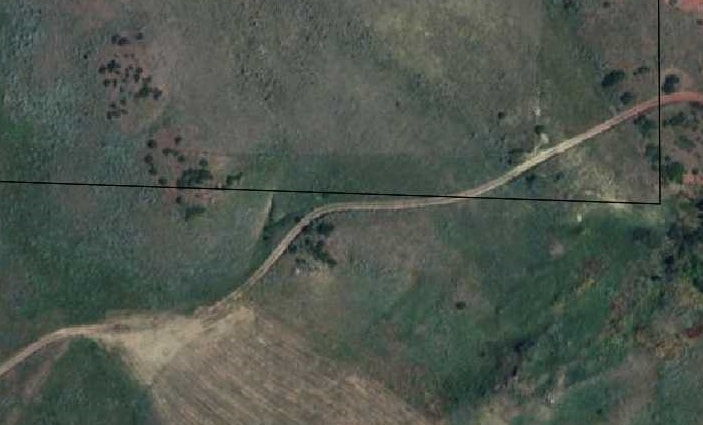
Anyway the court decided the plaintiff doesn't get the lands on their side of the fence, in the previous case the division fence went along a ridge east of the section line (at least for forty years), the person to the east wanted to put it on line, the guy to the west sued to stop him and he lost. Both cases are in the same general area.
Both of these cases are kinda slowing down the idea of adverse possession and acquiescence in this part of the world, it's gone from ranchers thinking they own without reservation to anything on their side of a fence, to them at least considering the idea that maybe those fences aren't really boundaries.
Posted : February 22, 2016 8:16 am

Translate
▼
English
Spanish
French
German
Italian
Portuguese
Russian
Chinese
Japanese
Korean
Arabic
Hindi
Dutch
Polish
Turkish
Vietnamese
Thai
Swedish
Danish
Finnish
Norwegian
Czech
Hungarian
Romanian
Greek
Hebrew
Indonesian
Malay
Ukrainian
Bulgarian
Croatian
Slovak
Slovenian
Serbian
Lithuanian
Latvian
Estonian
These instances are always interesting to me. There seems to be an idea in the general public to oversimplify situations. I think people want to hear either "fences are ALWAYS the boundary" or "fences are NEVER the boundary". But the truth is that the answer is almost always "it depends".
Posted : February 23, 2016 2:41 pm

Translate
▼
English
Spanish
French
German
Italian
Portuguese
Russian
Chinese
Japanese
Korean
Arabic
Hindi
Dutch
Polish
Turkish
Vietnamese
Thai
Swedish
Danish
Finnish
Norwegian
Czech
Hungarian
Romanian
Greek
Hebrew
Indonesian
Malay
Ukrainian
Bulgarian
Croatian
Slovak
Slovenian
Serbian
Lithuanian
Latvian
Estonian
Well.....you have to know your state
HEER v. THOLA
Based on the wording of section 650.14 and these policy considerations, we hold that the establishment of title by acquiescence is effective only on a finding by the court that the requirements for acquiescence have been met. Ûâ This finding must also establish a definite line. ÛâDe Viney, 243 Iowa at 1394, 55 N.W.2d at 481. This is so even if the prerequisites for title by acquiescence have been in existence for some time, as in this case.
Posted : February 23, 2016 5:02 pm
Topic starter
Translate
▼
English
Spanish
French
German
Italian
Portuguese
Russian
Chinese
Japanese
Korean
Arabic
Hindi
Dutch
Polish
Turkish
Vietnamese
Thai
Swedish
Danish
Finnish
Norwegian
Czech
Hungarian
Romanian
Greek
Hebrew
Indonesian
Malay
Ukrainian
Bulgarian
Croatian
Slovak
Slovenian
Serbian
Lithuanian
Latvian
Estonian
linebender, post: 359287, member: 449 wrote: Well.....you have to know your state
HEER v. THOLA
Based on the wording of section 650.14 and these policy considerations, we hold that the establishment of title by acquiescence is effective only on a finding by the court that the requirements for acquiescence have been met. Ûâ This finding must also establish a definite line. ÛâDe Viney, 243 Iowa at 1394, 55 N.W.2d at 481. This is so even if the prerequisites for title by acquiescence have been in existence for some time, as in this case.
There seems to be quite some differences in acquiescence law around the US. I really like where Utah is and it can be used to resolve a lot of issues. The courts see all this and I think sort of adapt to the need. There has been so much DIY and table top description writing down through time in Utah that very seldom does the ground reality match the paper fiction. Surveying has always been a premium service and avoided to save the expense. It's still going on - avoiding surveying in land transactions if possible. Meantime the title industry has been busy making all the paper title fit together well, you can write up from the record and make it look really good. Surveyors just got pushed aside if possible because they couldn't force the shape of the earth to fit the fiction in the recorders office.
Here we have an opportunity for surveyors to step up and save the day but I'm not expecting this to really happen. Not sure how the title folks will react, whether they will accept that a surveyor needs to find the boundary (already established) and then update the description to fit the boundary or not. I'm expecting that rather than some of the title transfer money going to surveyors instead of the title companies that the title folks with drop some legislation to override the court, they are not going to let their sweet dollars escape.
Also, I'm skeptical that many surveyors can step up to finding boundaries instead of staking deed lines. The law is fairly straight forward unless for a whole career you've believed in something else. The title industry could help a lot here by getting some good surveyors in the mix instead of trying to avoid them at all cost but old habits die hard (or don't die at all).
BUT as Linebender pointed out, you gotta know the law in YOUR state. Utah is on one side of the spectrum.
Posted : February 23, 2016 5:57 pm