Reading RPLS is free for the whole profession. Members post, reply, and get the members-only rooms.

Notifications
Clear all

Topic starter
Translate
▼
English
Spanish
French
German
Italian
Portuguese
Russian
Chinese
Japanese
Korean
Arabic
Hindi
Dutch
Polish
Turkish
Vietnamese
Thai
Swedish
Danish
Finnish
Norwegian
Czech
Hungarian
Romanian
Greek
Hebrew
Indonesian
Malay
Ukrainian
Bulgarian
Croatian
Slovak
Slovenian
Serbian
Lithuanian
Latvian
Estonian
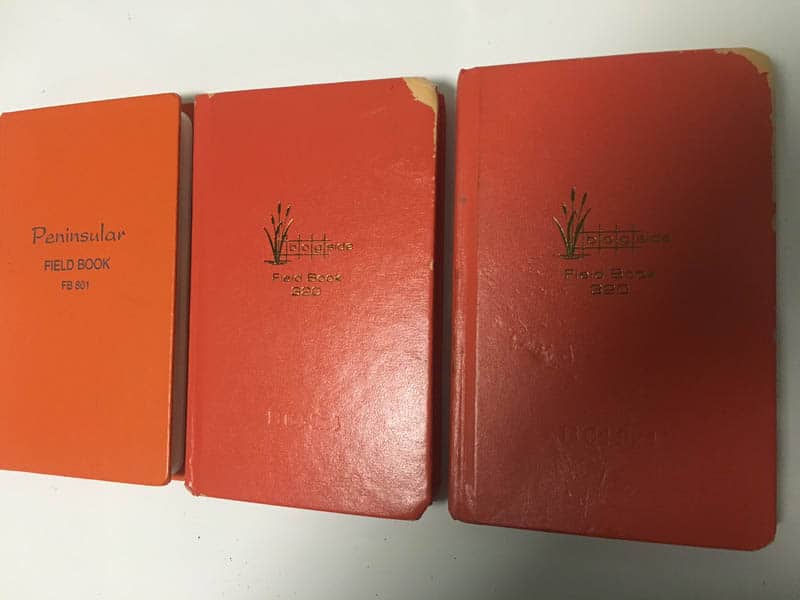
As this photo shows, unfortunately the covering on the Bogside #320 field books is inferior to that used on the Peninsular FB 801, now discontinued, that I thought they would replace. All of the field books have been carried in the inside pocket of my vest. It would be nice to convince the folks at Bogside Publishing Company to use a more durable covering, even if it means raising the price a bit.
Posted : June 20, 2017 6:32 am

Translate
▼
English
Spanish
French
German
Italian
Portuguese
Russian
Chinese
Japanese
Korean
Arabic
Hindi
Dutch
Polish
Turkish
Vietnamese
Thai
Swedish
Danish
Finnish
Norwegian
Czech
Hungarian
Romanian
Greek
Hebrew
Indonesian
Malay
Ukrainian
Bulgarian
Croatian
Slovak
Slovenian
Serbian
Lithuanian
Latvian
Estonian
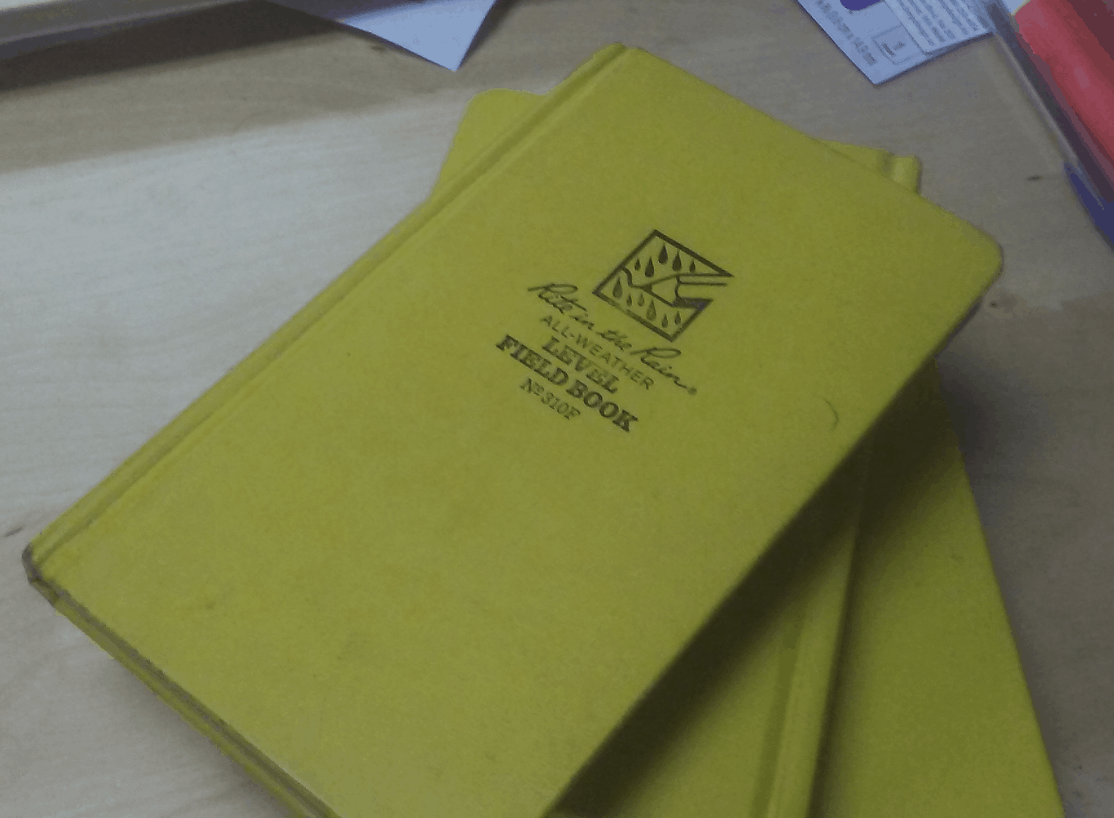
These Rite-in-the-Rains have been through the vest pocket mill. Plus they've been rained on numerous times and thoroughly soaked at least once or twice.
Posted : June 20, 2017 9:06 am

Translate
▼
English
Spanish
French
German
Italian
Portuguese
Russian
Chinese
Japanese
Korean
Arabic
Hindi
Dutch
Polish
Turkish
Vietnamese
Thai
Swedish
Danish
Finnish
Norwegian
Czech
Hungarian
Romanian
Greek
Hebrew
Indonesian
Malay
Ukrainian
Bulgarian
Croatian
Slovak
Slovenian
Serbian
Lithuanian
Latvian
Estonian
I find that the yellow book is easier to find on my desk or on the ground. Not that I am a fumbling mess or anything.
Posted : June 20, 2017 10:15 am

Translate
▼
English
Spanish
French
German
Italian
Portuguese
Russian
Chinese
Japanese
Korean
Arabic
Hindi
Dutch
Polish
Turkish
Vietnamese
Thai
Swedish
Danish
Finnish
Norwegian
Czech
Hungarian
Romanian
Greek
Hebrew
Indonesian
Malay
Ukrainian
Bulgarian
Croatian
Slovak
Slovenian
Serbian
Lithuanian
Latvian
Estonian
Mark Mayer, post: 433354, member: 424 wrote: These Rite-in-the-Rains have been through the vest pocket mill. Plus they've been rained on numerous times and thoroughly soaked at least once or twice.
I'm currently carefully drying the pages of a field book that i got caught in the rain with yesterday. Kinda wish i was using one of these.
Posted : June 20, 2017 12:18 pm

Translate
▼
English
Spanish
French
German
Italian
Portuguese
Russian
Chinese
Japanese
Korean
Arabic
Hindi
Dutch
Polish
Turkish
Vietnamese
Thai
Swedish
Danish
Finnish
Norwegian
Czech
Hungarian
Romanian
Greek
Hebrew
Indonesian
Malay
Ukrainian
Bulgarian
Croatian
Slovak
Slovenian
Serbian
Lithuanian
Latvian
Estonian
For years I have carried the LB801 (Level book) from Peninsular for use as a journal. It is small enough to fit in the back pocket of my jeans. I've had a couple where the cover separated from the pages but a little packing tape held it until the book was full.
Andy
Posted : June 20, 2017 3:01 pm

Translate
▼
English
Spanish
French
German
Italian
Portuguese
Russian
Chinese
Japanese
Korean
Arabic
Hindi
Dutch
Polish
Turkish
Vietnamese
Thai
Swedish
Danish
Finnish
Norwegian
Czech
Hungarian
Romanian
Greek
Hebrew
Indonesian
Malay
Ukrainian
Bulgarian
Croatian
Slovak
Slovenian
Serbian
Lithuanian
Latvian
Estonian
For those of us up north, Rite in the Rain books stand up well not only to rain and snow, but also to the squishy biomass of mosquito/no-see-um/white socks guts and skeeter-borne human blood that is entered into the permanent record every time the book is closed.
Posted : June 20, 2017 3:22 pm

Translate
▼
English
Spanish
French
German
Italian
Portuguese
Russian
Chinese
Japanese
Korean
Arabic
Hindi
Dutch
Polish
Turkish
Vietnamese
Thai
Swedish
Danish
Finnish
Norwegian
Czech
Hungarian
Romanian
Greek
Hebrew
Indonesian
Malay
Ukrainian
Bulgarian
Croatian
Slovak
Slovenian
Serbian
Lithuanian
Latvian
Estonian
I have no clear memory of when I first discovered Rite in the Rain. I first used the loose leaf pages, then later the bound books. They are not cheap, but they do last and last and last.
even when it is as dry as a popcorn fart I use them, sweat is also an obsticle
Posted : June 20, 2017 8:28 pm
Topic starter
Translate
▼
English
Spanish
French
German
Italian
Portuguese
Russian
Chinese
Japanese
Korean
Arabic
Hindi
Dutch
Polish
Turkish
Vietnamese
Thai
Swedish
Danish
Finnish
Norwegian
Czech
Hungarian
Romanian
Greek
Hebrew
Indonesian
Malay
Ukrainian
Bulgarian
Croatian
Slovak
Slovenian
Serbian
Lithuanian
Latvian
Estonian
Mark Mayer, post: 433354, member: 424 wrote: These Rite-in-the-Rains have been through the vest pocket mill. Plus they've been rained on numerous times and thoroughly soaked at least once or twice.
I think that I bought one Rite-in-the-Rain fieldbook once, but as best I can recall, the tooth of the paper was a bit problematic. I'd think that for a couple of extra bucks the folks at Bogside Publishing could cover their field books with something a good bit sturdier. There pretty much have to be standard cover fabrics sold to book binders for all sorts of purpposes, fabrics that can be bought off the shelf with zero R & D effort.
Posted : June 20, 2017 9:03 pm

Translate
▼
English
Spanish
French
German
Italian
Portuguese
Russian
Chinese
Japanese
Korean
Arabic
Hindi
Dutch
Polish
Turkish
Vietnamese
Thai
Swedish
Danish
Finnish
Norwegian
Czech
Hungarian
Romanian
Greek
Hebrew
Indonesian
Malay
Ukrainian
Bulgarian
Croatian
Slovak
Slovenian
Serbian
Lithuanian
Latvian
Estonian
The book below is pretty typical for me: it spent about a year in my inside vest pocket. The cover fabric is smudged here and there, but still intact.

Posted : June 20, 2017 9:21 pm
Translate
▼
English
Spanish
French
German
Italian
Portuguese
Russian
Chinese
Japanese
Korean
Arabic
Hindi
Dutch
Polish
Turkish
Vietnamese
Thai
Swedish
Danish
Finnish
Norwegian
Czech
Hungarian
Romanian
Greek
Hebrew
Indonesian
Malay
Ukrainian
Bulgarian
Croatian
Slovak
Slovenian
Serbian
Lithuanian
Latvian
Estonian
Kent McMillan, post: 433425, member: 3 wrote: the tooth of the paper was a bit problematic.
The paper is a bit rough. Switching to an H pencil may improve your experience with it.
Posted : June 20, 2017 9:23 pm
Topic starter
Translate
▼
English
Spanish
French
German
Italian
Portuguese
Russian
Chinese
Japanese
Korean
Arabic
Hindi
Dutch
Polish
Turkish
Vietnamese
Thai
Swedish
Danish
Finnish
Norwegian
Czech
Hungarian
Romanian
Greek
Hebrew
Indonesian
Malay
Ukrainian
Bulgarian
Croatian
Slovak
Slovenian
Serbian
Lithuanian
Latvian
Estonian
Mark Mayer, post: 433429, member: 424 wrote: The paper is a bit rough. Switching to an H pencil may improve your experience with it.
I use H leads. Maybe 2H are needed. It seems to me that erasures on sketches were also a problem with the Rite-in-the-Rain fieldbooks, but I may be misremembering that detail.
Posted : June 20, 2017 9:56 pm
Topic starter
Translate
▼
English
Spanish
French
German
Italian
Portuguese
Russian
Chinese
Japanese
Korean
Arabic
Hindi
Dutch
Polish
Turkish
Vietnamese
Thai
Swedish
Danish
Finnish
Norwegian
Czech
Hungarian
Romanian
Greek
Hebrew
Indonesian
Malay
Ukrainian
Bulgarian
Croatian
Slovak
Slovenian
Serbian
Lithuanian
Latvian
Estonian
Jim Frame, post: 433428, member: 10 wrote: The book below is pretty typical for me: it spent about a year in my inside vest pocket. The cover fabric is smudged here and there, but still intact.
Okay, but knowing the Frame Economic Model, may I assume that was a field book purchased on eBay that you then had to erase various entries from that the previous owner had made? Is the Leonardo da Vinci method of overwriting at different angles really all that economical when you factor in the time needed to actually read what was overwritten? :>
Posted : June 20, 2017 10:03 pm

Translate
▼
English
Spanish
French
German
Italian
Portuguese
Russian
Chinese
Japanese
Korean
Arabic
Hindi
Dutch
Polish
Turkish
Vietnamese
Thai
Swedish
Danish
Finnish
Norwegian
Czech
Hungarian
Romanian
Greek
Hebrew
Indonesian
Malay
Ukrainian
Bulgarian
Croatian
Slovak
Slovenian
Serbian
Lithuanian
Latvian
Estonian
I can't erase in my rite in rain books. Pretty annoying. Good books otherwise.
Posted : June 20, 2017 10:03 pm
Translate
▼
English
Spanish
French
German
Italian
Portuguese
Russian
Chinese
Japanese
Korean
Arabic
Hindi
Dutch
Polish
Turkish
Vietnamese
Thai
Swedish
Danish
Finnish
Norwegian
Czech
Hungarian
Romanian
Greek
Hebrew
Indonesian
Malay
Ukrainian
Bulgarian
Croatian
Slovak
Slovenian
Serbian
Lithuanian
Latvian
Estonian
Shawn Billings, post: 433436, member: 6521 wrote: I can't erase in my rite in rain books. Pretty annoying. Good books otherwise.
I was taught from the beginning that erasures in a field book were a big no-no. Strikethroughs and corrections were appropriate. Of course the head of the Surveying Department where I went to school wanted no less than 6H lead too. When you handed on a field book he was likely to lick his thumb and wipe it across the page. If it smeared you received a stern "talking to".
Andy
Posted : June 21, 2017 6:24 am
Topic starter
Translate
▼
English
Spanish
French
German
Italian
Portuguese
Russian
Chinese
Japanese
Korean
Arabic
Hindi
Dutch
Polish
Turkish
Vietnamese
Thai
Swedish
Danish
Finnish
Norwegian
Czech
Hungarian
Romanian
Greek
Hebrew
Indonesian
Malay
Ukrainian
Bulgarian
Croatian
Slovak
Slovenian
Serbian
Lithuanian
Latvian
Estonian
Andy Bruner, post: 433461, member: 1123 wrote: I was taught from the beginning that erasures in a field book were a big no-no.
Erasures on sketches are always acceptable as long as it's a clean erasure, not a smudge job. Otherwise, the alternative is to void the entire sketch and start again, which is usually not a very good choice.
Posted : June 21, 2017 6:32 am
Translate
▼
English
Spanish
French
German
Italian
Portuguese
Russian
Chinese
Japanese
Korean
Arabic
Hindi
Dutch
Polish
Turkish
Vietnamese
Thai
Swedish
Danish
Finnish
Norwegian
Czech
Hungarian
Romanian
Greek
Hebrew
Indonesian
Malay
Ukrainian
Bulgarian
Croatian
Slovak
Slovenian
Serbian
Lithuanian
Latvian
Estonian
Andy Bruner, post: 433461, member: 1123 wrote: I was taught from the beginning that erasures in a field book were a big no-no. Strikethroughs and corrections were appropriate. Of course the head of the Surveying Department where I went to school wanted no less than 6H lead too. When you handed on a field book he was likely to lick his thumb and wipe it across the page. If it smeared you received a stern "talking to".
Andy
I've always considered that to be urban legend. I've heard a lot of surveyors suggest it is illegal to erase in a field book! No one has ever offered any evidence of a surveyor being penalized for having erasures in the book. I have nothing against surveyors who impose strict "no erasure" policies, but I do have an aversion to bullsh!t, and a lot of those who were warning about legal ramifications for erasures were spreading manure (wittingly or otherwise).
These days, my field book is used as a handy scratch pad and contains nothing like the notes I would take in the pre- data collector, pre- RTK days of my career, so I'm not really concerned about neatness anymore, just legibility that will last long enough for me to draw up the plat.
Posted : June 21, 2017 7:19 am

Translate
▼
English
Spanish
French
German
Italian
Portuguese
Russian
Chinese
Japanese
Korean
Arabic
Hindi
Dutch
Polish
Turkish
Vietnamese
Thai
Swedish
Danish
Finnish
Norwegian
Czech
Hungarian
Romanian
Greek
Hebrew
Indonesian
Malay
Ukrainian
Bulgarian
Croatian
Slovak
Slovenian
Serbian
Lithuanian
Latvian
Estonian
In the 70s I bought 4 Pentax field books and have only used a few pages for a 3k ft survey to mark a boundary.
After that I switched to loose leafs.
I do not like to erase angle readings and distances measured.
When wrong, I draw a line thru and then write the actual reading.
If I have messed up the sketch, I will erase and get that drawn correctly.
In college, no erasures were allowed for any reason.
Posted : June 21, 2017 8:05 am

Translate
▼
English
Spanish
French
German
Italian
Portuguese
Russian
Chinese
Japanese
Korean
Arabic
Hindi
Dutch
Polish
Turkish
Vietnamese
Thai
Swedish
Danish
Finnish
Norwegian
Czech
Hungarian
Romanian
Greek
Hebrew
Indonesian
Malay
Ukrainian
Bulgarian
Croatian
Slovak
Slovenian
Serbian
Lithuanian
Latvian
Estonian
When I went through Fort Sill Artillery surveying course, the mere sight of an eraser on the end of a pencil would land you in the front leaning rest.
Ask me some time how we gamed the polaris/kochab observations.
Posted : June 21, 2017 8:18 am
Translate
▼
English
Spanish
French
German
Italian
Portuguese
Russian
Chinese
Japanese
Korean
Arabic
Hindi
Dutch
Polish
Turkish
Vietnamese
Thai
Swedish
Danish
Finnish
Norwegian
Czech
Hungarian
Romanian
Greek
Hebrew
Indonesian
Malay
Ukrainian
Bulgarian
Croatian
Slovak
Slovenian
Serbian
Lithuanian
Latvian
Estonian
Daniel Ralph, post: 433362, member: 8817 wrote: I find that the yellow book is easier to find on my desk or on the ground. Not that I am a fumbling mess or anything.
I'm the opposite. Orange stands right out to me. Yellow and blue, not so much, especially in the field. Thought about painting all my tripods orange.
Posted : June 21, 2017 8:40 am

Translate
▼
English
Spanish
French
German
Italian
Portuguese
Russian
Chinese
Japanese
Korean
Arabic
Hindi
Dutch
Polish
Turkish
Vietnamese
Thai
Swedish
Danish
Finnish
Norwegian
Czech
Hungarian
Romanian
Greek
Hebrew
Indonesian
Malay
Ukrainian
Bulgarian
Croatian
Slovak
Slovenian
Serbian
Lithuanian
Latvian
Estonian
Rite-In-The-Rain
These are very durable and I've used them for years. The drawback is that the coating and surface treatment that makes the pages water resistant also makes it very easy to smudge and smear your entries. H lead is way too soft to use with these books. 2H is better, but still smudges. 4H is better with regard to smudging, but once you start getting into such hard leads, you have to press harder to make writing and lines dark enough to easily read.
When working in areas where I don't expect to be working in much or any wet weather, I prefer books with standard paper. I have some transit books by ELAN, but have the same issue with the cover material as Kent pointed out in the OP. I have some older field books that have a more durable cover at home, but don't recall the brand.
Erasures
I've heard that thing about erasures being illegal as well. I don't know if that stuff starts with the teller having misunderstood what he had been told many years previous, or if it's that some think they need to exaggerate the gravity of the principle to get their subordinates to take it seriously.
What I was taught that's credible is that field notes with erasures in them cast doubt on their veracity. That is, if there is some question as to the accuracy or quality of the work done, the presence of eraser marks casts doubt as to whether or not they were pencil-whipped after the fact in order to correct and hide mistakes which may have been there. If mistakes, whether of entry or of observation are crossed out and the new & corrected observation or entry made nearby, it is clear that the correction was made at the time of making the observation and not at some later time, and it is plain that nothing is being hidden by manipulating the work record.
I've testified in one case where field notes were discussed and called into question. In that case though, it was electronic field notes rather than field book notes. It was a licensing disciplinary case and the respondent licensee hadn't kept any notes by hand. It was also fairly clear for someone familiar with that DC software, even in the printout, that he had made several not very clever alterations to his field file to make the data appear different than it originally was.
With a DC file, it takes an expert, someone familiar with the particular program to spot and explain note manipulation. An eraser mark in a field book doesn't take such expertise.
However, prior to that case, I had never heard of a case where the surveyor's field notes were at issue. Even though field notes rarely are at issue in most survey cases (exceptions being where the notes are the public record - i.e. GLO Notes, or licensing disciplinary cases which are administrative so don't typically get much attention beyond the parties directly involved), most surveyors realize that it is a possibility, albeit unlikely for any project we work on.
I've always worked by the standard that (very) minor erasures in sketches is OK, but beyond that, cross out the mistake and put the new data entry(ies) on the same page if you have room, or on the next available page.
Posted : June 21, 2017 10:52 am
Page 1 / 3
Next