

So I thought I had learned the "do not erase" in my "survey of surveying" AKA "surveying for those not doing a surveying concentration/degree" course at Ohio State so I went to the textbook to check.
Davis, Foote, Anderson, and Mikhail. Surveying: Theory and Practice 6th Edition. Copyright is 1981, but was purchased in 1991.
In article 3.14, "Recording data".
Paraphrasing the start: use a 4H pencil and Reinhardt slope lettering is suggested. "Office entries of reduced or corrected values should be made in red ink."
It goes on to say:
"The figures used should be plain; one figure should never be written over another. In general, numerical data should not be erased; if a number is in error, a line should be drawn through it, and the corrected value written above." (italics are in the original)
It later says that if a page is abandoned, to write VOID diagonally across it and reference the number of the next valid page.
In an earlier article (3.13 "Notebook") there is a note that loose leaf notebooks has the disadvantage that "there may be difficulty in establishing the identity of the data in court, as compared with a bound book."
I also have an inherited book from 1987.
Moffitt and Bouchard. Surveying. 8th Edition. Has similar statements, "No erasures should be made, because such notes will be under suspicion of having been altered."

mkennedy, post: 433568, member: 7183 wrote: So I thought I had learned the "do not erase" in my "survey of surveying" AKA "surveying for those not doing a surveying concentration/degree" course at Ohio State so I went to the textbook to check.
Davis, Foote, Anderson, and Mikhail. Surveying: Theory and Practice 6th Edition. Copyright is 1981, but was purchased in 1991.
In article 3.14, "Recording data".
Paraphrasing the start: use a 4H pencil and Reinhardt slope lettering is suggested. "Office entries of reduced or corrected values should be made in red ink."
It goes on to say:
"The figures used should be plain; one figure should never be written over another. In general, numerical data should not be erased; if a number is in error, a line should be drawn through it, and the corrected value written above." (italics are in the original)
It later says that if a page is abandoned, to write VOID diagonally across it and reference the number of the next valid page.
In an earlier article (3.13 "Notebook") there is a note that loose leaf notebooks has the disadvantage that "there may be difficulty in establishing the identity of the data in court, as compared with a bound book."
I also have an inherited book from 1987.
Moffitt and Bouchard. Surveying. 8th Edition. Has similar statements, "No erasures should be made, because such notes will be under suspicion of having been altered."
Love that book--I have the 7th edition, which by then was just Anderson and Mikhail. Forgive the following anecdote:
I had coveted this book for a while, but because it wasn't a required text for any of my courses at Penn State, I had never shelled out the substantial (but fair) sum to acquire it. Then about 10 years ago, my wife and I were in Nairobi and happened to pass by a sidewalk bookseller who literally had his wares arranged on the sidewalk at ground level. And there it was, still in shrink wrap, for USD 20 equivalent! I couldn't believe my luck, though I feel just slightly bad that someone, somewhere along the way got ripped off.

FrozenNorth, post: 433393, member: 10219 wrote: For those of us up north, Rite in the Rain books stand up well not only to rain and snow, but also to the squishy biomass of mosquito/no-see-um/white socks guts and skeeter-borne human blood that is entered into the permanent record every time the book is closed.
A poem for the bug hunters
Ode to the Mosquito
by M. Barber
Art work by Eddy and Harry
Mosquito, mosquito how we love you
You buzz divinely and dance to and fro
You steal our blood and make us itch
We like squishing you - you son of a bitch.

Steve Boon, post: 433571, member: 416 wrote: A poem for the bug hunters
Ode to the Mosquito
by M. Barber
Art work by Eddy and HarryMosquito, mosquito how we love you
You buzz divinely and dance to and fro
You steal our blood and make us itch
We like squishing you - you son of a bitch.
Excellent poetry! I thought I was gonna get carried away by them son of bitches today.

Steve Boon, post: 433571, member: 416 wrote: You steal our blood and make us itch
We like squishing you - you son of a bitch.
It's not the sons of bitches that bite you, it's the bitches themselves.

As a footnote to the erasure discussion. One of the fundamental tools to carry on one's person when a mechanical pencil with H lead is to be used to draw or write in a field book is a soft mylar eraser similar to what Staedtler sells.
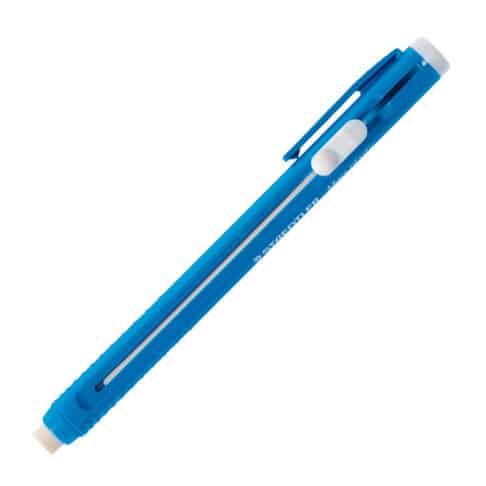
If your field book is ever used as evidence in court, chances are that you will produce a scan or photocopy of it. So, presenting a clean field book free of cross-outs and misfires and other spasms is to be desired.

Do you think that shrink wrap plastic could be applied to make a waterproof cover?
How about those sticker book covers?
I agree, do not erase. If there is an error, cross it out.

I like loose leaf. The pages can be taken out and scanned easily, then stored with my DC, processing, and CAD files. After scanning, I staple the corner and put them in a file with other paper documents from the job. Also, they don't go back in the field on another job where they may get wet, lost, damaged, or stolen.
Sent from my iPhone using Tapatalk
spledeus, post: 433621, member: 3579 wrote: Do you think that shrink wrap plastic could be applied to make a waterproof cover?
How about those sticker book covers?
I think that it would be possible to spend enough time tinkering with the Bogside field book that a $6.00 field book might become a $60.00 field book. I'd settle for finding a $10.00 field book that was as good as the Peninsular FB 801 that I've used for years.

Kent McMillan, post: 433632, member: 3 wrote: I think that it would be possible to spend enough time tinkering with the Bogside field book that a $6.00 field book might become a $60.00 field book. I'd settle for finding a $10.00 field book that was as good as the Peninsular FB 801 that I've used for years.
https://www.karaco.com/peninsular-field-book-fb-801/
N10,000, E7,000, Z100.00
PLS - IL, MO, AR, KS, MN, KY
Kent McMillan, post: 433632, member: 3 wrote: I think that it would be possible to spend enough time tinkering with the Bogside field book that a $6.00 field book might become a $60.00 field book. I'd settle for finding a $10.00 field book that was as good as the Peninsular FB 801 that I've used for years.
But the sticker book covers come in pink sparkle color... you would not lose it and you would be welcome in certain liberal communities.
Sent from my SM-G930V using Tapatalk
StLSurveyor, post: 433633, member: 7070 wrote: https://www.karaco.com/peninsular-field-book-fb-801/
Thanks. When I heard that Peninsular had either gone out of business or quit making field books, it didn't occur to me that some vendors might still have stocks of them. I just ordered four.

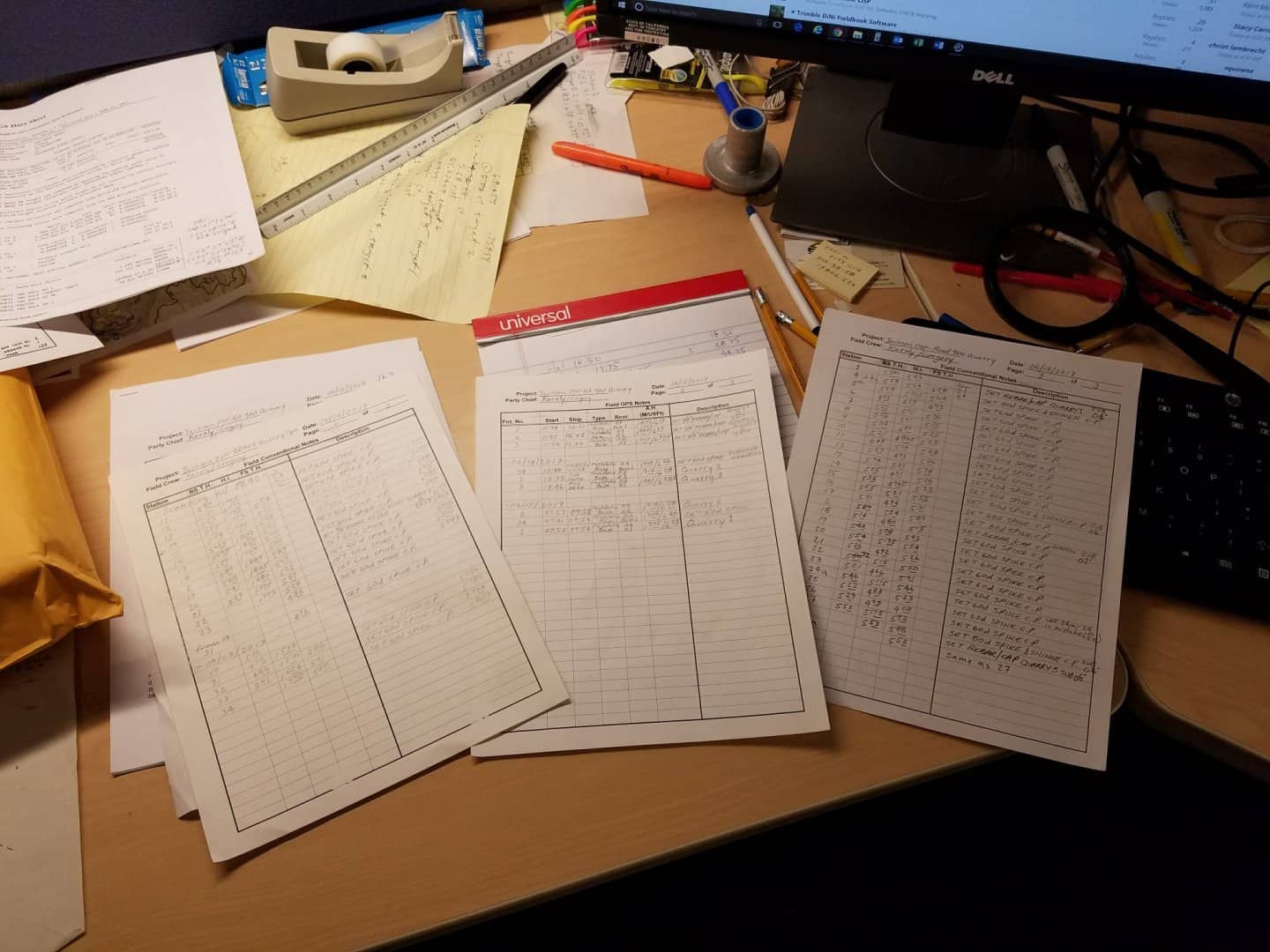
I use my own forms printed on cardstock, on a clipboard. They are letter size so easy to keep in the file, copy, and scan. I also have half-letter size forms on cardstock (cut in half); I carry a slightly larger level book which is perfect for putting my half size form in. Then I can pull the form out and write on top of the book. This is for work in the woods where I don't want to carry my clipboard. I have a Conventional (total station) form, GPS form, and level form.

Kent McMillan, post: 433432, member: 3 wrote: I use H leads. Maybe 2H are needed. It seems to me that erasures on sketches were also a problem with the Rite-in-the-Rain fieldbooks, but I may be misremembering that detail.
Our company goes back a few years, and it seems that no one used to fill up field books. Many were used exclusively for a single project, then put on the shelf. So, sometimes one of these field books come out for some reason or another. The problem of writing and erasing in the new books is a real thing. The older Rite-In-The-Rain books (think pre-1990, it appears we started using that brand around 1980 or so) are much easier to write and erase in. I am not sure why, if the paper changes as it ages, or there is a new formula.
I actually prefer softer pencils in them. Keeping the graphite from pushing through the protective layer seems to be the key to getting good erasures. I have erased until the blue lines came away, and still seen pencil marks in a newer book.

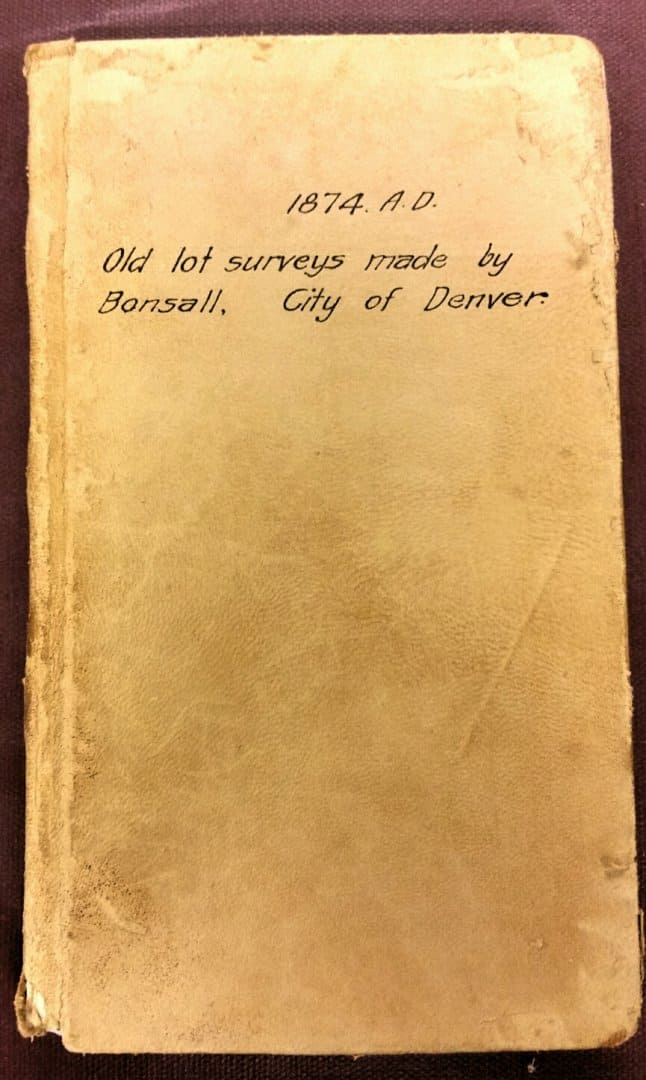 This one is in pretty good shape given its age. Can't find a maker on the inside. Probably a local printer.
Rubrew, post: 434292, member: 954 wrote:
Nice that they identified the date as "A.D." in order that the book wouldn't be filed with the "B.C." records.
Kent McMillan, post: 434324, member: 3 wrote: Nice that they identified the date as "A.D." in order that the book wouldn't be filed with the "B.C." records.
A.D. At Denver
Rubrew, post: 434331, member: 954 wrote: A.D. At Denver
So, would "B.C." be "Before Colorado", meaning : when Colorado was part of Texas?

Shawn Billings, post: 433436, member: 6521 wrote: I can't erase in my rite in rain books. Pretty annoying. Good books otherwise.
Pink Pearl type erasers, being a little more abrasive, erase marks on Rite-in-the-Rain effectively.
Thank you [USER=424]@Mark Mayer[/USER]