Reading RPLS is free for the whole profession. Members post, reply, and get the members-only rooms.

Notifications
Clear all

Topic starter
Translate
▼
English
Spanish
French
German
Italian
Portuguese
Russian
Chinese
Japanese
Korean
Arabic
Hindi
Dutch
Polish
Turkish
Vietnamese
Thai
Swedish
Danish
Finnish
Norwegian
Czech
Hungarian
Romanian
Greek
Hebrew
Indonesian
Malay
Ukrainian
Bulgarian
Croatian
Slovak
Slovenian
Serbian
Lithuanian
Latvian
Estonian
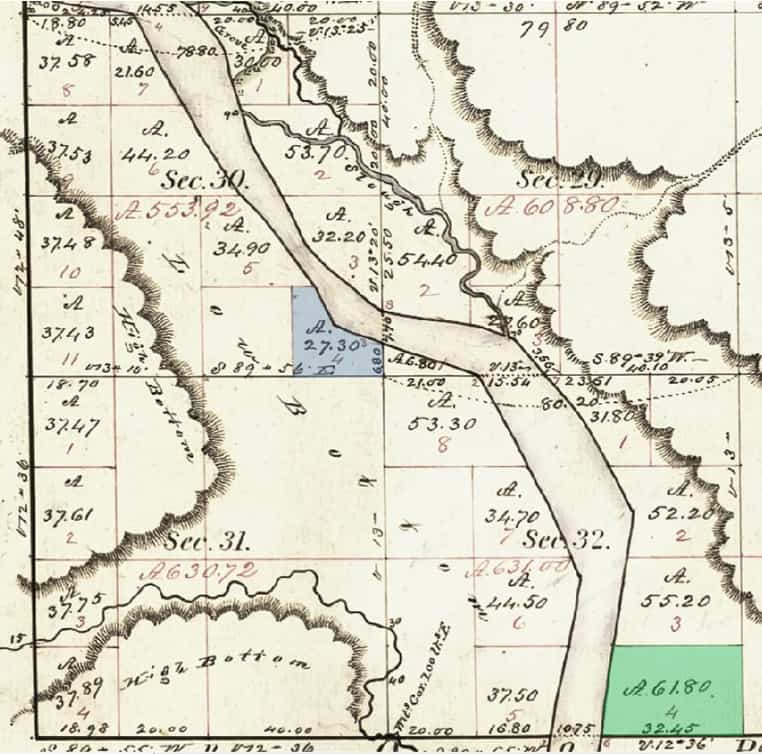
I am trying to figure out if there was a set rule for fractional lot size. In many cases if an aliquot lot could be made with 40 acres within a section it was not given a lot number. However, in the example here from 1870, Lot 4 in Section 32 has 61.80 acres. Lot 4 in Section 30 has 27.30 acres and the SW 1/4, SE 1/4 was left alone as an aliquot part and not numbered instead of making Lot 4 to be 67.30 acres. An aliquot part of Section 32 could have been made with Lot 4 adjacent to the river having 21.80 acres. What was the rule here for determining when to cut off or include acreage for a lot?
Posted : August 31, 2017 11:06 am

Translate
▼
English
Spanish
French
German
Italian
Portuguese
Russian
Chinese
Japanese
Korean
Arabic
Hindi
Dutch
Polish
Turkish
Vietnamese
Thai
Swedish
Danish
Finnish
Norwegian
Czech
Hungarian
Romanian
Greek
Hebrew
Indonesian
Malay
Ukrainian
Bulgarian
Croatian
Slovak
Slovenian
Serbian
Lithuanian
Latvian
Estonian
[SARCASM]Oh come on now Jerry, just get out the Cookie Cutter "How to Survey in the simple PLSS System" book everyone knows we have and it will answer your basic question. You are just giving all those Texas and Metes and Bounds surveyors more ammo to support their superior position.[/SARCASM]
Other than that, I don't know the answer.
Posted : August 31, 2017 11:31 am

Translate
▼
English
Spanish
French
German
Italian
Portuguese
Russian
Chinese
Japanese
Korean
Arabic
Hindi
Dutch
Polish
Turkish
Vietnamese
Thai
Swedish
Danish
Finnish
Norwegian
Czech
Hungarian
Romanian
Greek
Hebrew
Indonesian
Malay
Ukrainian
Bulgarian
Croatian
Slovak
Slovenian
Serbian
Lithuanian
Latvian
Estonian
As I recall (probably erroneously), the 1855 Manual discouraged Lots LESS Than 20 acres (or something like that). I should probably look that up!
Loyal
Posted : August 31, 2017 11:45 am

Translate
▼
English
Spanish
French
German
Italian
Portuguese
Russian
Chinese
Japanese
Korean
Arabic
Hindi
Dutch
Polish
Turkish
Vietnamese
Thai
Swedish
Danish
Finnish
Norwegian
Czech
Hungarian
Romanian
Greek
Hebrew
Indonesian
Malay
Ukrainian
Bulgarian
Croatian
Slovak
Slovenian
Serbian
Lithuanian
Latvian
Estonian
Loyal, post: 444279, member: 228 wrote: As I recall (probably erroneously), the 1855 Manual discouraged Lots LESS Than 20 acres (or something like that). I should probably look that up!
Loyal
Loyal is correct. The answer probably lies either in the manual that was current at the time of the survey or possibly some special instructions they were working under (good luck finding any of those...).
Posted : August 31, 2017 12:06 pm
Topic starter
Translate
▼
English
Spanish
French
German
Italian
Portuguese
Russian
Chinese
Japanese
Korean
Arabic
Hindi
Dutch
Polish
Turkish
Vietnamese
Thai
Swedish
Danish
Finnish
Norwegian
Czech
Hungarian
Romanian
Greek
Hebrew
Indonesian
Malay
Ukrainian
Bulgarian
Croatian
Slovak
Slovenian
Serbian
Lithuanian
Latvian
Estonian
Posted : August 31, 2017 12:11 pm
Topic starter
Translate
▼
English
Spanish
French
German
Italian
Portuguese
Russian
Chinese
Japanese
Korean
Arabic
Hindi
Dutch
Polish
Turkish
Vietnamese
Thai
Swedish
Danish
Finnish
Norwegian
Czech
Hungarian
Romanian
Greek
Hebrew
Indonesian
Malay
Ukrainian
Bulgarian
Croatian
Slovak
Slovenian
Serbian
Lithuanian
Latvian
Estonian
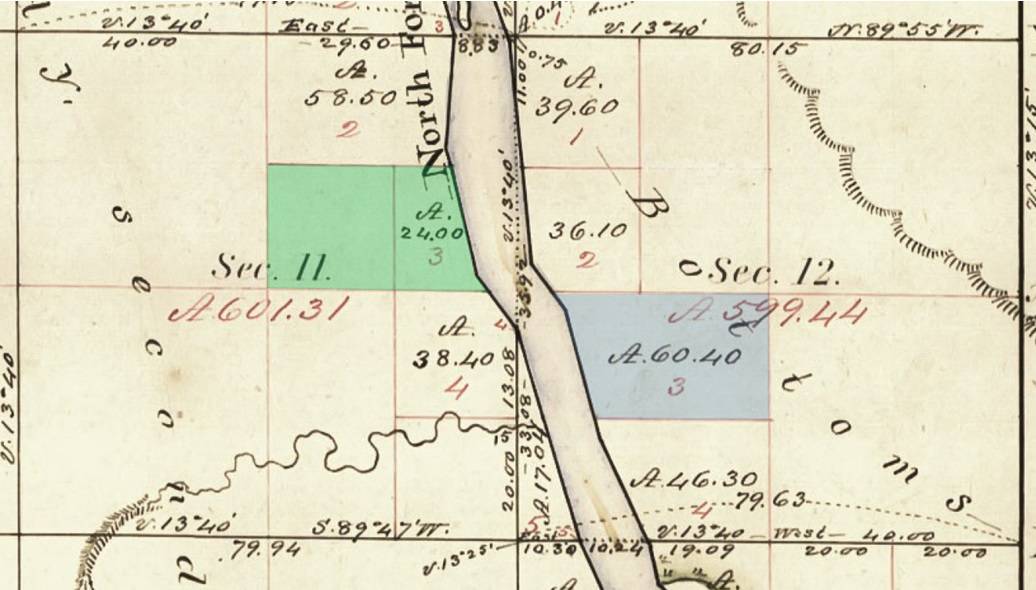
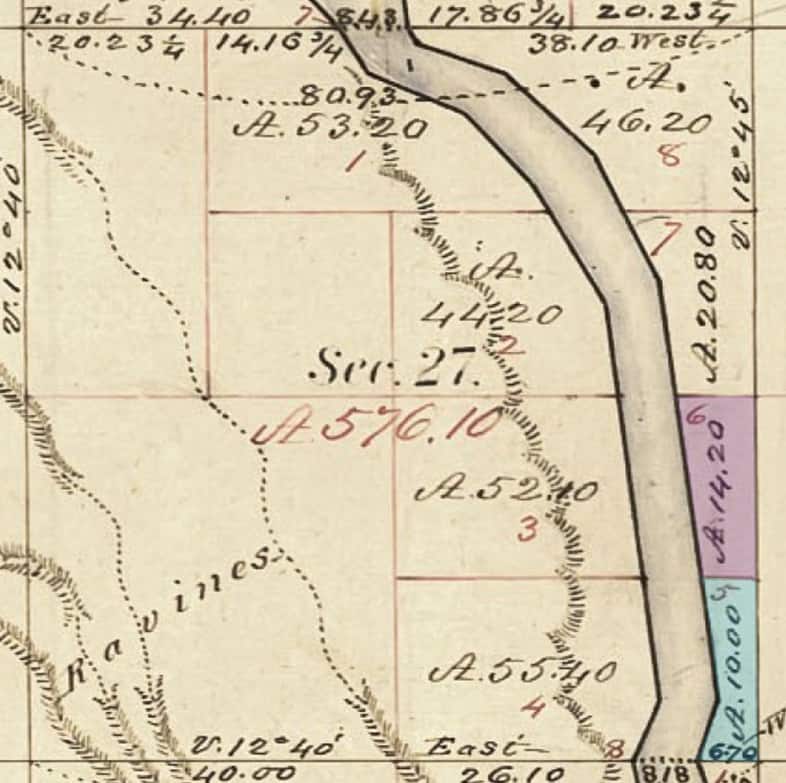
This call would have probably been at the discretion of the draftsman in the office. Has anyone ever seen "Instructions to Draughtsmen"?
Posted : August 31, 2017 12:12 pm

Translate
▼
English
Spanish
French
German
Italian
Portuguese
Russian
Chinese
Japanese
Korean
Arabic
Hindi
Dutch
Polish
Turkish
Vietnamese
Thai
Swedish
Danish
Finnish
Norwegian
Czech
Hungarian
Romanian
Greek
Hebrew
Indonesian
Malay
Ukrainian
Bulgarian
Croatian
Slovak
Slovenian
Serbian
Lithuanian
Latvian
Estonian
Probably has something to do with the S1/4 of S32 no being in place
Posted : August 31, 2017 12:20 pm
Translate
▼
English
Spanish
French
German
Italian
Portuguese
Russian
Chinese
Japanese
Korean
Arabic
Hindi
Dutch
Polish
Turkish
Vietnamese
Thai
Swedish
Danish
Finnish
Norwegian
Czech
Hungarian
Romanian
Greek
Hebrew
Indonesian
Malay
Ukrainian
Bulgarian
Croatian
Slovak
Slovenian
Serbian
Lithuanian
Latvian
Estonian
J. Penry, post: 444285, member: 321 wrote: This call would have probably been at the discretion of the draftsman in the office. Has anyone ever seen "Instructions to Draughtsmen"?
Someone would have ask Keith Williams. I think that's about the time he started drafting for them in between semesters.
Posted : August 31, 2017 12:20 pm
Topic starter
Translate
▼
English
Spanish
French
German
Italian
Portuguese
Russian
Chinese
Japanese
Korean
Arabic
Hindi
Dutch
Polish
Turkish
Vietnamese
Thai
Swedish
Danish
Finnish
Norwegian
Czech
Hungarian
Romanian
Greek
Hebrew
Indonesian
Malay
Ukrainian
Bulgarian
Croatian
Slovak
Slovenian
Serbian
Lithuanian
Latvian
Estonian
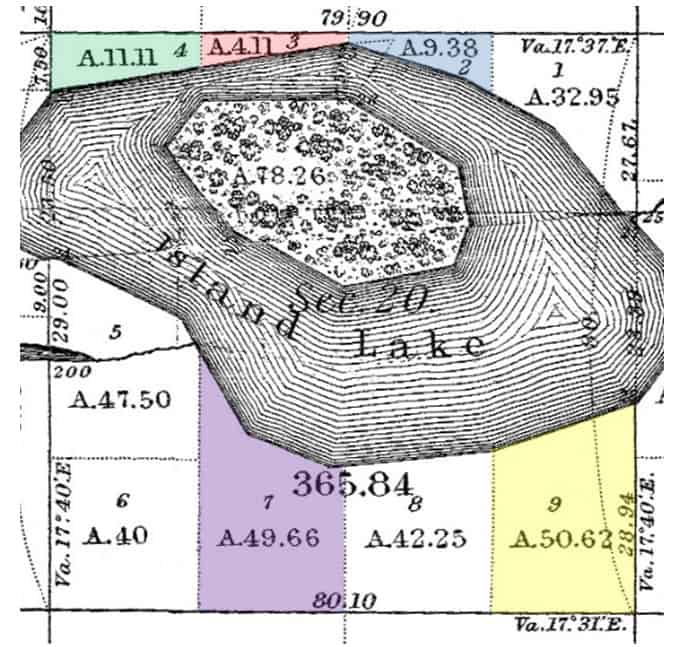
It seems the 1855 Manual likes refers to the diagrams quite a bit for guidance. Here is an example from Diagram B which shows three small lots at the top of the section, but two at the bottom that could have been two aliquot parts and two lots with 9.66 and 10.62 acres. They also give the SW 1/4. SW 1/4 a number (Lot 6), but this is an aliquot part and would therefore not be numbered.
Posted : August 31, 2017 12:31 pm

Translate
▼
English
Spanish
French
German
Italian
Portuguese
Russian
Chinese
Japanese
Korean
Arabic
Hindi
Dutch
Polish
Turkish
Vietnamese
Thai
Swedish
Danish
Finnish
Norwegian
Czech
Hungarian
Romanian
Greek
Hebrew
Indonesian
Malay
Ukrainian
Bulgarian
Croatian
Slovak
Slovenian
Serbian
Lithuanian
Latvian
Estonian
Loyal is on the right track, I haven't looked at that particular manual, but all the manuals have had maximum and minimum desirable lot sizes, that can be in conflict with instructions to avoid lots that cross center of section lines and center of 1/4 section lines. Each offical in charge is left on his or her own in deciding how to deal with situations that need to violate at least one of the rules.
The bigger question is why the island in section 20 was not lotted.
Posted : August 31, 2017 12:54 pm

Translate
▼
English
Spanish
French
German
Italian
Portuguese
Russian
Chinese
Japanese
Korean
Arabic
Hindi
Dutch
Polish
Turkish
Vietnamese
Thai
Swedish
Danish
Finnish
Norwegian
Czech
Hungarian
Romanian
Greek
Hebrew
Indonesian
Malay
Ukrainian
Bulgarian
Croatian
Slovak
Slovenian
Serbian
Lithuanian
Latvian
Estonian
paden cash, post: 444282, member: 20 wrote: Loyal is correct. The answer probably lies either in the manual that was current at the time of the survey or possibly some special instructions they were working under (good luck finding any of those...).
Depending on the time, special instructions are not that difficult to find. For example, GLO Commissioner J.A. Williamson was fond of including instructions in the annual appropriations letters sent to the various Surveyors General. The Surveyors General of Colorado then printed them as special instructions for U.S. Deputy Surveyors. I found several of the letters and 5 sets of special instructions in the BLM holdings at the Denver National Archives. They were included in the deputy's contract.
I attached an example of the special instructions issued by Albert Johnson, the U.S. Surveyor General for the District of Colorado from 1879-1883 to U.S. Deputy Surveyor L.P. Ouellette. Lotting was done by GLO draughtsmen so you won't find much, if any info in the special instructions on how that was done. Ron Scherler, who recently retired as the CFedS Coordinator did quite a bit of research on lotting and parenthetical distances at the National Archives. I'm not sure what his current contact info is.
Edit to add: If there were any revised instructions they may have been sent to the Surveyors General via letter correspondence from the Commissioner. The correspondence would be tagged as a "Letter E".
Posted : August 31, 2017 1:16 pm

Translate
▼
English
Spanish
French
German
Italian
Portuguese
Russian
Chinese
Japanese
Korean
Arabic
Hindi
Dutch
Polish
Turkish
Vietnamese
Thai
Swedish
Danish
Finnish
Norwegian
Czech
Hungarian
Romanian
Greek
Hebrew
Indonesian
Malay
Ukrainian
Bulgarian
Croatian
Slovak
Slovenian
Serbian
Lithuanian
Latvian
Estonian
This is one of the great thing about this site. Meaningful and educational exploration of the why's and how's of our not-so-everyday world.
I enjoy finding the itty bitty Lots that are created by straight lines intersecting the naturally occurring curvilinear shapes of rivers. One Lot 1 was barely an acre 150 years ago. Mother Nature has expanded that to over 15 acres today. Another river bend left an almost triangular tract near a section corner that was maybe three or four acres that has now completely disappeared.
Posted : August 31, 2017 4:14 pm
Translate
▼
English
Spanish
French
German
Italian
Portuguese
Russian
Chinese
Japanese
Korean
Arabic
Hindi
Dutch
Polish
Turkish
Vietnamese
Thai
Swedish
Danish
Finnish
Norwegian
Czech
Hungarian
Romanian
Greek
Hebrew
Indonesian
Malay
Ukrainian
Bulgarian
Croatian
Slovak
Slovenian
Serbian
Lithuanian
Latvian
Estonian
Gene Kooper, post: 444298, member: 9850 wrote: Depending on the time, special instructions are not that difficult to find. For example, GLO Commissioner J.A. Williamson was fond of including instructions in the annual appropriations letters sent to the various Surveyors General. The Surveyors General of Colorado then printed them as special instructions for U.S. Deputy Surveyors. I found several of the letters and 5 sets of special instructions in the BLM holdings at the Denver National Archives. They were included in the deputy's contract.
I attached an example of the special instructions issued by Albert Johnson, the U.S. Surveyor General for the District of Colorado from 1879-1883 to U.S. Deputy Surveyor L.P. Ouellette. Lotting was done by GLO draughtsmen so you won't find much, if any info in the special instructions on how that was done. Ron Scherler, who recently retired as the CFedS Coordinator did quite a bit of research on lotting and parenthetical distances at the National Archives. I'm not sure what his current contact info is.
Edit to add: If there were any revised instructions they may have been sent to the Surveyors General via letter correspondence from the Commissioner. The correspondence would be tagged as a "Letter E".
66.06 ft. Same as required by the 1881 Manual (see pages 19 & 20 thereof).
Loyal
Posted : August 31, 2017 5:02 pm

Translate
▼
English
Spanish
French
German
Italian
Portuguese
Russian
Chinese
Japanese
Korean
Arabic
Hindi
Dutch
Polish
Turkish
Vietnamese
Thai
Swedish
Danish
Finnish
Norwegian
Czech
Hungarian
Romanian
Greek
Hebrew
Indonesian
Malay
Ukrainian
Bulgarian
Croatian
Slovak
Slovenian
Serbian
Lithuanian
Latvian
Estonian
paden cash, post: 444282, member: 20 wrote: Loyal is correct. The answer probably lies either in the manual that was current at the time of the survey or possibly some special instructions they were working under (good luck finding any of those...).
Hey Paden~ Question for you about Oklahoma. Holy Cow can answer if he knows too. I'm doing work over in OK in T2N, R2E CM and reading the notes where all the interior was pits and mounds. But around the exterior there were zinc cones (pots) set. I am wondering if there were special instructions for setting these or what?
Posted : August 31, 2017 8:30 pm
Translate
▼
English
Spanish
French
German
Italian
Portuguese
Russian
Chinese
Japanese
Korean
Arabic
Hindi
Dutch
Polish
Turkish
Vietnamese
Thai
Swedish
Danish
Finnish
Norwegian
Czech
Hungarian
Romanian
Greek
Hebrew
Indonesian
Malay
Ukrainian
Bulgarian
Croatian
Slovak
Slovenian
Serbian
Lithuanian
Latvian
Estonian
Scotland, post: 444377, member: 559 wrote: Hey Paden~ Question for you about Oklahoma. Holy Cow can answer if he knows too. I'm doing work over in OK in T2N, R2E CM and reading the notes where all the interior was pits and mounds. But around the exterior there were zinc cones (pots) set. I am wondering if there were special instructions for setting these or what?
I'm not sure as to their instructions. There was a lot of misc. correspondence sent from the BLM office in NM to our Dept. of Libraries when the notes were actually transferred here in about 1979, but the only notes that are catalogued as far as I know are their published notes. Finding the specific instructions they worked under is difficult here in Oklahoma, but I'm sure they exist somewhere.
During this time the surveys moved from stones to iron pipes with bronze or zinc caps. There's a couple of publications I've seen that show their standard details, but no reference to any instructions.
I'm sure they had their reasons. This was during a period (1880-1895) that the Surveyor General was coming under fire for contracting the surveys. What eventually happened here in central OK was the USGS picked up the torch and completed/ resurveyed a mess of the area with "real government employees" and not just "contractors". I use the term "mess" tactically. The notes don't appear to be USGS notes, but could be. The one reason that seems logical to me is brevity. It doesn't appear as they wanted to spent too much time in there, but there are plenty of stones available in most of that township.
I have seen a couple of the zinc "cones"...but they are on a shelf at a friend's office. I've never seen one in the field. I have done some work in 5 & 6 N 1ECM but never saw the later corners set along the townships lines during what was actually a "completion" survey.
Wish I could help. They don't call that part of the state "No Man's Land" for nothing.
Posted : August 31, 2017 9:24 pm
Translate
▼
English
Spanish
French
German
Italian
Portuguese
Russian
Chinese
Japanese
Korean
Arabic
Hindi
Dutch
Polish
Turkish
Vietnamese
Thai
Swedish
Danish
Finnish
Norwegian
Czech
Hungarian
Romanian
Greek
Hebrew
Indonesian
Malay
Ukrainian
Bulgarian
Croatian
Slovak
Slovenian
Serbian
Lithuanian
Latvian
Estonian
[USER=559]@Scotland[/USER]
Sorry. No help with that question.
Hope you got your reservation in early at the Hyatt there in Felt and enjoyed a nice evening meal at Red Lobster while in town. Those pesky tourists tend to snap up the best rooms.
Also hope you took some great photos while in the field so as to scare the bejeebers out of our more urban participants here. I wonder what the exact opposite of claustrophobia is called.
Several of the early families in that area have connections to my home area. We used to visit a distant cousin and her husband at their farm a few miles northeast of Felt.
Was looking at a teensy little view of a survey included in a legal notice in the Boise City News earlier today that was used to provide the description of a tract owned by J & K Tire Service that they would like to have annexed into the metropolitan limits of Boise City. About the only thing I can make out is a logo for the survey firm that looks a bit like a plus sign with the letters S-L-S-L arranged in the quadrants. I might have those letters wrong as they are very difficult to make out even with a decent magnifying glass.
Posted : August 31, 2017 9:34 pm
Translate
▼
English
Spanish
French
German
Italian
Portuguese
Russian
Chinese
Japanese
Korean
Arabic
Hindi
Dutch
Polish
Turkish
Vietnamese
Thai
Swedish
Danish
Finnish
Norwegian
Czech
Hungarian
Romanian
Greek
Hebrew
Indonesian
Malay
Ukrainian
Bulgarian
Croatian
Slovak
Slovenian
Serbian
Lithuanian
Latvian
Estonian
Here is a nice view of the shoulder high sunflowers. Somewhere in here is a mound and pits for the quarter corner. I think the dust bowl of the 30's buried them significantly under ground. But you know it is esi easy surveying in PLSS land!
Sent from my SM-G925V using Tapatalk
Posted : August 31, 2017 9:45 pm
Translate
▼
English
Spanish
French
German
Italian
Portuguese
Russian
Chinese
Japanese
Korean
Arabic
Hindi
Dutch
Polish
Turkish
Vietnamese
Thai
Swedish
Danish
Finnish
Norwegian
Czech
Hungarian
Romanian
Greek
Hebrew
Indonesian
Malay
Ukrainian
Bulgarian
Croatian
Slovak
Slovenian
Serbian
Lithuanian
Latvian
Estonian
Holy Cow, post: 444391, member: 50 wrote: Also hope you took some great photos while in the field so as to scare the bejeebers out of our more urban participants here. I wonder what the exact opposite of claustrophobia is called.
The term is agoraphobia. My first wife suffered from it. I took her from our abode in urban Lincoln to the Sandhills to visit my folks many years ago. After a couple of days there (the nearest neighbor was over 3 miles away) she became more neurotic than usual. It was her only visit.
Posted : August 31, 2017 9:54 pm
Translate
▼
English
Spanish
French
German
Italian
Portuguese
Russian
Chinese
Japanese
Korean
Arabic
Hindi
Dutch
Polish
Turkish
Vietnamese
Thai
Swedish
Danish
Finnish
Norwegian
Czech
Hungarian
Romanian
Greek
Hebrew
Indonesian
Malay
Ukrainian
Bulgarian
Croatian
Slovak
Slovenian
Serbian
Lithuanian
Latvian
Estonian
Scotland, post: 444394, member: 559 wrote: Here is a nice view of the shoulder high sunflowers. Somewhere in here is a mound and pits for the quarter corner. I think the dust bowl of the 30's buried them significantly under ground. But you know it is esi easy surveying in PLSS land!
Sent from my SM-G925V using Tapatalk
At least the flowers are green. Walk a mile or two through those puppy's after a couple of frosts and you'll need a blood transfusion and a case of Band Aids.
Even though I agree the pits and mounds are probably "gone with the wind" and buried under 1/2 of s.e. Colorado you might still be surprised what you find. I found a quarter corner in the middle of a June wheat field south of Keyes that had been a pit and mound set originally. We found the remains of a rail tie that had been chain-sawed flush within a foot of a calculated position.
The old man that farmed the area wouldn't let us drive on it until he had cut the wheat. I talked to him about the rail tie and it indeed had been him that cut it down. It seems it cost him some repairs on a combine header a few years earlier. He had no idea what it was meant to be and thought it was just an old fence post. We never could figure out who had set the tie.
Look anyway, you might be surprised.
Posted : August 31, 2017 10:04 pm
Translate
▼
English
Spanish
French
German
Italian
Portuguese
Russian
Chinese
Japanese
Korean
Arabic
Hindi
Dutch
Polish
Turkish
Vietnamese
Thai
Swedish
Danish
Finnish
Norwegian
Czech
Hungarian
Romanian
Greek
Hebrew
Indonesian
Malay
Ukrainian
Bulgarian
Croatian
Slovak
Slovenian
Serbian
Lithuanian
Latvian
Estonian
It is tough for some people to grasp what it is like to be somewhere where you can see forever but yet can't see anyone.
I wonder how far one would need to drive from there to get to a Starbucks. Any Starbucks.
Posted : August 31, 2017 10:05 pm
Page 1 / 3
Next