Reading RPLS is free for the whole profession. Members post, reply, and get the members-only rooms.

Notifications
Clear all

Topic starter
Translate
▼
English
Spanish
French
German
Italian
Portuguese
Russian
Chinese
Japanese
Korean
Arabic
Hindi
Dutch
Polish
Turkish
Vietnamese
Thai
Swedish
Danish
Finnish
Norwegian
Czech
Hungarian
Romanian
Greek
Hebrew
Indonesian
Malay
Ukrainian
Bulgarian
Croatian
Slovak
Slovenian
Serbian
Lithuanian
Latvian
Estonian
Several different kinds of software, different instruments, and just plain different equipment have created many new ways to perform all kinds of surveys. I know some of you while climbing the ranks had ideas of, "how I would do this", or thought of telling your chief or registered surveyor, "you could do this..." but fell on deaf ears. I got to thinking recently, if anyone ever got to execute those ideas. If it were staking offsets, locating a point on line with funky linework codes, or just a different methodology that may not be as mainstream in surveying as most "major" companies do. I know I have found myself on more than one occasion saying, "If you did this..." or "Why don't you just..." or even "Can we just try this..." trying to prove myself to the "superior" crew member or surveyor and knowing that if we did it my way we would have ended up with the same result just maybe a couple minutes quicker. Since any of you have been your own boss, or ran your own crew, have you executed any of these wild ideas with productivity? If so, what were you doing and how did you reach your end result?
Posted : August 12, 2015 8:11 pm

Translate
▼
English
Spanish
French
German
Italian
Portuguese
Russian
Chinese
Japanese
Korean
Arabic
Hindi
Dutch
Polish
Turkish
Vietnamese
Thai
Swedish
Danish
Finnish
Norwegian
Czech
Hungarian
Romanian
Greek
Hebrew
Indonesian
Malay
Ukrainian
Bulgarian
Croatian
Slovak
Slovenian
Serbian
Lithuanian
Latvian
Estonian
McCracker, post: 331623, member: 9299 wrote: Several different kinds of software, different instruments, and just plain different equipment have created many new ways to perform all kinds of surveys. I know some of you while climbing the ranks had ideas of, "how I would do this", or thought of telling your chief or registered surveyor, "you could do this..." but fell on deaf ears. I got to thinking recently, if anyone ever got to execute those ideas. If it were staking offsets, locating a point on line with funky linework codes, or just a different methodology that may not be as mainstream in surveying as most "major" companies do. I know I have found myself on more than one occasion saying, "If you did this..." or "Why don't you just..." or even "Can we just try this..." trying to prove myself to the "superior" crew member or surveyor and knowing that if we did it my way we would have ended up with the same result just maybe a couple minutes quicker. Since any of you have been your own boss, or ran your own crew, have you executed any of these wild ideas with productivity? If so, what were you doing and how did you reach your end result?
I am really big on productivity, so as soon as I realize I have a frequent task I write a routine for it. Get a bright idea in the field, write the code that night, and it is ready for use next morning.
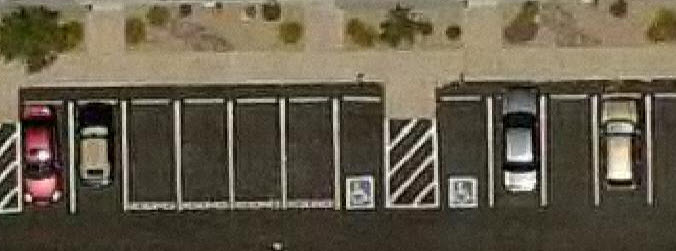
See those painted hatch marks between handicapped parking spaces? Take the four corner shots, coded as HAT, the program draws the three lines and connects them with slanted lines, just as in the field. See the parking bumpers. B BMP on the first, BMP 6 on the last, and the program draws the seven bumpers all lined up. See the parking stripes. B TT, E TT, and TT 5 on the last, then the program draws the six parking stripes.
Why TT for stripes? Because hitting a double letter is faster. Same with FF for face of curb, BB for back of curb, PP for power pole, SS for sidewalk, HH for hidden parking stripes under cover. Efficiency makes it so much more fun. That's why I love parking lots.
Posted : August 12, 2015 9:04 pm

Translate
▼
English
Spanish
French
German
Italian
Portuguese
Russian
Chinese
Japanese
Korean
Arabic
Hindi
Dutch
Polish
Turkish
Vietnamese
Thai
Swedish
Danish
Finnish
Norwegian
Czech
Hungarian
Romanian
Greek
Hebrew
Indonesian
Malay
Ukrainian
Bulgarian
Croatian
Slovak
Slovenian
Serbian
Lithuanian
Latvian
Estonian
so if there's a chevy parked in the spot, do you code it POS? 😉
Posted : August 12, 2015 9:14 pm

Translate
▼
English
Spanish
French
German
Italian
Portuguese
Russian
Chinese
Japanese
Korean
Arabic
Hindi
Dutch
Polish
Turkish
Vietnamese
Thai
Swedish
Danish
Finnish
Norwegian
Czech
Hungarian
Romanian
Greek
Hebrew
Indonesian
Malay
Ukrainian
Bulgarian
Croatian
Slovak
Slovenian
Serbian
Lithuanian
Latvian
Estonian
That code should be reserved for the Fix Or Repair Daily make.
Posted : August 12, 2015 9:21 pm

Translate
▼
English
Spanish
French
German
Italian
Portuguese
Russian
Chinese
Japanese
Korean
Arabic
Hindi
Dutch
Polish
Turkish
Vietnamese
Thai
Swedish
Danish
Finnish
Norwegian
Czech
Hungarian
Romanian
Greek
Hebrew
Indonesian
Malay
Ukrainian
Bulgarian
Croatian
Slovak
Slovenian
Serbian
Lithuanian
Latvian
Estonian
Being mostly solo, I try new stuff almost every day. I like teaming up with my buddies, and we end up teaching each other different things based upon our field experiences.
Posted : August 12, 2015 9:30 pm

Translate
▼
English
Spanish
French
German
Italian
Portuguese
Russian
Chinese
Japanese
Korean
Arabic
Hindi
Dutch
Polish
Turkish
Vietnamese
Thai
Swedish
Danish
Finnish
Norwegian
Czech
Hungarian
Romanian
Greek
Hebrew
Indonesian
Malay
Ukrainian
Bulgarian
Croatian
Slovak
Slovenian
Serbian
Lithuanian
Latvian
Estonian
Bruce Small, post: 331627, member: 1201 wrote: I am really big on productivity, so as soon as I realize I have a frequent task I write a routine for it.
A programmer will spend an hour automating a 5-minute task that he may only need to perform once.
But I'm with Bruce on this - I have hundreds of AutoLISP routines that I use to reduce the drudgery and make things go faster. And I have almost as much fun writing the code as I do seeing the work get speeded up.
Posted : August 12, 2015 11:37 pm

Translate
▼
English
Spanish
French
German
Italian
Portuguese
Russian
Chinese
Japanese
Korean
Arabic
Hindi
Dutch
Polish
Turkish
Vietnamese
Thai
Swedish
Danish
Finnish
Norwegian
Czech
Hungarian
Romanian
Greek
Hebrew
Indonesian
Malay
Ukrainian
Bulgarian
Croatian
Slovak
Slovenian
Serbian
Lithuanian
Latvian
Estonian
Everyone develops their own techniques that they use to get the job done and every once in a while an improvement is shared.
On other days, somebody's new find just is some shortcut that may save time and will cause more risk at the same time.
Some people do have deaf ears to any suggestions and meet you with a punch in the pride while taking credit for your ideas.
I know a few that it is do it my way or the highway, even when their way is intended to waste time by design and give you no chance of advancement. Your way is never an option.
There are some young people out there that are stuck in how things were done decades ago because their mentor is stuck there and won't accept any of these newfangled ways. I've worked for people that only cared about accumulating billable hours and never considered "get r done" today was better.
Other shops are open to suggestion and when properly shown improved methods, reward you and look forward to your next achievement.
I've had bosses that were happy to get two days of planned work finished by 2pm the first day and others that expected 1 week jobs to be finished by noon by using shortcuts to disaster.
There was one boss in the late 80s that could not understand how I could have something finished so fast. He ask me to demonstrate what I did to reduce the traverse notes and he said start over. I pulled up the COGO program, was looking left and making little sketches on a yellow pad with one hand and hitting keys with the other hand and never looking at the screen, just fixating on the research material, deeds and sketches. After about 20 seconds he was hollern' Whoa, stop, I can't tell what you are doing. What else was I doing, I was doing COGO on a set of traverse notes and balancing angles and closing the traverse and beginning to check everything against deeds and such. He simply insisted that I work slower and check myself more often and not make any mistakes by doing each computation several times to guarantee the data entry. He insisted every step to be printed out hardcopy so he could approve my work before proceeding and he made all the decisions. He actually expected me to sign and seal his work. Work slowed to a standstill and I never signed any of his decisions.
He was my last boss.
I had one other boss before him that had the inside track on everything in town and held many titles. He made a lot of money by being banker, agent, engineer, council, board member and middleman for most every construction and design project. He thought surveyors were not worthy to come into his office and had them stay out in the maintenance barn until work orders were delivered each morning and were to leave immediately after getting back to the parking lot.
I was treated as an equal by all the other surveyors I've worked with. They sweated it out right there at my side and shared the workload and took advice and taught better ways at will. They may have been the head honcho, owner or CEO and actual Boss and they never acted like it.
Bottom line, you never know what someone is going to do when you can best them. They can be appreciative for being shown, be a stickler and deny your claim or take you down because you are going places and they are not.
0.02
Posted : August 12, 2015 11:52 pm

Translate
▼
English
Spanish
French
German
Italian
Portuguese
Russian
Chinese
Japanese
Korean
Arabic
Hindi
Dutch
Polish
Turkish
Vietnamese
Thai
Swedish
Danish
Finnish
Norwegian
Czech
Hungarian
Romanian
Greek
Hebrew
Indonesian
Malay
Ukrainian
Bulgarian
Croatian
Slovak
Slovenian
Serbian
Lithuanian
Latvian
Estonian
The greatest thing about working solo is that you never have some smartass telling you how you should be doing something faster or better or easier and making you feel like an idiot for doing things slower or harder or worse for the last 40 years.
Posted : August 13, 2015 5:55 am

Translate
▼
English
Spanish
French
German
Italian
Portuguese
Russian
Chinese
Japanese
Korean
Arabic
Hindi
Dutch
Polish
Turkish
Vietnamese
Thai
Swedish
Danish
Finnish
Norwegian
Czech
Hungarian
Romanian
Greek
Hebrew
Indonesian
Malay
Ukrainian
Bulgarian
Croatian
Slovak
Slovenian
Serbian
Lithuanian
Latvian
Estonian
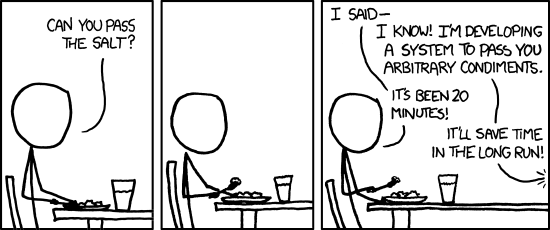
Jim Frame, post: 331641, member: 10 wrote: A programmer will spend an hour automating a 5-minute task that he may only need to perform once
Posted : August 13, 2015 7:10 am

Translate
▼
English
Spanish
French
German
Italian
Portuguese
Russian
Chinese
Japanese
Korean
Arabic
Hindi
Dutch
Polish
Turkish
Vietnamese
Thai
Swedish
Danish
Finnish
Norwegian
Czech
Hungarian
Romanian
Greek
Hebrew
Indonesian
Malay
Ukrainian
Bulgarian
Croatian
Slovak
Slovenian
Serbian
Lithuanian
Latvian
Estonian
Jim Frame, post: 331641, member: 10 wrote: A programmer will spend an hour automating a 5-minute task that he may only need to perform once.
But I'm with Bruce on this - I have hundreds of AutoLISP routines that I use to reduce the drudgery and make things go faster. And I have almost as much fun writing the code as I do seeing the work get speeded up.
Just out of curiosity do the Autolisp routines work in Briscad without any modification?
Posted : August 13, 2015 7:31 am
Translate
▼
English
Spanish
French
German
Italian
Portuguese
Russian
Chinese
Japanese
Korean
Arabic
Hindi
Dutch
Polish
Turkish
Vietnamese
Thai
Swedish
Danish
Finnish
Norwegian
Czech
Hungarian
Romanian
Greek
Hebrew
Indonesian
Malay
Ukrainian
Bulgarian
Croatian
Slovak
Slovenian
Serbian
Lithuanian
Latvian
Estonian
FL/GA PLS., post: 331677, member: 379 wrote: Just out of curiosity do the Autolisp routines work in Briscad without any modification?
I've run into a few minor differences that were easily addressed, but for the most part all my code has run unmodified. BricsCAD actually has an expanded function set, as well as an optimizer that seems to make functions execute faster than in AutoCAD. I'm very happy with the LISP implementation.
Posted : August 13, 2015 8:04 am

Translate
▼
English
Spanish
French
German
Italian
Portuguese
Russian
Chinese
Japanese
Korean
Arabic
Hindi
Dutch
Polish
Turkish
Vietnamese
Thai
Swedish
Danish
Finnish
Norwegian
Czech
Hungarian
Romanian
Greek
Hebrew
Indonesian
Malay
Ukrainian
Bulgarian
Croatian
Slovak
Slovenian
Serbian
Lithuanian
Latvian
Estonian
A lot of people, in this business perhaps more than others, are reluctant to depart from the tried and true. Even if it holds the promise of greater things. Even now, 26 years on from my first day on the crew, and supposedly being in responsible charge of people, I find passive-aggressive resistance to new procedures an imposing force. A lot of things have changed in my time (data collectors, GPS, least squares, much more) and not one of them was introduced without heavy opposition and long term holdouts.
You just have to bide your time and slip in those little things that you can, when you can. Over time, you gain gravitas among your peers, and they will be a little more willing to listen. Some of your ideas will fail. Be prepared for that. But you can only turn the herd by degrees, cowboy.
Posted : August 13, 2015 8:47 am

Translate
▼
English
Spanish
French
German
Italian
Portuguese
Russian
Chinese
Japanese
Korean
Arabic
Hindi
Dutch
Polish
Turkish
Vietnamese
Thai
Swedish
Danish
Finnish
Norwegian
Czech
Hungarian
Romanian
Greek
Hebrew
Indonesian
Malay
Ukrainian
Bulgarian
Croatian
Slovak
Slovenian
Serbian
Lithuanian
Latvian
Estonian
If someone wants to introduce a new procedure on my project, they have to show me that it works. That means results that can be quantified and repeated in a variety of circumstances. At the end of the day it is my license, my decision. The certificate says done under my direction, not done by someone with a really cool idea that he or she is convinced is better.
I have been fortunate to see the advances in measurement technology and computing in recent decades. Much of the 'resistance to change' came from people who required a demonstration of understanding and proficiency with new methods and equipment. A lot of us old guys accept change, but we refuse to adopt black box surveying. The long and short is simple. Show me the new toy or method, but be ready to defend it. I will push until convinced that my risk / reward decision is sound.
Posted : August 13, 2015 10:02 am

Translate
▼
English
Spanish
French
German
Italian
Portuguese
Russian
Chinese
Japanese
Korean
Arabic
Hindi
Dutch
Polish
Turkish
Vietnamese
Thai
Swedish
Danish
Finnish
Norwegian
Czech
Hungarian
Romanian
Greek
Hebrew
Indonesian
Malay
Ukrainian
Bulgarian
Croatian
Slovak
Slovenian
Serbian
Lithuanian
Latvian
Estonian
If you want me to let you try something new, consistently bring in clean files within the time allotted to each project. When you do that, you have a tremendous amount of credibility and I am all ears.
Posted : August 13, 2015 1:04 pm
Topic starter
Translate
▼
English
Spanish
French
German
Italian
Portuguese
Russian
Chinese
Japanese
Korean
Arabic
Hindi
Dutch
Polish
Turkish
Vietnamese
Thai
Swedish
Danish
Finnish
Norwegian
Czech
Hungarian
Romanian
Greek
Hebrew
Indonesian
Malay
Ukrainian
Bulgarian
Croatian
Slovak
Slovenian
Serbian
Lithuanian
Latvian
Estonian
Great input from all, thanks. I agree that it is important to know the fundamentals behind the tried and true procedures done in the field, also I can see the reluctance of accepting new methods. I understand that there are certain liabilities and credibility on the line all the time, and that is partially my drive for being a little more creative to accomplish things. I would very much like to be licensed in the future and consider it a dream. Implementing an entirely new method was never my intent. I am always curious as to how other surveyors measure the same things I measure and if there is a more accurate and efficient way to accomplish it. Also, as far as just performing a survey, have any of you ever done a whole a survey a particular way just for grins, for the sake of doing it that way just because you knew you could?
Posted : August 13, 2015 8:13 pm
Translate
▼
English
Spanish
French
German
Italian
Portuguese
Russian
Chinese
Japanese
Korean
Arabic
Hindi
Dutch
Polish
Turkish
Vietnamese
Thai
Swedish
Danish
Finnish
Norwegian
Czech
Hungarian
Romanian
Greek
Hebrew
Indonesian
Malay
Ukrainian
Bulgarian
Croatian
Slovak
Slovenian
Serbian
Lithuanian
Latvian
Estonian
This is the very kind of thread that keeps this board going.
Posted : August 16, 2015 8:28 am

Translate
▼
English
Spanish
French
German
Italian
Portuguese
Russian
Chinese
Japanese
Korean
Arabic
Hindi
Dutch
Polish
Turkish
Vietnamese
Thai
Swedish
Danish
Finnish
Norwegian
Czech
Hungarian
Romanian
Greek
Hebrew
Indonesian
Malay
Ukrainian
Bulgarian
Croatian
Slovak
Slovenian
Serbian
Lithuanian
Latvian
Estonian
Resection is a very liberating tool for construction layout that was outside of the bounds of "how we do things here" when I started.
Posted : August 16, 2015 11:01 am

Translate
▼
English
Spanish
French
German
Italian
Portuguese
Russian
Chinese
Japanese
Korean
Arabic
Hindi
Dutch
Polish
Turkish
Vietnamese
Thai
Swedish
Danish
Finnish
Norwegian
Czech
Hungarian
Romanian
Greek
Hebrew
Indonesian
Malay
Ukrainian
Bulgarian
Croatian
Slovak
Slovenian
Serbian
Lithuanian
Latvian
Estonian
I did a scan involving 17 setups with a lot of network target acquisition. It was mostly dirt with some burned up vehicles and burned down houses plus dirt roads, and some trees.
I registered it with targets only (which is our SOP)then I went back, as an experiment, and put it all together with a cloud to cloud registration then registered it to control. It matched so well that I see that's the way to go. Especially with the small Faro on the camera tripod, just keep moving it and have some targets in there so you can match it to control.
I have noticed that we tend to try to make the new technology work like the old technology like insisting on putting the Faro in a Trimax because of our disdain for a half pound camera tripod. I did that with the C10 when we first got it, tried to make it be an SS2 mostly focusing on windowed detail scans. Just doing full dome medium density scans will cover it 99% of the time. I even back off to low density because do you really need 50million shots?
Posted : August 16, 2015 11:24 am

Translate
▼
English
Spanish
French
German
Italian
Portuguese
Russian
Chinese
Japanese
Korean
Arabic
Hindi
Dutch
Polish
Turkish
Vietnamese
Thai
Swedish
Danish
Finnish
Norwegian
Czech
Hungarian
Romanian
Greek
Hebrew
Indonesian
Malay
Ukrainian
Bulgarian
Croatian
Slovak
Slovenian
Serbian
Lithuanian
Latvian
Estonian
party chef, post: 332118, member: 98 wrote: Resection is a very liberating tool for construction layout that was outside of the bounds of "how we do things here" when I started.
Same goes for radial stakeout.
Posted : August 16, 2015 11:26 am