Reading RPLS is free for the whole profession. Members post, reply, and get the members-only rooms.

Notifications
Clear all
Strictly Surveying
15
Posts
13
Users
0
Reactions
683
Views

Topic starter
Translate
▼
English
Spanish
French
German
Italian
Portuguese
Russian
Chinese
Japanese
Korean
Arabic
Hindi
Dutch
Polish
Turkish
Vietnamese
Thai
Swedish
Danish
Finnish
Norwegian
Czech
Hungarian
Romanian
Greek
Hebrew
Indonesian
Malay
Ukrainian
Bulgarian
Croatian
Slovak
Slovenian
Serbian
Lithuanian
Latvian
Estonian
A newbie question...I have a Bosch laser distance measuring device. If I want to take a distance measurement from a theodolite, in my case a Wild T2002, where do I place the base of my Bosch unit? I'm assuming the center or axis of the "telescope" of the theodolite, is that correct?
I realize I'm not going to get it perfect by hand holding it, but I think I can hold it on the side of my unit or just above it and get within 1/8th of an inch accuracy which is all I want or need for my purposes.
Thanks for any advice...
Gene
Posted : January 15, 2017 6:50 pm

Translate
▼
English
Spanish
French
German
Italian
Portuguese
Russian
Chinese
Japanese
Korean
Arabic
Hindi
Dutch
Polish
Turkish
Vietnamese
Thai
Swedish
Danish
Finnish
Norwegian
Czech
Hungarian
Romanian
Greek
Hebrew
Indonesian
Malay
Ukrainian
Bulgarian
Croatian
Slovak
Slovenian
Serbian
Lithuanian
Latvian
Estonian
*making popcorn, hang on a second*
Posted : January 15, 2017 7:01 pm

Translate
▼
English
Spanish
French
German
Italian
Portuguese
Russian
Chinese
Japanese
Korean
Arabic
Hindi
Dutch
Polish
Turkish
Vietnamese
Thai
Swedish
Danish
Finnish
Norwegian
Czech
Hungarian
Romanian
Greek
Hebrew
Indonesian
Malay
Ukrainian
Bulgarian
Croatian
Slovak
Slovenian
Serbian
Lithuanian
Latvian
Estonian
The point you are measuring angles and/or distances from should be directly above or below the vertical axis about which the instrument rotates. If you are using a hand-held distance measuring device held over the instrument, then estimate where that axis would come out the top - the most stationary point as you turn it.
In prior decades a plumb bob was hung from a hook below the instrument and put over the ground point. Nowadays it's probably an optical plummet either built into the instrument or a tribrach that looks down at the ground point. In the photos of your battery work, it looks to me like your instrument has an optical plummet built in. If you have a tripod to mount it on, you should be able to sight through it for positioning over points when you take angles.
If you are unfamiliar with use of such instruments, I would recommend an elementary surveying book such as a (cheap) prior edition of Wolf & Ghilani.
Posted : January 15, 2017 7:04 pm

Translate
▼
English
Spanish
French
German
Italian
Portuguese
Russian
Chinese
Japanese
Korean
Arabic
Hindi
Dutch
Polish
Turkish
Vietnamese
Thai
Swedish
Danish
Finnish
Norwegian
Czech
Hungarian
Romanian
Greek
Hebrew
Indonesian
Malay
Ukrainian
Bulgarian
Croatian
Slovak
Slovenian
Serbian
Lithuanian
Latvian
Estonian
If I'm not mistaken, most instruments have a point molded into the case at the axis of the scope, which would be in vertical alignment of the instrument's plumb point. Probably a dimple on the top of the handle too.
The slight offset to the side should never exceed anything of concern... if you're hitting it with a bosch. Just understand the effect of the vertical angle and offset for a glass target.
No slight on the bosch, I love mine! 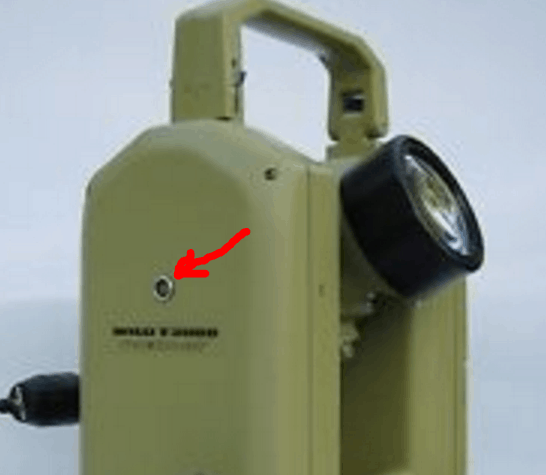
Posted : January 15, 2017 7:38 pm

Translate
▼
English
Spanish
French
German
Italian
Portuguese
Russian
Chinese
Japanese
Korean
Arabic
Hindi
Dutch
Polish
Turkish
Vietnamese
Thai
Swedish
Danish
Finnish
Norwegian
Czech
Hungarian
Romanian
Greek
Hebrew
Indonesian
Malay
Ukrainian
Bulgarian
Croatian
Slovak
Slovenian
Serbian
Lithuanian
Latvian
Estonian
1/8"? How crucial is that? If it's make or break then I would suggest a different route, or hiring someone.
For a builder, sure, and eighth sounds pretty large. They cut to 1/16, shave to 32nds etc, but dealing with land and measuring distances.... an 8th is pretty miniscule. With a separate edm and theodolite, and any error on the other side (such as prism leveling) that may be pretty tough if it's a definite needed precision.
Posted : January 15, 2017 8:12 pm

Translate
▼
English
Spanish
French
German
Italian
Portuguese
Russian
Chinese
Japanese
Korean
Arabic
Hindi
Dutch
Polish
Turkish
Vietnamese
Thai
Swedish
Danish
Finnish
Norwegian
Czech
Hungarian
Romanian
Greek
Hebrew
Indonesian
Malay
Ukrainian
Bulgarian
Croatian
Slovak
Slovenian
Serbian
Lithuanian
Latvian
Estonian
As jb pointed out, most theodolites have a center mark on the side of the unit.
Your Bosch unit may have selectable settings as to where it measures from. The simple solution would be to confirm your first measurement with a tape.
As all surveyors know, unless you are 100% confident in your measurements, run checks.
Posted : January 22, 2017 12:11 pm

Translate
▼
English
Spanish
French
German
Italian
Portuguese
Russian
Chinese
Japanese
Korean
Arabic
Hindi
Dutch
Polish
Turkish
Vietnamese
Thai
Swedish
Danish
Finnish
Norwegian
Czech
Hungarian
Romanian
Greek
Hebrew
Indonesian
Malay
Ukrainian
Bulgarian
Croatian
Slovak
Slovenian
Serbian
Lithuanian
Latvian
Estonian
Gene-
I might suggest .......................
The rubberized end opposite the laser 'business' end is zero.
Hold that end of the laser unit as parallel to the little dot on the side at the centre of the telescope axis as JB set out, in order accurately measuring to the distant object that is within the range set out for the unit.
Then check it with a tape or with a reflector allowing for a compilation of distances measured.
Cheers,
Derek
Posted : January 22, 2017 12:45 pm

Translate
▼
English
Spanish
French
German
Italian
Portuguese
Russian
Chinese
Japanese
Korean
Arabic
Hindi
Dutch
Polish
Turkish
Vietnamese
Thai
Swedish
Danish
Finnish
Norwegian
Czech
Hungarian
Romanian
Greek
Hebrew
Indonesian
Malay
Ukrainian
Bulgarian
Croatian
Slovak
Slovenian
Serbian
Lithuanian
Latvian
Estonian
Most modern total stations have standard errors in the distance measurement approaching 1/8". I think you'll find the method you are describing will well exceed 1/8". Yes you may be able to hold the distance measurement device within 1/8" of the point you are measuring from, but you aren't accounting for the inherent random errors in the device. The Bosh device advertises 1/8" accuracy as it's standard error, add to that your 1/8" holding it at the point of the T2002 (estimated), then there's the inherent uncertainty in your optical plummet, which I usually assume as 0.005' when it's well adjusted (call it 1/16"). You also must account for the fact that you are measuring on the slope, so you must measure the zenith angle with the T2002 and apply the proper trig, of course that's another measurement which adds more uncertainty. Bottom line, with just the few items I've described you are well over 1/4" of uncertainty. If 1/8" is critical, don't use a low order distance meter to measure it. I don't use a distance meter at all for short distances on high precision measurements, except to check my work. I use a calibrated steel tape with tension handles, plumb bobs, and well trained employees.
Posted : January 22, 2017 1:13 pm

Translate
▼
English
Spanish
French
German
Italian
Portuguese
Russian
Chinese
Japanese
Korean
Arabic
Hindi
Dutch
Polish
Turkish
Vietnamese
Thai
Swedish
Danish
Finnish
Norwegian
Czech
Hungarian
Romanian
Greek
Hebrew
Indonesian
Malay
Ukrainian
Bulgarian
Croatian
Slovak
Slovenian
Serbian
Lithuanian
Latvian
Estonian
Bill93, post: 409305, member: 87 wrote: The point you are measuring angles and/or distances from should be directly above or below the vertical axis about which the instrument rotates. If you are using a hand-held distance measuring device held over the instrument, then estimate where that axis would come out the top - the most stationary point as you turn it.
In prior decades a plumb bob was hung from a hook below the instrument and put over the ground point. Nowadays it's probably an optical plummet either built into the instrument or a tribrach that looks down at the ground point. In the photos of your battery work, it looks to me like your instrument has an optical plummet built in. If you have a tripod to mount it on, you should be able to sight through it for positioning over points when you take angles.
If you are unfamiliar with use of such instruments, I would recommend an elementary surveying book such as a (cheap) prior edition of Wolf & Ghilani.
the merit badge booklet I had in Boy Scouts in the early 60's describes it all... at least to the degree the OP needs
Posted : January 22, 2017 7:00 pm
Translate
▼
English
Spanish
French
German
Italian
Portuguese
Russian
Chinese
Japanese
Korean
Arabic
Hindi
Dutch
Polish
Turkish
Vietnamese
Thai
Swedish
Danish
Finnish
Norwegian
Czech
Hungarian
Romanian
Greek
Hebrew
Indonesian
Malay
Ukrainian
Bulgarian
Croatian
Slovak
Slovenian
Serbian
Lithuanian
Latvian
Estonian
Gene: what is the advertised accuracy of your "Bosch laser distance measuring device"? Use it measure several long, short, and medium distances, and the same with whatever device you have... develop your own spec and see how it compares to advertised.
Posted : January 22, 2017 7:06 pm

Translate
▼
English
Spanish
French
German
Italian
Portuguese
Russian
Chinese
Japanese
Korean
Arabic
Hindi
Dutch
Polish
Turkish
Vietnamese
Thai
Swedish
Danish
Finnish
Norwegian
Czech
Hungarian
Romanian
Greek
Hebrew
Indonesian
Malay
Ukrainian
Bulgarian
Croatian
Slovak
Slovenian
Serbian
Lithuanian
Latvian
Estonian
I'm going out on a limb here, but you will never get 1/8" , 0.01' in engineering terms, using that method. To be honest, it is hard to get less than 0.01' unless you are very rigorous in your technique. Since you have already spent the money on a T2002 I would suggest that you invest the additional money to purchase the EDM that went along with it. That is what makes it a total station and allows the instrument to give you the corrected horizontal distances. You will also need to purchase the correct glass which for this instrument would be the Leica circular prism with the target below the glass yoke.
Posted : January 23, 2017 9:19 am

Translate
▼
English
Spanish
French
German
Italian
Portuguese
Russian
Chinese
Japanese
Korean
Arabic
Hindi
Dutch
Polish
Turkish
Vietnamese
Thai
Swedish
Danish
Finnish
Norwegian
Czech
Hungarian
Romanian
Greek
Hebrew
Indonesian
Malay
Ukrainian
Bulgarian
Croatian
Slovak
Slovenian
Serbian
Lithuanian
Latvian
Estonian
Of course he will only obtain a slope distance as well. So, if he is trying to use this for actual ground distances, it will not be helpful at all.
Posted : January 23, 2017 9:25 am
Translate
▼
English
Spanish
French
German
Italian
Portuguese
Russian
Chinese
Japanese
Korean
Arabic
Hindi
Dutch
Polish
Turkish
Vietnamese
Thai
Swedish
Danish
Finnish
Norwegian
Czech
Hungarian
Romanian
Greek
Hebrew
Indonesian
Malay
Ukrainian
Bulgarian
Croatian
Slovak
Slovenian
Serbian
Lithuanian
Latvian
Estonian
MitchPTD, post: 410489, member: 10124 wrote: it will not be helpful at all.
Well, I ASSUMED the instrument reads vertical or zenith angles and he has a calculator to do
Dhoriz = Dslope * sin(zenith angle)
Posted : January 23, 2017 11:09 am

Translate
▼
English
Spanish
French
German
Italian
Portuguese
Russian
Chinese
Japanese
Korean
Arabic
Hindi
Dutch
Polish
Turkish
Vietnamese
Thai
Swedish
Danish
Finnish
Norwegian
Czech
Hungarian
Romanian
Greek
Hebrew
Indonesian
Malay
Ukrainian
Bulgarian
Croatian
Slovak
Slovenian
Serbian
Lithuanian
Latvian
Estonian
DEREK G. GRAHAM OLS OLIP, post: 410401, member: 285 wrote: Gene-
I might suggest .......................
The rubberized end opposite the laser 'business' end is zero.
I have a Bosch and this is correct.
The problem I have is that the laser is hard to see on the sunny side. I use it to do offsets on building corners when using GPS and I have checked the accuracy and determined it to be within a couple of hundredths and it may have been closer if I had done a better job of holding it on the mark.
Posted : January 23, 2017 12:11 pm

Translate
▼
English
Spanish
French
German
Italian
Portuguese
Russian
Chinese
Japanese
Korean
Arabic
Hindi
Dutch
Polish
Turkish
Vietnamese
Thai
Swedish
Danish
Finnish
Norwegian
Czech
Hungarian
Romanian
Greek
Hebrew
Indonesian
Malay
Ukrainian
Bulgarian
Croatian
Slovak
Slovenian
Serbian
Lithuanian
Latvian
Estonian
The "zero" on a hand held laser meter varies depending on the manufacturer. I have one where it is centered on the device, so as to make it easy to use on a mono-pod. Easy to check zero.
Posted : January 23, 2017 1:07 pm