Reading RPLS is free for the whole profession. Members post, reply, and get the members-only rooms.


Notifications
Clear all

Topic starter
Translate
▼
English
Spanish
French
German
Italian
Portuguese
Russian
Chinese
Japanese
Korean
Arabic
Hindi
Dutch
Polish
Turkish
Vietnamese
Thai
Swedish
Danish
Finnish
Norwegian
Czech
Hungarian
Romanian
Greek
Hebrew
Indonesian
Malay
Ukrainian
Bulgarian
Croatian
Slovak
Slovenian
Serbian
Lithuanian
Latvian
Estonian
This is a aerial picture from Google Earth overlaid on the field work location of my crew. I used two back of curb corners to translate and rotate between the two and I must say the newer "3D Buildings" aerial is quite accurate. It's actual kind of scary how accurate. I wonder how long it will be before we are out of the picture and some guy at the computer is drafting all improvements from google earth. 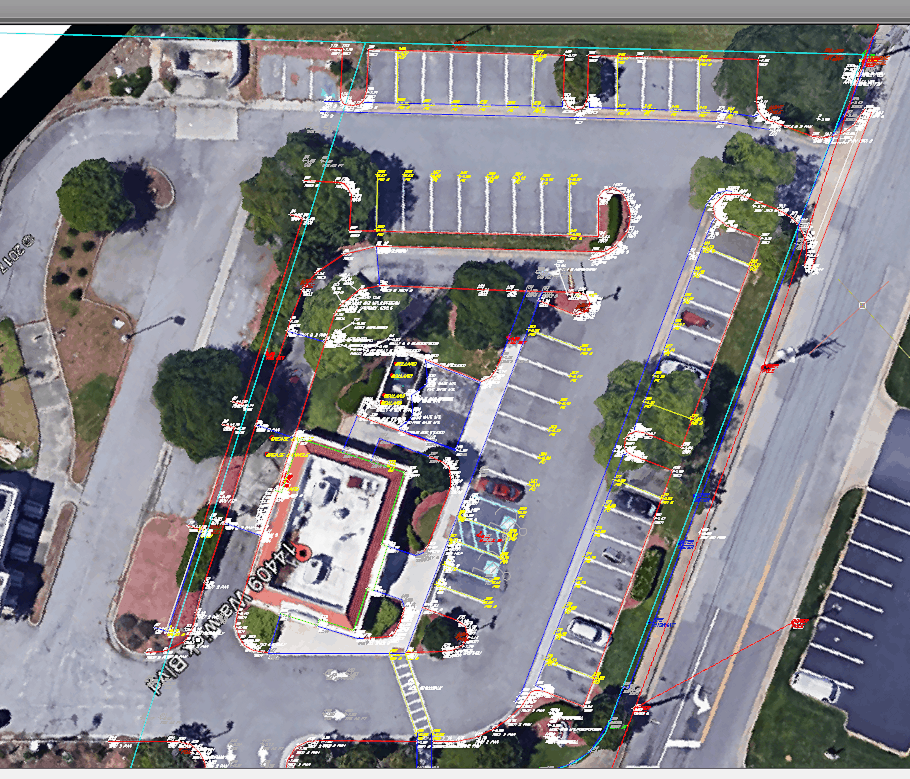
Posted : July 21, 2017 1:58 pm

Translate
▼
English
Spanish
French
German
Italian
Portuguese
Russian
Chinese
Japanese
Korean
Arabic
Hindi
Dutch
Polish
Turkish
Vietnamese
Thai
Swedish
Danish
Finnish
Norwegian
Czech
Hungarian
Romanian
Greek
Hebrew
Indonesian
Malay
Ukrainian
Bulgarian
Croatian
Slovak
Slovenian
Serbian
Lithuanian
Latvian
Estonian
pretty sure about every fourth as-built i'm reviewing these days is drafted straight off GE.
Posted : July 21, 2017 2:05 pm

Translate
▼
English
Spanish
French
German
Italian
Portuguese
Russian
Chinese
Japanese
Korean
Arabic
Hindi
Dutch
Polish
Turkish
Vietnamese
Thai
Swedish
Danish
Finnish
Norwegian
Czech
Hungarian
Romanian
Greek
Hebrew
Indonesian
Malay
Ukrainian
Bulgarian
Croatian
Slovak
Slovenian
Serbian
Lithuanian
Latvian
Estonian
Sure it's spatially accurate... the key words there were "translated & rotated". This is how far off (from real world coordinates) Google Earth CAN be - your mileage may vary...
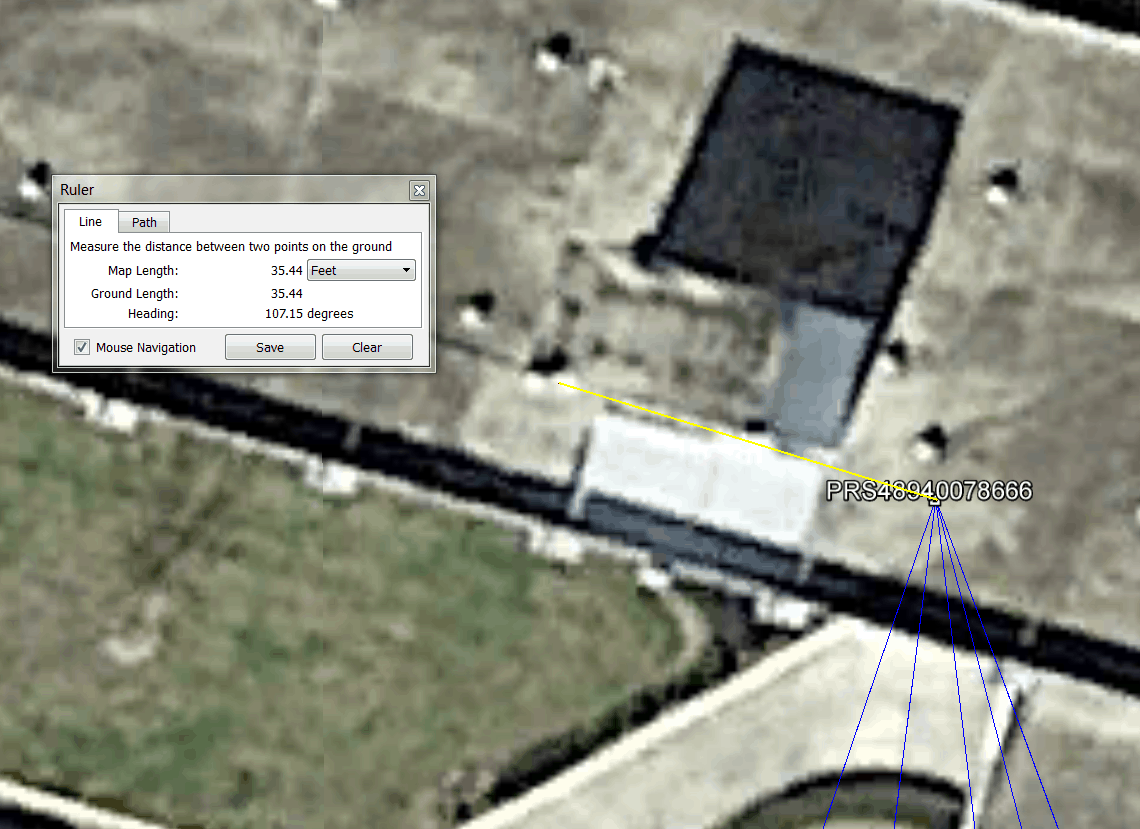
This is the antenna of the CORS station at Nicholls State University and where the coordinate fell in GE.
Posted : July 21, 2017 2:05 pm
Translate
▼
English
Spanish
French
German
Italian
Portuguese
Russian
Chinese
Japanese
Korean
Arabic
Hindi
Dutch
Polish
Turkish
Vietnamese
Thai
Swedish
Danish
Finnish
Norwegian
Czech
Hungarian
Romanian
Greek
Hebrew
Indonesian
Malay
Ukrainian
Bulgarian
Croatian
Slovak
Slovenian
Serbian
Lithuanian
Latvian
Estonian
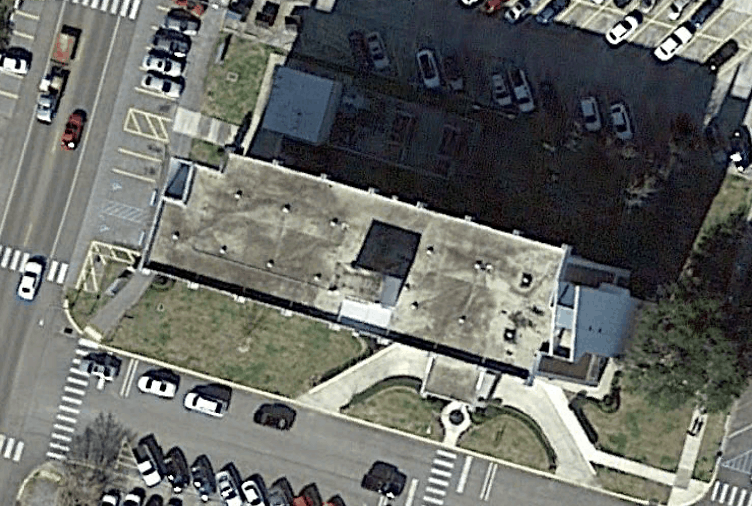
This is the same building zoomed out for perspective - the GPS antenna is on a mast that is bolted to the south face of the elevator shaft on the west side.
Posted : July 21, 2017 2:11 pm

Translate
▼
English
Spanish
French
German
Italian
Portuguese
Russian
Chinese
Japanese
Korean
Arabic
Hindi
Dutch
Polish
Turkish
Vietnamese
Thai
Swedish
Danish
Finnish
Norwegian
Czech
Hungarian
Romanian
Greek
Hebrew
Indonesian
Malay
Ukrainian
Bulgarian
Croatian
Slovak
Slovenian
Serbian
Lithuanian
Latvian
Estonian
At least in my area, Google information lags behind a few years. My brother and I were looking at my street at the same time in different states (me at home, my brother in NJ) and my brother was wondering when the images were taken. He found a copyright of that current year which I very promptly proved wrong. Google was still showing a boat in the house next door to me. The boat had been moved at least 2-3 years prior when those folks moved out.
At a job I was at a number of years ago, I had cause to check elevations (in Google) for a job I was working on. Those didn't work well for me.
Even if the lag time is a year for Google driving around updating the images, that could still lead to errors six months down the road if someone builds a shed, garage, pool, or other structure for doing any sort of as-built.
Posted : July 21, 2017 2:27 pm

Translate
▼
English
Spanish
French
German
Italian
Portuguese
Russian
Chinese
Japanese
Korean
Arabic
Hindi
Dutch
Polish
Turkish
Vietnamese
Thai
Swedish
Danish
Finnish
Norwegian
Czech
Hungarian
Romanian
Greek
Hebrew
Indonesian
Malay
Ukrainian
Bulgarian
Croatian
Slovak
Slovenian
Serbian
Lithuanian
Latvian
Estonian
In the 1970s it was discovered that a local surveyor was using aerial photos, a scale and magnifying glass to measure for his surveys.
After he passed away one of his helpers used his seal to survey under for several years.
GE is a great tool and I use it for many things.
Having to work in areas that property has not been surveyed since the 1940s and before, it is able to find obvious differences between what is on the ground and what is in a deed.
Still, not nearly good enough to depend upon for measuring with required precision.
Posted : July 21, 2017 2:33 pm
Topic starter
Translate
▼
English
Spanish
French
German
Italian
Portuguese
Russian
Chinese
Japanese
Korean
Arabic
Hindi
Dutch
Polish
Turkish
Vietnamese
Thai
Swedish
Danish
Finnish
Norwegian
Czech
Hungarian
Romanian
Greek
Hebrew
Indonesian
Malay
Ukrainian
Bulgarian
Croatian
Slovak
Slovenian
Serbian
Lithuanian
Latvian
Estonian
Lee D, post: 438035, member: 7971 wrote: Sure it's spatially accurate... the key words there were "translated & rotated". This is how far off (from real world coordinates) Google Earth CAN be - your mileage may vary...
This is the antenna of the CORS station at Nicholls State University and where the coordinate fell in GE.
To me the difference with the cors station is the perspective of the picture at the elevation of the top of the shaft. I've found GE accuracy to be quite close geographically, when comparing against cell tower locations I've surveyed.
This survey is on assumed coordinates an I was just amazed at the accuracy of the ground level features.
Posted : July 21, 2017 2:39 pm

Translate
▼
English
Spanish
French
German
Italian
Portuguese
Russian
Chinese
Japanese
Korean
Arabic
Hindi
Dutch
Polish
Turkish
Vietnamese
Thai
Swedish
Danish
Finnish
Norwegian
Czech
Hungarian
Romanian
Greek
Hebrew
Indonesian
Malay
Ukrainian
Bulgarian
Croatian
Slovak
Slovenian
Serbian
Lithuanian
Latvian
Estonian
In my area you can shuffle between various vintages of aerial photos in Google Earth. With it, you can watch the background dance around a point set with a geodetic position. Some sets of photos are better than others. Some are darn close to true, Some are a good 20-30 feet off. And it isn't always the most recent that is best.
Posted : July 21, 2017 2:40 pm

Translate
▼
English
Spanish
French
German
Italian
Portuguese
Russian
Chinese
Japanese
Korean
Arabic
Hindi
Dutch
Polish
Turkish
Vietnamese
Thai
Swedish
Danish
Finnish
Norwegian
Czech
Hungarian
Romanian
Greek
Hebrew
Indonesian
Malay
Ukrainian
Bulgarian
Croatian
Slovak
Slovenian
Serbian
Lithuanian
Latvian
Estonian
John, post: 438039, member: 791 wrote: At least in my area, Google information lags behind a few years. My brother and I were looking at my street at the same time in different states (me at home, my brother in NJ) and my brother was wondering when the images were taken. He found a copyright of that current year which I very promptly proved wrong. Google was still showing a boat in the house next door to me. The boat had been moved at least 2-3 years prior when those folks moved out.
At a job I was at a number of years ago, I had cause to check elevations (in Google) for a job I was working on. Those didn't work well for me.
Even if the lag time is a year for Google driving around updating the images, that could still lead to errors six months down the road if someone builds a shed, garage, pool, or other structure for doing any sort of as-built.
The copy right date is the date google last did something, usually within a year, but google does show the image date at the bottom of the screen, these are acurate. Elevations are getting better, but stI'll shouldn't be trusted.
I would love to be able to use Google Earth instead of shooting inprovments. I avoid jobs that I have to that as much as I can, but I think it will be awhile yet.
Posted : July 21, 2017 5:05 pm

Translate
▼
English
Spanish
French
German
Italian
Portuguese
Russian
Chinese
Japanese
Korean
Arabic
Hindi
Dutch
Polish
Turkish
Vietnamese
Thai
Swedish
Danish
Finnish
Norwegian
Czech
Hungarian
Romanian
Greek
Hebrew
Indonesian
Malay
Ukrainian
Bulgarian
Croatian
Slovak
Slovenian
Serbian
Lithuanian
Latvian
Estonian
I'll take heat for saying this but I work with surveyors. Why are surveyors using GE so much with no accuracy statements when likely down the street or down the hall is the GIS guy sitting on the surveyed ORTHO or features shot in w a Decimeter GPS??
Sent from my iPhone using Tapatalk
Posted : July 21, 2017 6:21 pm

Translate
▼
English
Spanish
French
German
Italian
Portuguese
Russian
Chinese
Japanese
Korean
Arabic
Hindi
Dutch
Polish
Turkish
Vietnamese
Thai
Swedish
Danish
Finnish
Norwegian
Czech
Hungarian
Romanian
Greek
Hebrew
Indonesian
Malay
Ukrainian
Bulgarian
Croatian
Slovak
Slovenian
Serbian
Lithuanian
Latvian
Estonian
I ain't scared yet. As far as I can tell, every job is going to need "boots on the ground" verification. I like working on flown lidar projects.
Posted : July 21, 2017 6:27 pm
Translate
▼
English
Spanish
French
German
Italian
Portuguese
Russian
Chinese
Japanese
Korean
Arabic
Hindi
Dutch
Polish
Turkish
Vietnamese
Thai
Swedish
Danish
Finnish
Norwegian
Czech
Hungarian
Romanian
Greek
Hebrew
Indonesian
Malay
Ukrainian
Bulgarian
Croatian
Slovak
Slovenian
Serbian
Lithuanian
Latvian
Estonian
GISJoel_GetItSurveyed, post: 438071, member: 11867 wrote: I'll take heat for saying this but I work with surveyors. Why are surveyors using GE so much with no accuracy statements when likely down the street or down the hall is the GIS guy sitting on the surveyed ORTHO or features shot in w a Decimeter GPS??
Sent from my iPhone using Tapatalk
Google Earth is a centralized data source--you don't have to go data hunting. The surveyors I know use GE as a quick red-face or planning-level check. It serves that purpose pretty well. And the price is right :).
Whenever GINA's best data layer was free (Alaska), I know a lot of people were taking advantage of that where they would have otherwise used Google Earth...but now that it's expensive...
Posted : July 21, 2017 6:28 pm
Translate
▼
English
Spanish
French
German
Italian
Portuguese
Russian
Chinese
Japanese
Korean
Arabic
Hindi
Dutch
Polish
Turkish
Vietnamese
Thai
Swedish
Danish
Finnish
Norwegian
Czech
Hungarian
Romanian
Greek
Hebrew
Indonesian
Malay
Ukrainian
Bulgarian
Croatian
Slovak
Slovenian
Serbian
Lithuanian
Latvian
Estonian
You got me there Frozen North. Alaska has had a meltdown at Gina, but is a one-stop platform being abused when a state clearinghouse serving data (DCED, NOAA lidar, NAIP) is available w stated accuracies.
Sent from my iPhone using Tapatalk
Posted : July 21, 2017 6:34 pm

Translate
▼
English
Spanish
French
German
Italian
Portuguese
Russian
Chinese
Japanese
Korean
Arabic
Hindi
Dutch
Polish
Turkish
Vietnamese
Thai
Swedish
Danish
Finnish
Norwegian
Czech
Hungarian
Romanian
Greek
Hebrew
Indonesian
Malay
Ukrainian
Bulgarian
Croatian
Slovak
Slovenian
Serbian
Lithuanian
Latvian
Estonian
I use GE only as a reference tool when preparing a proposal or trying to see what's on site if something in my draft plans doesn't look right. Much of my work area is moderately to heavily wooded or otherwise obscured from aerial views so it isn't a hugely valuable tool for me.
I do not see the day that any technology will replace boots on the ground.
Posted : July 23, 2017 10:58 am
Translate
▼
English
Spanish
French
German
Italian
Portuguese
Russian
Chinese
Japanese
Korean
Arabic
Hindi
Dutch
Polish
Turkish
Vietnamese
Thai
Swedish
Danish
Finnish
Norwegian
Czech
Hungarian
Romanian
Greek
Hebrew
Indonesian
Malay
Ukrainian
Bulgarian
Croatian
Slovak
Slovenian
Serbian
Lithuanian
Latvian
Estonian
Ron Lang, post: 438045, member: 6445 wrote: To me the difference with the cors station is the perspective of the picture at the elevation of the top of the shaft.
Good point - the top of the elevator shaft is probably 100' above the ground, it's about an eight story building; the mast is probably another six to eight feet.
We use GE as a planning tool but also as background for a lot of maps. Of course, if you can fly something that's the best background.
Posted : July 24, 2017 6:16 am