Reading RPLS is free for the whole profession. Members post, reply, and get the members-only rooms.

Notifications
Clear all
Education & Training
32
Posts
20
Users
0
Reactions
1,337
Views

Topic starter
Translate
▼
English
Spanish
French
German
Italian
Portuguese
Russian
Chinese
Japanese
Korean
Arabic
Hindi
Dutch
Polish
Turkish
Vietnamese
Thai
Swedish
Danish
Finnish
Norwegian
Czech
Hungarian
Romanian
Greek
Hebrew
Indonesian
Malay
Ukrainian
Bulgarian
Croatian
Slovak
Slovenian
Serbian
Lithuanian
Latvian
Estonian
I struggled with the category for this note appearing on plans:
The elevations hereon are referenced to state plane. Subtract 4.29 to obtain mine datum.
Posted : May 6, 2017 7:54 am

Translate
▼
English
Spanish
French
German
Italian
Portuguese
Russian
Chinese
Japanese
Korean
Arabic
Hindi
Dutch
Polish
Turkish
Vietnamese
Thai
Swedish
Danish
Finnish
Norwegian
Czech
Hungarian
Romanian
Greek
Hebrew
Indonesian
Malay
Ukrainian
Bulgarian
Croatian
Slovak
Slovenian
Serbian
Lithuanian
Latvian
Estonian
wow
Posted : May 6, 2017 8:27 am

Translate
▼
English
Spanish
French
German
Italian
Portuguese
Russian
Chinese
Japanese
Korean
Arabic
Hindi
Dutch
Polish
Turkish
Vietnamese
Thai
Swedish
Danish
Finnish
Norwegian
Czech
Hungarian
Romanian
Greek
Hebrew
Indonesian
Malay
Ukrainian
Bulgarian
Croatian
Slovak
Slovenian
Serbian
Lithuanian
Latvian
Estonian
thebionicman, post: 427100, member: 8136 wrote: The elevations hereon are referenced to state plane. Subtract 4.29 to obtain mine datum.
Question. Does this sort of thing rise to the level of "gross incompetence", the sort of thing that should be reported to the board? I think it does.
Posted : May 6, 2017 8:29 am

Translate
▼
English
Spanish
French
German
Italian
Portuguese
Russian
Chinese
Japanese
Korean
Arabic
Hindi
Dutch
Polish
Turkish
Vietnamese
Thai
Swedish
Danish
Finnish
Norwegian
Czech
Hungarian
Romanian
Greek
Hebrew
Indonesian
Malay
Ukrainian
Bulgarian
Croatian
Slovak
Slovenian
Serbian
Lithuanian
Latvian
Estonian
0.0 of the mine datum is 4.29' lower than the grid plane of projection, duh 😉
I guess that translates to: "The elevations hereon are what the controller on my GPS told me; I missed the mine datum by 4.29. But the box don't lie."
Posted : May 6, 2017 8:53 am

Translate
▼
English
Spanish
French
German
Italian
Portuguese
Russian
Chinese
Japanese
Korean
Arabic
Hindi
Dutch
Polish
Turkish
Vietnamese
Thai
Swedish
Danish
Finnish
Norwegian
Czech
Hungarian
Romanian
Greek
Hebrew
Indonesian
Malay
Ukrainian
Bulgarian
Croatian
Slovak
Slovenian
Serbian
Lithuanian
Latvian
Estonian
James Fleming, post: 427107, member: 136 wrote: But the box don't lie.
That reminds me of the words spat at a crew I was on by an irate construction foreman many years ago: "Them lasers don't lie!" This was a follow-up to his earlier statement that our stakes for a sewer line were all wrong, so he ignored them and laid the 200 feet of clay pipe according to the laser. We checked our stakes and they looked good, so we all went over to his laser where he showed us that he had dialed in the the slope shown on the plans, which was 0.005. Unfortunately, his laser setting was graduated in percent, so he had actually dialed in a slope of 0.00005, producing a 200-run of pipe that was just about dead flat.
Posted : May 6, 2017 9:20 am
Topic starter
Translate
▼
English
Spanish
French
German
Italian
Portuguese
Russian
Chinese
Japanese
Korean
Arabic
Hindi
Dutch
Polish
Turkish
Vietnamese
Thai
Swedish
Danish
Finnish
Norwegian
Czech
Hungarian
Romanian
Greek
Hebrew
Indonesian
Malay
Ukrainian
Bulgarian
Croatian
Slovak
Slovenian
Serbian
Lithuanian
Latvian
Estonian
Mark Mayer, post: 427103, member: 424 wrote: Question. Does this sort of thing rise to the level of "gross incompetence", the sort of thing that should be reported to the board? I think it does.
I will start with a phone call. My whole week has been filled with this stuff...
Posted : May 6, 2017 9:52 am

Translate
▼
English
Spanish
French
German
Italian
Portuguese
Russian
Chinese
Japanese
Korean
Arabic
Hindi
Dutch
Polish
Turkish
Vietnamese
Thai
Swedish
Danish
Finnish
Norwegian
Czech
Hungarian
Romanian
Greek
Hebrew
Indonesian
Malay
Ukrainian
Bulgarian
Croatian
Slovak
Slovenian
Serbian
Lithuanian
Latvian
Estonian
Here in Tasmania we had a statewide State Datum that was superceded by current AHD (Australian Height Datum)
A local city council ran their own "Port Datum" across their area.
Working for the road authority we naturally used the state datum of the day.
That certainly caused confusion amongst the users within council.
Any transfer of information was accompanied by a sketch showing the vertical relationship between the 2 datums.
Even then it was not uncommon to see the correction applied the wrong way.
Posted : May 6, 2017 4:17 pm

Translate
▼
English
Spanish
French
German
Italian
Portuguese
Russian
Chinese
Japanese
Korean
Arabic
Hindi
Dutch
Polish
Turkish
Vietnamese
Thai
Swedish
Danish
Finnish
Norwegian
Czech
Hungarian
Romanian
Greek
Hebrew
Indonesian
Malay
Ukrainian
Bulgarian
Croatian
Slovak
Slovenian
Serbian
Lithuanian
Latvian
Estonian
thebionicman, post: 427100, member: 8136 wrote: I struggled with the category for this note appearing on plans:
The elevations hereon are referenced to state plane. Subtract 4.29 to obtain mine datum.
Is there a mine?
I interviewed a cold call on Friday. 3 years experience and he knew how to run a total station, GPS, data collector.
He did not know
Precision ratios
Geometry of angles for proper traverse
Definition of ellipsoid, geoid, scale factor
Or a variety of other simple items that I expected a crew member of 3 years to know.
Look 100 feet, turn 20", how far does the rod man move?
Backsight 300 feet, double sideshot 10 feet away. Angles bust by 59", do you accept or return It? Why?
Posted : May 7, 2017 7:39 am

Translate
▼
English
Spanish
French
German
Italian
Portuguese
Russian
Chinese
Japanese
Korean
Arabic
Hindi
Dutch
Polish
Turkish
Vietnamese
Thai
Swedish
Danish
Finnish
Norwegian
Czech
Hungarian
Romanian
Greek
Hebrew
Indonesian
Malay
Ukrainian
Bulgarian
Croatian
Slovak
Slovenian
Serbian
Lithuanian
Latvian
Estonian
Who is at fault for that crewman's 1st year of experience, repeated 3 times?
You can't immediately fault JUST the kid.
Sent from my iPad using Tapatalk
Posted : June 29, 2017 6:53 am

Translate
▼
English
Spanish
French
German
Italian
Portuguese
Russian
Chinese
Japanese
Korean
Arabic
Hindi
Dutch
Polish
Turkish
Vietnamese
Thai
Swedish
Danish
Finnish
Norwegian
Czech
Hungarian
Romanian
Greek
Hebrew
Indonesian
Malay
Ukrainian
Bulgarian
Croatian
Slovak
Slovenian
Serbian
Lithuanian
Latvian
Estonian
nm
Posted : June 29, 2017 8:00 am

Translate
▼
English
Spanish
French
German
Italian
Portuguese
Russian
Chinese
Japanese
Korean
Arabic
Hindi
Dutch
Polish
Turkish
Vietnamese
Thai
Swedish
Danish
Finnish
Norwegian
Czech
Hungarian
Romanian
Greek
Hebrew
Indonesian
Malay
Ukrainian
Bulgarian
Croatian
Slovak
Slovenian
Serbian
Lithuanian
Latvian
Estonian
When I started out in this business, I was fortunate to have worked for some LS party chiefs who believed that the more everyone on the crew knew about each task required to get the job done, the better. There were several advantages, not the least of which was that it was each of our jobs to check each other as we were doing our own job. Didn't take any extra time and went a long way to ensuring no mistakes left behind when we left the field.
I think I was among the last generation of party chiefs expected to do or be responsible for all the calcs to prepare for field work and to do data reduction so a draftsman, construction crew, or inspector could use our data for their work.
When I started, a mistake in the calcs, field work, or note reduction was on the party chief and reflected on the entire crew. The chiefs took responsibility and took it personally. Likewise, the whole crew might be embarrassed, depending on the nature of the mistake.
Somewhere along the way, as we went from 4-man crews down to 2-man crews, quality control took a back seat to production. Rather than having 4 assistants from among whom the chief could decide which might be worth mentoring for more responsibilities and who simply needed attention and leadership to maintain skills that would likely never increase much, it went to having only one assistant with relative worth and capability being at least in part, the luck of the draw (did the boss find someone with a brain or just supply me with a warm body to carry stakes and swing a hammer?).
The expectation for chiefs to do calcs gradually decreased to no more than checking angle reductions and checking for obvious busts in measurements. All calcs preparing for field work got shifted to a CAD tech or other survey office tech. Plans started to lack sufficient info to do those calcs by anyway, as both the CAD techs and engineers figured that if the CAD tech could lift coordinates or list a line or curve, there was no need to clutter a plan sheet with such trivial data. Carrying control positions, relating and reducing all the geometry for control, boundaries, search positions, and stakeout positions have been done for most of us in an electronic gizmo box since the 80s or early 90s. For some, before the gizmos were available, the office techs calced it all and provided the crew with pre-calc angles and distances from control to search positions or stakeout points.
By taking that responsibility and authority from the crew, and particularly the chief, identifying just where the responsibility lay got really fuzzy. The chiefs would get mad because the tech provided stakeout or search calcs using a backsite that was inconvenient to use for some reason. The office techs put it back on the chief because the chief is in the field and the tech isn't. A construction point has a grade bust, same conflict. Rather than anyone taking responsibility for either making a mistake or not catching it, everyone points the finger at someone else as they all had their fingers in the same pie.
I recall the first time this struck home for me. I was talking with the LS at another company where we were sending a crew over to do some work for. I was telling the LS that while both guys on our crew have worked as chiefs, one was quite capable of checking calcs or doing them from notes, maps, or plans. He said that they don't allow their chiefs to do any calcs, ever. Even if they are several hours from the office, if they found that there was a problem with the calcs, they were to pack up and bring it back to be fixed in the office. That was in the early or mid 90s and it blew me away that a crew would be sent out, particularly to a remote or distant project, with a chief that was not expected to be able to troubleshoot on site. With that eye opener, I began to realize that had become the standard operating model for many, if not most organizations. That's when the semi-skilled instrument operator began to regularly fill chief positions and carry the title. That's when the title lost the better part of its meaning.
Those of us who have passed the half century mark often marvel at the ignorance of some of the people coming to us to fill party chief or office tech positions. We also need to look at what we, collectively, have allowed to happen. I hate these type of self-flagellating "we've ruined the profession" statements, because for many of us, perhaps most of us, we've just gotten caught in the current and have been or felt powerless to alter it at all. But as a profession, we've allowed ourselves to be led into the mode of placing productivity over quality, with productivity being measured in dollars in through fees vs. dollars out for wages, benefits, and for some, backcharges.
For a great many employers, quality control has become a risk assessment rather than a reputational imperative. We largely compete on price, even as we grouse about it. Many of us will hold the line at some point, but we resent losing projects to the bottom feeders, even though we probably knew price would be a major deciding factor so made an attempt to trim down to an "optimistic" budget.
We field crews of two, or even one. We're to the point where we have a chief and no braves in the field (for those prone to take offense, put your hackles down, both are terms of respect). You might be fortunate enough to be the one in the field and enjoy the independence and alone time. If so, good for you, it's nice to have that option. You may be fortunate enough o be a chief of a 2-man crew and have a good assistant who has good field sense and can be a good second set of eyes to catch mistakes. Or, you may be fortunate to have knowledgeable people working in these positions under your direction.
More likely, you have fewer of those than you do chiefs who wouldn't even be considered good qualified instrumentmen 30 years ago, and chainmen who may not even know what a chain is, think steel tapes all come in handy little cases that clip to your belt and aren't made any longer than 33'. You may even have some that you hope won't forget how to properly hold a prism pole plum between Friday afternoon and Monday morning.
If we place people in the position of chief who qualify largely because they know how to work the buttons to make the equipment measure what we want measured, but haven't expected them to be able to independently perform calculations, troubleshoot conflicting data, and make near professional level decisions in the field, then it isn't really their fault for not even being aware of the degrading of the meaning of the title and for thinking that they are qualified chiefs. And if the qualifications for chief have been lowered so much, we can't blame chainmen for thinking that they can be chiefs after only a few months experience and for not recognizing that the position used to require an amount of knowledge that required several years of training and experience to qualify for.
I would bet that there are well under 1% who have 3 years of experience who, unless they are also at least halfway through a survey degree program, know any of the geodetic terms you mentioned. One would hope that after that amount of time, a field hand would have picked up the other simple math applications you mentioned - i.e., how much angle bust is acceptable for observations for certain purposes. However, the truth there is that as long as someone has entered the coordinates or the alignment and elevation data into their data collector, they don't need that knowledge as a practical matter. Their typical check is to look at the inverse between the staked point and the computed intended point and compare that to whatever tolerance they've been told to stay within.
It's to the point where, due to the precision, self checking, and interface capabilities of modern equipment, and the focus on productivity almost to the exclusion of procedures for redundancies and field checks, or even the knowledge of how to do them, that there has been a commensurate dumbing down of the technical side of the profession. The degradation of the qualifications of party chiefs is creating a widening knowledge gap between the LS and typical field personnel. It takes an especially motivated person to seek out the knowledge and education to move from unlicensed to licensed in that they need to find it mostly outside of their daily employment. It used to be an integral part of one's employment, but there's no time for it now and the chiefs, who a couple generations ago were the primary teachers, no longer have the skill or knowledge to pass on, and may not even have anyone to pass them on to if they did possess the skills and knowledge.
Unfortunately, some state boards are doing their part to close the knowledge gap by dumbing down the licensing exam and/or cut score requirements to pass the licensing exam. But that's a whole different soap box discussion. I'll step down now, find my seat and be quiet. Next!
Posted : June 29, 2017 11:25 am

Translate
▼
English
Spanish
French
German
Italian
Portuguese
Russian
Chinese
Japanese
Korean
Arabic
Hindi
Dutch
Polish
Turkish
Vietnamese
Thai
Swedish
Danish
Finnish
Norwegian
Czech
Hungarian
Romanian
Greek
Hebrew
Indonesian
Malay
Ukrainian
Bulgarian
Croatian
Slovak
Slovenian
Serbian
Lithuanian
Latvian
Estonian
spledeus, post: 427190, member: 3579 wrote: Geometry of angles for proper traverse
I don't understand this one. If you are measuring distance and angle both with reasonable precision, why does the angle matter? Is this a carryover from that (now obsolete) problem of narrow angle-angle intersections?
Posted : July 3, 2017 2:04 pm
Translate
▼
English
Spanish
French
German
Italian
Portuguese
Russian
Chinese
Japanese
Korean
Arabic
Hindi
Dutch
Polish
Turkish
Vietnamese
Thai
Swedish
Danish
Finnish
Norwegian
Czech
Hungarian
Romanian
Greek
Hebrew
Indonesian
Malay
Ukrainian
Bulgarian
Croatian
Slovak
Slovenian
Serbian
Lithuanian
Latvian
Estonian
Bill93, post: 435094, member: 87 wrote: I don't understand this one. If you are measuring distance and angle both with reasonable precision, why does the angle matter? Is this a carryover from that (now obsolete) problem of narrow angle-angle intersections?
Obsolete? Proper geometry is never obsolete.
Are all of your Error Ellipses circles?
Posted : July 3, 2017 2:42 pm
Translate
▼
English
Spanish
French
German
Italian
Portuguese
Russian
Chinese
Japanese
Korean
Arabic
Hindi
Dutch
Polish
Turkish
Vietnamese
Thai
Swedish
Danish
Finnish
Norwegian
Czech
Hungarian
Romanian
Greek
Hebrew
Indonesian
Malay
Ukrainian
Bulgarian
Croatian
Slovak
Slovenian
Serbian
Lithuanian
Latvian
Estonian
Ok, I'll have to back up a step and learn. What is proper geometry?
Posted : July 3, 2017 4:06 pm

Translate
▼
English
Spanish
French
German
Italian
Portuguese
Russian
Chinese
Japanese
Korean
Arabic
Hindi
Dutch
Polish
Turkish
Vietnamese
Thai
Swedish
Danish
Finnish
Norwegian
Czech
Hungarian
Romanian
Greek
Hebrew
Indonesian
Malay
Ukrainian
Bulgarian
Croatian
Slovak
Slovenian
Serbian
Lithuanian
Latvian
Estonian
eapls2708, post: 434554, member: 589 wrote: When I started out in this business, I was fortunate to have worked for some LS party chiefs who believed that the more everyone on the crew knew about each task required to get the job done, the better. There were several advantages, not the least of which was that it was each of our jobs to check each other as we were doing our own job. Didn't take any extra time and went a long way to ensuring no mistakes left behind when we left the field.
I think I was among the last generation of party chiefs expected to do or be responsible for all the calcs to prepare for field work and to do data reduction so a draftsman, construction crew, or inspector could use our data for their work.
When I started, a mistake in the calcs, field work, or note reduction was on the party chief and reflected on the entire crew. The chiefs took responsibility and took it personally. Likewise, the whole crew might be embarrassed, depending on the nature of the mistake.
Somewhere along the way, as we went from 4-man crews down to 2-man crews, quality control took a back seat to production. Rather than having 4 assistants from among whom the chief could decide which might be worth mentoring for more responsibilities and who simply needed attention and leadership to maintain skills that would likely never increase much, it went to having only one assistant with relative worth and capability being at least in part, the luck of the draw (did the boss find someone with a brain or just supply me with a warm body to carry stakes and swing a hammer?).
The expectation for chiefs to do calcs gradually decreased to no more than checking angle reductions and checking for obvious busts in measurements. All calcs preparing for field work got shifted to a CAD tech or other survey office tech. Plans started to lack sufficient info to do those calcs by anyway, as both the CAD techs and engineers figured that if the CAD tech could lift coordinates or list a line or curve, there was no need to clutter a plan sheet with such trivial data. Carrying control positions, relating and reducing all the geometry for control, boundaries, search positions, and stakeout positions have been done for most of us in an electronic gizmo box since the 80s or early 90s. For some, before the gizmos were available, the office techs calced it all and provided the crew with pre-calc angles and distances from control to search positions or stakeout points.
By taking that responsibility and authority from the crew, and particularly the chief, identifying just where the responsibility lay got really fuzzy. The chiefs would get mad because the tech provided stakeout or search calcs using a backsite that was inconvenient to use for some reason. The office techs put it back on the chief because the chief is in the field and the tech isn't. A construction point has a grade bust, same conflict. Rather than anyone taking responsibility for either making a mistake or not catching it, everyone points the finger at someone else as they all had their fingers in the same pie.
I recall the first time this struck home for me. I was talking with the LS at another company where we were sending a crew over to do some work for. I was telling the LS that while both guys on our crew have worked as chiefs, one was quite capable of checking calcs or doing them from notes, maps, or plans. He said that they don't allow their chiefs to do any calcs, ever. Even if they are several hours from the office, if they found that there was a problem with the calcs, they were to pack up and bring it back to be fixed in the office. That was in the early or mid 90s and it blew me away that a crew would be sent out, particularly to a remote or distant project, with a chief that was not expected to be able to troubleshoot on site. With that eye opener, I began to realize that had become the standard operating model for many, if not most organizations. That's when the semi-skilled instrument operator began to regularly fill chief positions and carry the title. That's when the title lost the better part of its meaning.
Those of us who have passed the half century mark often marvel at the ignorance of some of the people coming to us to fill party chief or office tech positions. We also need to look at what we, collectively, have allowed to happen. I hate these type of self-flagellating "we've ruined the profession" statements, because for many of us, perhaps most of us, we've just gotten caught in the current and have been or felt powerless to alter it at all. But as a profession, we've allowed ourselves to be led into the mode of placing productivity over quality, with productivity being measured in dollars in through fees vs. dollars out for wages, benefits, and for some, backcharges.
For a great many employers, quality control has become a risk assessment rather than a reputational imperative. We largely compete on price, even as we grouse about it. Many of us will hold the line at some point, but we resent losing projects to the bottom feeders, even though we probably knew price would be a major deciding factor so made an attempt to trim down to an "optimistic" budget.
We field crews of two, or even one. We're to the point where we have a chief and no braves in the field (for those prone to take offense, put your hackles down, both are terms of respect). You might be fortunate enough to be the one in the field and enjoy the independence and alone time. If so, good for you, it's nice to have that option. You may be fortunate enough o be a chief of a 2-man crew and have a good assistant who has good field sense and can be a good second set of eyes to catch mistakes. Or, you may be fortunate to have knowledgeable people working in these positions under your direction.
More likely, you have fewer of those than you do chiefs who wouldn't even be considered good qualified instrumentmen 30 years ago, and chainmen who may not even know what a chain is, think steel tapes all come in handy little cases that clip to your belt and aren't made any longer than 33'. You may even have some that you hope won't forget how to properly hold a prism pole plum between Friday afternoon and Monday morning.
If we place people in the position of chief who qualify largely because they know how to work the buttons to make the equipment measure what we want measured, but haven't expected them to be able to independently perform calculations, troubleshoot conflicting data, and make near professional level decisions in the field, then it isn't really their fault for not even being aware of the degrading of the meaning of the title and for thinking that they are qualified chiefs. And if the qualifications for chief have been lowered so much, we can't blame chainmen for thinking that they can be chiefs after only a few months experience and for not recognizing that the position used to require an amount of knowledge that required several years of training and experience to qualify for.
I would bet that there are well under 1% who have 3 years of experience who, unless they are also at least halfway through a survey degree program, know any of the geodetic terms you mentioned. One would hope that after that amount of time, a field hand would have picked up the other simple math applications you mentioned - i.e., how much angle bust is acceptable for observations for certain purposes. However, the truth there is that as long as someone has entered the coordinates or the alignment and elevation data into their data collector, they don't need that knowledge as a practical matter. Their typical check is to look at the inverse between the staked point and the computed intended point and compare that to whatever tolerance they've been told to stay within.
It's to the point where, due to the precision, self checking, and interface capabilities of modern equipment, and the focus on productivity almost to the exclusion of procedures for redundancies and field checks, or even the knowledge of how to do them, that there has been a commensurate dumbing down of the technical side of the profession. The degradation of the qualifications of party chiefs is creating a widening knowledge gap between the LS and typical field personnel. It takes an especially motivated person to seek out the knowledge and education to move from unlicensed to licensed in that they need to find it mostly outside of their daily employment. It used to be an integral part of one's employment, but there's no time for it now and the chiefs, who a couple generations ago were the primary teachers, no longer have the skill or knowledge to pass on, and may not even have anyone to pass them on to if they did possess the skills and knowledge.
Unfortunately, some state boards are doing their part to close the knowledge gap by dumbing down the licensing exam and/or cut score requirements to pass the licensing exam. But that's a whole different soap box discussion. I'll step down now, find my seat and be quiet. Next!
I agree, mentoring for the most part doesn't happen in todays work environment. The boards accept mostly without question any experience from a "firm." Workers in the "factory" don't get that much training and the experience is probably very narrow. But that's the system. You can get a LS license in Utah without almost any boundary experience as long as you have so much office and field time under "paid" employment with a "firm". I suppose it's how it is but the licensing process, at least from my view, has little to do with protecting the public.
Posted : July 6, 2017 10:38 pm

Translate
▼
English
Spanish
French
German
Italian
Portuguese
Russian
Chinese
Japanese
Korean
Arabic
Hindi
Dutch
Polish
Turkish
Vietnamese
Thai
Swedish
Danish
Finnish
Norwegian
Czech
Hungarian
Romanian
Greek
Hebrew
Indonesian
Malay
Ukrainian
Bulgarian
Croatian
Slovak
Slovenian
Serbian
Lithuanian
Latvian
Estonian
A pyramid is an example or maybe the concept of proper geometry for best vector layout.
Posted : July 7, 2017 5:24 am

Translate
▼
English
Spanish
French
German
Italian
Portuguese
Russian
Chinese
Japanese
Korean
Arabic
Hindi
Dutch
Polish
Turkish
Vietnamese
Thai
Swedish
Danish
Finnish
Norwegian
Czech
Hungarian
Romanian
Greek
Hebrew
Indonesian
Malay
Ukrainian
Bulgarian
Croatian
Slovak
Slovenian
Serbian
Lithuanian
Latvian
Estonian
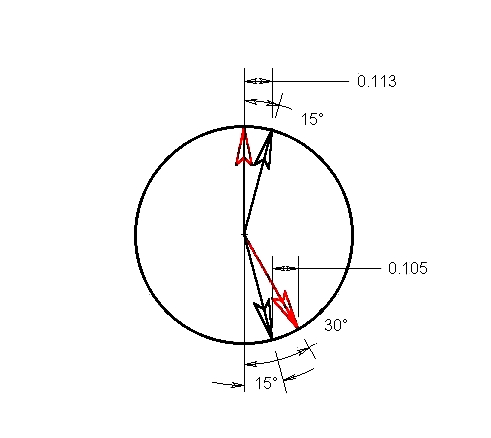
Bill93, post: 435116, member: 87 wrote: Ok, I'll have to back up a step and learn. What is proper geometry?
I'm not an expert; so please correct me if I'm wrong.
180 is a weak angle, 90 is a strong angle.
The closer you are to 90, the stronger the geometry.
Posted : July 7, 2017 10:06 am
Topic starter
Translate
▼
English
Spanish
French
German
Italian
Portuguese
Russian
Chinese
Japanese
Korean
Arabic
Hindi
Dutch
Polish
Turkish
Vietnamese
Thai
Swedish
Danish
Finnish
Norwegian
Czech
Hungarian
Romanian
Greek
Hebrew
Indonesian
Malay
Ukrainian
Bulgarian
Croatian
Slovak
Slovenian
Serbian
Lithuanian
Latvian
Estonian
RADAR, post: 435772, member: 413 wrote: I'm not an expert; so please correct me if I'm wrong.
180 is a weak angle, 90 is a strong angle.
The closer you are to 90, the stronger the geometry.
It depends on what you are doing and how you are doing it. I have resected near 180 without being able to find any appreciable error when closing out and adjusting later.
Posted : July 7, 2017 10:31 am
Translate
▼
English
Spanish
French
German
Italian
Portuguese
Russian
Chinese
Japanese
Korean
Arabic
Hindi
Dutch
Polish
Turkish
Vietnamese
Thai
Swedish
Danish
Finnish
Norwegian
Czech
Hungarian
Romanian
Greek
Hebrew
Indonesian
Malay
Ukrainian
Bulgarian
Croatian
Slovak
Slovenian
Serbian
Lithuanian
Latvian
Estonian
Very true for triangulation. I don't think that is a worry when you have both angle and distance accurately. Those are effectively measurements at right angles to each other, so one covers the other's weakness. I've run Star*Net examples to verify that.
Posted : July 7, 2017 10:34 am
Translate
▼
English
Spanish
French
German
Italian
Portuguese
Russian
Chinese
Japanese
Korean
Arabic
Hindi
Dutch
Polish
Turkish
Vietnamese
Thai
Swedish
Danish
Finnish
Norwegian
Czech
Hungarian
Romanian
Greek
Hebrew
Indonesian
Malay
Ukrainian
Bulgarian
Croatian
Slovak
Slovenian
Serbian
Lithuanian
Latvian
Estonian
I totally agree with Bill. An issue for triangulation, when you aren't measuring any distances (except the first baseline distance). Think about a simple angle and distance measurement....you are simply reading a two different directions on a circular scale depending on the instrument, the optics, and your eye-ability, it's your aiming ability and not how "wide" the angle is.
Posted : July 7, 2017 2:24 pm
Page 1 / 2
Next