Reading RPLS is free for the whole profession. Members post, reply, and get the members-only rooms.

Notifications
Clear all

Topic starter
Translate
▼
English
Spanish
French
German
Italian
Portuguese
Russian
Chinese
Japanese
Korean
Arabic
Hindi
Dutch
Polish
Turkish
Vietnamese
Thai
Swedish
Danish
Finnish
Norwegian
Czech
Hungarian
Romanian
Greek
Hebrew
Indonesian
Malay
Ukrainian
Bulgarian
Croatian
Slovak
Slovenian
Serbian
Lithuanian
Latvian
Estonian

West Texas pin cushion. Go large or go home.
FOUND 2Û IRON PIPE, FOUND 60 NAIL, FOUND STONE SET ON EDGE MARKED ÛÏ+Û AND FOUND 1-1/2Û GALVANIZED IRON PIPE IN CONCRETE.
Not sure why the other markers were needed when the original, called for stone is extant.
And hereÛªs a few more finds from today and yesterday.

Closeup of ÛÏ+Û

FOUND A STONE MARKED ÛÏ+Û

FOUND SET STONE

FOUND AXLE

FOUND STONE MARKED ÛÏSE6Û
Posted : June 14, 2016 2:18 pm

Translate
▼
English
Spanish
French
German
Italian
Portuguese
Russian
Chinese
Japanese
Korean
Arabic
Hindi
Dutch
Polish
Turkish
Vietnamese
Thai
Swedish
Danish
Finnish
Norwegian
Czech
Hungarian
Romanian
Greek
Hebrew
Indonesian
Malay
Ukrainian
Bulgarian
Croatian
Slovak
Slovenian
Serbian
Lithuanian
Latvian
Estonian
Andy Nold, post: 377229, member: 7 wrote: Not sure why the other markers were needed when the original, called for stone is extant.
No dimple.
Posted : June 14, 2016 2:30 pm
Topic starter
Translate
▼
English
Spanish
French
German
Italian
Portuguese
Russian
Chinese
Japanese
Korean
Arabic
Hindi
Dutch
Polish
Turkish
Vietnamese
Thai
Swedish
Danish
Finnish
Norwegian
Czech
Hungarian
Romanian
Greek
Hebrew
Indonesian
Malay
Ukrainian
Bulgarian
Croatian
Slovak
Slovenian
Serbian
Lithuanian
Latvian
Estonian
dmyhill, post: 377232, member: 1137 wrote: No dimple.
If you look at the second picture, you'll see a closeup of the "+" scratched on the top edge of the stone.
Posted : June 14, 2016 2:31 pm

Translate
▼
English
Spanish
French
German
Italian
Portuguese
Russian
Chinese
Japanese
Korean
Arabic
Hindi
Dutch
Polish
Turkish
Vietnamese
Thai
Swedish
Danish
Finnish
Norwegian
Czech
Hungarian
Romanian
Greek
Hebrew
Indonesian
Malay
Ukrainian
Bulgarian
Croatian
Slovak
Slovenian
Serbian
Lithuanian
Latvian
Estonian
Andy Nold, post: 377229, member: 7 wrote: Not sure why the other markers were needed when the original, called for stone is extant.
To make it easier to find with a metal detector???
Protective pipe bollards???
DDSM:beer:
Posted : June 14, 2016 3:07 pm

Translate
▼
English
Spanish
French
German
Italian
Portuguese
Russian
Chinese
Japanese
Korean
Arabic
Hindi
Dutch
Polish
Turkish
Vietnamese
Thai
Swedish
Danish
Finnish
Norwegian
Czech
Hungarian
Romanian
Greek
Hebrew
Indonesian
Malay
Ukrainian
Bulgarian
Croatian
Slovak
Slovenian
Serbian
Lithuanian
Latvian
Estonian
Clearly the stone was uncritically unaccepted and the pipes are in the exact location.
Posted : June 14, 2016 7:47 pm

Translate
▼
English
Spanish
French
German
Italian
Portuguese
Russian
Chinese
Japanese
Korean
Arabic
Hindi
Dutch
Polish
Turkish
Vietnamese
Thai
Swedish
Danish
Finnish
Norwegian
Czech
Hungarian
Romanian
Greek
Hebrew
Indonesian
Malay
Ukrainian
Bulgarian
Croatian
Slovak
Slovenian
Serbian
Lithuanian
Latvian
Estonian
Andy Nold, post: 377229, member: 7 wrote:
West Texas pin cushion. Go large or go home.
FOUND 2Û IRON PIPE, FOUND 60 NAIL, FOUND STONE SET ON EDGE MARKED ÛÏ+Û AND FOUND 1-1/2Û GALVANIZED IRON PIPE IN CONCRETE.
Not sure why the other markers were needed when the original, called for stone is extant.
It would be interesting to know when the various markers were set and by whom. In particular, how was the standing stone described by the surveyor who supposedly set it? Was it specifically described as planted or standing, or could one of the pipes beside it represent the position of the "+" as found on the stone, but flat on the ground?
Posted : June 14, 2016 8:13 pm
Topic starter
Translate
▼
English
Spanish
French
German
Italian
Portuguese
Russian
Chinese
Japanese
Korean
Arabic
Hindi
Dutch
Polish
Turkish
Vietnamese
Thai
Swedish
Danish
Finnish
Norwegian
Czech
Hungarian
Romanian
Greek
Hebrew
Indonesian
Malay
Ukrainian
Bulgarian
Croatian
Slovak
Slovenian
Serbian
Lithuanian
Latvian
Estonian
Kent McMillan, post: 377279, member: 3 wrote: It would be interesting to know when the various markers were set and by whom. In particular, how was the standing stone described by the surveyor who supposedly set it? Was it specifically described as planted or standing, or could one of the pipes beside it represent the position of the "+" as found on the stone, but flat on the ground?
Kent, that corner was described in the original field notes surveyed by Durrell on November 15th, 1881 and he calls it "a rock set on end marked +.H."
It is also a block corner and was probably set in March of 1881 for the adjoining block where he set several rocks on end and scribed markings on them.
I have no specific information on the other monuments at this time. Perhaps when I get additional deeds I may be able to tie it to specific surveyors. A.N. Lea did a lot of retracement work in the 1930s in this area. The 60D Nail seems like someone marking the corner like a dog peeing on a hydrant to let the other dogs know he had been there.
Posted : June 15, 2016 9:35 am

Translate
▼
English
Spanish
French
German
Italian
Portuguese
Russian
Chinese
Japanese
Korean
Arabic
Hindi
Dutch
Polish
Turkish
Vietnamese
Thai
Swedish
Danish
Finnish
Norwegian
Czech
Hungarian
Romanian
Greek
Hebrew
Indonesian
Malay
Ukrainian
Bulgarian
Croatian
Slovak
Slovenian
Serbian
Lithuanian
Latvian
Estonian
You left the wooden fence post off your list - or is that "the REST of the story..."
Posted : June 15, 2016 9:35 am
Translate
▼
English
Spanish
French
German
Italian
Portuguese
Russian
Chinese
Japanese
Korean
Arabic
Hindi
Dutch
Polish
Turkish
Vietnamese
Thai
Swedish
Danish
Finnish
Norwegian
Czech
Hungarian
Romanian
Greek
Hebrew
Indonesian
Malay
Ukrainian
Bulgarian
Croatian
Slovak
Slovenian
Serbian
Lithuanian
Latvian
Estonian
Andy Nold, post: 377357, member: 7 wrote: Kent, that corner was described in the original field notes surveyed by Durrell on November 15th, 1881 and he calls it "a rock set on end marked +.H."
It is also a block corner and was probably set in March of 1881 for the adjoining block where he set several rocks on end and scribed markings on them.
I have no specific information on the other monuments at this time. Perhaps when I get additional deeds I may be able to tie it to specific surveyors. A.N. Lea did a lot of retracement work in the 1930s in this area.
That style of "6" with the upright, narrowish letters reminds me of inscriptions that I've seen in Terrell County where the same group of surveyors were probably also at work.
Were all of Durrell's "rock on end" monuments actually planted stones? I have a photo of one of his monuments that he described as "large rock set on end" or something similar that was the most underwhelming thing in reality. Most of his monuments were things that later surveyors upgraded because the originals were so insubstantial.
Posted : June 15, 2016 9:47 am
Topic starter
Translate
▼
English
Spanish
French
German
Italian
Portuguese
Russian
Chinese
Japanese
Korean
Arabic
Hindi
Dutch
Polish
Turkish
Vietnamese
Thai
Swedish
Danish
Finnish
Norwegian
Czech
Hungarian
Romanian
Greek
Hebrew
Indonesian
Malay
Ukrainian
Bulgarian
Croatian
Slovak
Slovenian
Serbian
Lithuanian
Latvian
Estonian
The two called for set stones are as described but I can't suppose whether they are original to Durrell or upgrades by later surveyors. I have a line that runs through relatively easy ground and then the section lines one mile east or west run through rough terrain and have calls for earth mound instead of stk & mnd. I'm thinking the easy path monumented with set stones or stk & mnd corners are Durrell's traverse line and the earth mounds might be Durrell's code that he set nothing.
Posted : June 15, 2016 10:05 am

Translate
▼
English
Spanish
French
German
Italian
Portuguese
Russian
Chinese
Japanese
Korean
Arabic
Hindi
Dutch
Polish
Turkish
Vietnamese
Thai
Swedish
Danish
Finnish
Norwegian
Czech
Hungarian
Romanian
Greek
Hebrew
Indonesian
Malay
Ukrainian
Bulgarian
Croatian
Slovak
Slovenian
Serbian
Lithuanian
Latvian
Estonian
Here in PLSSia we would have four monuments meant to represent the same section aliquot corner in our great big subdivision of squares. However, Texas is a metes-and-bounds state, where all the surveyors are much more precise. That is clearly four different corner positions for the four different properties.
😉 (I couldn't find a tongue-in-cheek smiley). (So Wendell, we need two more smileys the other one being a light-bulb turning on mentioned a week or so ago)
Cool pictures, by the way.
Posted : June 15, 2016 12:41 pm
Translate
▼
English
Spanish
French
German
Italian
Portuguese
Russian
Chinese
Japanese
Korean
Arabic
Hindi
Dutch
Polish
Turkish
Vietnamese
Thai
Swedish
Danish
Finnish
Norwegian
Czech
Hungarian
Romanian
Greek
Hebrew
Indonesian
Malay
Ukrainian
Bulgarian
Croatian
Slovak
Slovenian
Serbian
Lithuanian
Latvian
Estonian
In Pecos and Terrell Counties, the number of inscribed rocks seems to have gone up after the railroads arrived and brought an endless supply of chisels and hammers in form of railroad spikes (and horseshoes). Before then, I'd bet that the mark was just scratched with a chaining pin when Durrell was involved.
Posted : June 15, 2016 12:51 pm

Translate
▼
English
Spanish
French
German
Italian
Portuguese
Russian
Chinese
Japanese
Korean
Arabic
Hindi
Dutch
Polish
Turkish
Vietnamese
Thai
Swedish
Danish
Finnish
Norwegian
Czech
Hungarian
Romanian
Greek
Hebrew
Indonesian
Malay
Ukrainian
Bulgarian
Croatian
Slovak
Slovenian
Serbian
Lithuanian
Latvian
Estonian
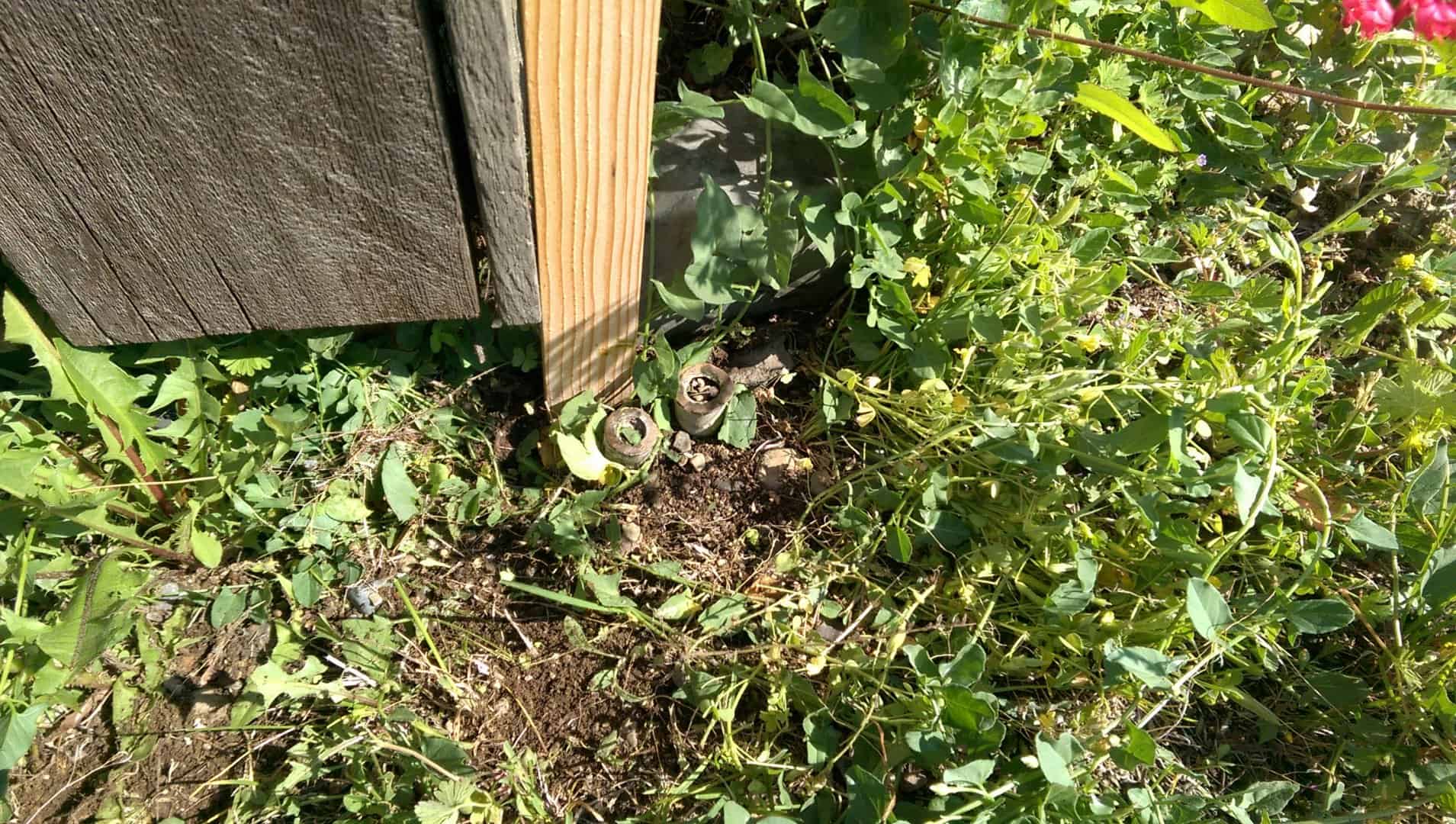
While not quite as exciting as a West Texas Pincusion.....here is today's Eastern WA pincushion.
Posted : June 15, 2016 1:13 pm
Topic starter
Translate
▼
English
Spanish
French
German
Italian
Portuguese
Russian
Chinese
Japanese
Korean
Arabic
Hindi
Dutch
Polish
Turkish
Vietnamese
Thai
Swedish
Danish
Finnish
Norwegian
Czech
Hungarian
Romanian
Greek
Hebrew
Indonesian
Malay
Ukrainian
Bulgarian
Croatian
Slovak
Slovenian
Serbian
Lithuanian
Latvian
Estonian
Kent McMillan, post: 377399, member: 3 wrote: In Pecos and Terrell Counties, the number of inscribed rocks seems to have gone up after the railroads arrived and brought an endless supply of chisels and hammers in form of railroad spikes (and horseshoes). Before then, I'd bet that the mark was just scratched with a chaining pin when Durrell was involved.
Yes, I agree the character of the + on the first stone set by Durrell definitely looks more like a chaining pin where the later found stone definitely looks chiseled.
The current cause of my frustration is a situation like the Fisher-Miller Colony "chevron" surveys in McCulloch County where the north-south section lines appear to have been surveyed independently. Corners called to be due east/west of each other have a difference in lattitude of 200'. And, one column of sections called to be 1900v (5277') is measuring 5449' in the field. Time to tie more monuments and pull more research. Sigh.
Posted : June 15, 2016 1:14 pm
Translate
▼
English
Spanish
French
German
Italian
Portuguese
Russian
Chinese
Japanese
Korean
Arabic
Hindi
Dutch
Polish
Turkish
Vietnamese
Thai
Swedish
Danish
Finnish
Norwegian
Czech
Hungarian
Romanian
Greek
Hebrew
Indonesian
Malay
Ukrainian
Bulgarian
Croatian
Slovak
Slovenian
Serbian
Lithuanian
Latvian
Estonian
Andy Nold, post: 377406, member: 7 wrote: Yes, I agree the character of the + on the first stone set by Durrell definitely looks more like a chaining pin where the later found stone definitely looks chiseled.
The current cause of my frustration is a situation like the Fisher-Miller Colony "chevron" surveys in McCulloch County where the north-south section lines appear to have been surveyed independently. Corners called to be due east/west of each other have a difference in lattitude of 200'. And, one column of sections called to be 1900v (5277') is measuring 5449' in the field. Time to tie more monuments and pull more research. Sigh.
If that was surveyed in 1881, then that would be nearly contemporaneous with the blocks of surveys that Durrell surveyed in Terrell County through which the GH&SA Rwy. tracts were subsequently laid. There is later correspondence with the GLO in which Durrell admitted that his field notes were "paper work" and one could examine the way in which he described corners that he acknowledged he hadn't made to see what the spectrum of fakery involved.
Posted : June 15, 2016 1:37 pm
Translate
▼
English
Spanish
French
German
Italian
Portuguese
Russian
Chinese
Japanese
Korean
Arabic
Hindi
Dutch
Polish
Turkish
Vietnamese
Thai
Swedish
Danish
Finnish
Norwegian
Czech
Hungarian
Romanian
Greek
Hebrew
Indonesian
Malay
Ukrainian
Bulgarian
Croatian
Slovak
Slovenian
Serbian
Lithuanian
Latvian
Estonian
I went back and looked at my file on the Texas & St. Louis Railway Co. Blocks 147, 148, and 149 that L.W. Durrell originally located in October, 1881 in what is now Terrell County. I concluded both from work on the gound and from reading Durrell's later correspondence with the GLO in 1903 that his calls for "stk & md" and "earth md" were invariably fictitious. The few corners that he did mark were rock mounds with some means of identifying them.
One of the corners that he made in 1903 during his resurvey of the East tier of Block 147 was described variously as "Rock set on end mkd X" and "Rk Mound set in ground mkd X". What was actually there was a rather small rock (perhaps 8 x 8 x 10in.) that was just resting on the ground. as a part of a very small rock mound, the "X" having weathered away long ago, apparently since there wasn't any question but that it was Durrell's monument.
Posted : June 15, 2016 4:36 pm

Translate
▼
English
Spanish
French
German
Italian
Portuguese
Russian
Chinese
Japanese
Korean
Arabic
Hindi
Dutch
Polish
Turkish
Vietnamese
Thai
Swedish
Danish
Finnish
Norwegian
Czech
Hungarian
Romanian
Greek
Hebrew
Indonesian
Malay
Ukrainian
Bulgarian
Croatian
Slovak
Slovenian
Serbian
Lithuanian
Latvian
Estonian
So many questions pop into my head, having no experience in the south: Is it common in that area to leave set pipes so far up? Why wouldn't they drive them down closer to the ground? Can you be sure the pipes are even intended to represent corners? The concrete around the one is flared out, like some of the soil has eroded around it after it was poured - that seems like a lot of erosion, but is it possible in that area?
Posted : June 16, 2016 7:37 am

Translate
▼
English
Spanish
French
German
Italian
Portuguese
Russian
Chinese
Japanese
Korean
Arabic
Hindi
Dutch
Polish
Turkish
Vietnamese
Thai
Swedish
Danish
Finnish
Norwegian
Czech
Hungarian
Romanian
Greek
Hebrew
Indonesian
Malay
Ukrainian
Bulgarian
Croatian
Slovak
Slovenian
Serbian
Lithuanian
Latvian
Estonian
Nice stones, the pipes and stuff must be there so you can find them in the snow:whistle:
Posted : June 16, 2016 8:28 am
Translate
▼
English
Spanish
French
German
Italian
Portuguese
Russian
Chinese
Japanese
Korean
Arabic
Hindi
Dutch
Polish
Turkish
Vietnamese
Thai
Swedish
Danish
Finnish
Norwegian
Czech
Hungarian
Romanian
Greek
Hebrew
Indonesian
Malay
Ukrainian
Bulgarian
Croatian
Slovak
Slovenian
Serbian
Lithuanian
Latvian
Estonian
Allen Wrench, post: 377589, member: 6172 wrote: So many questions pop into my head, having no experience in the south: Is it common in that area to leave set pipes so far up?
Sure, that was fairly typical of surveying in the desert lands of West Texas in the early 20th century up to perhaps about 1950. The object was to leave a marker that someone else would be able to find easily if rough measurements put them in the vicinity.
Why wouldn't they drive them down closer to the ground?
The object was to make a corner that could be spotted through the low brush when you were within, say, 50 ft. of it.
Can you be sure the pipes are even intended to represent corners?
It's ordinarily a safe bet that something that is too short for a fence post and otherwise looks like something a surveyor would set was in fact set by a surveyor.
The concrete around the one is flared out, like some of the soil has eroded around it after it was poured - that seems like a lot of erosion, but is it possible in that area?
The desert areas have some vary sparse grasses that, when overgrazed, do leave a surface that, in erosible soils, will slowly wash away just from surface runoff.
Posted : June 16, 2016 8:52 am
Translate
▼
English
Spanish
French
German
Italian
Portuguese
Russian
Chinese
Japanese
Korean
Arabic
Hindi
Dutch
Polish
Turkish
Vietnamese
Thai
Swedish
Danish
Finnish
Norwegian
Czech
Hungarian
Romanian
Greek
Hebrew
Indonesian
Malay
Ukrainian
Bulgarian
Croatian
Slovak
Slovenian
Serbian
Lithuanian
Latvian
Estonian
Just like the federal GLO surveyors; they probably weren't all that concerned about 1/2' in 1/2 a mile, the GLO often set a BC next to the set stone.
It isn't till later that surveyors got all bent out of shape about that .5'.
I would say this didn't really come up till surveyors started traversing with t2's and distance meters. Then the black boxes showed up and boy, you would think the sky was falling, lol.
Posted : June 16, 2016 9:38 am
Page 1 / 2
Next