Reading RPLS is free for the whole profession. Members post, reply, and get the members-only rooms.

Notifications
Clear all

Topic starter
Translate
▼
English
Spanish
French
German
Italian
Portuguese
Russian
Chinese
Japanese
Korean
Arabic
Hindi
Dutch
Polish
Turkish
Vietnamese
Thai
Swedish
Danish
Finnish
Norwegian
Czech
Hungarian
Romanian
Greek
Hebrew
Indonesian
Malay
Ukrainian
Bulgarian
Croatian
Slovak
Slovenian
Serbian
Lithuanian
Latvian
Estonian
Do you think the picture has anything to do with precision?
The Picture shows a scale in inches contrasted against the points of three targeting devices.
åá The top point is a prism pole point currently being used by a civil construction crew. It is about 0.11 inches across. (2.794 mm)
åá The middle point is a Hidden Point Bar Point no longer in use by a mechanical construction crew. It is about 0.01 inches across. (0.254 mm)
åá The bottom point is a new unused prism pole point to be used by a civil construction crew. It is about 0.06 inches across. (1.524 mm)
Errors have many sources in surveying. Consider all the potential error sources and how they add up.
Posted : April 11, 2016 3:05 pm

Translate
▼
English
Spanish
French
German
Italian
Portuguese
Russian
Chinese
Japanese
Korean
Arabic
Hindi
Dutch
Polish
Turkish
Vietnamese
Thai
Swedish
Danish
Finnish
Norwegian
Czech
Hungarian
Romanian
Greek
Hebrew
Indonesian
Malay
Ukrainian
Bulgarian
Croatian
Slovak
Slovenian
Serbian
Lithuanian
Latvian
Estonian
A big concern with the first one would be a loss of target height without being realised.
Posted : April 11, 2016 3:31 pm

Translate
▼
English
Spanish
French
German
Italian
Portuguese
Russian
Chinese
Japanese
Korean
Arabic
Hindi
Dutch
Polish
Turkish
Vietnamese
Thai
Swedish
Danish
Finnish
Norwegian
Czech
Hungarian
Romanian
Greek
Hebrew
Indonesian
Malay
Ukrainian
Bulgarian
Croatian
Slovak
Slovenian
Serbian
Lithuanian
Latvian
Estonian
I use the bottom kind, but I sharpen -- and occasionally resharpen -- them.
Posted : April 11, 2016 3:55 pm

Translate
▼
English
Spanish
French
German
Italian
Portuguese
Russian
Chinese
Japanese
Korean
Arabic
Hindi
Dutch
Polish
Turkish
Vietnamese
Thai
Swedish
Danish
Finnish
Norwegian
Czech
Hungarian
Romanian
Greek
Hebrew
Indonesian
Malay
Ukrainian
Bulgarian
Croatian
Slovak
Slovenian
Serbian
Lithuanian
Latvian
Estonian
Jim Frame, post: 366721, member: 10 wrote: I use the bottom kind, but I sharpen -- and occasionally resharpen -- them.
Jim,
Do you use a lathe to sharpen the points?
Posted : April 11, 2016 4:04 pm

Translate
▼
English
Spanish
French
German
Italian
Portuguese
Russian
Chinese
Japanese
Korean
Arabic
Hindi
Dutch
Polish
Turkish
Vietnamese
Thai
Swedish
Danish
Finnish
Norwegian
Czech
Hungarian
Romanian
Greek
Hebrew
Indonesian
Malay
Ukrainian
Bulgarian
Croatian
Slovak
Slovenian
Serbian
Lithuanian
Latvian
Estonian
I'm guessing that Kent uses the middle kind ...
Posted : April 11, 2016 4:08 pm

Translate
▼
English
Spanish
French
German
Italian
Portuguese
Russian
Chinese
Japanese
Korean
Arabic
Hindi
Dutch
Polish
Turkish
Vietnamese
Thai
Swedish
Danish
Finnish
Norwegian
Czech
Hungarian
Romanian
Greek
Hebrew
Indonesian
Malay
Ukrainian
Bulgarian
Croatian
Slovak
Slovenian
Serbian
Lithuanian
Latvian
Estonian
To be a smart aleck I would say it affects precision only when you use them to take more than one measurement to a particular point. With only one measurement it could affect accuracy.
Posted : April 11, 2016 4:43 pm

Translate
▼
English
Spanish
French
German
Italian
Portuguese
Russian
Chinese
Japanese
Korean
Arabic
Hindi
Dutch
Polish
Turkish
Vietnamese
Thai
Swedish
Danish
Finnish
Norwegian
Czech
Hungarian
Romanian
Greek
Hebrew
Indonesian
Malay
Ukrainian
Bulgarian
Croatian
Slovak
Slovenian
Serbian
Lithuanian
Latvian
Estonian
I use the bottom kind. My properly weighted least squares solutions usually indicate my work meets or exceeds ALTA å±.07+50ppm
I dunno though, why the manufacturers don't tip their prism pole pointy thingies with plumb bob points - except that if you break one off spearing your instrument man's foot, you're PMF trying to replacing it.
Posted : April 11, 2016 4:43 pm

Translate
▼
English
Spanish
French
German
Italian
Portuguese
Russian
Chinese
Japanese
Korean
Arabic
Hindi
Dutch
Polish
Turkish
Vietnamese
Thai
Swedish
Danish
Finnish
Norwegian
Czech
Hungarian
Romanian
Greek
Hebrew
Indonesian
Malay
Ukrainian
Bulgarian
Croatian
Slovak
Slovenian
Serbian
Lithuanian
Latvian
Estonian
I have an old bubble rod that takes plumb bob tips. When circumstances require high precision we just screw in a new one.
Posted : April 11, 2016 4:46 pm
Translate
▼
English
Spanish
French
German
Italian
Portuguese
Russian
Chinese
Japanese
Korean
Arabic
Hindi
Dutch
Polish
Turkish
Vietnamese
Thai
Swedish
Danish
Finnish
Norwegian
Czech
Hungarian
Romanian
Greek
Hebrew
Indonesian
Malay
Ukrainian
Bulgarian
Croatian
Slovak
Slovenian
Serbian
Lithuanian
Latvian
Estonian
Alan Cook, post: 366724, member: 43 wrote: Do you use a lathe to sharpen the points?
Drill press.
Posted : April 11, 2016 4:54 pm

Translate
▼
English
Spanish
French
German
Italian
Portuguese
Russian
Chinese
Japanese
Korean
Arabic
Hindi
Dutch
Polish
Turkish
Vietnamese
Thai
Swedish
Danish
Finnish
Norwegian
Czech
Hungarian
Romanian
Greek
Hebrew
Indonesian
Malay
Ukrainian
Bulgarian
Croatian
Slovak
Slovenian
Serbian
Lithuanian
Latvian
Estonian
Mike Falk, post: 366710, member: 442 wrote: Do you think the picture has anything to do with precision?
The Picture shows a scale in inches contrasted against the points of three targeting devices.
åá The top point is a prism pole point currently being used by a civil construction crew. It is about 0.11 inches across. (2.794 mm)
åá The middle point is a Hidden Point Bar Point no longer in use by a mechanical construction crew. It is about 0.01 inches across. (0.254 mm)
åá The bottom point is a new unused prism pole point to be used by a civil construction crew. It is about 0.06 inches across. (1.524 mm)Errors have many sources in surveying. Consider all the potential error sources and how they add up.
Are there any situations that would require the precision that do NOT have a Mag nail, survey disk, or some similar dimple? If you're staking out in dirt, it's not going to matter, but if you're working on anything that demands the precision, either the second or third would work the same, and depending on the dimple the first may self center as well, no?
Posted : April 11, 2016 5:08 pm
Translate
▼
English
Spanish
French
German
Italian
Portuguese
Russian
Chinese
Japanese
Korean
Arabic
Hindi
Dutch
Polish
Turkish
Vietnamese
Thai
Swedish
Danish
Finnish
Norwegian
Czech
Hungarian
Romanian
Greek
Hebrew
Indonesian
Malay
Ukrainian
Bulgarian
Croatian
Slovak
Slovenian
Serbian
Lithuanian
Latvian
Estonian
I often use plain concrete nails for temporary control, and it's hard to get a deep dimple in them, so a sharp point helps a lot in that circumstance.
Posted : April 11, 2016 5:28 pm

Translate
▼
English
Spanish
French
German
Italian
Portuguese
Russian
Chinese
Japanese
Korean
Arabic
Hindi
Dutch
Polish
Turkish
Vietnamese
Thai
Swedish
Danish
Finnish
Norwegian
Czech
Hungarian
Romanian
Greek
Hebrew
Indonesian
Malay
Ukrainian
Bulgarian
Croatian
Slovak
Slovenian
Serbian
Lithuanian
Latvian
Estonian
This thread should be right up McMillimeter's alley.
Posted : April 11, 2016 5:52 pm

Translate
▼
English
Spanish
French
German
Italian
Portuguese
Russian
Chinese
Japanese
Korean
Arabic
Hindi
Dutch
Polish
Turkish
Vietnamese
Thai
Swedish
Danish
Finnish
Norwegian
Czech
Hungarian
Romanian
Greek
Hebrew
Indonesian
Malay
Ukrainian
Bulgarian
Croatian
Slovak
Slovenian
Serbian
Lithuanian
Latvian
Estonian
I agree with PaulDon that the plumb bob style of point is best all around for precise work.
It took me awhile to appreciate the new tungsten polished tips for their durability.
Posted : April 11, 2016 5:56 pm

Translate
▼
English
Spanish
French
German
Italian
Portuguese
Russian
Chinese
Japanese
Korean
Arabic
Hindi
Dutch
Polish
Turkish
Vietnamese
Thai
Swedish
Danish
Finnish
Norwegian
Czech
Hungarian
Romanian
Greek
Hebrew
Indonesian
Malay
Ukrainian
Bulgarian
Croatian
Slovak
Slovenian
Serbian
Lithuanian
Latvian
Estonian
A Harris, post: 366766, member: 81 wrote: I agree with PaulDon that the plumb bob style of point is best all around for precise work.
It took me awhile to appreciate the new tungsten polished tips for their durability.
Yes, I agree with that. The basic control point I use is a 1mm punchmark on the head of a 3/8-inch spike. If the point of a pole won't find a center on that, it's worthless as far as I'm concerned. Replacement points are a very good solution as long as you are careful to make sure that they stay screwed in and don't back out with use.
Having said that, though, I should point out that if I used RTK to survey everything, the largest pole point would probably be fine - maybe even a blunt topo shoe. You'd never know the difference. It's when you crack out the total station that you want to eliminate the noise as much as posslbe.
Posted : April 11, 2016 6:08 pm

Translate
▼
English
Spanish
French
German
Italian
Portuguese
Russian
Chinese
Japanese
Korean
Arabic
Hindi
Dutch
Polish
Turkish
Vietnamese
Thai
Swedish
Danish
Finnish
Norwegian
Czech
Hungarian
Romanian
Greek
Hebrew
Indonesian
Malay
Ukrainian
Bulgarian
Croatian
Slovak
Slovenian
Serbian
Lithuanian
Latvian
Estonian
rfc, post: 366750, member: 8882 wrote: Are there any situations that would require the precision that do NOT have a Mag nail, survey disk, or some similar dimple?
Yes; what if you're locating a property corner that is, say, a fence post? Where would you stick that pointy tip? And why would it matter how pointy it was?
In my 40+ years of surveying; I've met quite a few "precision" layout guys. They set wing patterns on Boeing planes; staked construction on missile sites; laid automated assembly lines.
If you're using a prism pole for some of this stuff; you're doing it wrong...
Posted : April 11, 2016 6:31 pm
Translate
▼
English
Spanish
French
German
Italian
Portuguese
Russian
Chinese
Japanese
Korean
Arabic
Hindi
Dutch
Polish
Turkish
Vietnamese
Thai
Swedish
Danish
Finnish
Norwegian
Czech
Hungarian
Romanian
Greek
Hebrew
Indonesian
Malay
Ukrainian
Bulgarian
Croatian
Slovak
Slovenian
Serbian
Lithuanian
Latvian
Estonian
RADAR, post: 366774, member: 413 wrote: Yes; what if you're locating a property corner that is, say, a fence post? Where would you stick that pointy tip? And why would it matter how pointy it was?
If you were doing a professional job, you'd set reference monuments to establish the location of the corner that the fence post approximately marks, though. You'd want the same centering accuracy for those reference monuments as you would for any other normal boundary marker.
Posted : April 11, 2016 6:36 pm
Translate
▼
English
Spanish
French
German
Italian
Portuguese
Russian
Chinese
Japanese
Korean
Arabic
Hindi
Dutch
Polish
Turkish
Vietnamese
Thai
Swedish
Danish
Finnish
Norwegian
Czech
Hungarian
Romanian
Greek
Hebrew
Indonesian
Malay
Ukrainian
Bulgarian
Croatian
Slovak
Slovenian
Serbian
Lithuanian
Latvian
Estonian
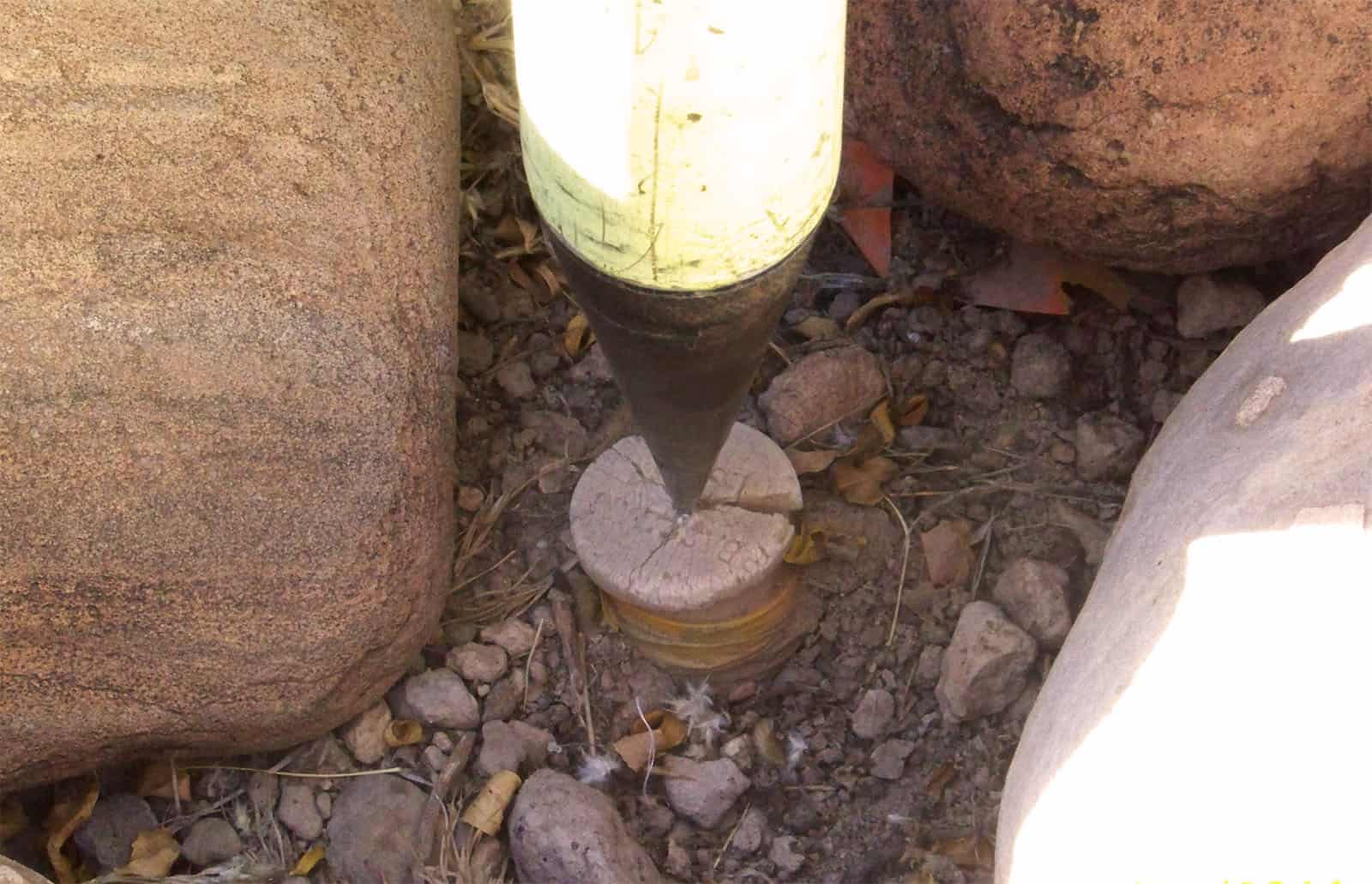
BTW, as a point of professional practice, be aware that some of the plastic caps won't stand up to a sharp prism pole point.
Posted : April 11, 2016 6:38 pm

Translate
▼
English
Spanish
French
German
Italian
Portuguese
Russian
Chinese
Japanese
Korean
Arabic
Hindi
Dutch
Polish
Turkish
Vietnamese
Thai
Swedish
Danish
Finnish
Norwegian
Czech
Hungarian
Romanian
Greek
Hebrew
Indonesian
Malay
Ukrainian
Bulgarian
Croatian
Slovak
Slovenian
Serbian
Lithuanian
Latvian
Estonian
If you are relying on a rod for something that needs greater than 1.5mm precision then you are crazy. That is what a tribrach is for. With 8' of plum error you are out over twice that amount with a 1.5m rod. I use the bottom type on our rods. As was mentioned above, I would be more concerned with the loss of rod height with the worn point on the top.
Posted : April 11, 2016 6:39 pm
Translate
▼
English
Spanish
French
German
Italian
Portuguese
Russian
Chinese
Japanese
Korean
Arabic
Hindi
Dutch
Polish
Turkish
Vietnamese
Thai
Swedish
Danish
Finnish
Norwegian
Czech
Hungarian
Romanian
Greek
Hebrew
Indonesian
Malay
Ukrainian
Bulgarian
Croatian
Slovak
Slovenian
Serbian
Lithuanian
Latvian
Estonian
John Putnam, post: 366778, member1188 wrote: If you are relying on a rod for something that needs greater than 1.5mm precision then you are crazy. That is what a tribrach is for. With 8' of plum error you are out over twice that amount with a 1.5m rod. I use the bottom type on our rods. As was mentioned above, I would be more concerned with the loss of rod height with the worn point on the top.
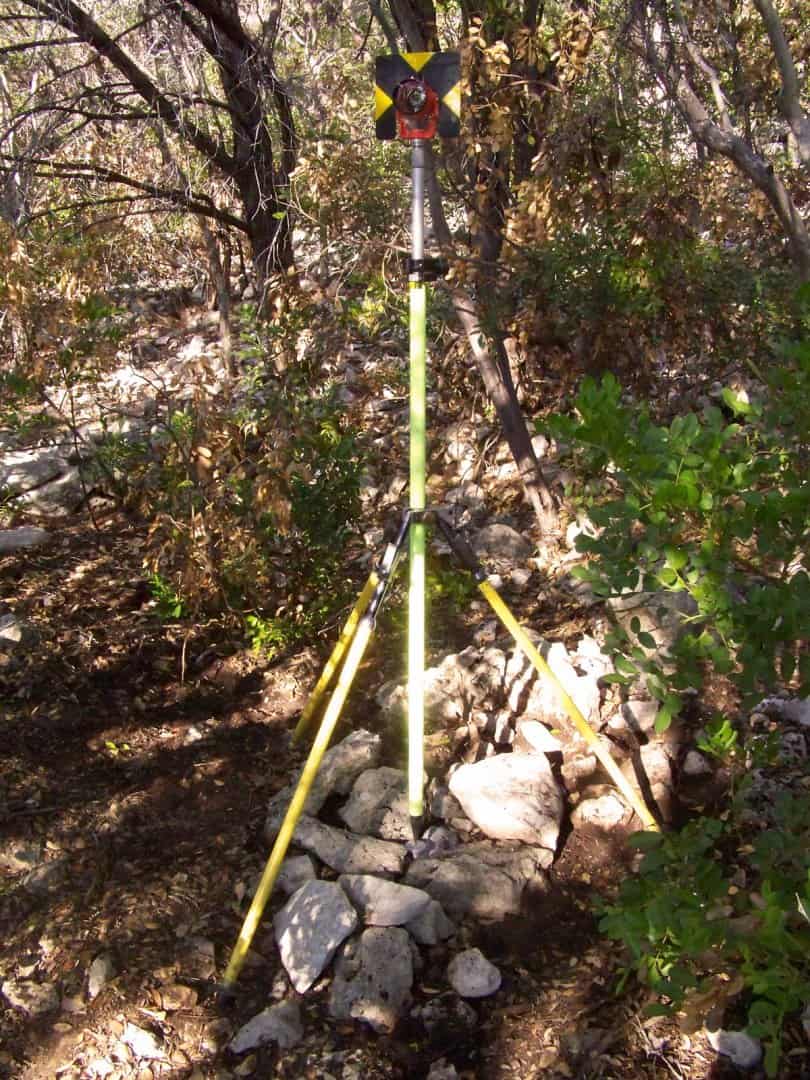
Except a rod bubble with a specified sensitivity of 8 minutes doesn't mean that it won't plumb anything closer than that. It's a measure of the deviation from plumb that the vial graduations are based upon. Sub-millimeter plumbing accuracy is easily possible with a SECO prism pole and SECO 8-minute vial in prism pole tripod.
It's the prism pole tripod that is the key ingredient. Here is an example for those unfamiliar. You can rotate the prism pole in it to check both the adjustment of the bubble and plumbing accuracy.
Posted : April 11, 2016 6:55 pm
Translate
▼
English
Spanish
French
German
Italian
Portuguese
Russian
Chinese
Japanese
Korean
Arabic
Hindi
Dutch
Polish
Turkish
Vietnamese
Thai
Swedish
Danish
Finnish
Norwegian
Czech
Hungarian
Romanian
Greek
Hebrew
Indonesian
Malay
Ukrainian
Bulgarian
Croatian
Slovak
Slovenian
Serbian
Lithuanian
Latvian
Estonian
For everything there is the correct tool. For me, if I'm laying out the 'dead nuts' stuff like bridges, bolt patterns or structural stuff I'm back to pulling chain and using plumb bobs. One of the first things I learned in the 60s when I started was that accuracy is one of the hardest things to do right. Not being precise enough to be accurate, but what jobs require what level of accuracy. In construction I've shot more prisms on top of a 25' telescopic rod than anything else. It's just a good thing dirt doesn't wear out.
Posted : April 11, 2016 7:41 pm
Page 1 / 2
Next