

Jim in AZ, post: 333249, member: 249 wrote: Why? Aren't all the parcels in a subdivision created simultaneously? If so a street do(e)s not have seniority and should be prorated as all the other parcels are. It doesn't matter if it has been abandoned or not.
Skelton says that when a plat is prepared the streets are layed out with the greatest care and lots are fitted in between them. Further, that once a street is in place it cannot be moved. That might have been more true when Skelton was writing (around 1930), but the principle was already in long standing then.

The principle of keeping proration within a block is an equitable one, based upon finding sufficient monumentation to "box" the limits.
Otherwise, an entire subdivision would be subject to the whims and vagaries of straight (and curved) line resection.
To be sure, occasionally one has to extend lines outside of a block in situations with inadequate monumentation, but the special category of public thoroughfares tend to default to stated widths.
This relates to current rights of way. Once vacated (or never built within), there is a presumption that an intent was present at its creation for limiting the effect of excess and deficiency within discrete blocks of myriad shapes.

Norman Oklahoma, post: 333269, member: 9981 wrote: Skelton says that when a plat is prepared the streets are layed out with the greatest care and lots are fitted in between them. Further, that once a street is in place it cannot be moved. That might have been more true when Skelton was writing (around 1930), but the principle was already in long standing then.
I was taught (correctly, I believe), that a subdivision plat creates ALL parcels shown thereon simultaneously at the time of signing (or recordation). They therefor ALL have the same dignity - ie. none have senior rights. The strrets are not senior to the lots, tracts, etc. - they have equal standing. Therefor ALL parcels must be treated equally - you can't prorate one set of parcels and not the others.

Jim in AZ, post: 333279, member: 249 wrote: I was taught (correctly, I believe), that a subdivision plat creates ALL parcels shown thereon simultaneously at the time of signing (or recordation). They therefor ALL have the same dignity - ie. none have senior rights. The strrets are not senior to the lots, tracts, etc. - they have equal standing. Therefor ALL parcels must be treated equally - you can't prorate one set of parcels and not the others.
Well, the road does have some different characteristics than a lot, whether it is owned by the subdivision tenants, or dedicated to the local public agency. If 50 feet is needed to service the "shareholders' of the street, then it shouldn't have more (nor less) than that 50 feet.
I differ in one manner than a lot of other surveyors in that once it is monumented (reasonably accurately), I will hold the monuments over a measurement.
Tom Adams, post: 333280, member: 7285 wrote: Well, the road does have some different characteristics than a lot, whether it is owned by the subdivision tenants, or dedicated to the local public agency. If 50 feet is needed to service the "shareholders' of the street, then it shouldn't have more (nor less) than that 50 feet.
I differ in one manner than a lot of other surveyors in that once it is monumented (reasonably accurately), I will hold the monuments over a measurement.
I do not believe that the character of the ownership provides any sort of seniority to the boundaries. If it did, we would need to calculate boundaries differently based on ownership. I have never read or been taught anything to this effect. ALL parcels have equal standing.
I almost always hold monuments over all else...
Jim in AZ, post: 333281, member: 249 wrote: .....I almost always hold monuments over all else...
Same here. Even if I disagree with the philosophy (say you prorated the street and I wouldn't). If there is logic behind what the previous surveyor did, and I wouldn't want to go arguing over a couple of tenths over such an issue.
A lot of highway surveyors locate the highway monuments figure out the centerline of the highway, and come back out the platted width and call that the width. I call the highway monuments the width.
Jim,
I think the principle is that of the public at large having an interest held in trust in the right of way from the common law. Where not codified, it is used as a pleading in equity. That is why the vacation of right of way requires public hearings and specific findings. In fact, their acceptance is usually conditioned upon improvement.
In the scheme of orderly development, streets function as limiting strips - both from a planning perspective and from a retracement point of view. Modern subdivisions require monuments at centerline intersections and change in direction for that reason. Upon creation within a map, there are tiers of lots that become developed as units between street improvements.
The OP's situation doesn't fall within this scheme as I understand it however. We may have wandered a bit far afield ... Great topic, though.

Jim in AZ, post: 333249, member: 249 wrote: "Not in this state. Government always gets full width, no matter the excess or deficiency."
Why? Aren't all the parcels in a subdivision created simultaneously? If so a street dous not have seniority and should be prorated as all the other parcels are. It doesn't matter if it has been abandoned or not.
Jim:
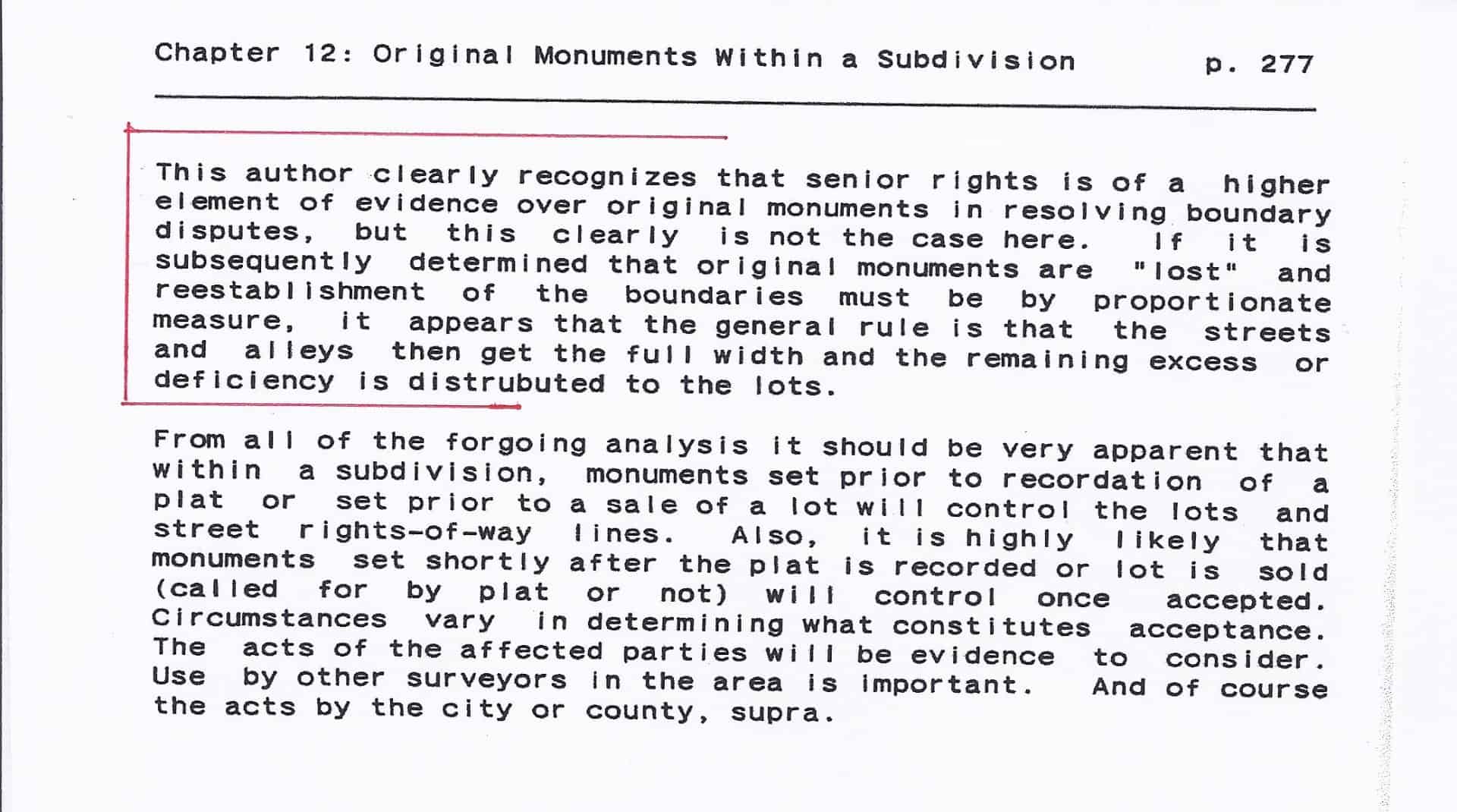
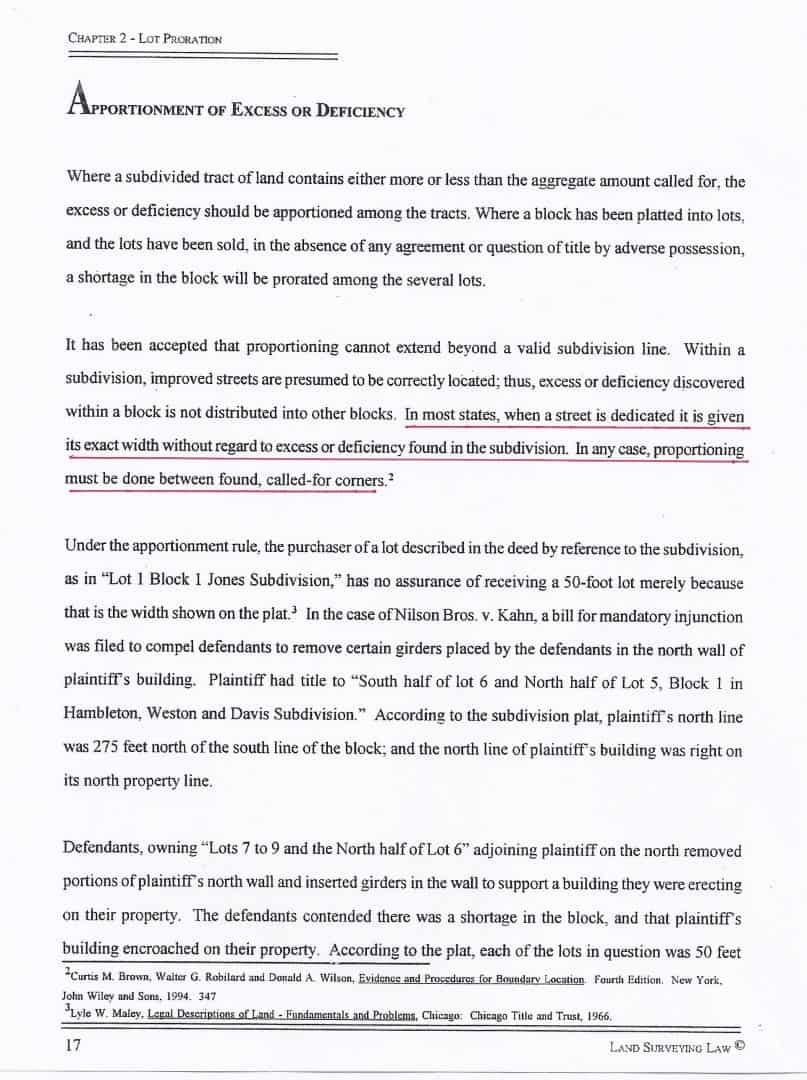
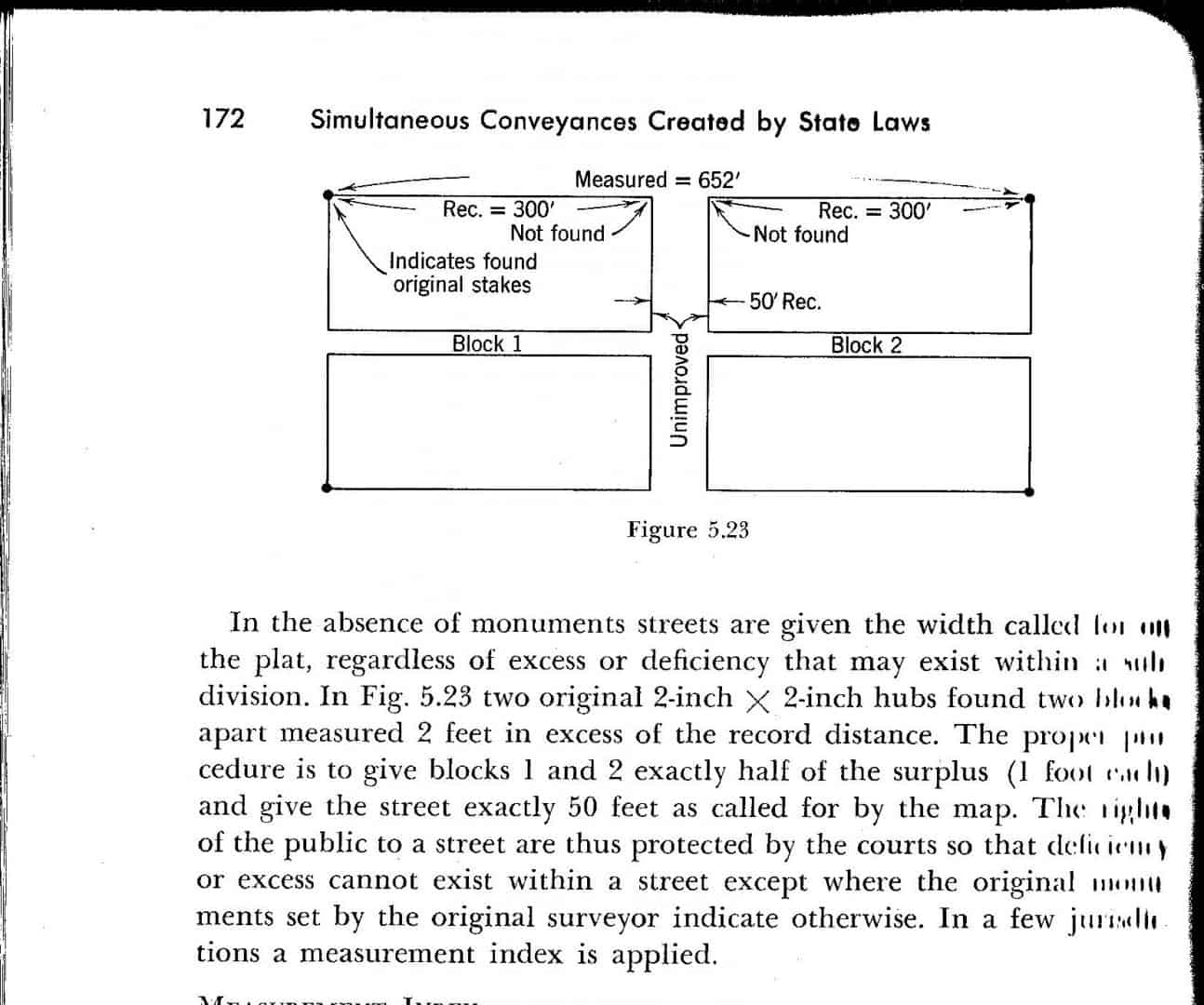
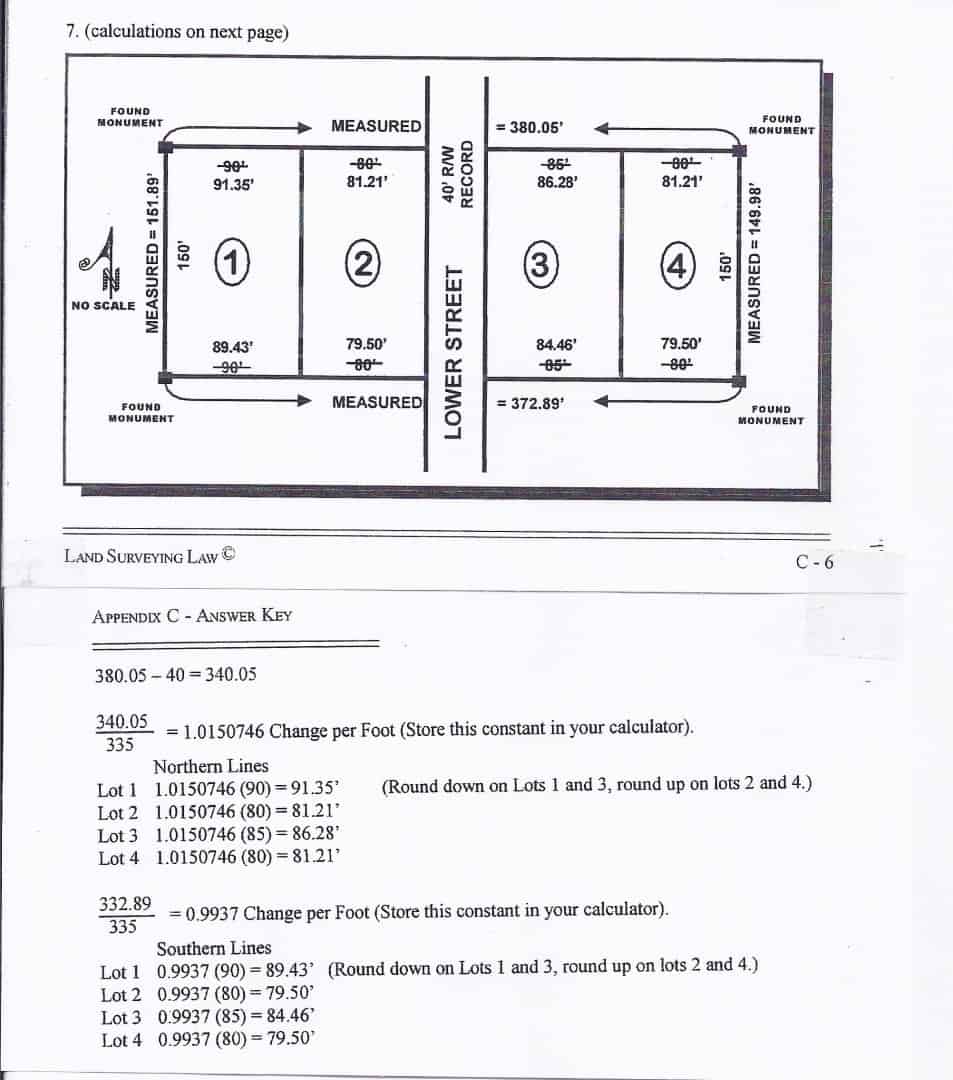
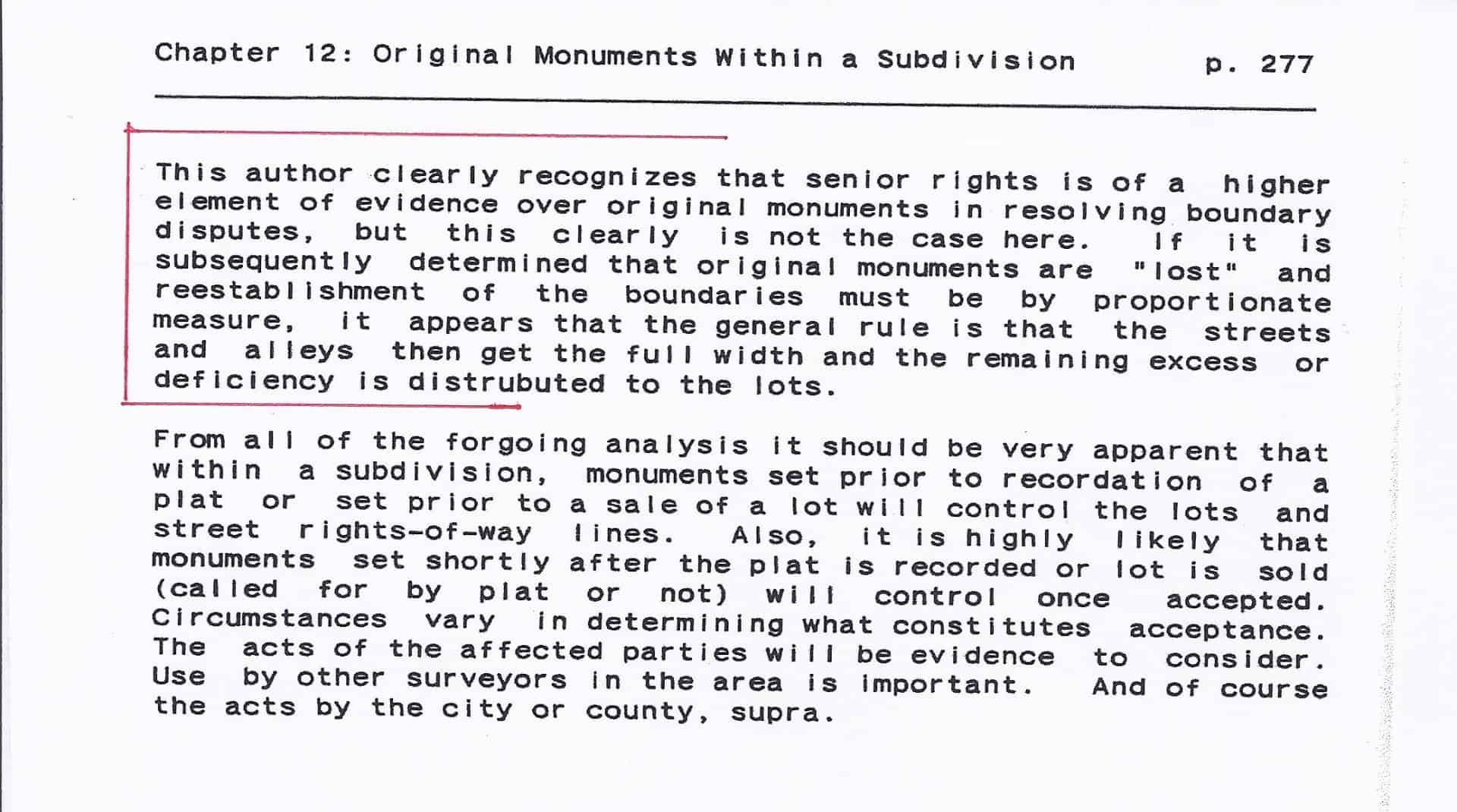
Here are the articles that I posted previously that disputes your interpretations regarding street prorations.
Jim in AZ, post: 333249, member: 249 wrote: "Not in this state. Government always gets full width, no matter the excess or deficiency."
Why? Aren't all the parcels in a subdivision created simultaneously? If so a street dous not have seniority and should be prorated as all the other parcels are. It doesn't matter if it has been abandoned or not.
Jim:
Here are the articles that I posted previously that disputes your interpretations regarding street prorations.
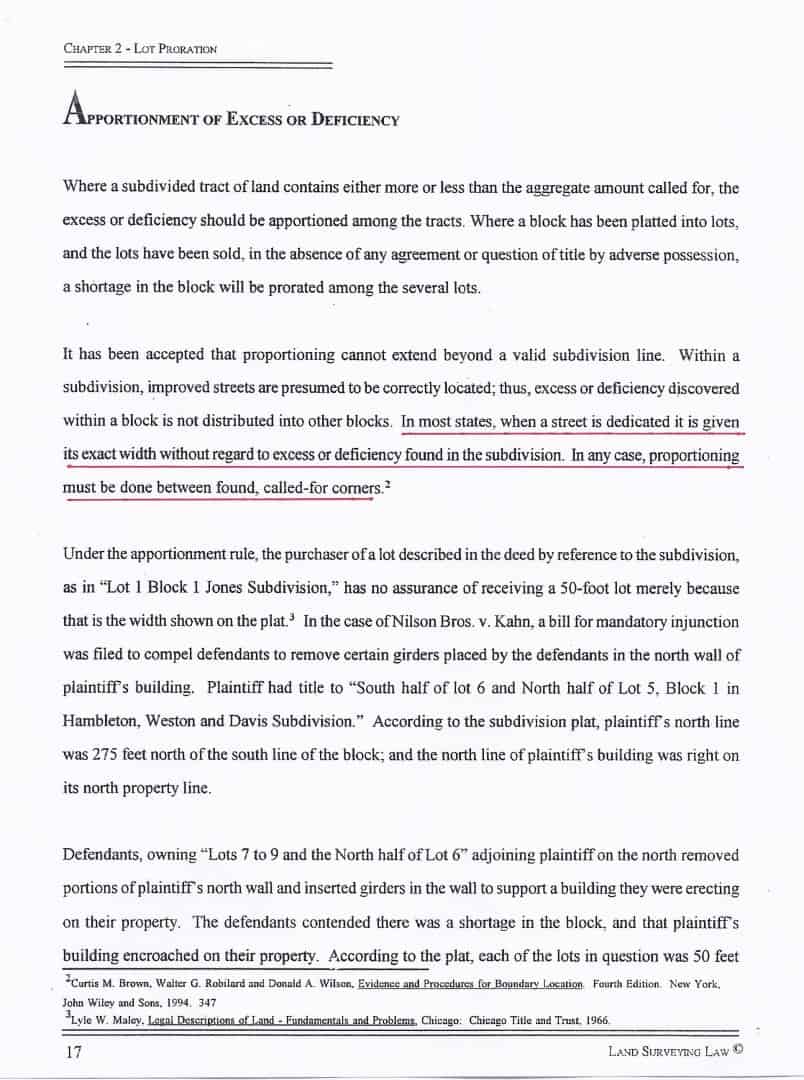
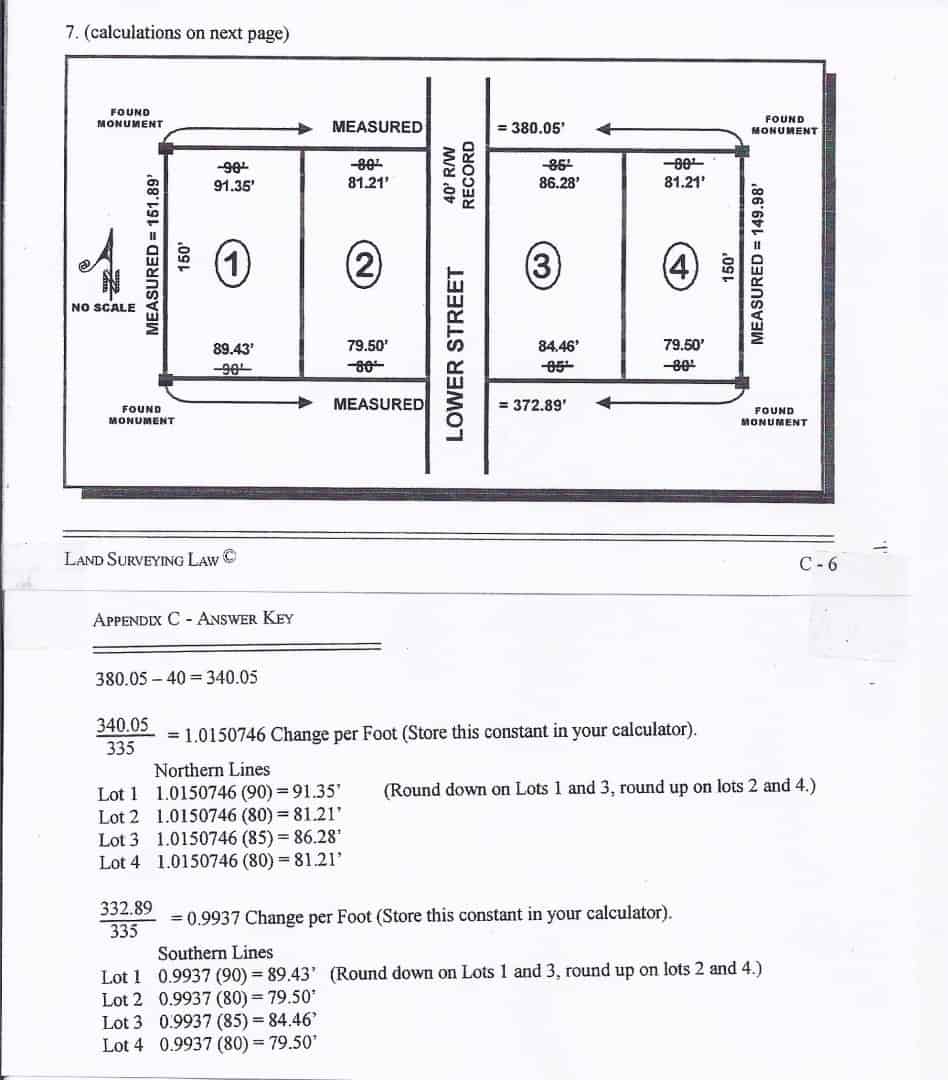
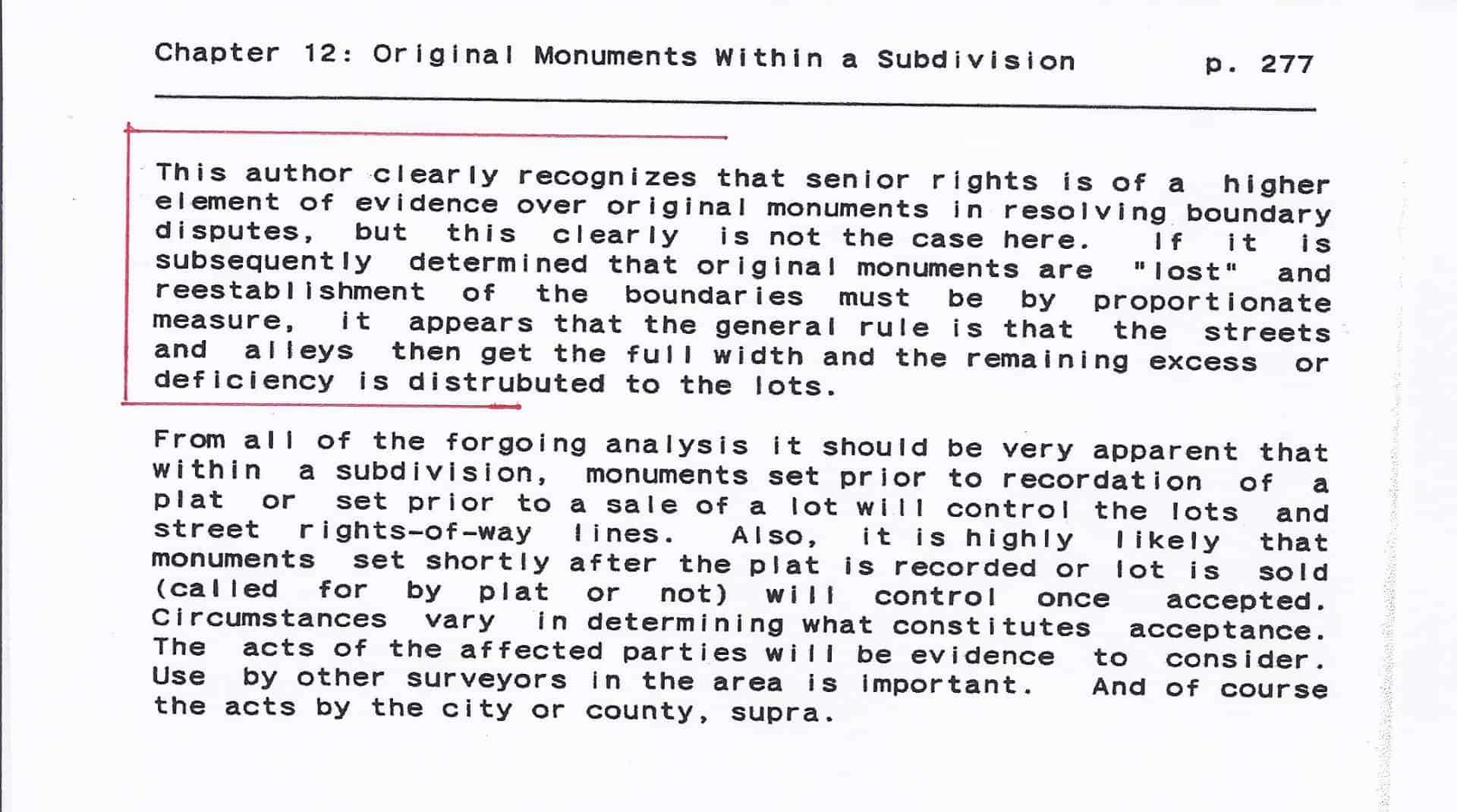
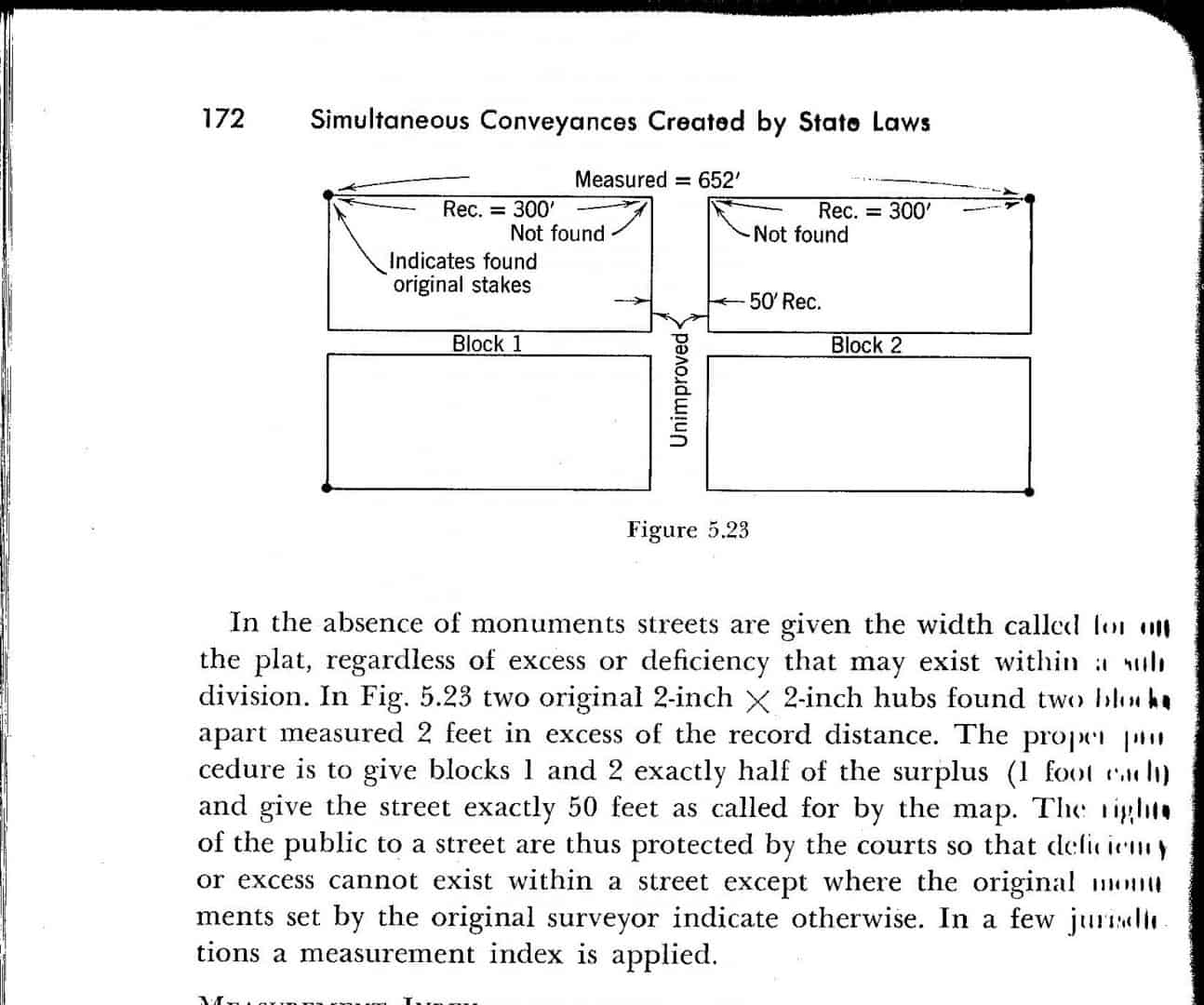
 [QUOTE="Jim in AZ, post:
Jim in AZ, post: 333249, member: 249 wrote: "Not in this state. Government always gets full width, no matter the excess or deficiency."
Why? Aren't all the parcels in a subdivision created simultaneously? If so a street dous not have seniority and should be prorated as all the other parcels are. It doesn't matter if it has been abandoned or not.
Jim:
Here are the articles from various publications that I posted before concerning proation of streets, that show your concept as erroneous.
Hey Leonard - good to hear from you!
So you would argue that a subdivision plat does not simultaneously create ALL of the parcels therein?
You missed Ron Platt's earlier statements "It is quite clear that to consider a recorded and platted subdivision anything but only one survey, we would also be throwing turmoil into the well settled rule of law for proportionate mwasure in a subdivision.
When a plat that purports to dedicate right-of-way to the public is shown on a subdivision map, it is only one of the many parcels that is created equal. At the very instant of time that the plat is recorded, the title passes to the city or county. This is not a senior conveyance, merely the first parcel that changes ownership with equal standing.
No cases were found during the research for this paper that would suggest the streets to have senior rights over original monumentation, and to consider the streets as a senior conveyence over monumentation would defeat the theory behibd a simultaneous conveyance, not to mention the case law presented herein."
I prefer to follow case law, the theory of simultaneous conveyance (properly applied), and not the "general rule." My concept is not erroneous - a subdivision plat creates all of the parcels equally. Period. It appears to me that it is the "general rule" that is erroneous.
Jim,
I see this as not so much whether streets are of a "greater" value in retracement, but that they certainly are different. Most rights-of-way that I deal with are an easement interest (Freeways being a notable exception). In California, it is now required to state whether the offer of dedication on a subdivision map is in fee or as an easement.
As a special type of public encumbrance over the underlying, adjacent lots; public utilities coexist with the travel way, landscaping, etc. Building setbacks are measured from the limits, based upon an adopted General Plan - with minimum widths.
In determining the retracement of a given lot within a subdivision, I would limit the potential alternate positions created by proration to as small an area as possible. The re-creation of a block seems to be the ideal, being that each block is subject to its share of the dedicated right of way. In California's Civil Code is a statute declaring the presumption that real property extends to the center of adjacent ROW. This is what occurs upon vacation of the public interest. Consider the effect when a public utility easement is reserved over the whole. Is it not an invariable width? Proration would indeed be performed from the original centerline, subject to the easement.

Lamon Miller, post: 333241, member: 553 wrote: You guys sure know how to make a simple concept difficult.
First, a drawing showing the blocks, lots and streets is necessary to understand the problem. As well, it needs be known the sequence or history of property transfers as well as jurisdictional codes, laws, regulations and common practices. In other words, while it is alleged "You guys sure know how to make a simple concept difficult," it can just as well be argued that the concept was complex because the simple relevant facts were not presented. Evidence is in the form of "if this" and "if that" in the responses.
Jim in AZ, post: 333293, member: 249 wrote: So you would argue that a subdivision plat does not simultaneously create ALL of the parcels therein? ......
The issue here is whether roads get their full measure, and as far as that goes I don't have to make any argument. Skelton, Brown, and Robillard do it for me. Line up 100 PLS's chosen at random, and 99 of them will agree with Skelton, Brown, and Robillard. The other 1 is Jim in Az. If you and I are in court being expert witnesses for opposing sides on this issue ..... well .... I like my chances.

I guess it depends on your state/regs. In QLD Australia the 'Road Lot' has just as much rights as the free hold.
If there's 3 properties with 20m frontage and a 20m wide road and you have 81m between marks at either end (obviously wildly outrageous made up numbers) each 'Lot' gets an extra 0.25m (assuming there's no other evidence to suggest where the excess falls, like occupation etc).
So each of the 3 lots now has a 20.25m frontage and the road is 20.25m wide.
Same goes for the other way, roads have no more rights than property. If there's shortage, road gets that too.
I guess it depends on your state/regs. In QLD Australia the 'Road Lot' has just as much rights as the free hold.
If there's 3 properties with 20m frontage and a 20m wide road and you have 81m between marks at either end (obviously wildly outrageous made up numbers) each 'Lot' gets an extra 0.25m (assuming there's no other evidence to suggest where the excess falls, like occupation etc).
So each of the 3 lots now has a 20.25m frontage and the road is 20.25m wide.
Same goes for the other way, roads have no more rights than property. If there's shortage, road gets that too.

A street is not a parcel. If it were, the assumed owning municipality could sell it off and take away your use of it.
Let us assume a 50' right of way. That is 50' for everyone to use and there is a greater need for the public to be made whole than any series of lot owners.
However I have come across filed maps that show a 50' right of way on perimeter streets but the original tract never held the full width. That was a hope and a prayer that the adjacent parcel would develop and make up the shortfall, which sometimes never happened. I owned seven lots in an unbuilt subdivision with several on a perimeter street that in reality was 7' to 38' in width. That street was not needed to make all the lots useful and it disappeared into adjacent original lots.
A street may not have senior rights as we understand them but does have superior rights to individual lots.
Paul in PA

Jim, very few would arge that streets have "senior rights over original monumentation". If the monuments are there they govern.
The question is how to proportion when the monuments are missing. Robillard was only able to find one court case were the streets were proportioned.
I am licenced in Arizona but have done very little work there. Are you aware of any precedent setting cases in Arizona that instruct us to proportion streets?

Paul in PA, post: 333318, member: 236 wrote: A street may not have senior rights as we understand them but does have superior rights to individual lots.
Paul in PA
So in the instance of this pdf example, the NW Cor. of Lot 14, Block 1 would be set at 24.25' from the NE Cor. of that Lot?