

[MEDIA=youtube]Mj2yzsgFtgw[/MEDIA]
Andy J, post: 373552, member: 44 wrote: that's one thing, but I just don't need to.

Nate The Surveyor, post: 373546, member: 291 wrote: Here is the final plat. The rain shot, above was taken at the South 1/4 corner.
Thanks for sharing your plat Nate. There is a lot to be learned from seeing how surveyors in other parts of the country are illustrating boundaries.

I just learned to upload to YouTube:
[MEDIA=youtube]TAwPkR-1g2o[/MEDIA]

[USER=291]@Nate The Surveyor[/USER]
Check out your point of beginning in your description. I think you will want to correct that.
Yes sir! Always like an extra set of eyes.
Thanks Mr Cow.
N

eapls2708, post: 373540, member: 589 wrote: When I worked in the Seattle area, I found that all of the electronic and optical equipment had a layer of some sort of wax sealing over the rubber seals that the factory installed between body parts of the shell of the equipment. The only place where there was no wax seal was where the parts had to move relative to each other for horizontal and vertical angular movement. While this didn't make the equipment waterproof, it went a long way to increasing its weather resistance.
If people did not use their equipment, electronic or otherwise in wet weather in that part of the country, virtually nothing would get done from mid-September to late May in any given year. You might find an average of 2 or 3 days a month in that time in which you could get a full field day of work in.
Moisture might be rough on electronic equipment, but unemployment is rougher on field crews, and even rougher on employers who can't keep good field help around because he tells them to stay home 18 to 20 days per month out of fear of getting the equipment wet.
It has nothing to do with ignorance and everything to do with practicality.
Well I will call BS on that.
We have an annual rainfall average here of about 65-70Û. I believe that is almost twice the average of Seattle. Been working here for almost 40 years and never had a problem with losing employees or clients because of the rain. You treat your employees well and have work plans that benefit everyone.
I can list 4 or 5 company policies but why bother.
I remember one year there was an average rainfall of about 100Û. No problem with people getting their hours because of various work schedule options. No problems getting the work done. Usually 10% of hours are billed for uncontrollable conditions. It is standard practice on government and private work orders.
BUT..when I see the word ÛÏcopiousÛ amount of water being used and someone is trying to work around or through it, I find it foolish.
We have GPSed with plastic bags on antennas, We have use TS in the rain but usually light rain and the rain hat is used between readings. But steady hard rain, the instruments get boxed.
I had the Topcons Hipers get damaged when squalls or fronts pass though. The seals did not hold.
So I see the Javadistas (Nate & Shawn) like your post so it must be standard practice to drench their equipment.
This is an old article
http://www.livescience.com/1558-study-reveals-top-10-wettest-cities.html

[USER=291]@Nate The Surveyor[/USER]
What is Por or Por.? Portion? The SW 1/4 NE 1/4 and the W1/2 W1/2 SE 1/4 NE 1/4 look whole...
How does the record description read? Metes and Bounds??
Is Hwy. 84 AKA Rock Creek Road?
Are set monuments based upon a NEW subdivision of the Section?
DDSM
@ ddsm
Some are, some are based on Webb's subdivision. The Webb plat contains a typo or something... Does not close by 10 ft. It turns out that the typo is over near the calc w1/4 cor. I felt that I should isolate the 10'.
So, I re ran this to make sure it did not have a bearing on my survey.
@ Robert Hill
If it's your job, it's your call. If it's someone else's job, it's their call. Leave others alone.
Nate
Nate The Surveyor, post: 373640, member: 291 wrote: @ ddsm
@ Robert Hill
If it's your job, it's your call. If it's someone else's job, it's their call. Leave others alone.Nate
Sure enough Nate. You got it. So much for discussion on a discussion board.

eapls2708, post: 373540, member: 589 wrote:
It has nothing to do with ignorance and everything to do with practicality.
Our equipment is rated for weather, or we don't buy it. If it can't handle the weather, we stop buying that equipment.
We did have Hipers get damaged, the fault was ours for not fixing the gortex breather when we broke it. Since then it has spent accumulated years sitting in all sorts of rain. Perhaps not as much as LA, but enough that I am confident that it is fine.
And, we have Nikon, Topcon, Leica, they all do fine. Just don't store them in the box at the end of the day, let them breath.
If somebody wants to get wet, well let em! Calling names, and such is over the line, on matters of personal opinion, on the weather, and what is suitable to work in, and what is not.
If somebody wants to get wet, let 'em!
N
.

Robert Hill, post: 373621, member: 378 wrote: Well I will call BS on that.
We have an annual rainfall average here of about 65-70Û. I believe that is almost twice the average of Seattle.
It's not the amount of rain in the northwest that's the problem, it's the duration. Rather than three inches in a downpour, its a slow steady half an inch a day for the entire week. I had boat shoes rot over a winter in college in Oregon because they never got dry.


Robert Hill, post: 373621, member: 378 wrote: Well I will call BS on that.
We have an annual rainfall average here of about 65-70Û. I believe that is almost twice the average of Seattle. Been working here for almost 40 years and never had a problem with losing employees or clients because of the rain. You treat your employees well and have work plans that benefit everyone.
I can list 4 or 5 company policies but why bother.
I remember one year there was an average rainfall of about 100Û. No problem with people getting their hours because of various work schedule options. No problems getting the work done. Usually 10% of hours are billed for uncontrollable conditions. It is standard practice on government and private work orders.
BUT..when I see the word ÛÏcopiousÛ amount of water being used and someone is trying to work around or through it, I find it foolish.
We have GPSed with plastic bags on antennas, We have use TS in the rain but usually light rain and the rain hat is used between readings. But steady hard rain, the instruments get boxed.
I had the Topcons Hipers get damaged when squalls or fronts pass though. The seals did not hold.
So I see the Javadistas (Nate & Shawn) like your post so it must be standard practice to drench their equipment.
This is an old article
http://www.livescience.com/1558-study-reveals-top-10-wettest-cities.html
Go ahead, call BS. You are only showing your own ignorance of conditions in other regions. The NW doesn't get hurricanes. It rarely gets thunderstorms and the downpours that come with them. It does get weeks of non-stop precipitation that ranges from a light drizzle to a steady moderate shower. It also gets an occasional heavy rain accompanied by strong winds.
Regional rainfall charts are practically meaningless to NW Washington. Most likely show a wide band that covers an area from the crest of the Cascades to some point in the middle of the Olyimpic Peninsula. If you look at a more detailed rainfall chart that covers only the Olympic Peninsula and the Puget Sound area, you would find that average annual rainfalls vary greatly with most areas having between 40" and 120". The wettest location in the Continental US, the Hoh Rainforest (250"/yr) is only 30 miles from a location that receives one of the lowest average precipitation in the US, Sequim (17"/yr). http://www.wsdot.wa.gov/publications/fulltext/Hydraulics/WaMeanAnnPrecip.pdf&apos ;">Western WA Rainfall Chart
Comparatively, all of LA seems to get somewhere between 50" and 68" annually on average. Likely, the vast majority of that comes with a dozen or so drenching rainstorms that each last a day or so. Pretty easy to plan around the precipitation when it all comes in short heavy bursts.  '">LA Rainfall Chart
I'm sure that your region has logistical challenges that many other regions don't. I won't pretend to know what those are. Meaning, I won't challenge your integrity based upon my ignorance.
Might I suggest that you afford your colleagues on this forum the same courtesy.
Yes, we work in the rain. I've worked in a light drizzle and not gotten wet; the trees suck the moister out of the air.
We also have some great surveying weather; but don't tell anyone, it's a secret.
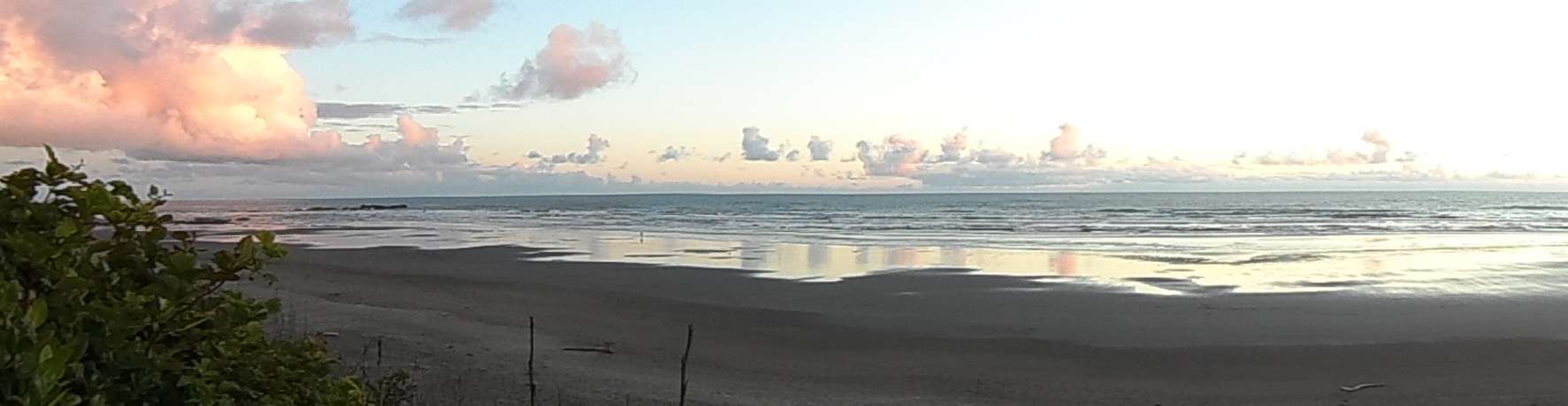
In a few weeks, this will be the view from my campsite for about a week......can't wait.
Bill93, post: 373438, member: 87 wrote: If something would get hot in a microwave oven then it is going to soak up some of the gps signal. It would be an interesting experiment to see how much loss comes from what thickness of water.
I talked with Shawn Billings this morning... He mentioned this post.
For SOME REASON, I went to thinking about a microwave tower... (sidetrack)
Shawn said that Bill meant to try the plastic in the microwave... (the plastic, that I'm trying to make a little cover out of) and that IF it gets hot, that piece would be disqualified from my use.
I had not looked at it like that.
Thanks Bill.
That gives me some ideas.
Nate