

You may be right I haven't really looked at the prices of full base and rover systems as unfortunately it's outside of my price range at the moment. It's static only for me for now.

I can run my epoch 50's (r8's) of the t2 when using the internet option. You have purchase a static ip address, mine was $500. I run my two epoch 50's and my ls off the t2 at the same time.

Nate The Surveyor, post: 343304, member: 291 wrote: Jim, I cannot see your pics
Hmmm...I wonder if you have to be logged into the Javad site for those to show up.
Here are copies: 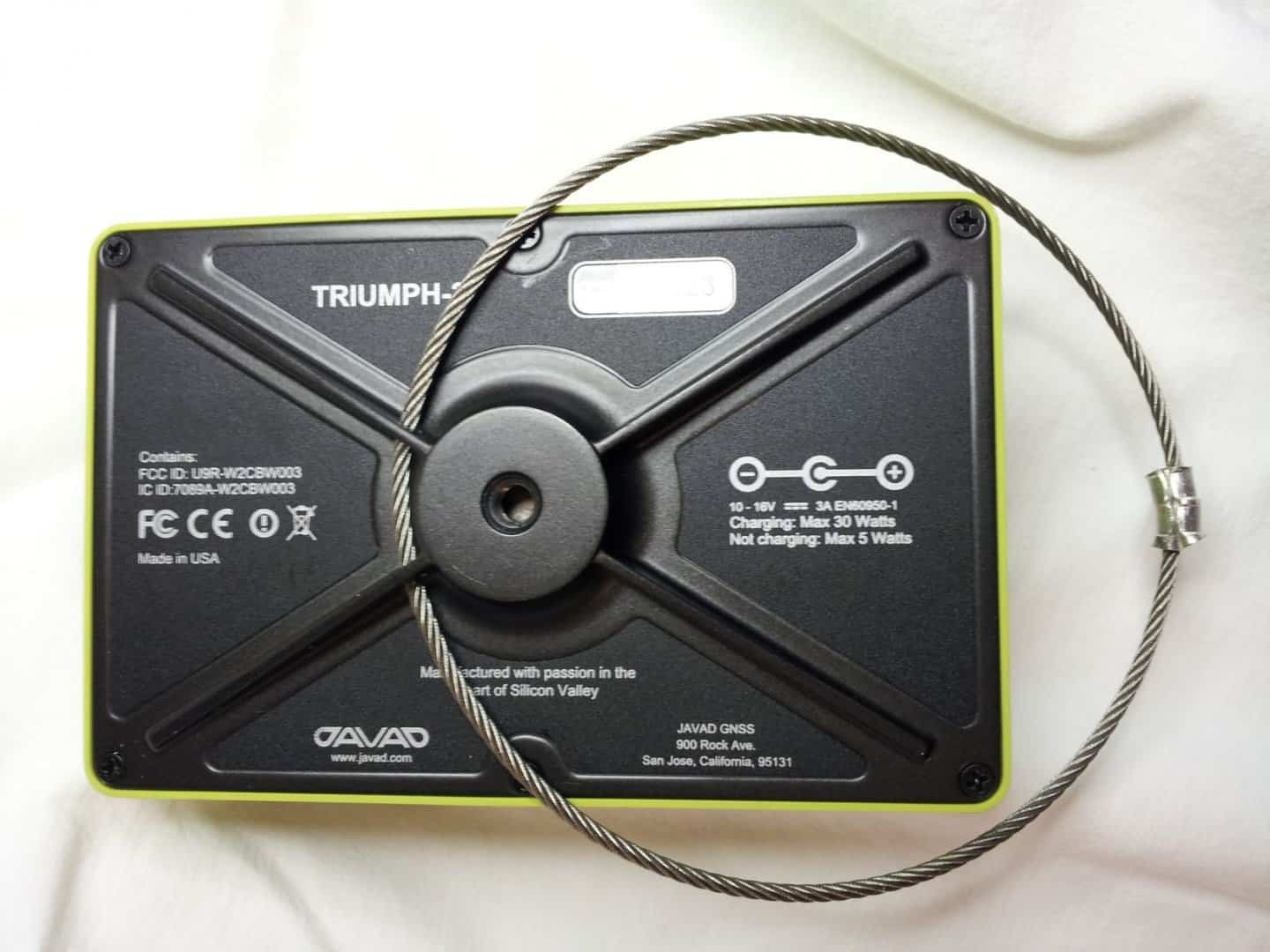
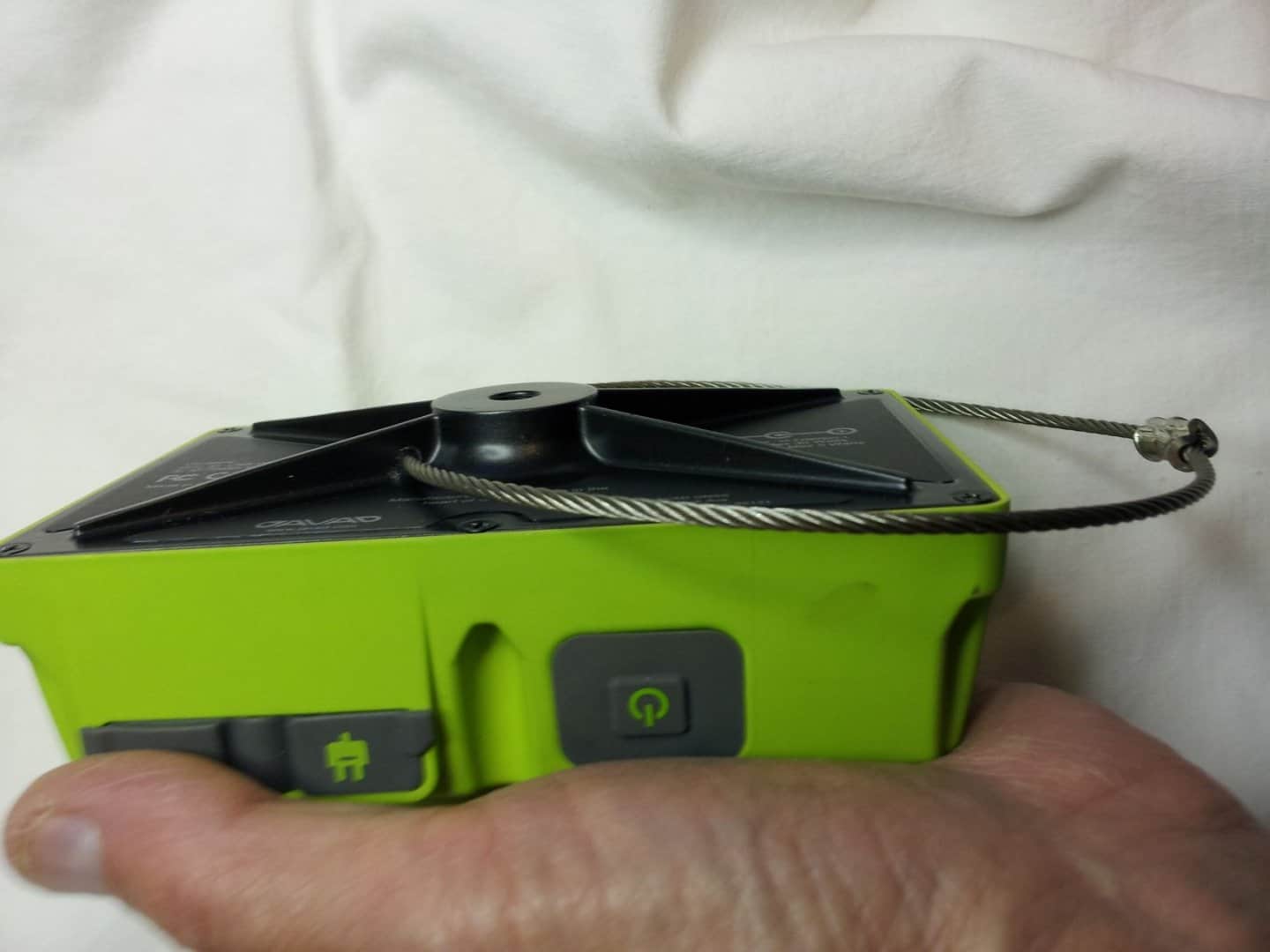
The T-LS would be harder to lock up, but since I only use it as a rover that's not a problem.

Since this forum has become an advertising ground for Javad, I'd just like to point out that Trimble receivers can run at 20Hz, and they've been able to do this for years. I believe Leica's have done high rate for quite some time as well.
Gimmicks sell, but rarely pay off for the buyer. Too each his own. You get what you pay for in the end.

Trimble lost me, when they said that "Glonass does not work". And, I saw the difference, and it did work.
Nate
When did you hear that statement?
yrs ago when Javad had Glonass, but nobody else did. It was several yrs before Trimble finally got it.
Yeah, that was 2001, when he sold his company to Topcon.
Trimble started to do it 2005, so they were probably developing it before 2001.
It was too hard for me to TRUST the equipment, that they lied to sell me. So, I did not buy from them. They told it to everybody.
Has Trimble got anything comparable to the Javad LS? And, have they quit saying things that are not true, to make a sale? I have been using a Legacy E system for years. It will fix in the woods. So, I developed several checks. The main thing I was worried about was BAD INIT. So, if it was a shot on a point I never wanted to return to, I'd move over some, to altogether change the multipath environment, and shoot another fix, and then tape between them. Pines are the worst. I have a 25' hixon Pole, to get above stuff. Sometimes LOWER is better. Anyhow, if it will fix fast, Then I can run checks on it, and I'm good.

SurveyAK, post: 343459, member: 9968 wrote: Since this forum has become an advertising ground for Javad, I'd just like to point out that Trimble receivers can run at 20Hz, and they've been able to do this for years. I believe Leica's have done high rate for quite some time as well.
Gimmicks sell, but rarely pay off for the buyer. Too each his own. You get what you pay for in the end.
It's no gimmick. Beast Mode is a base transmit setting. Higher base transmission rate improves time to fix. 5hz, for example, will produce fixes 5x faster than 1hz transmissions. Higher position rates have no effect on fix time. Other manufacturers apparently can broadcast higher than 1hz, but to my knowledge no one has really taken the time to explain the practical implications of doing so. This is why this topic keeps coming up.
Is the 20 hertz you mentioned the position rate or the broadcast rate?
Did you drill the holes or were they already on it?
For surveyAK:
I did not know that any other brand did 5hz or even 10 or 20. But, I don't think that is really what is propelling all this.
I think it is the combination of 6 RTK engines, and 864 channels, AND 5hz mode, that is doing it. In other words, any one of those is great, but when they all get together in one box, we have NASCAR! And checkered flags. Anytime somebody in the information business, gives bad info, then everything they say, is subject to question. el comprende?
You cannot fault a user of equipment, and information, for wanting the best. My customers demand it.
Do you fish in Alaska? I like fishing.
Regards,
Nate

Shawn Billings, post: 343485, member: 6521 wrote: It's no gimmick. Beast Mode is a base transmit setting. Higher base transmission rate improves time to fix. 5hz, for example, will produce fixes 5x faster than 1hz transmissions. Higher position rates have no effect on fix time. Other manufacturers apparently can broadcast higher than 1hz, but to my knowledge no one has really taken the time to explain the practical implications of doing so. This is why this topic keeps coming up.
I would expand upon Shawn's comments by saying that benefits increased transmission rates and reducing the time to fix are only fully realized if the receiver has a process to reset the RTK engines and check the initiations such as with Javad's automated RTK Verification and Validation. For receivers without such processes, initiations can be manually checked by the user by ÛÏdumpingÛ the receiver, turning it upside down causing the RTK engines to reset.
SurveyAK, post: 343459, member: 9968 wrote: Since this forum has become an advertising ground for Javad, I'd just like to point out that Trimble receivers can run at 20Hz, and they've been able to do this for years. I believe Leica's have done high rate for quite some time as well.
Gimmicks sell, but rarely pay off for the buyer. Too each his own. You get what you pay for in the end.
Just for what it is worth, have you asked for a demo?
I'd seriously like to hear your report.
There are no fans, like converted skeptics!
🙂
Nate

My old Hipers will do 20 or even 100 Htz at the rover. What they are saying is that the new Javad is transmitting at the base at a higher rate. The existing rovers are all receiving a transmission from the base at 1 second intervals (that has been standard) and then updating the rover position at 1Hz (1 Sec) and so on. If the Javad radio is transmitting a base position at a higher rate, the rover does not have to interpolate its position between the 1 second base transmission, and therefor has more info in order to process its fix.
And I don't think it is an ad campaign for Javad. It is the newest equipment and the only thing that really has new features - people are excited about that.
Is a higher transmit rate possible with a Trimble SPS855 base station?
I cannot see the broadcast frequency anywhere in the web interface.

As soon as there were enough GLONASS satellites to make having GLONASS capability worth having Trimble added GLONASS to their products. There was a long time there when the continued viability of GLONASS was seriously in question, and most people weren't interested in paying for it.
I don't think that SurveyAK is insulting your JAVAD. He is just saying that many of these features are also available on modern units from other manufacturers. I agree with him on that. For example I recall Leica heavily advertising 10hz update rates on their new units in the late '90s. I'm sure it's much higher now.
Norman Oklahoma, post: 343600, member: 9981 wrote: I don't think that SurveyAK is insulting your JAVAD. He is just saying that many of these features are also available on modern units from other manufacturers. I agree with him on that. For example I recall Leica heavily advertising 10hz update rates on their new units in the late '90s. I'm sure it's much higher now.
10Hz update is different from 10Hz broadcast. 10Hz update extrapolates a position at 0.1 second intervals. This can be done with 1Hz correction broadcast. It's possible that Leica has had greater-than 1Hz broadcasting, maybe even 10Hz broadcasting. But it's a whole different candy jar talking about broadcasting rate over position rate. Higher broadcasting rate provides faster time to fix. Higher position rate has NO effect of time to fix. For whatever reason, even though the ability to broadcast greater than 1Hz has been around for a decade (as others have pointed out), the manufacturers have not made a case for why a surveyor should ever care to do so. Javad and his development team had a thought that there would be a practical application to surveyors for this feature, and they were right. The time to fix is inversely proportional to the correction rate. 5Hz fixes five times faster than 1Hz. Not a big deal in the open. Most everyone fixes in under 10 seconds these days in open spaces, but in canopy, the higher rate makes impractical wait times more practical. A fix time of 2 minutes is reduced to less than 30 seconds. You get the point...
I feel like a broken record, but it seems this point has still not quite saturated. That's okay. I've had the luxury of seeing it so it's a bit more tangible for me. Once surveyors begin to realize the significance of high rate transmit (NOT high rate update/positioning), all of the manufacturers will be forced to follow suit.
I've been told that Topcon has this now. I believe it. I've looked at their documentation though and it isn't mentioned in the Magnet user guide. Clearly the industry has failed, at least in part, to highlight a very useful (likely already existing) feature of their equipment.