Reading RPLS is free for the whole profession. Members post, reply, and get the members-only rooms.


Notifications
Clear all
GNSS & Geodesy
23
Posts
18
Users
0
Reactions
1,648
Views

Topic starter
Translate
▼
English
Spanish
French
German
Italian
Portuguese
Russian
Chinese
Japanese
Korean
Arabic
Hindi
Dutch
Polish
Turkish
Vietnamese
Thai
Swedish
Danish
Finnish
Norwegian
Czech
Hungarian
Romanian
Greek
Hebrew
Indonesian
Malay
Ukrainian
Bulgarian
Croatian
Slovak
Slovenian
Serbian
Lithuanian
Latvian
Estonian
Question: What is the best tool for calculating the anticipated vertical difference between the 1929 and the 1988 datum for a given location?
Say such as here, for example?
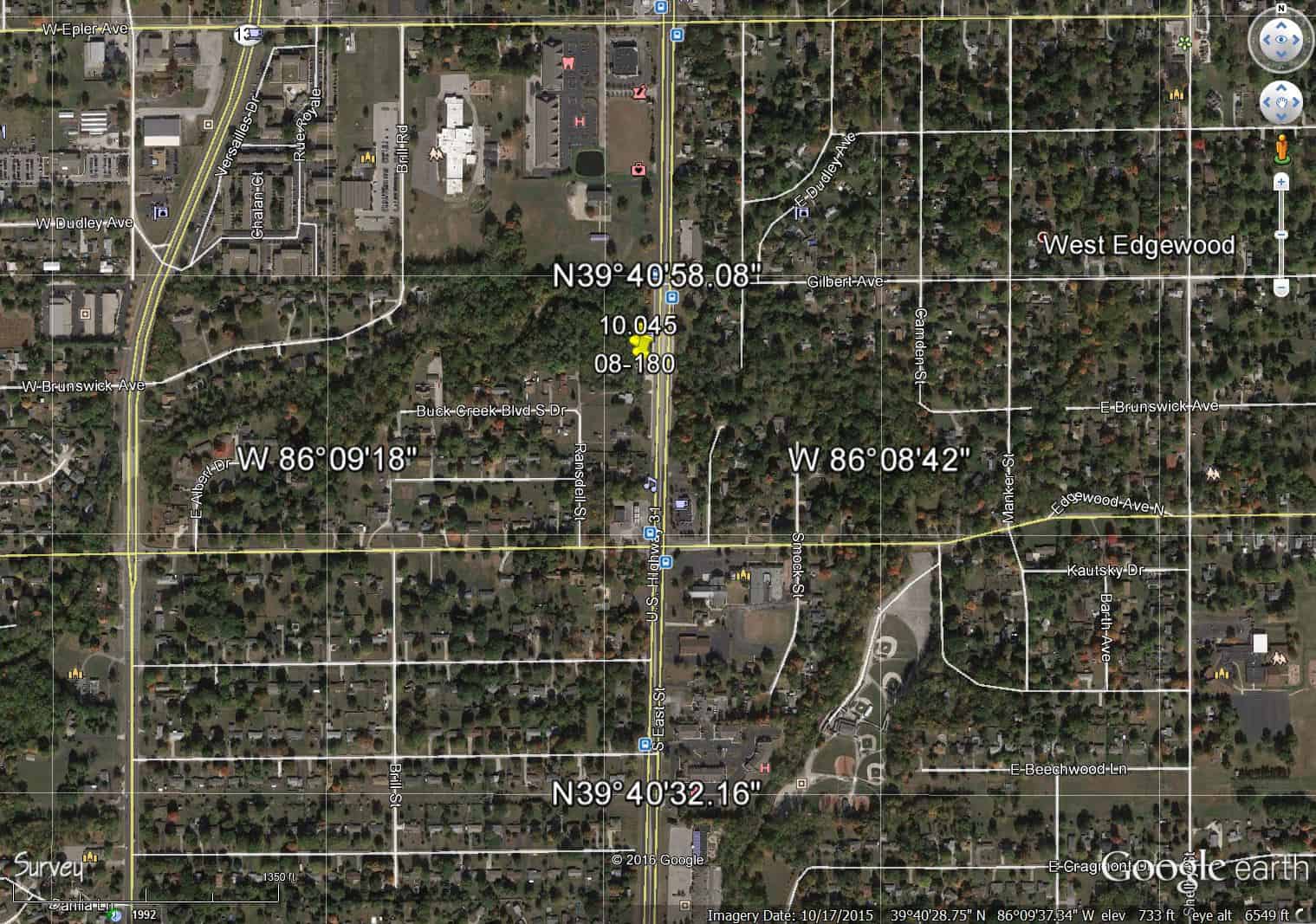
I started to look into downloading Corpscon to my new pc, but it looked like a buggy and clunky download, so I wondered if there is something more modern available? Maybe my Carlson software will do it?...
Posted : May 13, 2016 7:10 am

Translate
▼
English
Spanish
French
German
Italian
Portuguese
Russian
Chinese
Japanese
Korean
Arabic
Hindi
Dutch
Polish
Turkish
Vietnamese
Thai
Swedish
Danish
Finnish
Norwegian
Czech
Hungarian
Romanian
Greek
Hebrew
Indonesian
Malay
Ukrainian
Bulgarian
Croatian
Slovak
Slovenian
Serbian
Lithuanian
Latvian
Estonian
42....that's the real answer.
Posted : May 13, 2016 7:14 am
Topic starter
Translate
▼
English
Spanish
French
German
Italian
Portuguese
Russian
Chinese
Japanese
Korean
Arabic
Hindi
Dutch
Polish
Turkish
Vietnamese
Thai
Swedish
Danish
Finnish
Norwegian
Czech
Hungarian
Romanian
Greek
Hebrew
Indonesian
Malay
Ukrainian
Bulgarian
Croatian
Slovak
Slovenian
Serbian
Lithuanian
Latvian
Estonian
Tom Adams, post: 372046, member: 7285 wrote: 42....that's the real answer.
Funny. I actually would not be surprised if it turns out to be close to zero point four two (0.42).
Posted : May 13, 2016 7:16 am
Translate
▼
English
Spanish
French
German
Italian
Portuguese
Russian
Chinese
Japanese
Korean
Arabic
Hindi
Dutch
Polish
Turkish
Vietnamese
Thai
Swedish
Danish
Finnish
Norwegian
Czech
Hungarian
Romanian
Greek
Hebrew
Indonesian
Malay
Ukrainian
Bulgarian
Croatian
Slovak
Slovenian
Serbian
Lithuanian
Latvian
Estonian
Obviously I didn't have anything productive to say, so I had to say something. I look forward to an answer as well. It's closer to 3' difference in these parts.
Posted : May 13, 2016 7:19 am

Translate
▼
English
Spanish
French
German
Italian
Portuguese
Russian
Chinese
Japanese
Korean
Arabic
Hindi
Dutch
Polish
Turkish
Vietnamese
Thai
Swedish
Danish
Finnish
Norwegian
Czech
Hungarian
Romanian
Greek
Hebrew
Indonesian
Malay
Ukrainian
Bulgarian
Croatian
Slovak
Slovenian
Serbian
Lithuanian
Latvian
Estonian
Brad Ott, post: 372044, member: 197 wrote: Question: What is the best tool for calculating the anticipated vertical difference between the 1929 and the 1988 datum for a given location?
Say such as here, for example?
I started to look into downloading Corpscon to my new pc, but it looked like a buggy and clunky download, so I wondered if there is something more modern available? Maybe my Carlson software will do it?...
I use the data sheets for that, the shift (at least where I am) is usually pretty consistent over a fairly large area; not like a geoid height which can change rapidly.
A quick look shows about -.45'; a 29 elevation of 600.45' will become an 88 elevation of 600.00'. You can check against some conversion programs but the real data is always good to see and I figure what's on the data sheets is what we use anyway.
Posted : May 13, 2016 7:27 am

Translate
▼
English
Spanish
French
German
Italian
Portuguese
Russian
Chinese
Japanese
Korean
Arabic
Hindi
Dutch
Polish
Turkish
Vietnamese
Thai
Swedish
Danish
Finnish
Norwegian
Czech
Hungarian
Romanian
Greek
Hebrew
Indonesian
Malay
Ukrainian
Bulgarian
Croatian
Slovak
Slovenian
Serbian
Lithuanian
Latvian
Estonian
I'm lucky my differential is -0.98' convienently rounded to 1.00' B-)
Corpsocn is the tool we used. In our work a tenth or two doesn't make any difference.
Posted : May 13, 2016 7:32 am

Translate
▼
English
Spanish
French
German
Italian
Portuguese
Russian
Chinese
Japanese
Korean
Arabic
Hindi
Dutch
Polish
Turkish
Vietnamese
Thai
Swedish
Danish
Finnish
Norwegian
Czech
Hungarian
Romanian
Greek
Hebrew
Indonesian
Malay
Ukrainian
Bulgarian
Croatian
Slovak
Slovenian
Serbian
Lithuanian
Latvian
Estonian
+1.1 feet here at Port Newark using CorpsCon latest version.
Using other methods I always get the same difference.
Posted : May 13, 2016 7:49 am

Translate
▼
English
Spanish
French
German
Italian
Portuguese
Russian
Chinese
Japanese
Korean
Arabic
Hindi
Dutch
Polish
Turkish
Vietnamese
Thai
Swedish
Danish
Finnish
Norwegian
Czech
Hungarian
Romanian
Greek
Hebrew
Indonesian
Malay
Ukrainian
Bulgarian
Croatian
Slovak
Slovenian
Serbian
Lithuanian
Latvian
Estonian
You could try this. Seems to work well.
http://www.ngs.noaa.gov/cgi-bin/VERTCON/vert_con.prl
Posted : May 13, 2016 8:17 am

Translate
▼
English
Spanish
French
German
Italian
Portuguese
Russian
Chinese
Japanese
Korean
Arabic
Hindi
Dutch
Polish
Turkish
Vietnamese
Thai
Swedish
Danish
Finnish
Norwegian
Czech
Hungarian
Romanian
Greek
Hebrew
Indonesian
Malay
Ukrainian
Bulgarian
Croatian
Slovak
Slovenian
Serbian
Lithuanian
Latvian
Estonian
My preferred method is to download datasheets for 2 or 3 monuments surrounding the current project site which have both '29 and '88 elevations (per levelling) on them. Calculate the differences, compare, and usually use an average difference.
Posted : May 13, 2016 9:22 am

Translate
▼
English
Spanish
French
German
Italian
Portuguese
Russian
Chinese
Japanese
Korean
Arabic
Hindi
Dutch
Polish
Turkish
Vietnamese
Thai
Swedish
Danish
Finnish
Norwegian
Czech
Hungarian
Romanian
Greek
Hebrew
Indonesian
Malay
Ukrainian
Bulgarian
Croatian
Slovak
Slovenian
Serbian
Lithuanian
Latvian
Estonian
It looks like there isn't a lot of change within a few miles of your place mark. An ADJUSTED line runs about 5 miles north so I think the VERTCON should have been calibrated to that. To the south you have to go further to get many bench marks.
At 4.5 miles NW
KA0131 NAVD 88 ORTHO HEIGHT - 211.527 (meters) 693.98 (feet) ADJUSTED
KA0131 NGVD 29 (??/??/92) 211.665 (m) 694.44 (f) ADJ UNCH 2 0
chg -0.46 ft
At 4.8 miles NW
KA0133* NAVD 88 ORTHO HEIGHT - 211.519 (meters) 693.96 (feet) ADJUSTED
KA0133 NGVD 29 (??/??/92) 211.656 (m) 694.41 (f) ADJ UNCH 2 0
chg -0.46 ft
At 4.9 miles NE
KA0177* NAVD 88 ORTHO HEIGHT - 243.705 (meters) 799.56 (feet) ADJUSTED
KA0177 NGVD 29 (??/??/92) 243.824 (m) 799.95 (f) ADJ UNCH 1 2
chg -0.39 ft
At 4.9 miles NE
KA0178* NAVD 88 ORTHO HEIGHT - 240.435 (meters) 788.83 (feet) ADJUSTED
KA0178 NGVD 29 (??/??/92) 240.570 (m) 789.27 (f) ADJ UNCH 1 2
chg -0.44 ft
And several closer than that have VERTCON values that don't change much
1.2 miles E
KA1952* NAVD 88 ORTHO HEIGHT - 235.57 (+/-2cm) 772.9 (feet) VERTCON
KA1952 NGVD 29 (07/19/86) 235.70 (m) 773.3 (f) LEVELING 3
chg -0.4 ft
At 1.9 miles N
KA1956* NAVD 88 ORTHO HEIGHT - 225.97 (+/-2cm) 741.4 (feet) VERTCON
KA1956 NGVD 29 (07/19/86) 226.10 (m) 741.8 (f) LEVELING 3
chg -0. 4 ft
At 4.7 miles SE
KA1942* NAVD 88 ORTHO HEIGHT - 247.28 (+/-2cm) 811.3 (feet) VERTCON
KA1942 NGVD 29 (07/19/86) 247.40 (m) 811.7 (f) LEVELING 3
chg -0.4 ft
At 4.8 miles NE
KA1934* NAVD 88 ORTHO HEIGHT - 239.16 (+/-2cm) 784.6 (feet) VERTCON
KA1934 NGVD 29 (07/19/86) 239.29 (m) 785.1 (f) LEVELING 3
chg -0.5 ft
At 4.8 miles NE
KA1934* NAVD 88 ORTHO HEIGHT - 239.16 (+/-2cm) 784.6 (feet) VERTCON
KA1934 NGVD 29 (07/19/86) 239.29 (m) 785.1 (f) LEVELING 3
chg -0.5 ft
Posted : May 13, 2016 9:31 am

Translate
▼
English
Spanish
French
German
Italian
Portuguese
Russian
Chinese
Japanese
Korean
Arabic
Hindi
Dutch
Polish
Turkish
Vietnamese
Thai
Swedish
Danish
Finnish
Norwegian
Czech
Hungarian
Romanian
Greek
Hebrew
Indonesian
Malay
Ukrainian
Bulgarian
Croatian
Slovak
Slovenian
Serbian
Lithuanian
Latvian
Estonian
VERTCON is the official tool to compute shifts between NGVD29 and NAVD88. It is a model based on actual measured differences between points whose heights were determined in each datum. It is not intended to (nor will) provide geodetic quality results.
CORPSCON is an interface for NGS programs VERTCON and NADCON and GEOID and SPCS and UTMS. All these programs (and more) are available in the NGS Toolkit. The USACE is to be commended for combining these individual tools into a user-friendly tool.
For a description and explanation of program operation see the preprint of an article that appeared in Professional Surveyor here: http://geodesyattamucc.pbworks.com/f/VERTCON4ProfSurveyor.pdf
The article includes some advice about determining its applicability in an area. In short, compute shifts around your project area and examine them to see whether they are consistent.
The version of the article linked from the NGS web site is an archived version without graphics.
HTH,
DMM
Posted : May 13, 2016 9:36 am
Translate
▼
English
Spanish
French
German
Italian
Portuguese
Russian
Chinese
Japanese
Korean
Arabic
Hindi
Dutch
Polish
Turkish
Vietnamese
Thai
Swedish
Danish
Finnish
Norwegian
Czech
Hungarian
Romanian
Greek
Hebrew
Indonesian
Malay
Ukrainian
Bulgarian
Croatian
Slovak
Slovenian
Serbian
Lithuanian
Latvian
Estonian
See file dsdata.txt located here: http://www.ngs.noaa.gov/cgi-bin/ds_lookup.prl?Item=DSDATA.TXT
When using NGS data sheets users should familiarize themselves with the notations used. I have copied the notations relevant to heights below:
NAVD 88 orthometric heights are displayed where available.
If there was a height for the station on the National Geodetic
Vertical Datum of 1929 (NGVD 29), then that height will be
displayed under SUPERSEDED SURVEY CONTROL.
There are various Vertical Control sources, as specified below:
ADJUSTED = Direct Digital Output from Least Squares Adjustment
of Precise Leveling.
(Rounded to 3 decimal places.)
ADJ UNCH = Manually Entered (and NOT verified) Output of
Least Squares Adjustment of Precise Leveling.
(Rounded to 3 decimal places.)
POSTED = Pre-1991 Precise Leveling Adjusted to
the NAVD 88 Network After Completion of
the NAVD 88 General Adjustment of 1991.
(Rounded to 3 decimal places.)
READJUST = Precise Leveling Readjusted as Required
by Crustal Motion or Other Cause.
(Rounded to 2 decimal places.)
N HEIGHT = Computed from Precise Leveling Connected
at Only One Published Bench Mark.
(Rounded to 2 decimal places.)
RESET = Reset Computation of Precise Leveling.
(Rounded to 2 decimal places.)
COMPUTED = Computed from Precise Leveling Using
Non-rigorous Adjustment Technique.
(Rounded to 2 decimal places.)
GPSCONLV = Leveled Orthometric Height tied to GPS
HT_MOD Orthometric Height.
(Rounded to 2 decimal places.)
LEVELING = Precise Leveling Performed by Horizontal
Field Party.
(Rounded to 2 decimal places.)
H LEVEL = Level between control points not connected
to bench mark.
(Rounded to 1 decimal places.)
GPS OBS = Computed from GPS Observations.
(Rounded to 1 decimal places.)
VERT ANG = Computed from Vertical Angle Observations.
(Rounded to 1 decimal place;
If No Check, to 0 decimal places.)
SCALED = Scaled from a Topographic Map.
(Rounded to 0 decimal places.)
U HEIGHT = Unvalidated height from precise leveling
connected at only one NSRS point.
(Rounded to 2 decimal places.)
VERTCON = The NAVD 88 height was computed by applying the
VERTCON shift value to the NGVD 29 height.
(Rounded to 0 decimal places.)
NOTE: NAVD 88 and NGVD 29 heights in meters are
converted to U.S. Survey Feet by using the
conversion factor:
U.S. Survey Feet = (39.37 / 12.00) x meters
Height in feet is rounded to 1 less decimal
place than the corresponding height in meters.
Posted : May 13, 2016 9:48 am

Translate
▼
English
Spanish
French
German
Italian
Portuguese
Russian
Chinese
Japanese
Korean
Arabic
Hindi
Dutch
Polish
Turkish
Vietnamese
Thai
Swedish
Danish
Finnish
Norwegian
Czech
Hungarian
Romanian
Greek
Hebrew
Indonesian
Malay
Ukrainian
Bulgarian
Croatian
Slovak
Slovenian
Serbian
Lithuanian
Latvian
Estonian
I always used VERTCON, but then the county I work in decided that a constant -1.17 is what everyone would use. So that's easy.
Posted : May 13, 2016 9:51 am

Translate
▼
English
Spanish
French
German
Italian
Portuguese
Russian
Chinese
Japanese
Korean
Arabic
Hindi
Dutch
Polish
Turkish
Vietnamese
Thai
Swedish
Danish
Finnish
Norwegian
Czech
Hungarian
Romanian
Greek
Hebrew
Indonesian
Malay
Ukrainian
Bulgarian
Croatian
Slovak
Slovenian
Serbian
Lithuanian
Latvian
Estonian
+1 for VERTCON
Posted : May 13, 2016 10:00 am

Translate
▼
English
Spanish
French
German
Italian
Portuguese
Russian
Chinese
Japanese
Korean
Arabic
Hindi
Dutch
Polish
Turkish
Vietnamese
Thai
Swedish
Danish
Finnish
Norwegian
Czech
Hungarian
Romanian
Greek
Hebrew
Indonesian
Malay
Ukrainian
Bulgarian
Croatian
Slovak
Slovenian
Serbian
Lithuanian
Latvian
Estonian
Mark Mayer, post: 372072, member: 424 wrote: My preferred method is to download datasheets for 2 or 3 monuments surrounding the current project site which have both '29 and '88 elevations (per levelling) on them. Calculate the differences, compare, and usually use an average difference.
This is the only real way as "29" is a local datum especially along the coast. "29" is based upon the belief at the time that sea level was in fact actually level, so , a mean taken here was the same as a mean taken over there. As you go inland, you may be able to factor it as I am guessing not to many "means" were brought in, but, on the coast there are many.
Posted : May 13, 2016 10:18 am

Translate
▼
English
Spanish
French
German
Italian
Portuguese
Russian
Chinese
Japanese
Korean
Arabic
Hindi
Dutch
Polish
Turkish
Vietnamese
Thai
Swedish
Danish
Finnish
Norwegian
Czech
Hungarian
Romanian
Greek
Hebrew
Indonesian
Malay
Ukrainian
Bulgarian
Croatian
Slovak
Slovenian
Serbian
Lithuanian
Latvian
Estonian
Tom Adams, post: 372046, member: 7285 wrote: 42....that's the real answer.
Actually it is 59.
The difference: 88-29 = 59
Also, the mean is 59 (rounded): (88+29)/2 = 58.5.
Posted : May 13, 2016 10:30 am

Translate
▼
English
Spanish
French
German
Italian
Portuguese
Russian
Chinese
Japanese
Korean
Arabic
Hindi
Dutch
Polish
Turkish
Vietnamese
Thai
Swedish
Danish
Finnish
Norwegian
Czech
Hungarian
Romanian
Greek
Hebrew
Indonesian
Malay
Ukrainian
Bulgarian
Croatian
Slovak
Slovenian
Serbian
Lithuanian
Latvian
Estonian
Ever wonder how FEMA computes this datum conversion?
The determined value(s) are used to adjust the hydraulic models and thus the flood profile.
This was formerly known as APPENDIX B
DDSM:beer::beer::beer:
Posted : May 13, 2016 10:32 am
Translate
▼
English
Spanish
French
German
Italian
Portuguese
Russian
Chinese
Japanese
Korean
Arabic
Hindi
Dutch
Polish
Turkish
Vietnamese
Thai
Swedish
Danish
Finnish
Norwegian
Czech
Hungarian
Romanian
Greek
Hebrew
Indonesian
Malay
Ukrainian
Bulgarian
Croatian
Slovak
Slovenian
Serbian
Lithuanian
Latvian
Estonian
ppm, post: 372088, member: 6808 wrote: Actually it is 59.
The difference: 88-29 = 59
Also, the mean is 59 (rounded): (88+29)/2 = 58.5.
That is too profound....wow....now I have to rethink the answer to life, the universe, and everything.
Posted : May 13, 2016 10:45 am
Translate
▼
English
Spanish
French
German
Italian
Portuguese
Russian
Chinese
Japanese
Korean
Arabic
Hindi
Dutch
Polish
Turkish
Vietnamese
Thai
Swedish
Danish
Finnish
Norwegian
Czech
Hungarian
Romanian
Greek
Hebrew
Indonesian
Malay
Ukrainian
Bulgarian
Croatian
Slovak
Slovenian
Serbian
Lithuanian
Latvian
Estonian
Tom Adams, post: 372092, member: 7285 wrote: That is too profound....wow....now I have to rethink the answer to life, the universe, and everything.
I was shocked as well. Who'dathunk?
Posted : May 13, 2016 11:19 am

Translate
▼
English
Spanish
French
German
Italian
Portuguese
Russian
Chinese
Japanese
Korean
Arabic
Hindi
Dutch
Polish
Turkish
Vietnamese
Thai
Swedish
Danish
Finnish
Norwegian
Czech
Hungarian
Romanian
Greek
Hebrew
Indonesian
Malay
Ukrainian
Bulgarian
Croatian
Slovak
Slovenian
Serbian
Lithuanian
Latvian
Estonian
"25 or 6 to 4 - does anybody know what time it is; does anybody really care?"
Chicago Transit Authority
Posted : May 13, 2016 11:31 am
Page 1 / 2
Next