Reading RPLS is free for the whole profession. Members post, reply, and get the members-only rooms.

Notifications
Clear all
Strictly Surveying
13
Posts
8
Users
0
Reactions
1,395
Views

Topic starter
Translate
▼
English
Spanish
French
German
Italian
Portuguese
Russian
Chinese
Japanese
Korean
Arabic
Hindi
Dutch
Polish
Turkish
Vietnamese
Thai
Swedish
Danish
Finnish
Norwegian
Czech
Hungarian
Romanian
Greek
Hebrew
Indonesian
Malay
Ukrainian
Bulgarian
Croatian
Slovak
Slovenian
Serbian
Lithuanian
Latvian
Estonian
Does anyone have any studies on long term survey mark accuracy?
Someone I'm working with is interested in try to figure out how much movement their monitoring points are likely to see, so they can determine a suitable upper limit of movement.
In particular I'm interested in studies that try to relate survey mark movement to soil types. Not too interested in deep benchmarks. I'm more interested in marks similar to our permanent survey marks - buried concrete blocks with a plaque about 300mm square.
Posted : June 25, 2015 10:14 pm
Topic starter
Translate
▼
English
Spanish
French
German
Italian
Portuguese
Russian
Chinese
Japanese
Korean
Arabic
Hindi
Dutch
Polish
Turkish
Vietnamese
Thai
Swedish
Danish
Finnish
Norwegian
Czech
Hungarian
Romanian
Greek
Hebrew
Indonesian
Malay
Ukrainian
Bulgarian
Croatian
Slovak
Slovenian
Serbian
Lithuanian
Latvian
Estonian
BTW. Nice forum update. Good work.
Posted : June 25, 2015 10:15 pm

Translate
▼
English
Spanish
French
German
Italian
Portuguese
Russian
Chinese
Japanese
Korean
Arabic
Hindi
Dutch
Polish
Turkish
Vietnamese
Thai
Swedish
Danish
Finnish
Norwegian
Czech
Hungarian
Romanian
Greek
Hebrew
Indonesian
Malay
Ukrainian
Bulgarian
Croatian
Slovak
Slovenian
Serbian
Lithuanian
Latvian
Estonian
CSS, post: 324439, member: 2221 wrote: Does anyone have any studies on long term survey mark accuracy?
Someone I'm working with is interested in try to figure out how much movement their monitoring points are likely to see, so they can determine a suitable upper limit of movement.
I don't think you're going to find anything definitive, simply because there are many factors that can influence surface movement: frost depth, soil expansivity, wet-dry cycles, subsurface fluid withdrawal, tectonic movement, etc. You have to fit the mark to the site, and the best way to do that is by installing and monitoring test marks prior to establishing the monitoring network.
P.S. Deep rod marks were developed for a reason.
Posted : June 25, 2015 10:38 pm

Translate
▼
English
Spanish
French
German
Italian
Portuguese
Russian
Chinese
Japanese
Korean
Arabic
Hindi
Dutch
Polish
Turkish
Vietnamese
Thai
Swedish
Danish
Finnish
Norwegian
Czech
Hungarian
Romanian
Greek
Hebrew
Indonesian
Malay
Ukrainian
Bulgarian
Croatian
Slovak
Slovenian
Serbian
Lithuanian
Latvian
Estonian
Sorry I can't help, but I think Jim Frame is right. There are so many variables that it's going to be hard to find anything definitive. Hope they're not working in south Louisiana!
Posted : June 25, 2015 10:54 pm

Translate
▼
English
Spanish
French
German
Italian
Portuguese
Russian
Chinese
Japanese
Korean
Arabic
Hindi
Dutch
Polish
Turkish
Vietnamese
Thai
Swedish
Danish
Finnish
Norwegian
Czech
Hungarian
Romanian
Greek
Hebrew
Indonesian
Malay
Ukrainian
Bulgarian
Croatian
Slovak
Slovenian
Serbian
Lithuanian
Latvian
Estonian
I would not call that accuracy, I would call it stability.
We do yearly monitoring of an area above a deep salt mine (2000' deep). They drilled in 10 rod marks to what they say is bedrock, about 100' deep. However, the real subsidence there is much deeper, so even the so called bedrock is settling in some places. Unfortunately the NGS marks in the area are also settling, and they are using that for the geoid model. We have proven over the last few years which ones are stable and which ones aren't, so they are doing GPS there now to try to correct the geoid model. There is an NGS mark on a gage station there, and they recently installed a CORS on the same structure. But they won't use that for the geoid model, at least that is what i hear.
Posted : June 26, 2015 6:18 am

Translate
▼
English
Spanish
French
German
Italian
Portuguese
Russian
Chinese
Japanese
Korean
Arabic
Hindi
Dutch
Polish
Turkish
Vietnamese
Thai
Swedish
Danish
Finnish
Norwegian
Czech
Hungarian
Romanian
Greek
Hebrew
Indonesian
Malay
Ukrainian
Bulgarian
Croatian
Slovak
Slovenian
Serbian
Lithuanian
Latvian
Estonian
My theory on monitoring points is that you want to set something that will move with the structure. I don't set BIG concrete monuments in a levee because the weight of the concrete might cause the levee to settle more in that area but conversely I don't want to set an NGS 3-d rod driven to 100 meters because the levee could settle and the rod would be sticking up in the air.
For control points, you should have a minimum of 3 extremely stable monuments so you can check their stability against each other to guarantee that your control is not moving,
Posted : June 26, 2015 7:52 am
Translate
▼
English
Spanish
French
German
Italian
Portuguese
Russian
Chinese
Japanese
Korean
Arabic
Hindi
Dutch
Polish
Turkish
Vietnamese
Thai
Swedish
Danish
Finnish
Norwegian
Czech
Hungarian
Romanian
Greek
Hebrew
Indonesian
Malay
Ukrainian
Bulgarian
Croatian
Slovak
Slovenian
Serbian
Lithuanian
Latvian
Estonian
In the case of the salt mine, the NGS marks in the area (and the gage station) were showing subsidence. The mineral rights owner of the salt (the state) was pressuring the mining company to do something about it. The mining company's position was that the mine was too deep to affect the surface, and the subsidence of the benchmarks must be due to near-surface phenomena. Hence they had a drilling company install the rod marks down to a level of bedrock. What our yearly leveling has shown is that in some areas the 100' deep layer of bedrock is subsiding, and therefore MAY (I say probably, but I am not a geologist) be caused by the mining operation 2000' feet down.
Posted : June 26, 2015 8:37 am

Translate
▼
English
Spanish
French
German
Italian
Portuguese
Russian
Chinese
Japanese
Korean
Arabic
Hindi
Dutch
Polish
Turkish
Vietnamese
Thai
Swedish
Danish
Finnish
Norwegian
Czech
Hungarian
Romanian
Greek
Hebrew
Indonesian
Malay
Ukrainian
Bulgarian
Croatian
Slovak
Slovenian
Serbian
Lithuanian
Latvian
Estonian
We did a level survey in Butte MT in 2006 from a 1908 BM that was in an area away from the underground mines and ran the levels up to other 1908 BM's set in old buildings in the area where the heaviest mining activity had occurred. The worst subsidence was 6.5' around the Federal Courthouse, 3 story all brick) shows no signs of damage from this settling. Other areas showed 1.57' to 2.75'. Shafts under uptown Butte go up to 1 mile deep:-D.
Posted : June 26, 2015 9:05 am
Translate
▼
English
Spanish
French
German
Italian
Portuguese
Russian
Chinese
Japanese
Korean
Arabic
Hindi
Dutch
Polish
Turkish
Vietnamese
Thai
Swedish
Danish
Finnish
Norwegian
Czech
Hungarian
Romanian
Greek
Hebrew
Indonesian
Malay
Ukrainian
Bulgarian
Croatian
Slovak
Slovenian
Serbian
Lithuanian
Latvian
Estonian
My understanding of how the subsidence happens at the salt mine is that it is a slow creep (they call it closing), where the roof and the floor of the mine slowly get closer together. So what we are looking for is in the range of a few millimeters to a cm per year. This is way different than subsidence around Pittsburgh, where I live, which is episodic (sudden) and due to the coal mine roof collapsing. In those situations the closer to the surface the mine is the more extreme the subsidence. It can destroy a building in a short amount of time. My property (undermined long ago in this area) adjoins an old railroad, they typically left the coal under the railroad so hopefully I am okay. My house itself is about 150 feet from the C/L of the RR (abandoned in the early 70's). Also, I am at one of the highest points in the county, so the mine is quite a ways beneath my house, probably 500 feet or so.
Posted : June 26, 2015 9:21 am
Topic starter
Translate
▼
English
Spanish
French
German
Italian
Portuguese
Russian
Chinese
Japanese
Korean
Arabic
Hindi
Dutch
Polish
Turkish
Vietnamese
Thai
Swedish
Danish
Finnish
Norwegian
Czech
Hungarian
Romanian
Greek
Hebrew
Indonesian
Malay
Ukrainian
Bulgarian
Croatian
Slovak
Slovenian
Serbian
Lithuanian
Latvian
Estonian
Thanks all. I'll keep looking.
Posted : July 1, 2015 9:06 pm

Translate
▼
English
Spanish
French
German
Italian
Portuguese
Russian
Chinese
Japanese
Korean
Arabic
Hindi
Dutch
Polish
Turkish
Vietnamese
Thai
Swedish
Danish
Finnish
Norwegian
Czech
Hungarian
Romanian
Greek
Hebrew
Indonesian
Malay
Ukrainian
Bulgarian
Croatian
Slovak
Slovenian
Serbian
Lithuanian
Latvian
Estonian
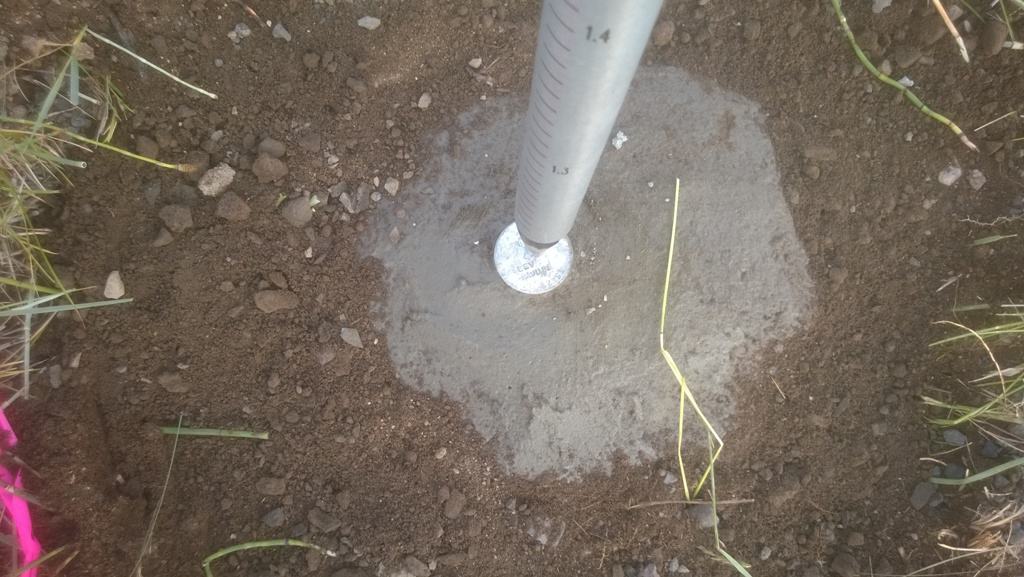
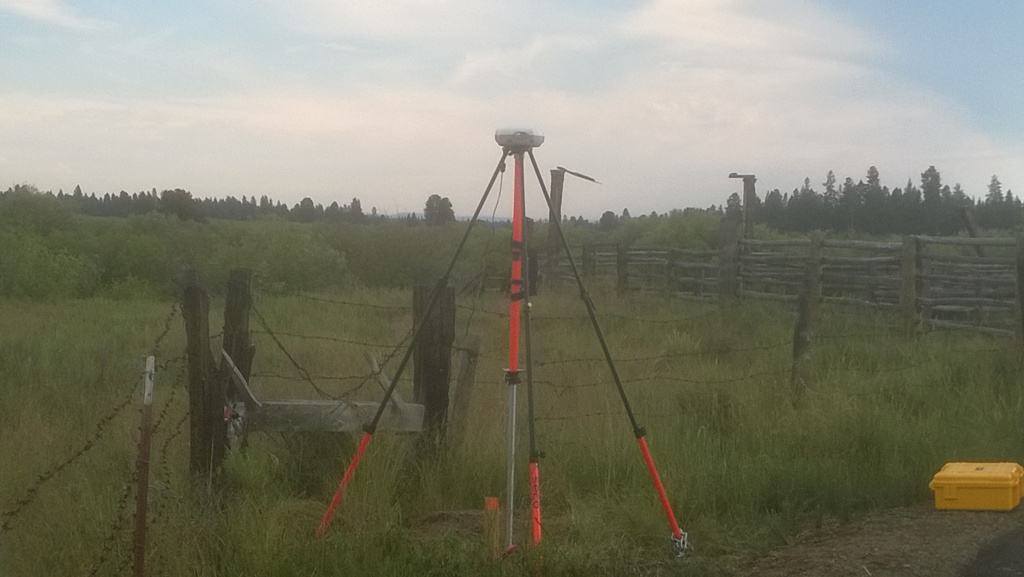
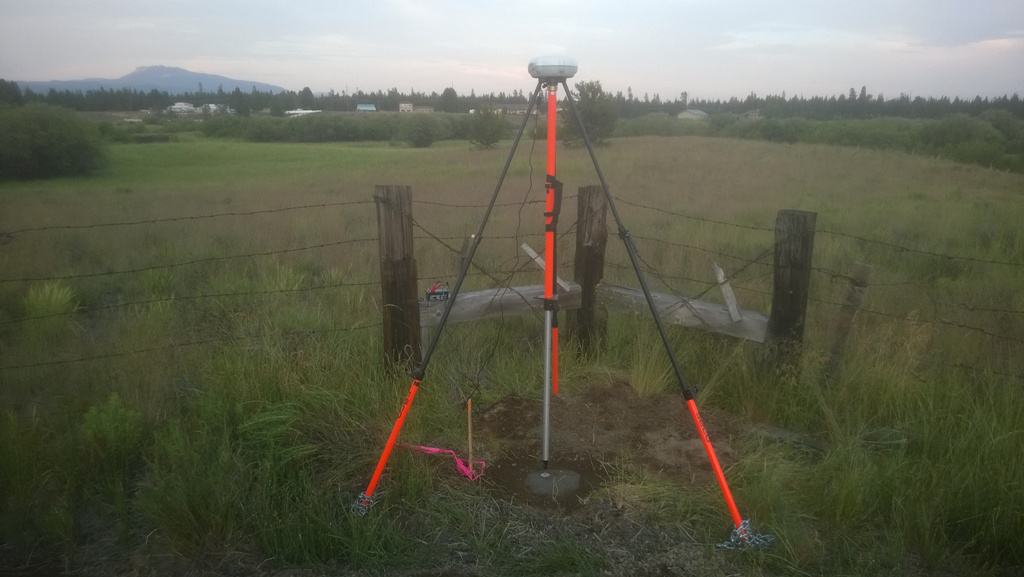 I just started my private Bench Mark network.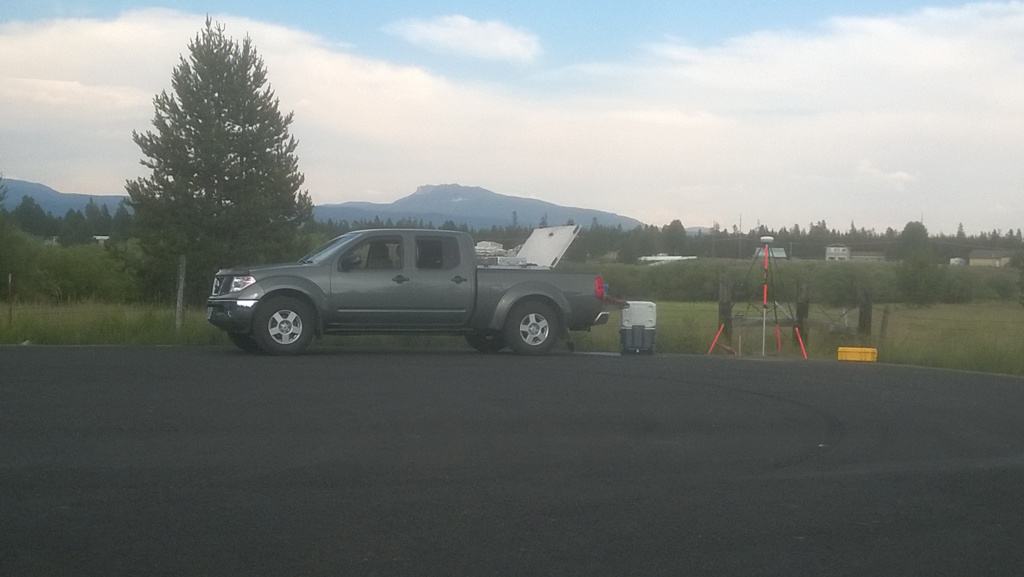
These photos are at the south end of Bridge Drive, Lazy River South subdivision near La Pine, Oregon.
Posted : July 2, 2015 8:28 am
Translate
▼
English
Spanish
French
German
Italian
Portuguese
Russian
Chinese
Japanese
Korean
Arabic
Hindi
Dutch
Polish
Turkish
Vietnamese
Thai
Swedish
Danish
Finnish
Norwegian
Czech
Hungarian
Romanian
Greek
Hebrew
Indonesian
Malay
Ukrainian
Bulgarian
Croatian
Slovak
Slovenian
Serbian
Lithuanian
Latvian
Estonian
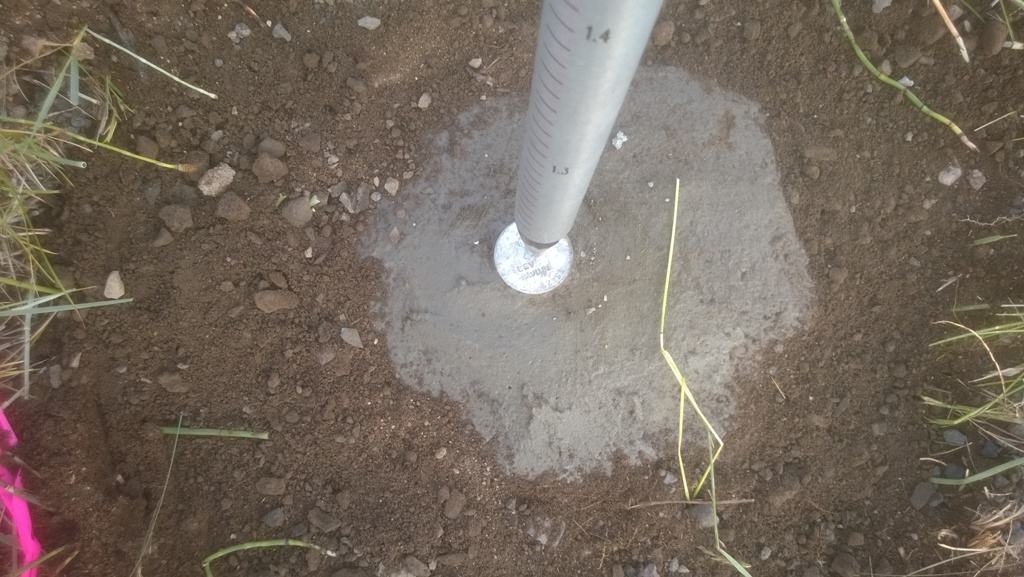
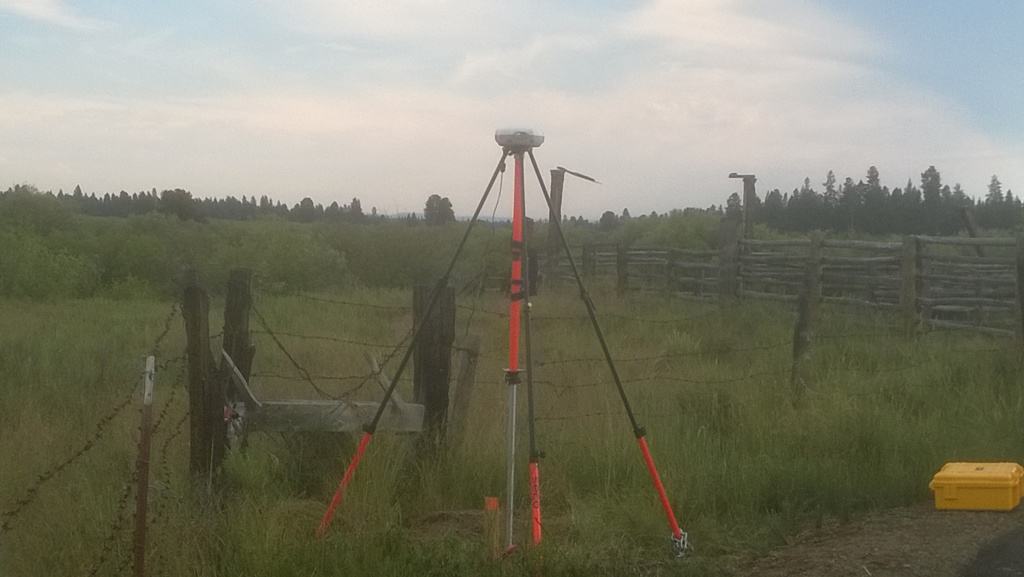
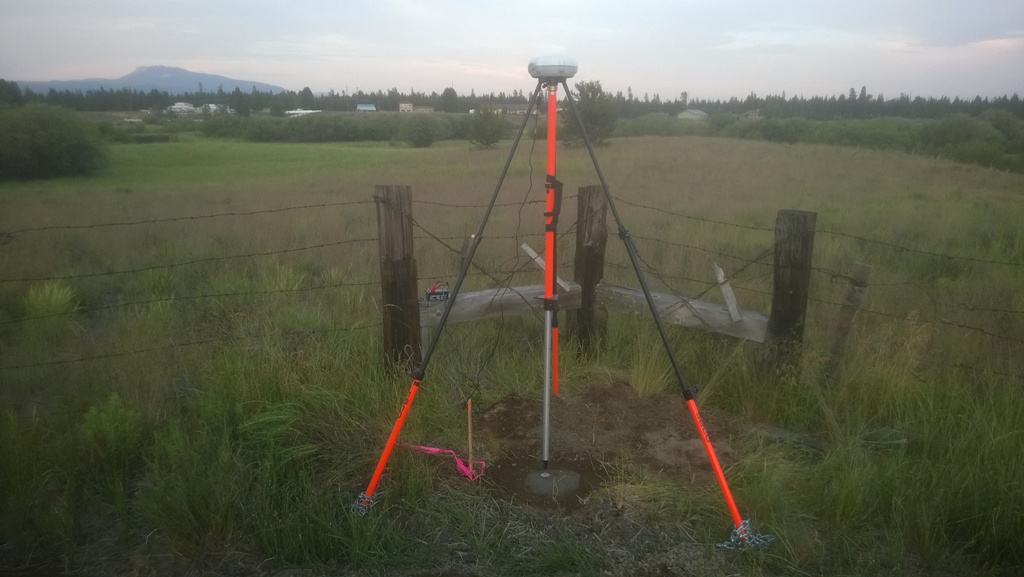
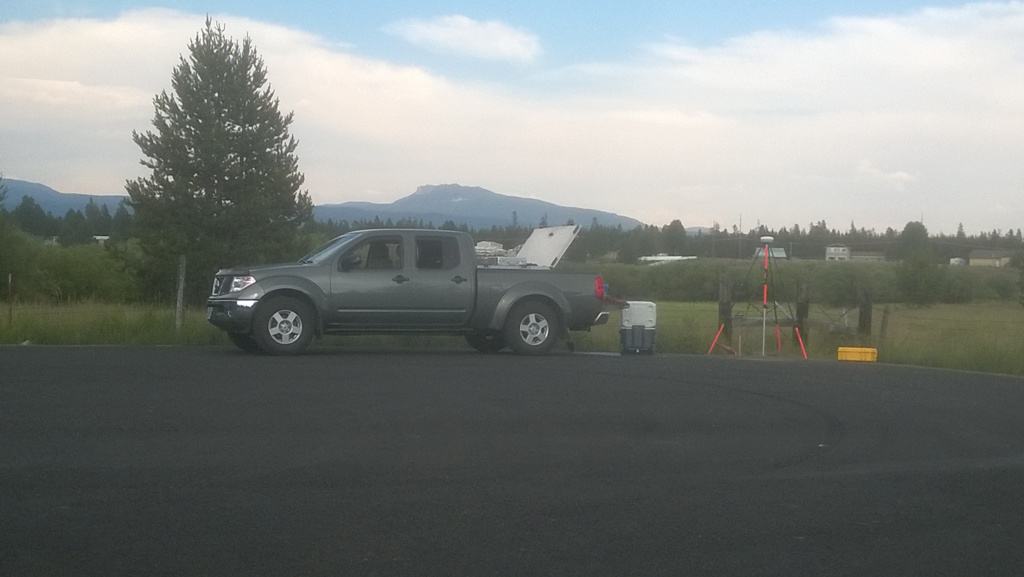 Well I hope the Bench Marks that I set will have longer term stability than I will!
This is the first in my private network, set last week at the south end of Bridge Drive
in the Lazy River South subdivision near La Pine, Oregon.
Posted : July 2, 2015 8:32 am

Translate
▼
English
Spanish
French
German
Italian
Portuguese
Russian
Chinese
Japanese
Korean
Arabic
Hindi
Dutch
Polish
Turkish
Vietnamese
Thai
Swedish
Danish
Finnish
Norwegian
Czech
Hungarian
Romanian
Greek
Hebrew
Indonesian
Malay
Ukrainian
Bulgarian
Croatian
Slovak
Slovenian
Serbian
Lithuanian
Latvian
Estonian
In 1985 I designed and supervised the benchmark densification programs in two Parishes (counties) in South Louisiana. New Class B benchmarks were placed at standard 1.6 kilometer spacings per NGS specifications for Blue Booked projects, but I also had some Class C marks installed. All of the Class C marks (3-foot rods with a concrete plug at the base) were placed in various soil types as a baseline for subsequent surveys to determine variations in local differential subsidence. The total number of benchmarks of all types & classes exceeded 450 surveyed to 2nd Order Class I specifications for precise leveling and relative gravity. (Absolute gravity has also been repeated at several fiducial benchmark sites.)
So far, neither of these local Parishes has deemed it worthwhile to fund a follow-up survey to determine the variation (if any) in near-surface subsidence rates in soil types in the Metropolitan New Orleans area - or relative gravity changes, either.
Science marches on, but it takes money ...
Posted : July 2, 2015 8:47 am