Reading RPLS is free for the whole profession. Members post, reply, and get the members-only rooms.

Notifications
Clear all
Strictly Surveying
22
Posts
11
Users
0
Reactions
1,826
Views

Topic starter
Translate
▼
English
Spanish
French
German
Italian
Portuguese
Russian
Chinese
Japanese
Korean
Arabic
Hindi
Dutch
Polish
Turkish
Vietnamese
Thai
Swedish
Danish
Finnish
Norwegian
Czech
Hungarian
Romanian
Greek
Hebrew
Indonesian
Malay
Ukrainian
Bulgarian
Croatian
Slovak
Slovenian
Serbian
Lithuanian
Latvian
Estonian
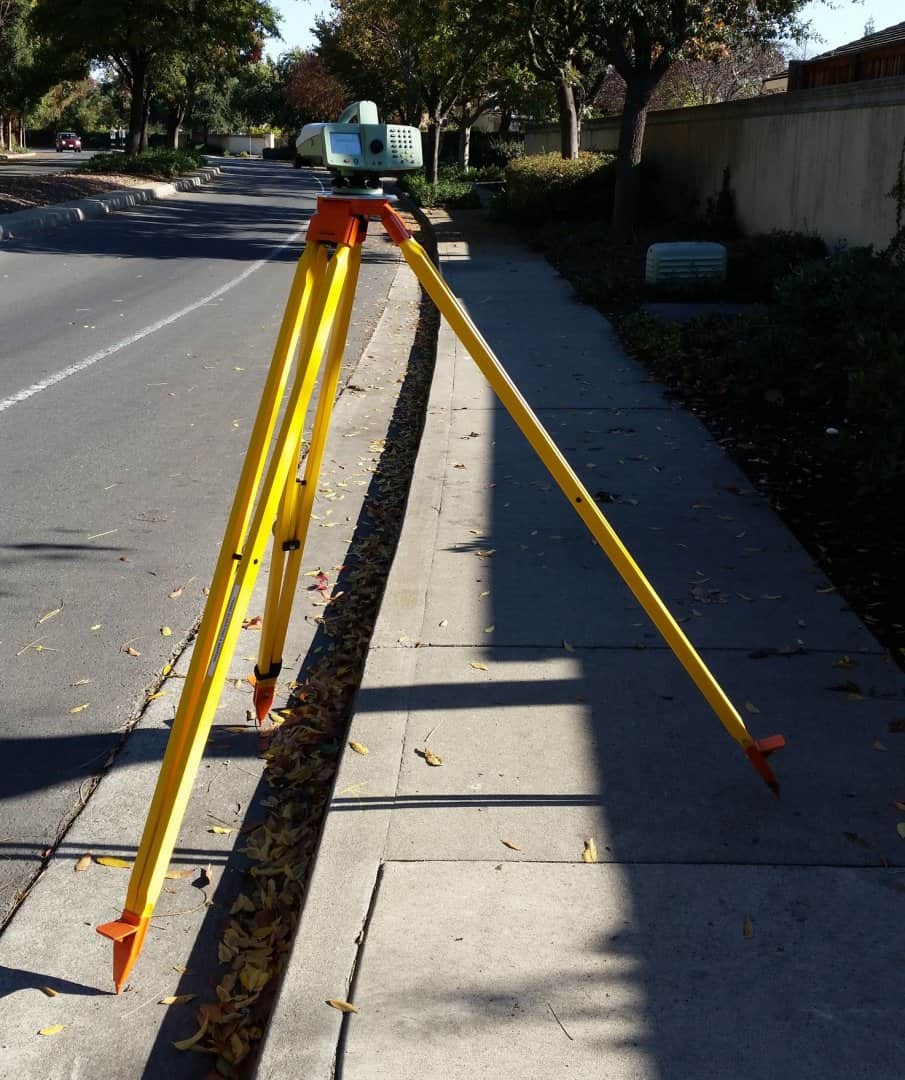
Yesterday I used the Nedo fixed-leg tripod I bought for leveling for the first time. This project didn't have to meet any published specifications, so I could have used an aluminum tripod, but it was a good shakedown opportunity. I learned a few things as a result:
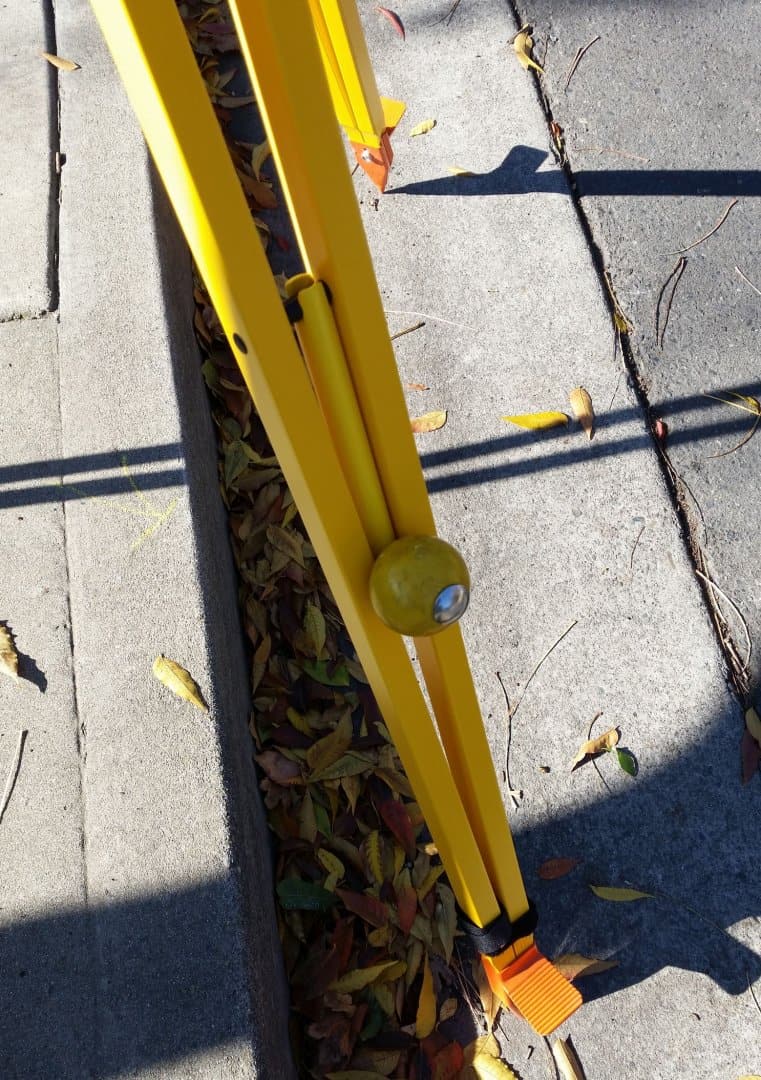
1. The tripod as equipped from the manufacturer doesn't provide any useful grips. Since a geodetic level should be carried as upright as is practical, balancing the tripod on your shoulder isn't a good plan. So I improvised with a hard rubber ball (I think it may be a lacrosse ball; I found it somewhere a few years ago), a 5/8" stainless carriage bolt, and a bit of 1/4" aluminum bar (visible in the upper photo). I drilled and tapped the aluminum to accept the bolt, then covered it with heat-shrink tubing so it won't scratch the legs. (The legs are wood, but they're covered with plastic of some sort.) There's a lot of friction between the bolt and the ball (drilling through rubber isn't what you'd call a precise operation), so I was able to tighten the bolt just by twisting the ball, and as it tightened the ball worked into the gap in the leg members. That held pretty well, but to be safe I added a piece of 1/2" PVC pipe (painted yellow) to the works. The bolt goes through one end of the pipe, and the other end is slotted to fit up against the tripod stabilizer bar. It worked pretty well, *but*:
2. This thing is heavy. I didn't weigh it, but I found that I can't comfortably carry it for long distances with just one hand. So I ended up supporting most of the weight with the ball hand, and some of the weight by just grabbing the legs with my other hand. It worked, though I think it made me walk a bit lopsided. We ran 3 loops for a round-trip total of about 3 miles, and by the end I was more than ready to put the tripod away. I wasn't sore this morning, though.
3. Whoever designed tripod legs with a rectangular cross-section must work in an office. When this thing closes on your fingers -- and despite my best efforts to avoid that, it happened many times during the morning -- those sharp corners hurt! A round (or rounded) design is much easier on the fingers.
Posted : November 10, 2016 10:50 pm

Translate
▼
English
Spanish
French
German
Italian
Portuguese
Russian
Chinese
Japanese
Korean
Arabic
Hindi
Dutch
Polish
Turkish
Vietnamese
Thai
Swedish
Danish
Finnish
Norwegian
Czech
Hungarian
Romanian
Greek
Hebrew
Indonesian
Malay
Ukrainian
Bulgarian
Croatian
Slovak
Slovenian
Serbian
Lithuanian
Latvian
Estonian
Jim Frame, post: 399218, member: 10 wrote: Yesterday I used the Nedo fixed-leg tripod I bought for leveling for the first time. This project didn't have to meet any published specifications, so I could have used an aluminum tripod, but it was a good shakedown opportunity. I learned a few things as a result:
1. The tripod as equipped from the manufacturer doesn't provide any useful grips. Since a geodetic level should be carried as upright as is practical, balancing the tripod on your shoulder isn't a good plan. So I improvised with a hard rubber ball (I think it may be a lacrosse ball; I found it somewhere a few years ago), a 5/8" stainless carriage bolt, and a bit of 1/4" aluminum bar (visible in the upper photo). I drilled and tapped the aluminum to accept the bolt, then covered it with heat-shrink tubing so it won't scratch the legs. (The legs are wood, but they're covered with plastic of some sort.) There's a lot of friction between the bolt and the ball (drilling through rubber isn't what you'd call a precise operation), so I was able to tighten the bolt just by twisting the ball, and as it tightened the ball worked into the gap in the leg members. That held pretty well, but to be safe I added a piece of 1/2" PVC pipe (painted yellow) to the works. The bolt goes through one end of the pipe, and the other end is slotted to fit up against the tripod stabilizer bar. It worked pretty well, *but*:
2. This thing is heavy. I didn't weigh it, but I found that I can't comfortably carry it for long distances with just one hand. So I ended up supporting most of the weight with the ball hand, and some of the weight by just grabbing the legs with my other hand. It worked, though I think it made me walk a bit lopsided. We ran 3 loops for a round-trip total of about 3 miles, and by the end I was more than ready to put the tripod away. I wasn't sore this morning, though.
3. Whoever designed tripod legs with a rectangular cross-section must work in an office. When this thing closes on your fingers -- and despite my best efforts to avoid that, it happened many times during the morning -- those sharp corners hurt! A round (or rounded) design is much easier on the fingers.
What's the advantage of fixed legs? Weight? Is this thing for leveling only? It seems that if you were going to use it to set up over something, it'd be a pain to do so; i.e. to get the top reasonably level and reasonably centered. I must be missing something.
Posted : November 11, 2016 4:47 am

Translate
▼
English
Spanish
French
German
Italian
Portuguese
Russian
Chinese
Japanese
Korean
Arabic
Hindi
Dutch
Polish
Turkish
Vietnamese
Thai
Swedish
Danish
Finnish
Norwegian
Czech
Hungarian
Romanian
Greek
Hebrew
Indonesian
Malay
Ukrainian
Bulgarian
Croatian
Slovak
Slovenian
Serbian
Lithuanian
Latvian
Estonian
I take it rfc never surveyed with a transit and fixed leg tripod. The skill was in setting it over a fixed point and getting the plate as level as possible at the same time as getting it at a comfortable height.
No advantage to it except cost and sturdiness. What you are missing is good old experience.
Paul in PA.
Posted : November 11, 2016 6:52 am

Translate
▼
English
Spanish
French
German
Italian
Portuguese
Russian
Chinese
Japanese
Korean
Arabic
Hindi
Dutch
Polish
Turkish
Vietnamese
Thai
Swedish
Danish
Finnish
Norwegian
Czech
Hungarian
Romanian
Greek
Hebrew
Indonesian
Malay
Ukrainian
Bulgarian
Croatian
Slovak
Slovenian
Serbian
Lithuanian
Latvian
Estonian
Sounds like these tripod legs started as a good idea, then the cost-cutting came into the design.
Posted : November 11, 2016 7:04 am

Translate
▼
English
Spanish
French
German
Italian
Portuguese
Russian
Chinese
Japanese
Korean
Arabic
Hindi
Dutch
Polish
Turkish
Vietnamese
Thai
Swedish
Danish
Finnish
Norwegian
Czech
Hungarian
Romanian
Greek
Hebrew
Indonesian
Malay
Ukrainian
Bulgarian
Croatian
Slovak
Slovenian
Serbian
Lithuanian
Latvian
Estonian
rfc, post: 399236, member: 8882 wrote: What's the advantage of fixed legs? Weight? Is this thing for leveling only? It seems that if you were going to use it to set up over something, it'd be a pain to do so; i.e. to get the top reasonably level and reasonably centered. I must be missing something.
The main advantage of fixed legs is just that, "fixed". There is no possibility that any adjustment coupling will come loose and have a leg "slide". Lighter weight may be a consequence of less parts but the main purpose is stability.
Andy
Posted : November 11, 2016 7:14 am
Translate
▼
English
Spanish
French
German
Italian
Portuguese
Russian
Chinese
Japanese
Korean
Arabic
Hindi
Dutch
Polish
Turkish
Vietnamese
Thai
Swedish
Danish
Finnish
Norwegian
Czech
Hungarian
Romanian
Greek
Hebrew
Indonesian
Malay
Ukrainian
Bulgarian
Croatian
Slovak
Slovenian
Serbian
Lithuanian
Latvian
Estonian
Paul in PA, post: 399240, member: 236 wrote: I take it rfc never surveyed with a transit and fixed leg tripod. The skill was in setting it over a fixed point and getting the plate as level as possible at the same time as getting it at a comfortable height.
No advantage to it except cost and sturdiness. What you are missing is good old experience.
Paul in PA.
How soon we forget. I actually have...when I briefly (6 months) owned my Topcon AG-20 optical transit that I put on a fixed leg metal tripod. I used a plumb bob with the little hook thing that hung on a horizontal pin (I think) at the bottom of the instrument. It seemed though that the range of travel of the leveling screws was vast--much more than on a regular tribrach, but I may be wrong there. I'm impressed with your (and some others' here) ability to remember stuff you did decades ago; I can't even remember what I did two or three years ago. I am sorry I sold that instrument though. I'd love to retrace my current network with it and see how close I could come using even older school technology than the old school technology I'm now using.
Posted : November 11, 2016 8:02 am
Translate
▼
English
Spanish
French
German
Italian
Portuguese
Russian
Chinese
Japanese
Korean
Arabic
Hindi
Dutch
Polish
Turkish
Vietnamese
Thai
Swedish
Danish
Finnish
Norwegian
Czech
Hungarian
Romanian
Greek
Hebrew
Indonesian
Malay
Ukrainian
Bulgarian
Croatian
Slovak
Slovenian
Serbian
Lithuanian
Latvian
Estonian
Glad you remember that the older transit bases had more screw adjustment. Most also had 4 screws, the point of which was to keep the instrument centered over the point that you set up on. Remember that the older instrument to tripod connections did not allow you to slide the head horizontally.
Four screws were very difficult for rookies who could not learn to screw the opposite two at the same time. They would either have the instrument rocking or the screws jammed solid tight.
rfc, did you ever turn sets on a transit plate?
Jim from what I recall, the earliest tripod legs were square. We hve become spoiled with steady improvements.
Paul in PA
Posted : November 11, 2016 8:20 am
Topic starter
Translate
▼
English
Spanish
French
German
Italian
Portuguese
Russian
Chinese
Japanese
Korean
Arabic
Hindi
Dutch
Polish
Turkish
Vietnamese
Thai
Swedish
Danish
Finnish
Norwegian
Czech
Hungarian
Romanian
Greek
Hebrew
Indonesian
Malay
Ukrainian
Bulgarian
Croatian
Slovak
Slovenian
Serbian
Lithuanian
Latvian
Estonian
Andy Bruner, post: 399248, member: 1123 wrote: Lighter weight may be a consequence of less parts but the main purpose is stability.
This thing weighs about the same as my Trimax at 15 lbs. The Leica is almost 2 pounds lighter, but it's also about $200 more expensive.
Posted : November 11, 2016 8:25 am
Translate
▼
English
Spanish
French
German
Italian
Portuguese
Russian
Chinese
Japanese
Korean
Arabic
Hindi
Dutch
Polish
Turkish
Vietnamese
Thai
Swedish
Danish
Finnish
Norwegian
Czech
Hungarian
Romanian
Greek
Hebrew
Indonesian
Malay
Ukrainian
Bulgarian
Croatian
Slovak
Slovenian
Serbian
Lithuanian
Latvian
Estonian
Paul in PA, post: 399259, member: 236 wrote:
rfc, did you ever turn sets on a transit plate?
Paul in PA
Paul: if what you mean by a "transit plate" is using a two plate transit to turn sets, then the answer is yes. The old AG ÛÒ 20 was a two plate instrument.
I filled up quite a few pages in my field book, with calculations subtracting all the angles from each other, and calculating the means.
Posted : November 11, 2016 8:57 am

Translate
▼
English
Spanish
French
German
Italian
Portuguese
Russian
Chinese
Japanese
Korean
Arabic
Hindi
Dutch
Polish
Turkish
Vietnamese
Thai
Swedish
Danish
Finnish
Norwegian
Czech
Hungarian
Romanian
Greek
Hebrew
Indonesian
Malay
Ukrainian
Bulgarian
Croatian
Slovak
Slovenian
Serbian
Lithuanian
Latvian
Estonian
I like the fixed leg for most leveling. Eliminates one source of error (mainly leg clamps getting loose). I did some precise leveling on a year long monitoring project and the fixed legs were specified. Highly recommend their use with a digital level, as Jim has in the pictures. And Paul, those were the good ole (or bad ole days)! Setting fixed legs up over a point, with a bob, on an incline, with a crew Cheif riding you to get moving! On top of that we always competed to see who could do it fastest and most accurately.
Posted : November 11, 2016 11:08 am

Translate
▼
English
Spanish
French
German
Italian
Portuguese
Russian
Chinese
Japanese
Korean
Arabic
Hindi
Dutch
Polish
Turkish
Vietnamese
Thai
Swedish
Danish
Finnish
Norwegian
Czech
Hungarian
Romanian
Greek
Hebrew
Indonesian
Malay
Ukrainian
Bulgarian
Croatian
Slovak
Slovenian
Serbian
Lithuanian
Latvian
Estonian
Jim is this NEDO tripod the only fixed leg tripod you have? Just wondering if you bought it to try it out.
How did your loops close?
If you need a fixed leg tripod with round legs (Wild) I can loan you one of mine anytime.
JOHN NOLTON
Posted : November 11, 2016 12:27 pm

Translate
▼
English
Spanish
French
German
Italian
Portuguese
Russian
Chinese
Japanese
Korean
Arabic
Hindi
Dutch
Polish
Turkish
Vietnamese
Thai
Swedish
Danish
Finnish
Norwegian
Czech
Hungarian
Romanian
Greek
Hebrew
Indonesian
Malay
Ukrainian
Bulgarian
Croatian
Slovak
Slovenian
Serbian
Lithuanian
Latvian
Estonian
When I started my professional career almost 30 years ago, the age of fixed tripods was over. But you could tell those that had started off that way. The chief of field surveyors at my first job could set up level and over the point without the use of plumb bob or optical plummet on a sand hill. He just made it look to easy.
Posted : November 11, 2016 3:52 pm
Topic starter
Translate
▼
English
Spanish
French
German
Italian
Portuguese
Russian
Chinese
Japanese
Korean
Arabic
Hindi
Dutch
Polish
Turkish
Vietnamese
Thai
Swedish
Danish
Finnish
Norwegian
Czech
Hungarian
Romanian
Greek
Hebrew
Indonesian
Malay
Ukrainian
Bulgarian
Croatian
Slovak
Slovenian
Serbian
Lithuanian
Latvian
Estonian
JOHN NOLTON, post: 399291, member: 225 wrote: How did your loops close?
All closed well below 0.01 foot, mostly around 0.002 foot. We weren't using a turtle or pin, just kiel marks on pavement, so it wasn't intended to be a geodetic-quality run. But the Nedo, while heavy, seems okay to me.
Posted : November 11, 2016 4:01 pm

Translate
▼
English
Spanish
French
German
Italian
Portuguese
Russian
Chinese
Japanese
Korean
Arabic
Hindi
Dutch
Polish
Turkish
Vietnamese
Thai
Swedish
Danish
Finnish
Norwegian
Czech
Hungarian
Romanian
Greek
Hebrew
Indonesian
Malay
Ukrainian
Bulgarian
Croatian
Slovak
Slovenian
Serbian
Lithuanian
Latvian
Estonian
Jim, is that a DNA03? What kind of leveling do you do to justify the cost?
TIA
Posted : November 11, 2016 5:58 pm
Topic starter
Translate
▼
English
Spanish
French
German
Italian
Portuguese
Russian
Chinese
Japanese
Korean
Arabic
Hindi
Dutch
Polish
Turkish
Vietnamese
Thai
Swedish
Danish
Finnish
Norwegian
Czech
Hungarian
Romanian
Greek
Hebrew
Indonesian
Malay
Ukrainian
Bulgarian
Croatian
Slovak
Slovenian
Serbian
Lithuanian
Latvian
Estonian
FL/GA PLS., post: 399318, member: 379 wrote: Jim, is that a DNA03? What kind of leveling do you do to justify the cost?
TIA
Every few years I get a job that requires some Second Order Class II leveling, so I bought the DNA03 and a 2-meter invar barcode rod. There aren't many firms around here equipped for geodetic leveling, so while the opportunities aren't frequent, they're lucrative.
Posted : November 11, 2016 6:37 pm
Translate
▼
English
Spanish
French
German
Italian
Portuguese
Russian
Chinese
Japanese
Korean
Arabic
Hindi
Dutch
Polish
Turkish
Vietnamese
Thai
Swedish
Danish
Finnish
Norwegian
Czech
Hungarian
Romanian
Greek
Hebrew
Indonesian
Malay
Ukrainian
Bulgarian
Croatian
Slovak
Slovenian
Serbian
Lithuanian
Latvian
Estonian
Jim Frame, post: 399321, member: 10 wrote: There aren't many firms around here equipped for geodetic leveling, so while the opportunities aren't frequent, they're lucrative.
Kudos to you for capitalizing on unique opportunities ($). 🙂
Posted : November 11, 2016 7:00 pm
Translate
▼
English
Spanish
French
German
Italian
Portuguese
Russian
Chinese
Japanese
Korean
Arabic
Hindi
Dutch
Polish
Turkish
Vietnamese
Thai
Swedish
Danish
Finnish
Norwegian
Czech
Hungarian
Romanian
Greek
Hebrew
Indonesian
Malay
Ukrainian
Bulgarian
Croatian
Slovak
Slovenian
Serbian
Lithuanian
Latvian
Estonian
JIM FRAME, two more questions for you.
1. How much does the DNA03 weigh ?
2. How much does the NEDO tripod weigh ?
I have 4 fixed leg tripods. Two Wild 4a that I use for my Wild T3 and T3000 and my Kern E2 that has a tribrack. Weight is 16 lbs. per tripod.
One Wild 21a tripod/ 12 lbs.
One Wild Va tripod/ 11 lbs.
Now you might not of heard of the last 2 tripods but they were for the Wild N3 (old style) Level. The level weight was 7.7 lbs.
JOHN NOLTON
Posted : November 11, 2016 7:03 pm

Translate
▼
English
Spanish
French
German
Italian
Portuguese
Russian
Chinese
Japanese
Korean
Arabic
Hindi
Dutch
Polish
Turkish
Vietnamese
Thai
Swedish
Danish
Finnish
Norwegian
Czech
Hungarian
Romanian
Greek
Hebrew
Indonesian
Malay
Ukrainian
Bulgarian
Croatian
Slovak
Slovenian
Serbian
Lithuanian
Latvian
Estonian
FL/GA PLS., post: 399318, member: 379 wrote: What kind of leveling do you do to justify the cost?
Rarely does a job require the precision that you get from a digital level. But DOT work requires that the control be levelled. At least in both Oregon and Oklahoma it does. A digital level is the way to go on those jobs for productivity reasons.
Work on airports and railways generally require that the control elevations be levelled.
They don't cost that much. They are easy to use. They never transpose numbers.
Posted : November 11, 2016 8:29 pm
Topic starter
Translate
▼
English
Spanish
French
German
Italian
Portuguese
Russian
Chinese
Japanese
Korean
Arabic
Hindi
Dutch
Polish
Turkish
Vietnamese
Thai
Swedish
Danish
Finnish
Norwegian
Czech
Hungarian
Romanian
Greek
Hebrew
Indonesian
Malay
Ukrainian
Bulgarian
Croatian
Slovak
Slovenian
Serbian
Lithuanian
Latvian
Estonian
JOHN NOLTON, post: 399326, member: 225 wrote: 1. How much does the DNA03 weigh ?
2. How much does the NEDO tripod weigh ?
The level weighs a bit over 6 pounds with a small battery; I had to look it up and was surprised, because it seems so much lighter. The Nedo tripod weighs 15 pounds; I had to look it up and was surprised, because it seems like it weighs a ton!
Posted : November 11, 2016 9:28 pm
Topic starter
Translate
▼
English
Spanish
French
German
Italian
Portuguese
Russian
Chinese
Japanese
Korean
Arabic
Hindi
Dutch
Polish
Turkish
Vietnamese
Thai
Swedish
Danish
Finnish
Norwegian
Czech
Hungarian
Romanian
Greek
Hebrew
Indonesian
Malay
Ukrainian
Bulgarian
Croatian
Slovak
Slovenian
Serbian
Lithuanian
Latvian
Estonian
Mark Mayer, post: 399331, member: 424 wrote: They don't cost that much.
I guess it depends on which one you get and how you define "that much." I paid a little over $6k for the DNA03 in 2006.
Posted : November 11, 2016 9:29 pm
Page 1 / 2
Next