Reading RPLS is free for the whole profession. Members post, reply, and get the members-only rooms.

Notifications
Clear all
Strictly Surveying
17
Posts
7
Users
0
Reactions
1,070
Views

Topic starter
Translate
▼
English
Spanish
French
German
Italian
Portuguese
Russian
Chinese
Japanese
Korean
Arabic
Hindi
Dutch
Polish
Turkish
Vietnamese
Thai
Swedish
Danish
Finnish
Norwegian
Czech
Hungarian
Romanian
Greek
Hebrew
Indonesian
Malay
Ukrainian
Bulgarian
Croatian
Slovak
Slovenian
Serbian
Lithuanian
Latvian
Estonian
Posted : July 6, 2016 7:08 am

Translate
▼
English
Spanish
French
German
Italian
Portuguese
Russian
Chinese
Japanese
Korean
Arabic
Hindi
Dutch
Polish
Turkish
Vietnamese
Thai
Swedish
Danish
Finnish
Norwegian
Czech
Hungarian
Romanian
Greek
Hebrew
Indonesian
Malay
Ukrainian
Bulgarian
Croatian
Slovak
Slovenian
Serbian
Lithuanian
Latvian
Estonian
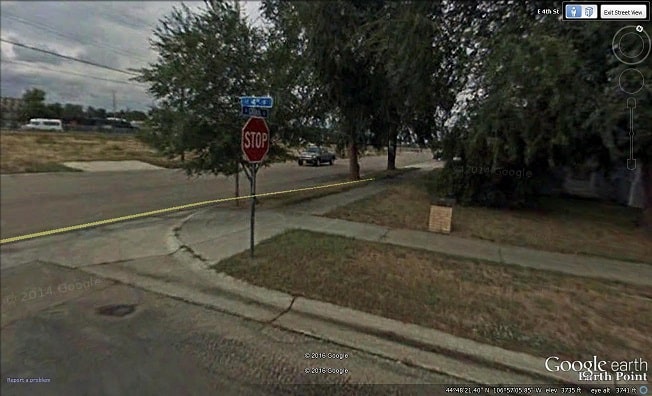
" Officially, the USGS lists the Sheridan Astro Station as ÛÏpresumed destroyed.Û But the pillar at corner of Crook and Fourth streets in Sheridan stands proud.."
So much for a USGS "presumed destroyed" station:
Posted : July 6, 2016 8:20 am

Translate
▼
English
Spanish
French
German
Italian
Portuguese
Russian
Chinese
Japanese
Korean
Arabic
Hindi
Dutch
Polish
Turkish
Vietnamese
Thai
Swedish
Danish
Finnish
Norwegian
Czech
Hungarian
Romanian
Greek
Hebrew
Indonesian
Malay
Ukrainian
Bulgarian
Croatian
Slovak
Slovenian
Serbian
Lithuanian
Latvian
Estonian
The astro point was saved during a rather large SID project starting about 1994....
The area was marked by unpaved roads and it was to say the least messy, when the engineers and surveyors designed the sidewalks and underground upgrades they made sure to save the monument....
As an interesting aside that project covered an extensive area and because of that property lines needed to be located and were incorporated into the project using the city state plane system. So all the property lines were pretty accurately controlled based on a HARN point just east of the astro monument.
Those lines were inputted into the city GIS and when layered over the county wide photo made an accurate representation of the lines and the features on the ground. If you go onto the county GIS website today you will see that the property lines are shifted about 15-20 east southeast........now the property corner is shown almost on the astro point, when it was properly shown west of it's present location at the back of walk intersection,,,,,,,,what changed?
I don't know but I'm sure it was a surveyors fault:cool:
Posted : July 6, 2016 9:13 am

Translate
▼
English
Spanish
French
German
Italian
Portuguese
Russian
Chinese
Japanese
Korean
Arabic
Hindi
Dutch
Polish
Turkish
Vietnamese
Thai
Swedish
Danish
Finnish
Norwegian
Czech
Hungarian
Romanian
Greek
Hebrew
Indonesian
Malay
Ukrainian
Bulgarian
Croatian
Slovak
Slovenian
Serbian
Lithuanian
Latvian
Estonian
The article says it was knocked down and rebuilt. If there were no accurate reference ties then the position is officially destroyed, not just "presumed". "Presumed destroyed" usually would be used in a "not found" report to mean "we think so but don't have proof."
The article keeps saying USGS but I suspect some of the mentions should be NGS. Data sheet PW0418 is marked No Geodetic Control.
Posted : July 6, 2016 2:25 pm
Translate
▼
English
Spanish
French
German
Italian
Portuguese
Russian
Chinese
Japanese
Korean
Arabic
Hindi
Dutch
Polish
Turkish
Vietnamese
Thai
Swedish
Danish
Finnish
Norwegian
Czech
Hungarian
Romanian
Greek
Hebrew
Indonesian
Malay
Ukrainian
Bulgarian
Croatian
Slovak
Slovenian
Serbian
Lithuanian
Latvian
Estonian
Bill93, post: 380197, member: 87 wrote: The article says it was knocked down and rebuilt. If there were no accurate reference ties then the position is officially destroyed, not just "presumed". "Presumed destroyed" usually would be used in a "not found" report to mean "we think so but don't have proof."
The article keeps saying USGS but I suspect some of the mentions should be NGS. Data sheet PW0418 is marked No Geodetic Control.
There never was a tie to it Geodetically, it is more of a historical monument, the bench mark system was run much later, an early system was run and later replaced by NGVD29 which was 10' different vertically, so the old bench marks have elevations stenciled and are 10' from the datasheets.
Posted : July 6, 2016 2:45 pm

Translate
▼
English
Spanish
French
German
Italian
Portuguese
Russian
Chinese
Japanese
Korean
Arabic
Hindi
Dutch
Polish
Turkish
Vietnamese
Thai
Swedish
Danish
Finnish
Norwegian
Czech
Hungarian
Romanian
Greek
Hebrew
Indonesian
Malay
Ukrainian
Bulgarian
Croatian
Slovak
Slovenian
Serbian
Lithuanian
Latvian
Estonian
DEREK G. GRAHAM OLS OLIP, post: 380113, member: 285 wrote: http://www.wyofile.com/wyoming-monument-middle-nowhere/
Cheers,
Derek
Thanks for the article. This is very cool. It looks like they used traditional (sea going) celestial techniques, to determine latitude. That is, rather than observing the azimuth to a star(s), they made repeated elevation observations to two stars (one north, one south). I'm now suspecting that, just as many have said "celestial azimuth observations can't be better than 10 or 15 seconds of arc (wrong), that similar comments made in the past regarding observing elevation of stars may be similarly wrong. It looks like they used traditional "meridian passage" techniques. I've only been aware (until now) of using the technique for the sun. As important as time was (and is), this technique is much less sensitive to time error than it is for azimuth observations.
Looks like I've got a new project.:)
Posted : July 7, 2016 4:01 am

Translate
▼
English
Spanish
French
German
Italian
Portuguese
Russian
Chinese
Japanese
Korean
Arabic
Hindi
Dutch
Polish
Turkish
Vietnamese
Thai
Swedish
Danish
Finnish
Norwegian
Czech
Hungarian
Romanian
Greek
Hebrew
Indonesian
Malay
Ukrainian
Bulgarian
Croatian
Slovak
Slovenian
Serbian
Lithuanian
Latvian
Estonian
An article like this goes to show why geodetic survey is a profession. And that just anyone with a GPS receiver is not a surveyor. It insults the skill of the profession circa 1890.
_______________
I am curious about the accuracy statement of the 1896 survey. 0.12" Lat and 1.2" Long.
Firstly, their position was astronomic. Deflection was known to occur, but not quantified. So, the comment stated that they off a1000 feet, "mostly longitude".
Was the GPS latitude first corrected to astronomic latitude for comparison? And how much difference in astronomic latitude was there in 1896 survey compared to astronomic today?
Second. The longitude of Sheridan was "relative" to the St Louis observatory. Again, astronomic. And the st Louis observatory's longitude would've been relative to the Naval Observatory in Washington DC.
So, was the 1.2" estimated error relative to Washingtin DC? Or to St Louis? And, which longitude of the Naval Observatory was used? The longitude of the Naval Obs. was revised several times.
Notably the 1892 longitude of the naval observatory is 3" different to GPS.
The Greenwich observatory isn't at 0.0 longitude anymore. It's "off" by 100 m.
So, I think saying that the 1896 survey is "1000 feet off" is very misleading and unqualified. Unless deflection and datum transformations were applied, not mentioned in the article.
I suspect that a review of the data will show that the survey wasn't off anything approaching 1000 feet.
I suspect, an academic review would find the 1.2" by 0.12" stated accuracy, a reasonable estimate.
No, the astronomic position of Sheridan by the 1896 survey was probably far better than a 1000 feet.
Posted : July 18, 2016 5:51 am

Translate
▼
English
Spanish
French
German
Italian
Portuguese
Russian
Chinese
Japanese
Korean
Arabic
Hindi
Dutch
Polish
Turkish
Vietnamese
Thai
Swedish
Danish
Finnish
Norwegian
Czech
Hungarian
Romanian
Greek
Hebrew
Indonesian
Malay
Ukrainian
Bulgarian
Croatian
Slovak
Slovenian
Serbian
Lithuanian
Latvian
Estonian
Deflections of the vertical at that point are 10.15" N-S and 11.93" in the Prime Vertical (DEFLEC12B), which means that the difference between astro longitude and geodetic longitude (on NAD83) is 16.8", which is 369 meters, or about 1210 feet. So saying it is in error by 1000' in longitude is incorrect.
These deflections are pretty large compared to values in the east, but that would be expected in the mountainous west
Posted : July 18, 2016 7:12 am
Translate
▼
English
Spanish
French
German
Italian
Portuguese
Russian
Chinese
Japanese
Korean
Arabic
Hindi
Dutch
Polish
Turkish
Vietnamese
Thai
Swedish
Danish
Finnish
Norwegian
Czech
Hungarian
Romanian
Greek
Hebrew
Indonesian
Malay
Ukrainian
Bulgarian
Croatian
Slovak
Slovenian
Serbian
Lithuanian
Latvian
Estonian
And the 1892 longitude of DC, I believe, is another additive reason that the 1896 survey was high science. Not the disappointment that was in the article.
There is a similar rumor about Four Corners being 1/4 mile away from "should be". And that rumor was due to the revision of the DC longitude.
Posted : July 18, 2016 7:42 am
Translate
▼
English
Spanish
French
German
Italian
Portuguese
Russian
Chinese
Japanese
Korean
Arabic
Hindi
Dutch
Polish
Turkish
Vietnamese
Thai
Swedish
Danish
Finnish
Norwegian
Czech
Hungarian
Romanian
Greek
Hebrew
Indonesian
Malay
Ukrainian
Bulgarian
Croatian
Slovak
Slovenian
Serbian
Lithuanian
Latvian
Estonian
People don't realize that latitude determination is an "absolute" thing, whereas longitude is always with respect to some fixed meridian. And longitude needed accurate time.
Posted : July 18, 2016 8:04 am
Translate
▼
English
Spanish
French
German
Italian
Portuguese
Russian
Chinese
Japanese
Korean
Arabic
Hindi
Dutch
Polish
Turkish
Vietnamese
Thai
Swedish
Danish
Finnish
Norwegian
Czech
Hungarian
Romanian
Greek
Hebrew
Indonesian
Malay
Ukrainian
Bulgarian
Croatian
Slovak
Slovenian
Serbian
Lithuanian
Latvian
Estonian
John Hamilton, post: 381528, member: 640 wrote: People don't realize that latitude determination is an "absolute" thing, whereas longitude is always with respect to some fixed meridian. And longitude needed accurate time.
There was at least one revision of the longitude at the Naval Obs. That was determined by time transfer over the Trans Atlantic telegraph cable. And that was 19th c.
Time transfer by telegraph for longitude, is discussed in the Royal Engineers Survey textbook of 1925, as a preferred method.
In the article:
The surveyors made their observations at both points on the same nights, coordinating and communicating the exact time over the telegraph, Cedarholm said. The time it took the signal to cross hundreds of miles of copper wire was insignificant.
So their timing would've been state of the art circa 1896.
Posted : July 18, 2016 8:42 am
Translate
▼
English
Spanish
French
German
Italian
Portuguese
Russian
Chinese
Japanese
Korean
Arabic
Hindi
Dutch
Polish
Turkish
Vietnamese
Thai
Swedish
Danish
Finnish
Norwegian
Czech
Hungarian
Romanian
Greek
Hebrew
Indonesian
Malay
Ukrainian
Bulgarian
Croatian
Slovak
Slovenian
Serbian
Lithuanian
Latvian
Estonian
Access to the telegraph made all the difference in longitude determination before the advent of radio time signals. They would run lines for miles from the railroad to an astro station just to be able to get a good longitude.
There is still in existence in Pittsburgh the Allegheny Observatory, which was important for time dissemination. From an article on wiki:
In 1869, Langley created income for observatory by selling subscription service to time that was accurately determined by astronomical measurements and transmitted over telegraphs to customers. The Pennsylvania Railroad was the most influential subscriber to the "Allegheny Time" system. The Allegheny Observatory's service is believed to have been the first regular and systematic system of time distribution to railroads and cities as well as the origin of the modern standard time system.[6] By 1870, the Allegheny Time service extended over 2,500 miles with 300 telegraph offices receiving time signals.[7] On November 18, 1883, the first day of railroad standard time in North America, the Allegheny Observatory transmitted a signal on telegraph lines operated by railroads in Canada and the United States. The signal marked noon, Eastern Standard Time, and railroads across the continent synchronized their schedules based on this signal. The standard time that began on this day continues in North American use to this day
Full article: https://en.wikipedia.org/wiki/Allegheny_Observatory&apos ;">Allegheny Observatory
Posted : July 18, 2016 10:26 am
Translate
▼
English
Spanish
French
German
Italian
Portuguese
Russian
Chinese
Japanese
Korean
Arabic
Hindi
Dutch
Polish
Turkish
Vietnamese
Thai
Swedish
Danish
Finnish
Norwegian
Czech
Hungarian
Romanian
Greek
Hebrew
Indonesian
Malay
Ukrainian
Bulgarian
Croatian
Slovak
Slovenian
Serbian
Lithuanian
Latvian
Estonian
I believe the first longitude survey that traversed 360 degrees by telegraph was completed around 1906. Something like a 10-15 year project.
Posted : July 18, 2016 10:51 am
Translate
▼
English
Spanish
French
German
Italian
Portuguese
Russian
Chinese
Japanese
Korean
Arabic
Hindi
Dutch
Polish
Turkish
Vietnamese
Thai
Swedish
Danish
Finnish
Norwegian
Czech
Hungarian
Romanian
Greek
Hebrew
Indonesian
Malay
Ukrainian
Bulgarian
Croatian
Slovak
Slovenian
Serbian
Lithuanian
Latvian
Estonian
If the numbers were close, then you would know the original longitude was a mistake
Posted : July 18, 2016 2:48 pm
Translate
▼
English
Spanish
French
German
Italian
Portuguese
Russian
Chinese
Japanese
Korean
Arabic
Hindi
Dutch
Polish
Turkish
Vietnamese
Thai
Swedish
Danish
Finnish
Norwegian
Czech
Hungarian
Romanian
Greek
Hebrew
Indonesian
Malay
Ukrainian
Bulgarian
Croatian
Slovak
Slovenian
Serbian
Lithuanian
Latvian
Estonian
MightyMoe, post: 381579, member: 700 wrote: If the numbers were close, then you would know the original longitude was a mistake
I don't even know what that means.
But the article sounded like there effort was approximate. The opposite I'm sure is reflected in 1896 survey
Posted : July 18, 2016 4:47 pm
Translate
▼
English
Spanish
French
German
Italian
Portuguese
Russian
Chinese
Japanese
Korean
Arabic
Hindi
Dutch
Polish
Turkish
Vietnamese
Thai
Swedish
Danish
Finnish
Norwegian
Czech
Hungarian
Romanian
Greek
Hebrew
Indonesian
Malay
Ukrainian
Bulgarian
Croatian
Slovak
Slovenian
Serbian
Lithuanian
Latvian
Estonian
Larry Scott, post: 381592, member: 8766 wrote: I don't even know what that means.
But the article sounded like there effort was approximate. The opposite I'm sure is reflected in 1896 survey
it means that an 1890 survey for longitude and a NAD 83 longitude would be expected to have a different numbers, they wouldn't even use the same basis, so seeing a 1000' shouldn't surprise anyone, now how difficult it might be to "get" the expected 1890 number, I can't answer.....
But from an 1890 astronomic survey they are probably fairly close to the number. It would not match the NAD83 number, and shouldn't.
Therefore, numbers from 1890 and 2016 that match would indicate a mistake.
Posted : July 18, 2016 4:55 pm
Translate
▼
English
Spanish
French
German
Italian
Portuguese
Russian
Chinese
Japanese
Korean
Arabic
Hindi
Dutch
Polish
Turkish
Vietnamese
Thai
Swedish
Danish
Finnish
Norwegian
Czech
Hungarian
Romanian
Greek
Hebrew
Indonesian
Malay
Ukrainian
Bulgarian
Croatian
Slovak
Slovenian
Serbian
Lithuanian
Latvian
Estonian
And how good were the ephemerides back then?
Posted : July 24, 2016 9:14 am