Reading RPLS is free for the whole profession. Members post, reply, and get the members-only rooms.

Notifications
Clear all
Strictly Surveying
25
Posts
14
Users
0
Reactions
1,415
Views

Topic starter
Translate
▼
English
Spanish
French
German
Italian
Portuguese
Russian
Chinese
Japanese
Korean
Arabic
Hindi
Dutch
Polish
Turkish
Vietnamese
Thai
Swedish
Danish
Finnish
Norwegian
Czech
Hungarian
Romanian
Greek
Hebrew
Indonesian
Malay
Ukrainian
Bulgarian
Croatian
Slovak
Slovenian
Serbian
Lithuanian
Latvian
Estonian
In May of 1950, a judgment was entered in the matter of Wharton County v. Colorado County a lawsuit to settle the common boundary of the two Texas counties. The judgment included a description by metes and bounds of the adjudicated boundary from a survey made following the instructions of the court.
The description began at a certain "post of railroad iron" that appears in the photo below which I've previously posted:
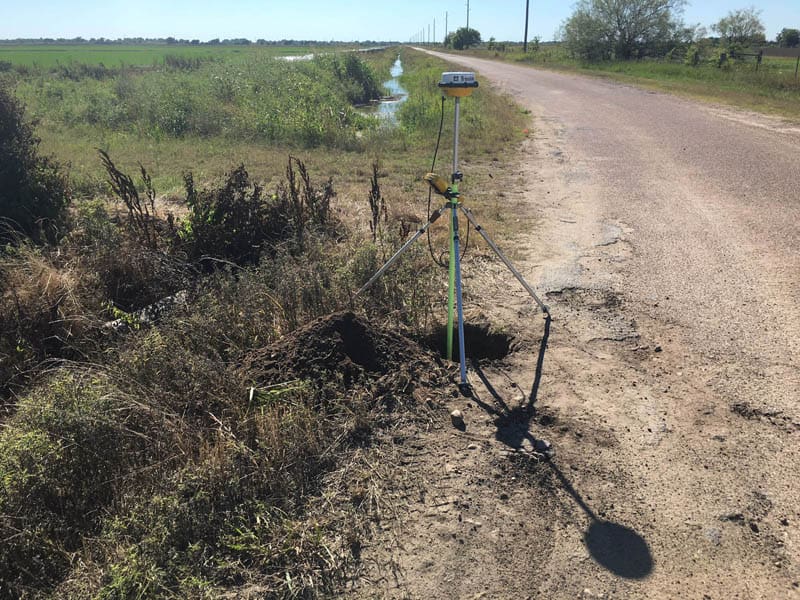
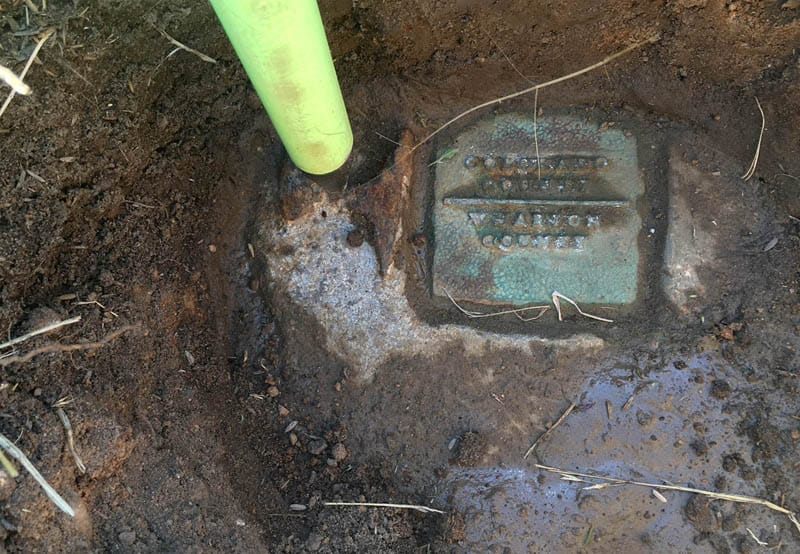
From that Railroad Iron, the boundary ran as follows:
"THENCE N45?ø24'E at a distance of 9,582.4 varas to a large sandstone buried near the center of a public road;
"THENCE N45?ø16'30"E at a distance of 11,483.7 varas (continuous chaining from the post of railroad iron at the point of beginning0 to an eight inch in diameter concrete post buried in the center of two intersecting public roads;"
That concrete monument is what appears in the photos below that I posted the other day:
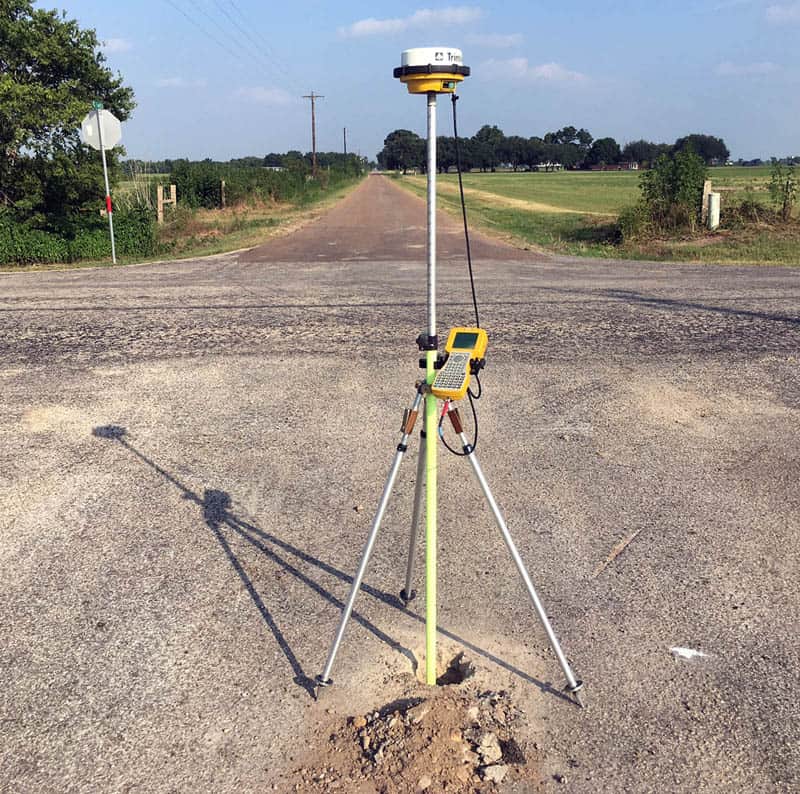
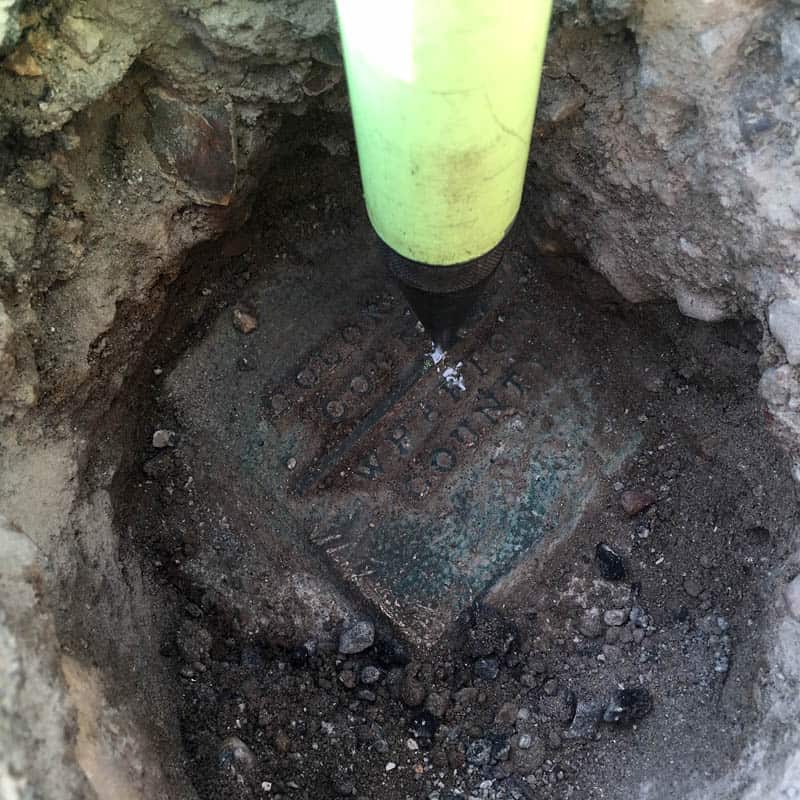
So, how did the surveyors do who in 1950 reported the distance between the two points as being 11,483.7 varas (= 31,899..17 ft.)? They really did quite well. According to my resurvey measurements, the actual distance is 11,483.975 varas with an uncertainty of +/- 0.006 vrs. (standard error). The difference of 0.275 varas between the 1950 survey and my resurvey amounts to an error of 1:41,800 in distances that were almost certainly taped.
Posted : June 25, 2017 8:40 am

Translate
▼
English
Spanish
French
German
Italian
Portuguese
Russian
Chinese
Japanese
Korean
Arabic
Hindi
Dutch
Polish
Turkish
Vietnamese
Thai
Swedish
Danish
Finnish
Norwegian
Czech
Hungarian
Romanian
Greek
Hebrew
Indonesian
Malay
Ukrainian
Bulgarian
Croatian
Slovak
Slovenian
Serbian
Lithuanian
Latvian
Estonian
Kent McMillan, post: 434034, member: 3 wrote: ...The difference of 0.275 varas between the 1950 survey and my resurvey amounts to an error of 1:41,800 in distances that were almost certainly taped.
1 in 42k is an almost astonishing number for chaining such as distance. That is some really good work.
Posted : June 25, 2017 12:44 pm
Topic starter
Translate
▼
English
Spanish
French
German
Italian
Portuguese
Russian
Chinese
Japanese
Korean
Arabic
Hindi
Dutch
Polish
Turkish
Vietnamese
Thai
Swedish
Danish
Finnish
Norwegian
Czech
Hungarian
Romanian
Greek
Hebrew
Indonesian
Malay
Ukrainian
Bulgarian
Croatian
Slovak
Slovenian
Serbian
Lithuanian
Latvian
Estonian
paden cash, post: 434062, member: 20 wrote: 1 in 42k is an almost astonishing number for chaining such as distance. That is some really good work.
Yes, I find it amazing. The 1950 surveyors did have a couple of advantages, one of which was that the terrain is for all practical purposes utterly flat and the other being that four of the nominally six miles ran right along a graded road. The judgment was entered in May, so possibly the survey was made a month or two before when temperatures were more moderate. Otherwise, just getting the temperature corrections for the tape right would have been a trick.
Posted : June 25, 2017 1:04 pm
Translate
▼
English
Spanish
French
German
Italian
Portuguese
Russian
Chinese
Japanese
Korean
Arabic
Hindi
Dutch
Polish
Turkish
Vietnamese
Thai
Swedish
Danish
Finnish
Norwegian
Czech
Hungarian
Romanian
Greek
Hebrew
Indonesian
Malay
Ukrainian
Bulgarian
Croatian
Slovak
Slovenian
Serbian
Lithuanian
Latvian
Estonian
I've mulled over my thoughts and have some comments concerning the distance reported between the points in 1950. First and foremost it took some planning and some line work to chain that distance. And seeing how it was apparently some fairly accurate chaining, I bet it was chained either multiple times or possibly in segments. I guess what I'm saying is that chaining six miles is a big undertaking. One doesn't simply drop the chain and take a six mile hike and come up with numbers like that the first try.
And given the procedures of the day I would almost bet there was some sort of check or geometry to "prove" their distance. Even if you had line of sight for six miles there is a lot more to take into consideration other than just temperature for corrections. If notes exist I would really like to read them. That is some really, really good work. And I say this as someone that worked on crews that used a chain daily.
Color me still amazed. 😉
Posted : June 25, 2017 9:42 pm
Topic starter
Translate
▼
English
Spanish
French
German
Italian
Portuguese
Russian
Chinese
Japanese
Korean
Arabic
Hindi
Dutch
Polish
Turkish
Vietnamese
Thai
Swedish
Danish
Finnish
Norwegian
Czech
Hungarian
Romanian
Greek
Hebrew
Indonesian
Malay
Ukrainian
Bulgarian
Croatian
Slovak
Slovenian
Serbian
Lithuanian
Latvian
Estonian
paden cash, post: 434100, member: 20 wrote: I've mulled over my thoughts and have some comments concerning the distance reported between the points in 1950. First and foremost it took some planning and some line work to chain that distance. And seeing how it was apparently some fairly accurate chaining, I bet it was chained either multiple times or possibly in segments. I guess what I'm saying is that chaining six miles is a big undertaking. One doesn't simply drop the chain and take a six mile hike and come up with numbers like that the first try.
And given the procedures of the day I would almost bet there was some sort of check or geometry to "prove" their distance. Even if you had line of sight for six miles there is a lot more to take into consideration other than just temperature for corrections. If notes exist I would really like to read them. That is some really, really good work. And I say this as someone that worked on crews that used a chain daily.
My best guess would be that a preliminary line was run from the "Railroad Iron" corner for five nominal miles to a point where the miss on the sandstone was measured, then the preliminary line was corrected up and true line was run and carefully chained. At the two-mile mark, where the line began to follow a graded county road for the next three miles to reach the sandstone, I found that the county line was nearly exactly splitting old cedar fence posts on both sides of the road that looked of an age to have been there in 1950.
The road records reflect that the Northern section of the road was laid out centered on where the county line was thought to have been in about 1910, so that would have provided a simple check to get the preliminary line started quite close to the final, true line. It also suggests that there might have been some other markers along what was reputed to be the county line. The county road was what in Texas was classified as a First-Class Road. Most likely that simply meant that the road was graveled and graded in 1950 and the chaining along the road was quite unlikely to have been done in any other way than just laying the tape flat, supported throughout its length.
The 1950 survey was reported in varas and tenths of a vara, so I'd think that it probably was measured with a tape graduated in varas. I'd also think that a 50-vara tape would have been most practical for general use in rural surveying in that part of the Coastal Prairie in 1950, so I think that it's not unreasonable to assume that one of at least that length was used, probably graduated on babbit like the K&E Dreadnaught band chain was.
The directions of the lines were not referenced to astronomic North, so I don't think that the effort was as sophisticated as it might have been using just tape and transit technology and I'd extrapolate that to how the taping was done.
For a 50-vara tape, stretched flat on a graded road, supported throughout its length, on a good alignment, the biggest sources of error should have been those due to (a) faulty tape standardization and (b) uncorrected thermal expansion, with thermal expansion being the more likely culprit unless the tape was one that had been through the wars and suffered kinks and mends.
On a gravel road, over flat terrain, with tape laid flat, the whole problem mainly reduces to that of temperature correction. That's tough since the temperature of a tape laid on the ground will be expected to be signifcantly hotter than ambient air. However, if the survey was done in the late Winter or Spring, that would have been less of an effect.
Posted : June 25, 2017 10:50 pm

Translate
▼
English
Spanish
French
German
Italian
Portuguese
Russian
Chinese
Japanese
Korean
Arabic
Hindi
Dutch
Polish
Turkish
Vietnamese
Thai
Swedish
Danish
Finnish
Norwegian
Czech
Hungarian
Romanian
Greek
Hebrew
Indonesian
Malay
Ukrainian
Bulgarian
Croatian
Slovak
Slovenian
Serbian
Lithuanian
Latvian
Estonian
If you reduce to sea level you might match the old distance better!
Just kidding.
Posted : June 26, 2017 6:09 am
Topic starter
Translate
▼
English
Spanish
French
German
Italian
Portuguese
Russian
Chinese
Japanese
Korean
Arabic
Hindi
Dutch
Polish
Turkish
Vietnamese
Thai
Swedish
Danish
Finnish
Norwegian
Czech
Hungarian
Romanian
Greek
Hebrew
Indonesian
Malay
Ukrainian
Bulgarian
Croatian
Slovak
Slovenian
Serbian
Lithuanian
Latvian
Estonian
On the other hand, if the tape was 100 varas long, an error of standardization of 0.003 ft. would represent a proportional error of about 1:93,000, which would be roughly half of the error budget. For a net result of 1:42,000, that would mean that errors due to faulty temperature correction would have be less than 1:76,000. That would be an allowable temperature error of only 2?øF, which seems unrealistic to expect. I think that there was more likely a strong element of luck involved in getting such excellent results as was done.
Posted : June 26, 2017 6:43 am

Translate
▼
English
Spanish
French
German
Italian
Portuguese
Russian
Chinese
Japanese
Korean
Arabic
Hindi
Dutch
Polish
Turkish
Vietnamese
Thai
Swedish
Danish
Finnish
Norwegian
Czech
Hungarian
Romanian
Greek
Hebrew
Indonesian
Malay
Ukrainian
Bulgarian
Croatian
Slovak
Slovenian
Serbian
Lithuanian
Latvian
Estonian
I suspect that the space aliens took a break from building pyramids on primitive worlds to give these guys a hand, or perhaps a tentacle. Keep an eye on the History Channel. There will probably be a show about this survey and how the aliens did it.
Posted : June 26, 2017 7:58 am

Translate
▼
English
Spanish
French
German
Italian
Portuguese
Russian
Chinese
Japanese
Korean
Arabic
Hindi
Dutch
Polish
Turkish
Vietnamese
Thai
Swedish
Danish
Finnish
Norwegian
Czech
Hungarian
Romanian
Greek
Hebrew
Indonesian
Malay
Ukrainian
Bulgarian
Croatian
Slovak
Slovenian
Serbian
Lithuanian
Latvian
Estonian
Very interesting. When a good tape is properly calibrated and adjusted for temperature, and on fairly flat ground, the biggest error becomes the personal locating of the ends of the tape as one surveys along the line. That error would likely be random error. Random error will likely average out as long as the error histogram is close to being normal or symmetric (not skewed). With a line that long, there were plenty data points for the histogram and the "averaging out" of the error. If tape was not calibrated and adjusted for temperature, the error would propagate, as opposed to average out. Plus some luck as mentioned in the first post.
Posted : June 26, 2017 8:08 am
Topic starter
Translate
▼
English
Spanish
French
German
Italian
Portuguese
Russian
Chinese
Japanese
Korean
Arabic
Hindi
Dutch
Polish
Turkish
Vietnamese
Thai
Swedish
Danish
Finnish
Norwegian
Czech
Hungarian
Romanian
Greek
Hebrew
Indonesian
Malay
Ukrainian
Bulgarian
Croatian
Slovak
Slovenian
Serbian
Lithuanian
Latvian
Estonian
Frank Willis, post: 434111, member: 472 wrote: Very interesting. When a good tape is properly calibrated and adjusted for temperature, and on fairly flat ground, the biggest error becomes the personal locating of the ends of the tape as one surveys along the line. That error would likely be random error. Random error will likely average out as long as the error histogram is close to being normal or symmetric (not skewed). With a line that long, there were plenty data points for the histogram and the "averaging out" of the error. If tape was not calibrated and adjusted for temperature, the error would propagate, as opposed to average out. Plus some luck as mentioned in the first post.
Yes, if a 100 vara tape was used, that's about 115 pulls. If the error of tape marking was a random 0.01 ft. in each end, that would be SQRT[115] x 0.014 ft. = 0.15 ft. = 0.054 varas uncertainty due to tape marking. That's a pretty minimal error component, 1: 213,000.
Posted : June 26, 2017 8:49 am

Translate
▼
English
Spanish
French
German
Italian
Portuguese
Russian
Chinese
Japanese
Korean
Arabic
Hindi
Dutch
Polish
Turkish
Vietnamese
Thai
Swedish
Danish
Finnish
Norwegian
Czech
Hungarian
Romanian
Greek
Hebrew
Indonesian
Malay
Ukrainian
Bulgarian
Croatian
Slovak
Slovenian
Serbian
Lithuanian
Latvian
Estonian
Kent McMillan, post: 434115, member: 3 wrote: Yes, if a 100 vara tape was used, that's about 115 pulls. If the error of tape marking was a random 0.01 ft. in each end, that would be SQRT[115] x 0.014 ft. = 0.15 ft. = 0.054 varas uncertainty due to tape marking. That's a pretty minimal error component, 1: 213,000.
Sometimes you're good, sometimes you're lucky, and sometimes you're both.
In any event, it's good to be able to retrace such work.
Angelo
Posted : June 26, 2017 2:24 pm
Topic starter
Translate
▼
English
Spanish
French
German
Italian
Portuguese
Russian
Chinese
Japanese
Korean
Arabic
Hindi
Dutch
Polish
Turkish
Vietnamese
Thai
Swedish
Danish
Finnish
Norwegian
Czech
Hungarian
Romanian
Greek
Hebrew
Indonesian
Malay
Ukrainian
Bulgarian
Croatian
Slovak
Slovenian
Serbian
Lithuanian
Latvian
Estonian
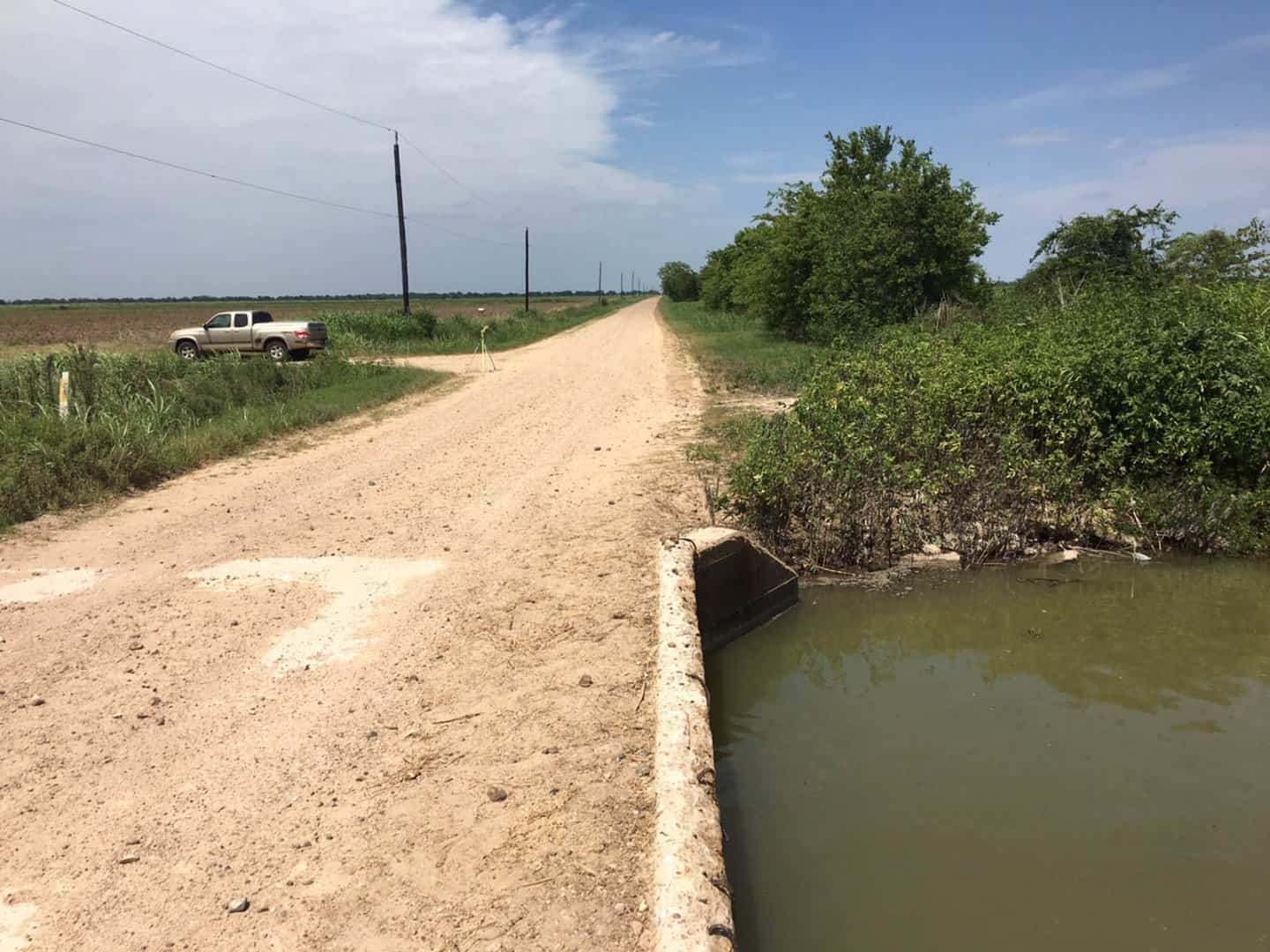
As an example of the terrain that the county line traversed in 1950, here's a photo of the vicinity of Mile 3 that probably looks pretty much the same as it did then, with the possible exception that the road gravel in 1950 was more likely rounded river gravel mined locally instead of the crushed limestone imported from elsewhere that is the top layer today. The GPS receiver in the background is set up on a Boat Spike that I found in place and determined to be 1.39' offset from the county line.
When I said the land was flat for most practical purposes, I wasn't kidding. The difference in elevation between the Boat Spike and the Post of Railroad Iron nominally three miles Southwesterly is only 3.49 ft. For the history buffs, this is in an area known as Lissie Prairie that in April, 1836 defeated the main force of the Mexican Army consisting of about 2500 troops, 1500 female camp followers, 1200 mules, and 8 artillery pieces when in wet weather they found themselves bogged down in the Mar de Lodo, a sea of mud that the silty prairie soil became, the same soil that a surveyor fifty years later described as "crawfish dirt". They left the Mar de Lodo a defeated and exhausted force, officers bootless and barefoot and troops spent.
Here's a link to a more complete description :
http://www.pstx.org/index.php?option=com_content&view=article&id=303:turning-points-of-the-san-jacinto-campaign&catid=25&Itemid=190
Posted : June 26, 2017 9:06 pm

Translate
▼
English
Spanish
French
German
Italian
Portuguese
Russian
Chinese
Japanese
Korean
Arabic
Hindi
Dutch
Polish
Turkish
Vietnamese
Thai
Swedish
Danish
Finnish
Norwegian
Czech
Hungarian
Romanian
Greek
Hebrew
Indonesian
Malay
Ukrainian
Bulgarian
Croatian
Slovak
Slovenian
Serbian
Lithuanian
Latvian
Estonian
Kent McMillan, post: 434067, member: 3 wrote: Yes, I find it amazing. The 1950 surveyors did have a couple of advantages, one of which was that the terrain is for all practical purposes utterly flat and the other being that four of the nominally six miles ran right along a graded road. The judgment was entered in May, so possibly the survey was made a month or two before when temperatures were more moderate. Otherwise, just getting the temperature corrections for the tape right would have been a trick.
Like all things, good chaining is in the details. In my favorite textbook, Topographical and Geographical Surveys, 1925, emphasizes that precise chaining should only be conducted during overcast to allow for more accurate temperature determination.
The few times I've tried to seriously measure a chain distance I did that. A light rain and full contact with the ground.
Posted : June 27, 2017 4:16 am
Topic starter
Translate
▼
English
Spanish
French
German
Italian
Portuguese
Russian
Chinese
Japanese
Korean
Arabic
Hindi
Dutch
Polish
Turkish
Vietnamese
Thai
Swedish
Danish
Finnish
Norwegian
Czech
Hungarian
Romanian
Greek
Hebrew
Indonesian
Malay
Ukrainian
Bulgarian
Croatian
Slovak
Slovenian
Serbian
Lithuanian
Latvian
Estonian
Chaining on an overcast day in mild weather after a rain would be a good strategy, but they are few and far between in Central Texas. Chaining in bright Sun on a hot day would be the worse condition that the 1950 surveyor appears to have dodged.
Posted : June 28, 2017 9:01 am

Translate
▼
English
Spanish
French
German
Italian
Portuguese
Russian
Chinese
Japanese
Korean
Arabic
Hindi
Dutch
Polish
Turkish
Vietnamese
Thai
Swedish
Danish
Finnish
Norwegian
Czech
Hungarian
Romanian
Greek
Hebrew
Indonesian
Malay
Ukrainian
Bulgarian
Croatian
Slovak
Slovenian
Serbian
Lithuanian
Latvian
Estonian
Why are these in varas, from 1950? You're not dealing in just feet at that date?
It just seems strange to me, but I'm not from Texas
Posted : June 28, 2017 8:56 pm

Translate
▼
English
Spanish
French
German
Italian
Portuguese
Russian
Chinese
Japanese
Korean
Arabic
Hindi
Dutch
Polish
Turkish
Vietnamese
Thai
Swedish
Danish
Finnish
Norwegian
Czech
Hungarian
Romanian
Greek
Hebrew
Indonesian
Malay
Ukrainian
Bulgarian
Croatian
Slovak
Slovenian
Serbian
Lithuanian
Latvian
Estonian
Varas are the official unit of measure for original surveys in the state of texas at the general land office. You can provide alternate measurements in parentheses (feet), but 33 1/3 is the official measure of land in Tejas.
Posted : June 28, 2017 9:00 pm
Topic starter
Translate
▼
English
Spanish
French
German
Italian
Portuguese
Russian
Chinese
Japanese
Korean
Arabic
Hindi
Dutch
Polish
Turkish
Vietnamese
Thai
Swedish
Danish
Finnish
Norwegian
Czech
Hungarian
Romanian
Greek
Hebrew
Indonesian
Malay
Ukrainian
Bulgarian
Croatian
Slovak
Slovenian
Serbian
Lithuanian
Latvian
Estonian
JPH, post: 434485, member: 6636 wrote: Why are these in varas, from 1950? You're not dealing in just feet at that date?
It just seems strange to me, but I'm not from Texas
Varas are still in use in Texas because that facilitates comparison of resurvey measurements with the results of the original surveys that were measured in varas. It's quite silly, for example, to express a distance that in 1857 was reported as 1900 varas as a record distance of 5277.78 ft., which suggests a much greater precision was present in a measurement that more likely had systematic errors of 50 varas per mile or more.
The instructions of the court that the 1950 surveyor was operating under directed him to follow the lines of certain land grants from a known corner to the intersection of a certain waterway, so it was perfectly natural to report the distances in varas to assist the comparison.
The other element is that back in 1950 it was reasonably common for a surveyor working outside of cities to have a tape graduated in varas since many rural lands were held under old descriptions that used varas as the unit of measure. I haven't looked, but it is also possible that the use of varas was prescribed by the State statutes of the day for resurveys of county lines. The county line between Travis and Hays Counties at the present outskirts of Austin, was resurveyed in 1954 in varas, as I recall, and I'm sure there was a good reason for that since I know that the Travis County Surveyor had tapes graduated in both feet and varas.
The field notes of resurveys of county lines were to be filed in the GLO so that they could be plotted on the official county maps showing the patchwork of original land grants within a particular county. Those maps are all compiled at an even 1 inch = _____ varas scale. So reporting the resurvey in varas was useful toward that end.
Posted : June 28, 2017 9:44 pm

Translate
▼
English
Spanish
French
German
Italian
Portuguese
Russian
Chinese
Japanese
Korean
Arabic
Hindi
Dutch
Polish
Turkish
Vietnamese
Thai
Swedish
Danish
Finnish
Norwegian
Czech
Hungarian
Romanian
Greek
Hebrew
Indonesian
Malay
Ukrainian
Bulgarian
Croatian
Slovak
Slovenian
Serbian
Lithuanian
Latvian
Estonian
Most local surveyors used vara tapes thru the 1960s and at various times in the early 1970s when they were revisiting prior surveys.
It was in the early 1970s when the vara tapes became too worn to use when my mentors stopped ordering them or maybe the foot chain became the standard because of availability and price.
I can remember using a 100 vara chain on a few surveys in my early career and we would only use all of it on one or two pulls because the land had changed from crops to forest it was always a concern to keep it out of the way and not become damaged.
Posted : June 28, 2017 10:35 pm

Translate
▼
English
Spanish
French
German
Italian
Portuguese
Russian
Chinese
Japanese
Korean
Arabic
Hindi
Dutch
Polish
Turkish
Vietnamese
Thai
Swedish
Danish
Finnish
Norwegian
Czech
Hungarian
Romanian
Greek
Hebrew
Indonesian
Malay
Ukrainian
Bulgarian
Croatian
Slovak
Slovenian
Serbian
Lithuanian
Latvian
Estonian
Having grown through feet then metres, with links and chains tagging along, the mix of old surveys never causes an issue amongst surveyors and its a bit like being multilingual (I expect) as I can freely talk a mix of feet, chains and metres.
I'd imagine it must be confusing for the population though.
What do for egs, roads get measured in and buildings?
The old timers here (some) work in Acres but some know a fair comparison to hectares.
Younger generation wouldn't have much (any) idea what even a foot was apart from what's at the end of their leg. (and some don't comprehend that judging by the reticence to walk anywhere!)
Do your total stations spit out varas?
What about GPS grid coordinates? Are they in varas?
Kent I know it's what you're used to, as mentioned at start here, but for how long will it be before a certain generation says enough with all these multiple measurements?
Posted : June 29, 2017 2:44 am
Translate
▼
English
Spanish
French
German
Italian
Portuguese
Russian
Chinese
Japanese
Korean
Arabic
Hindi
Dutch
Polish
Turkish
Vietnamese
Thai
Swedish
Danish
Finnish
Norwegian
Czech
Hungarian
Romanian
Greek
Hebrew
Indonesian
Malay
Ukrainian
Bulgarian
Croatian
Slovak
Slovenian
Serbian
Lithuanian
Latvian
Estonian
Kent McMillan, post: 434489, member: 3 wrote: Varas are still in use in Texas because that facilitates comparison of resurvey measurements with the results of the original surveys that were measured in varas. It's quite silly, for example, to express a distance that in 1857 was reported as 1900 varas as a record distance of 5277.78 ft., which suggests a much greater precision was present in a measurement that more likely had systematic errors of 50 varas per mile or more.
The instructions of the court that the 1950 surveyor was operating under directed him to follow the lines of certain land grants from a known corner to the intersection of a certain waterway, so it was perfectly natural to report the distances in varas to assist the comparison.
The other element is that back in 1950 it was reasonably common for a surveyor working outside of cities to have a tape graduated in varas since many rural lands were held under old descriptions that used varas as the unit of measure. I haven't looked, but it is also possible that the use of varas was prescribed by the State statutes of the day for resurveys of county lines. The county line between Travis and Hays Counties at the present outskirts of Austin, was resurveyed in 1954 in varas, as I recall, and I'm sure there was a good reason for that since I know that the Travis County Surveyor had tapes graduated in both feet and varas.
The field notes of resurveys of county lines were to be filed in the GLO so that they could be plotted on the official county maps showing the patchwork of original land grants within a particular county. Those maps are all compiled at an even 1 inch = _____ varas scale. So reporting the resurvey in varas was useful toward that end.
That's interesting. Makes some sense.
I've seen some distances on plans around here that make me scratch my head, and then after researching see that the recent surveyor just converted the rods and links calls to feet. And sometimes those have been held over a wall or a pipe, or some other physical feature, that I'm sure was the intended corner, even though not called for.
That said, I can't imagine using those units for measuring in my field surveys.
Posted : June 29, 2017 4:11 am
Page 1 / 2
Next