Reading RPLS is free for the whole profession. Members post, reply, and get the members-only rooms.


Notifications
Clear all
Software, CAD & Mapping
18
Posts
6
Users
0
Reactions
1,178
Views

Topic starter
Translate
▼
English
Spanish
French
German
Italian
Portuguese
Russian
Chinese
Japanese
Korean
Arabic
Hindi
Dutch
Polish
Turkish
Vietnamese
Thai
Swedish
Danish
Finnish
Norwegian
Czech
Hungarian
Romanian
Greek
Hebrew
Indonesian
Malay
Ukrainian
Bulgarian
Croatian
Slovak
Slovenian
Serbian
Lithuanian
Latvian
Estonian
Would any of you Civil 3D users mind punching in this vertical profile and generate a report that includes the sight distance and K-value?
The criteria is 3.5 eye ht. and a 2.0 object ht. (stopping)
Station, Elevation, Vertical curve length,
5200.000 2755.024 -
5322.681 2754.736 100.000
5482.681 2751.599 220.000
5721.227 2755.575 80.000
5858.432 2754.853 -
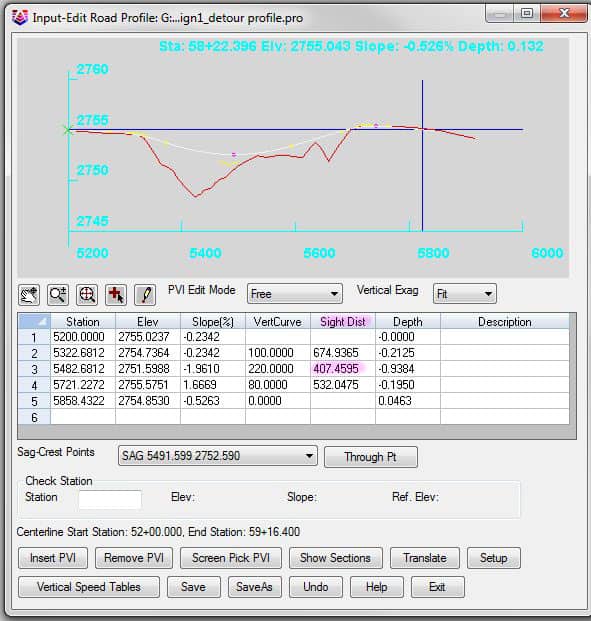
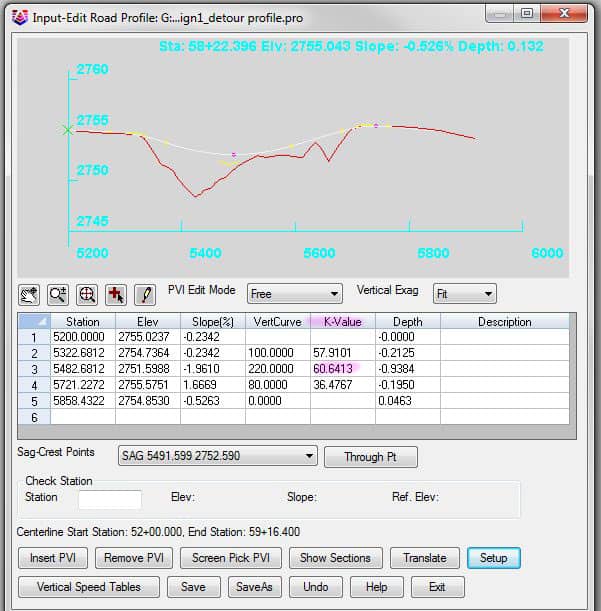
I'm having some discrepancies in my software reports (specific to the 220 sag vertical curve) and would like to check the calcs. by hand. One report is stating S=407.46' K=60.64'.
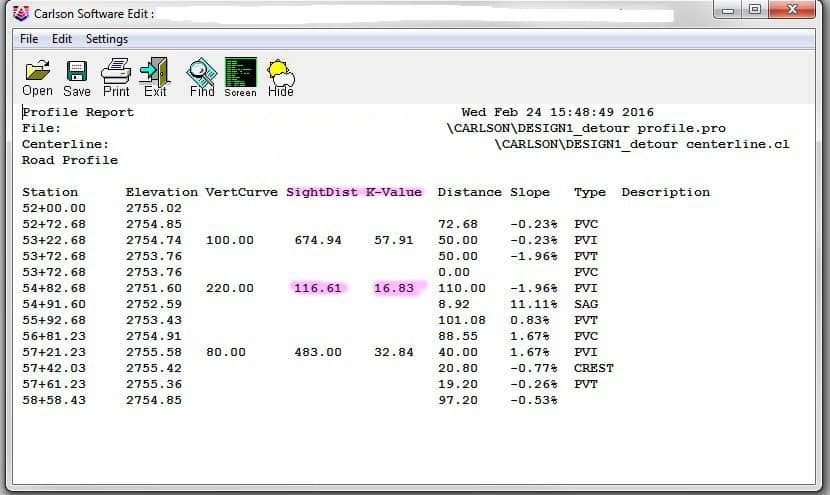
The other report is stating S=116.61' K=16.83'
It is always nice to have something to check against while you are learning the formulas.
Thanks in advance if you can lend a hand.
Posted : February 24, 2016 6:38 pm

Translate
▼
English
Spanish
French
German
Italian
Portuguese
Russian
Chinese
Japanese
Korean
Arabic
Hindi
Dutch
Polish
Turkish
Vietnamese
Thai
Swedish
Danish
Finnish
Norwegian
Czech
Hungarian
Romanian
Greek
Hebrew
Indonesian
Malay
Ukrainian
Bulgarian
Croatian
Slovak
Slovenian
Serbian
Lithuanian
Latvian
Estonian
I am no help on this. I abhor vertical curves and refuse to work them because I truly hate the quadratic equation. 🙂 I break out in cold sweats thinking back to Algebra II on the matter.
Good luck.
Posted : February 25, 2016 8:43 am

Translate
▼
English
Spanish
French
German
Italian
Portuguese
Russian
Chinese
Japanese
Korean
Arabic
Hindi
Dutch
Polish
Turkish
Vietnamese
Thai
Swedish
Danish
Finnish
Norwegian
Czech
Hungarian
Romanian
Greek
Hebrew
Indonesian
Malay
Ukrainian
Bulgarian
Croatian
Slovak
Slovenian
Serbian
Lithuanian
Latvian
Estonian

Posted : February 25, 2016 8:54 am
Topic starter
Translate
▼
English
Spanish
French
German
Italian
Portuguese
Russian
Chinese
Japanese
Korean
Arabic
Hindi
Dutch
Polish
Turkish
Vietnamese
Thai
Swedish
Danish
Finnish
Norwegian
Czech
Hungarian
Romanian
Greek
Hebrew
Indonesian
Malay
Ukrainian
Bulgarian
Croatian
Slovak
Slovenian
Serbian
Lithuanian
Latvian
Estonian
Thanks Vern, so no sight distance value for the sag. It seems that sag vertical curves have a special property regarding sight distance that I have not quite entirely grasped. The formulas tend to focus on solving the required length of curve for a given K value, rather than solving the sight distance.
Could anybody enlighten me?
Posted : February 25, 2016 10:20 am
Translate
▼
English
Spanish
French
German
Italian
Portuguese
Russian
Chinese
Japanese
Korean
Arabic
Hindi
Dutch
Polish
Turkish
Vietnamese
Thai
Swedish
Danish
Finnish
Norwegian
Czech
Hungarian
Romanian
Greek
Hebrew
Indonesian
Malay
Ukrainian
Bulgarian
Croatian
Slovak
Slovenian
Serbian
Lithuanian
Latvian
Estonian
imaudigger, post: 359635, member: 7286 wrote: Thanks Vern, so no sight distance value for the sag. It seems that sag vertical curves have a special property regarding sight distance that I have not quite entirely grasped. The formulas tend to focus on solving the required length of curve for a given K value, rather than solving the sight distance.
Could anybody enlighten me?
Basically, that is because where ever you are on the curve you are looking over any object that may be on line. Note that none of the curves posted meet AASHTO K value standards.
Posted : February 25, 2016 10:58 am
Topic starter
Translate
▼
English
Spanish
French
German
Italian
Portuguese
Russian
Chinese
Japanese
Korean
Arabic
Hindi
Dutch
Polish
Turkish
Vietnamese
Thai
Swedish
Danish
Finnish
Norwegian
Czech
Hungarian
Romanian
Greek
Hebrew
Indonesian
Malay
Ukrainian
Bulgarian
Croatian
Slovak
Slovenian
Serbian
Lithuanian
Latvian
Estonian
Vern, I was under the impression that you used the headlight sight distance formula for sag curves.
I guess maybe with the min. K values provided, headlight sight distance isn't an issue?
Posted : February 25, 2016 11:10 am

Translate
▼
English
Spanish
French
German
Italian
Portuguese
Russian
Chinese
Japanese
Korean
Arabic
Hindi
Dutch
Polish
Turkish
Vietnamese
Thai
Swedish
Danish
Finnish
Norwegian
Czech
Hungarian
Romanian
Greek
Hebrew
Indonesian
Malay
Ukrainian
Bulgarian
Croatian
Slovak
Slovenian
Serbian
Lithuanian
Latvian
Estonian
100,171.35,57.94
220,319.07,60.65
80,135.51,36.48
Posted : February 25, 2016 11:30 am
Translate
▼
English
Spanish
French
German
Italian
Portuguese
Russian
Chinese
Japanese
Korean
Arabic
Hindi
Dutch
Polish
Turkish
Vietnamese
Thai
Swedish
Danish
Finnish
Norwegian
Czech
Hungarian
Romanian
Greek
Hebrew
Indonesian
Malay
Ukrainian
Bulgarian
Croatian
Slovak
Slovenian
Serbian
Lithuanian
Latvian
Estonian
imaudigger, post: 359643, member: 7286 wrote: Vern, I was under the impression that you used the headlight sight distance formula for sag curves.
I guess maybe with the min. K values provided, headlight sight distance isn't an issue?
Take a look at the data. You don't have 3.5 feet difference from your low point to high point. Just my personal opinion is that vertical curves are barely required along that data set.
navaran, post: 359648, member: 1096 wrote: 100,171.35,57.94
220,319.07,60.65
80,135.51,36.48
What program or formulae are you using? I can't reproduce any of those numbers nor any of [USER=7286]@imaudigger[/USER] answers.
Posted : February 25, 2016 11:37 am
Topic starter
Translate
▼
English
Spanish
French
German
Italian
Portuguese
Russian
Chinese
Japanese
Korean
Arabic
Hindi
Dutch
Polish
Turkish
Vietnamese
Thai
Swedish
Danish
Finnish
Norwegian
Czech
Hungarian
Romanian
Greek
Hebrew
Indonesian
Malay
Ukrainian
Bulgarian
Croatian
Slovak
Slovenian
Serbian
Lithuanian
Latvian
Estonian
navaran, post: 359648, member: 1096 wrote: 100,171.35,57.94
220,319.07,60.65
80,135.51,36.48
The K values are similar, but the sight distance values are significantly different that what I was expecting.
My gut instinct says they are too short given the flat grades.
For example using the first crest vertical curve..
Where S>L
L = 100.00'
h1 = 3.50'
h2 = 2.00'
A = 1.73%

I get a sight distance of 673.79'. My software is saying 674.94'. I'll buy that (although I am not sure why it doesn't match). That is significantly different than the data you provided.
Of course that is making the assumption that there is no grade changes further down the profile within that 674'
Hmm....
Vern, I understand what you are saying. I am mainly concerned with figuring out the formulas in order to check the software reports (for future reference).
Posted : February 25, 2016 12:14 pm
Topic starter
Translate
▼
English
Spanish
French
German
Italian
Portuguese
Russian
Chinese
Japanese
Korean
Arabic
Hindi
Dutch
Polish
Turkish
Vietnamese
Thai
Swedish
Danish
Finnish
Norwegian
Czech
Hungarian
Romanian
Greek
Hebrew
Indonesian
Malay
Ukrainian
Bulgarian
Croatian
Slovak
Slovenian
Serbian
Lithuanian
Latvian
Estonian
Then with the 220' sag vertical curve...
Where S>L
L = 220'
h1 = 3.5'
h2 = 2.0'
A = 3.63%
Angle of headlight = 1å¡
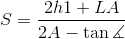
I'm getting a sight distance of 397.51'
The software is telling me it is 319.01' (which agrees with Navaran's report) so it must be using a different formula.
Posted : February 25, 2016 12:54 pm
Topic starter
Translate
▼
English
Spanish
French
German
Italian
Portuguese
Russian
Chinese
Japanese
Korean
Arabic
Hindi
Dutch
Polish
Turkish
Vietnamese
Thai
Swedish
Danish
Finnish
Norwegian
Czech
Hungarian
Romanian
Greek
Hebrew
Indonesian
Malay
Ukrainian
Bulgarian
Croatian
Slovak
Slovenian
Serbian
Lithuanian
Latvian
Estonian
I think I goofed the last calc.
I requested that Carlson furnish the formulas that it uses to calculate the sight distances.
I will re-visit the issue once I have more information.
Posted : February 25, 2016 1:43 pm

Translate
▼
English
Spanish
French
German
Italian
Portuguese
Russian
Chinese
Japanese
Korean
Arabic
Hindi
Dutch
Polish
Turkish
Vietnamese
Thai
Swedish
Danish
Finnish
Norwegian
Czech
Hungarian
Romanian
Greek
Hebrew
Indonesian
Malay
Ukrainian
Bulgarian
Croatian
Slovak
Slovenian
Serbian
Lithuanian
Latvian
Estonian
Sag curve design can be affected by three factors:
- Headlight sight distance is important for roads with lots of crests and valleys, and if the design speed is high.
- Comfort distance can be important. You don't want the vehicles to "bounce" at the bottom of a sag.
- Drainage can be an issue if the profile is generally flat. Very long sag curves can create areas without enough grade for water to flow, leading to problems with icing.
Posted : February 25, 2016 1:48 pm

Translate
▼
English
Spanish
French
German
Italian
Portuguese
Russian
Chinese
Japanese
Korean
Arabic
Hindi
Dutch
Polish
Turkish
Vietnamese
Thai
Swedish
Danish
Finnish
Norwegian
Czech
Hungarian
Romanian
Greek
Hebrew
Indonesian
Malay
Ukrainian
Bulgarian
Croatian
Slovak
Slovenian
Serbian
Lithuanian
Latvian
Estonian
The K value is basically the distance in feet it takes to get a 1% change in grade.
If you have -2% coming in and +2% going out, 4% total, a 400 foot length would give you a K value of 100.
200 foot length would give you a K of 50. If you want a K of 75 then 75x4= 300 foot length
Can't help with the sight distances.
James
Posted : February 25, 2016 2:26 pm
Topic starter
Translate
▼
English
Spanish
French
German
Italian
Portuguese
Russian
Chinese
Japanese
Korean
Arabic
Hindi
Dutch
Polish
Turkish
Vietnamese
Thai
Swedish
Danish
Finnish
Norwegian
Czech
Hungarian
Romanian
Greek
Hebrew
Indonesian
Malay
Ukrainian
Bulgarian
Croatian
Slovak
Slovenian
Serbian
Lithuanian
Latvian
Estonian
This is what started this whole investigation.
My first issue was that the software didn't specify what type of sight distance it was reporting nor the heights used.
Posted : February 25, 2016 2:27 pm
Translate
▼
English
Spanish
French
German
Italian
Portuguese
Russian
Chinese
Japanese
Korean
Arabic
Hindi
Dutch
Polish
Turkish
Vietnamese
Thai
Swedish
Danish
Finnish
Norwegian
Czech
Hungarian
Romanian
Greek
Hebrew
Indonesian
Malay
Ukrainian
Bulgarian
Croatian
Slovak
Slovenian
Serbian
Lithuanian
Latvian
Estonian
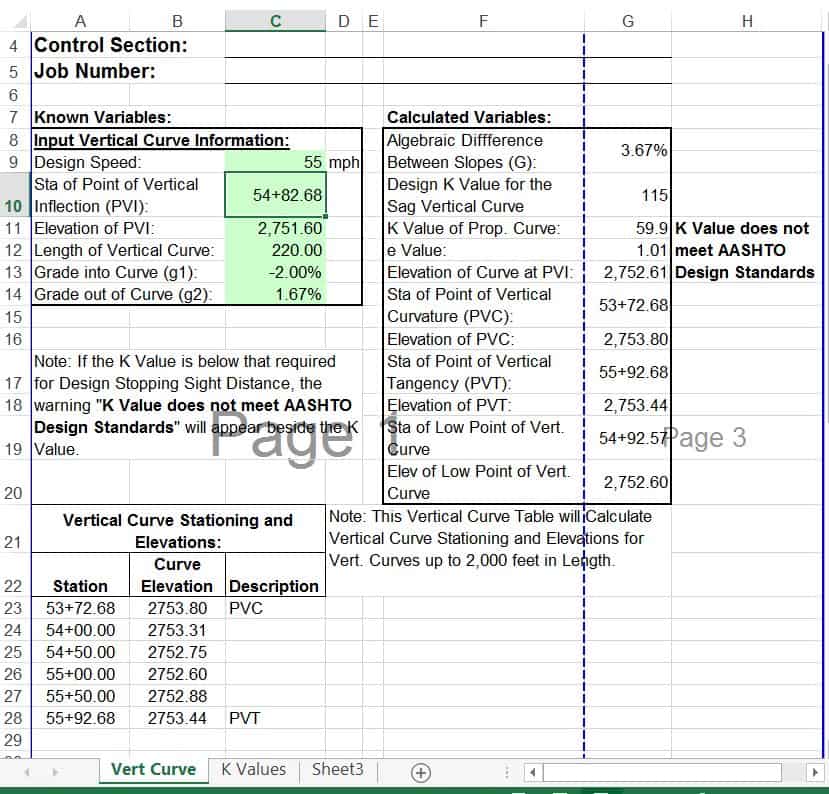
Dirt is cheap, just raise that vpi at 54+82 about a foot. :stakeout:
edit: that 11.11% should not be there.
James
Posted : February 25, 2016 2:36 pm
Topic starter
Translate
▼
English
Spanish
French
German
Italian
Portuguese
Russian
Chinese
Japanese
Korean
Arabic
Hindi
Dutch
Polish
Turkish
Vietnamese
Thai
Swedish
Danish
Finnish
Norwegian
Czech
Hungarian
Romanian
Greek
Hebrew
Indonesian
Malay
Ukrainian
Bulgarian
Croatian
Slovak
Slovenian
Serbian
Lithuanian
Latvian
Estonian
JaRo, post: 359701, member: 292 wrote: Dirt is cheap, just raise that vpi at 54+82 about a foot. :stakeout:
edit: that 11.11% should not be there.
James
My point was that the sight distance and K values don't agree from one report to the next.
-------
"Dirt is cheap"...Tell that to the permit folks...the fill is going in a stream bed.
Posted : February 25, 2016 3:08 pm
Translate
▼
English
Spanish
French
German
Italian
Portuguese
Russian
Chinese
Japanese
Korean
Arabic
Hindi
Dutch
Polish
Turkish
Vietnamese
Thai
Swedish
Danish
Finnish
Norwegian
Czech
Hungarian
Romanian
Greek
Hebrew
Indonesian
Malay
Ukrainian
Bulgarian
Croatian
Slovak
Slovenian
Serbian
Lithuanian
Latvian
Estonian
My smarta$$ comment was after looking at the first drawing. Just being funny.
After looking at the second report, there is a point that should not be there. That station 54+91 may be the low point of the sag but the software is figuring the slope from the VPC to the VPI to the sag 8.92 feet away and then to the VPT. Thats where the 16.83 K value is coming from and it's just wrong. That is where the comment about the 11.11% came from.
Not being familiar with Carlson, I'm at a disadvantage, but that point should not be in that report or at least the software should not be calculating a distance and slope to it.
James
Posted : February 25, 2016 3:18 pm
Topic starter
Translate
▼
English
Spanish
French
German
Italian
Portuguese
Russian
Chinese
Japanese
Korean
Arabic
Hindi
Dutch
Polish
Turkish
Vietnamese
Thai
Swedish
Danish
Finnish
Norwegian
Czech
Hungarian
Romanian
Greek
Hebrew
Indonesian
Malay
Ukrainian
Bulgarian
Croatian
Slovak
Slovenian
Serbian
Lithuanian
Latvian
Estonian
JaRo, post: 359718, member: 292 wrote: My smarta$$ comment was after looking at the first drawing. Just being funny.
After looking at the second report, there is a point that should not be there. That station 54+91 may be the low point of the sag but the software is figuring the slope from the VPC to the VPI to the sag 8.92 feet away and then to the VPT. Thats where the 16.83 K value is coming from and it's just wrong. That is where the comment about the 11.11% came from.
Not being familiar with Carlson, I'm at a disadvantage, but that point should not be in that report or at least the software should not be calculating a distance and slope to it.
James
I'm immune to SmartA$$ remarks, so no problem there at all.
You are right on the money with the report using the sag station.
Turning that report option off changes the results.
Too many profile revisions and reports..my brain is spinning.
Posted : February 25, 2016 4:41 pm