

If you aren't into mud, come to West Texas, it only rains here a few times a year! What kinda pictures you like? I got a few neat ones.

Welcome IG: enodavid. I don't get that many good surveying pictures that much since I am in the office most of the time nowadays.

headywest, post: 381279, member: 9223 wrote: Hi Guys!
((I can generally use that safely in the middle of a bunch of surveyors because only about 1% of us in the States are female.))
I have been surveying for over a decade. I was licensed last year in Missouri, where I live. I was licensed this year in Texas, where I am from and where I hope to return next year. I am currently trying to get Illinois to let me take their exam.
My degree is in forestry and I became a certified arborist to meet more municipal requirements to have arborists sign tree surveys.
i love following surveyors on Instagram. Its a hoot! We take a lot of photos.
I love almost everything about surveying, except the bad days. You know those days? And mud. I really can't stand mud.
Apparently, I have been a member for almost 2 years but I don't really remember joining. Probably a late night thing... Anyways, i am looking forward to visiting a bit more.
--- Heather
Heather, I like you already.
Cash in North Idaho.

headywest, post: 381418, member: 9223 wrote: The problem I always see and hear about when talking to surveyors about tree id is that they were never taught how to properly use a tree id key. They honestly don't know where to start. They use the wrong guide for their area. They don't understand the fundamentals (opposite, alternate, simple, compound). If you start with a good foundation it is relatively easy to make a good id to the genus level.
Do I think that a surveyor or his field crew can make an accurate id? Given the proper training and tools, yes. But just because someone grows up somewhere, outside, and says they 'know' their trees doesn't mean they know their trees. Common names vary across the US and the same species may have several.
I see crews going out without field guides and without d-tapes and I wonder why a surveyor would sign his name on that? We are so careful to certify only to what we know and yet does that surveyor really feel like he knows the accuracy of a tree id?
Welcome Heather, (not sure if your still looking @ this, but the thread was brought to the top.)
Years ago, when I was on a field crew, I went out to do a topography of some Hospital grounds. Our instructions said to locate all the trees and ID them with their common name and their latin name (or whatever it is). None of the trees were native and we were were stumped. We never id'd trees beyond Deciduous and evergreen. Well the guy I was working with found the groundskeeper who took care of all the exotic trees on the grounds. He took us to each one and gave us their full name and their common name. The office guys, one of whom had taken forestry in College, were scratching their heads wondering how we identified them so precisely.

Heather-
Please be at home here as true professionals respect true professionals like you.
BTW- I was speaking with the Surveyor General of Ontario today Susan MacGregor at a Geodetic conference .
Have a looksee FYI
The Surveyor General of New Zealand is Narelle Underwood
Now, if you'd like to practice in Ontario, Alexandra and I could suggest a place or two.
Cheers,
Derek
Wait, you mean tree ID doesn't mean we put nametag on the tree and assign it a name like Bill or George or Sue? I can look at a tree and identify mesquite, cedar, live oak, and Christmas. Other than that, I am at a loss, due to lack of materials to study on.

@https://surveyorconnect.com/community/members/derek-g-graham-ols-olip.285/&apos ;">DEREK G. GRAHAM OLS OLIP
That site is a great resource
I'm slowly trying to catch up to the rest of the world. Aint my fault they're running and I'm wearing leather workboots!

My thought on the whole identifying trees thing relative to site plans is WHO REALLY CARES. Size matters. That's useful for determining effort required to clear them all out. Someone who might actually give a hoot about the final appearance of the site might take the initial site plan out and select some number of worthy trees to remain to accentuate the appearance of the final layout once the new construction has happened. It would be far simpler if they were to request only those trees to be located. Everything else is trash in the architect's mind.

Holy Cow, post: 392505, member: 50 wrote: My thought on the whole identifying trees thing relative to site plans is WHO REALLY CARES. Size matters. That's useful for determining effort required to clear them all out. Someone who might actually give a hoot about the final appearance of the site might take the initial site plan out and select some number of worthy trees to remain to accentuate the appearance of the final layout once the new construction has happened. It would be far simpler if they were to request only those trees to be located. Everything else is trash in the architect's mind.
Well, that wouldn't fly here at all.
Reason being...because of various ordinances and permitting processes at different levels of government. A few
Examples: buffer zones for commercial and residential construction, protected trees etc.
Once in awhile, a developer will ignore and clear cut everything but it usually doesn't work out for them. They will confess to some sort of ignorance of the process. I think that they weigh the penalties (fines, cease work permits, restitution costs) versus compliance.
I have been on projects where it made no sense to locate every tree over 6" only to see them cut except for the buffer. But it did provide a few days of work.
Let me say that by all means that there isn't a tree hugger movement here at all but there is some cultural connection to the importance of trees for the aesthetic and commercial value.

Holy Cow, post: 392505, member: 50 wrote: My thought on the whole identifying trees thing relative to site plans is WHO REALLY CARES....
It's a pretty big deal in PDX. It seems like everybody cares.

In my area the only trees that have any kind of statutory protection are oaks, so I label them as such on my topos. The rest I'll assign a common name if I recognize it (sycamore, hackberry, pine and deodar cedar being the most common), otherwise it get "unidentified" as a label. The arborists come behind me when necessary and annotate a copy of my map with the proper names.

Wasn't the whole Cedar/Juniper question answered some time back on this forum ?

welcome from Texas!

I'm good at ID's for trees. There is the kind that lose their leaves and the kind that don't.
Illinios has some tough requirements. They don't seem to care what your degree is in but they require a certain number of hours of specific things in your degree, such as so many hours of math and science.

headywest, post: 381418, member: 9223 wrote: The problem I always see and hear about when talking to surveyors about tree id is that they were never taught how to properly use a tree id key
Ain't a problem in Florida development sites. We just tie in all the trees, (regardless of their genus), which are subsequently bulldozed and replaced with new ones at a 2.2 to 1 ratio.

I am confused... what are these tree things you refer to? 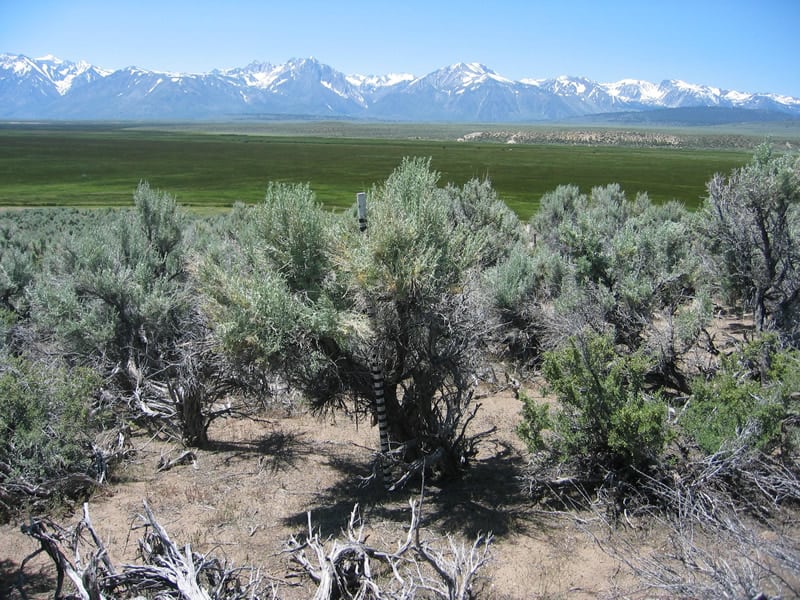

Holy Cow, post: 392505, member: 50 wrote: My thought on the whole identifying trees thing relative to site plans is WHO REALLY CARES. Size matters. That's useful for determining effort required to clear them all out. Someone who might actually give a hoot about the final appearance of the site might take the initial site plan out and select some number of worthy trees to remain to accentuate the appearance of the final layout once the new construction has happened. It would be far simpler if they were to request only those trees to be located. Everything else is trash in the architect's mind.
An increasing number of cities are using tree surveys - by species - in their planning. Desirable tree species are rewarded. List by species of the trees to keep or lose, tree coverage percentage, residual diameter calcs. The people who care are the clients that an incorrect tree survey costs them money.