Reading RPLS is free for the whole profession. Members post, reply, and get the members-only rooms.

Notifications
Clear all

Topic starter
Translate
▼
English
Spanish
French
German
Italian
Portuguese
Russian
Chinese
Japanese
Korean
Arabic
Hindi
Dutch
Polish
Turkish
Vietnamese
Thai
Swedish
Danish
Finnish
Norwegian
Czech
Hungarian
Romanian
Greek
Hebrew
Indonesian
Malay
Ukrainian
Bulgarian
Croatian
Slovak
Slovenian
Serbian
Lithuanian
Latvian
Estonian
Nothing major just some Ozark surveying on the Huzah in Crawford County, Missouri. Sure is nice - just like downtown St. Louis...not.
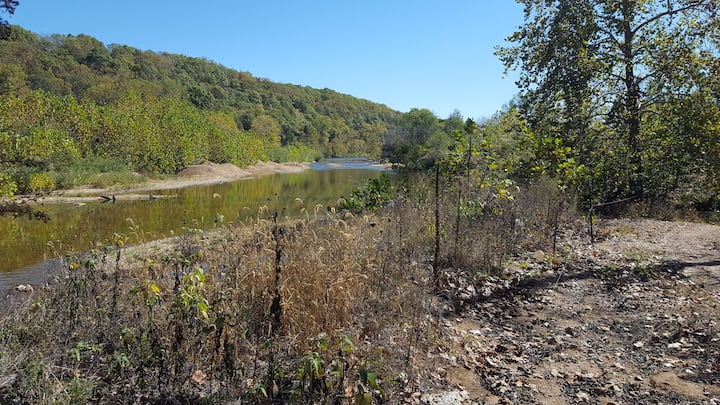
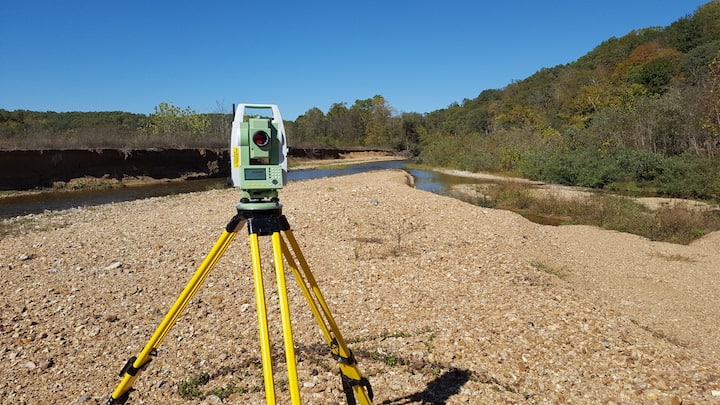
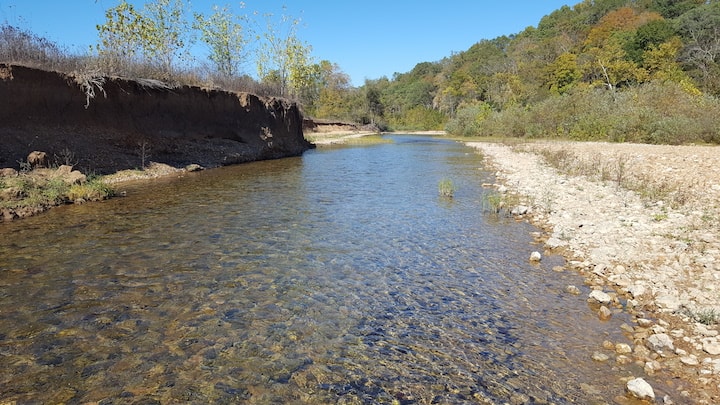
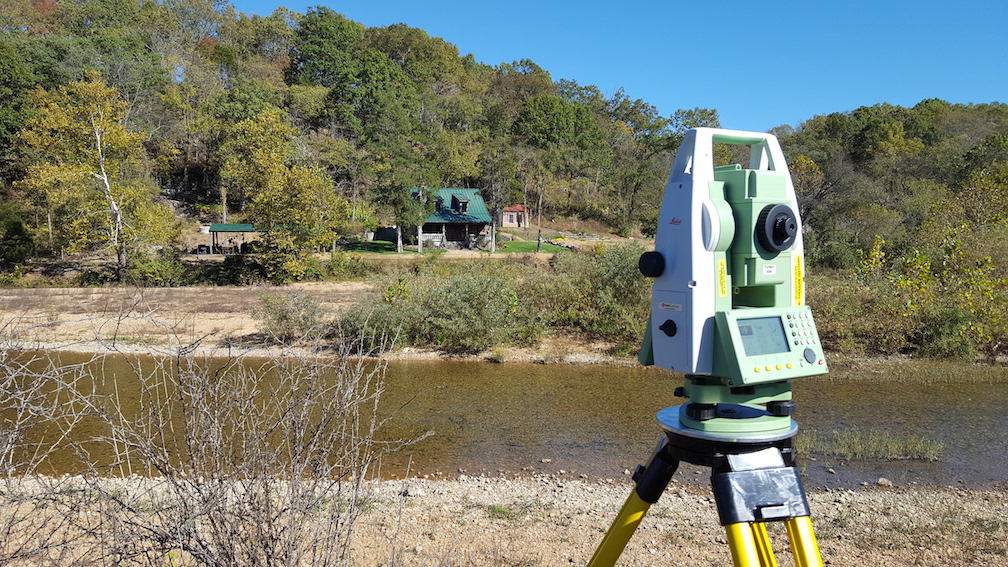
Nice place to wake up, huh?
N10,000, E7,000, Z100.00
PLS - IL, MO, AR, KS, MN, KY
Posted : October 27, 2017 7:09 pm

Translate
▼
English
Spanish
French
German
Italian
Portuguese
Russian
Chinese
Japanese
Korean
Arabic
Hindi
Dutch
Polish
Turkish
Vietnamese
Thai
Swedish
Danish
Finnish
Norwegian
Czech
Hungarian
Romanian
Greek
Hebrew
Indonesian
Malay
Ukrainian
Bulgarian
Croatian
Slovak
Slovenian
Serbian
Lithuanian
Latvian
Estonian
Is that boundary work or river recovery/rehabilitation work?
Certainly nice working in such locations.
Posted : October 27, 2017 8:41 pm

Translate
▼
English
Spanish
French
German
Italian
Portuguese
Russian
Chinese
Japanese
Korean
Arabic
Hindi
Dutch
Polish
Turkish
Vietnamese
Thai
Swedish
Danish
Finnish
Norwegian
Czech
Hungarian
Romanian
Greek
Hebrew
Indonesian
Malay
Ukrainian
Bulgarian
Croatian
Slovak
Slovenian
Serbian
Lithuanian
Latvian
Estonian
How far to the nearest Starbucks?????
;);)
Posted : October 28, 2017 8:23 am
Topic starter
Translate
▼
English
Spanish
French
German
Italian
Portuguese
Russian
Chinese
Japanese
Korean
Arabic
Hindi
Dutch
Polish
Turkish
Vietnamese
Thai
Swedish
Danish
Finnish
Norwegian
Czech
Hungarian
Romanian
Greek
Hebrew
Indonesian
Malay
Ukrainian
Bulgarian
Croatian
Slovak
Slovenian
Serbian
Lithuanian
Latvian
Estonian
Richard, post: 452863, member: 833 wrote: Is that boundary work or river recovery/rehabilitation work?
Certainly nice working in such locations.
This job was for stream bank stabilization, no boundary yet - we'll see when the dozers show up.
N10,000, E7,000, Z100.00
PLS - IL, MO, AR, KS, MN, KY
Posted : October 28, 2017 8:31 am
Topic starter
Translate
▼
English
Spanish
French
German
Italian
Portuguese
Russian
Chinese
Japanese
Korean
Arabic
Hindi
Dutch
Polish
Turkish
Vietnamese
Thai
Swedish
Danish
Finnish
Norwegian
Czech
Hungarian
Romanian
Greek
Hebrew
Indonesian
Malay
Ukrainian
Bulgarian
Croatian
Slovak
Slovenian
Serbian
Lithuanian
Latvian
Estonian
Holy Cow, post: 452889, member: 50 wrote: How far to the nearest Starbucks?????
;);)
only about 1.5 hrs...perfect
N10,000, E7,000, Z100.00
PLS - IL, MO, AR, KS, MN, KY
Posted : October 28, 2017 8:31 am
Translate
▼
English
Spanish
French
German
Italian
Portuguese
Russian
Chinese
Japanese
Korean
Arabic
Hindi
Dutch
Polish
Turkish
Vietnamese
Thai
Swedish
Danish
Finnish
Norwegian
Czech
Hungarian
Romanian
Greek
Hebrew
Indonesian
Malay
Ukrainian
Bulgarian
Croatian
Slovak
Slovenian
Serbian
Lithuanian
Latvian
Estonian
[USER=7070]@StLSurveyor[/USER] thanks.
I'd be interested if you've got more photos after the works.
I've done many river rehabilitation and similar surveys over the years.
Interesting work in peaceful environs.
Posted : October 28, 2017 2:36 pm

Translate
▼
English
Spanish
French
German
Italian
Portuguese
Russian
Chinese
Japanese
Korean
Arabic
Hindi
Dutch
Polish
Turkish
Vietnamese
Thai
Swedish
Danish
Finnish
Norwegian
Czech
Hungarian
Romanian
Greek
Hebrew
Indonesian
Malay
Ukrainian
Bulgarian
Croatian
Slovak
Slovenian
Serbian
Lithuanian
Latvian
Estonian
StLSurveyor, post: 452892, member: 7070 wrote: This job was for stream bank stabilization, no boundary yet - we'll see when the dozers show up.
What's involved in this type of survey work? Not something I'm familiar with but looks interesting.
Just because I'm paranoid, doesn't mean they aren't out to get me.
Posted : October 29, 2017 10:48 am
Translate
▼
English
Spanish
French
German
Italian
Portuguese
Russian
Chinese
Japanese
Korean
Arabic
Hindi
Dutch
Polish
Turkish
Vietnamese
Thai
Swedish
Danish
Finnish
Norwegian
Czech
Hungarian
Romanian
Greek
Hebrew
Indonesian
Malay
Ukrainian
Bulgarian
Croatian
Slovak
Slovenian
Serbian
Lithuanian
Latvian
Estonian
[USER=7066]@Williwaw[/USER] I can't answer for your neck of woods but from Tasmania.
It's pretty basic really but must include salient parts of the stream bed.
That includes deepest part of pool (not some gouged out huge hole though), if pool has a fair length and depth then some idea of the deeper section.
Riffle top and riffle toe are important as they form the streams gradient which is vital to determine remedial design works.
The natural flood plain levels.
If a levee has been thrown up alongside the bank then details.
What's needed is a long section of the stream bed with typical cross sections to determine stream capacity before it breaks out of the channel.
I've worked with geomorphologists and riverine engineers.
Both are interesting people, and good ones who know their stuff are uncanny.
I've walked many a stream with a geomorphologist and they'd point out features and say, for egs, 'if you put a single boulder wedged into bank here, watch for the shingle bar to form there.
And it does!
Similarly both people would walk a river and say a particularly bad looking section is under no threat and to leave alone, whilst giving a simple fix with groins, riprap (log or stones laid and anchored against the bank).
A lot of damage comes from river straightening and that's when survey comes to the fore, to enable a restoration of a comfortable bed grade to lower the speed of the water and help the river restore itself naturally.
In such instances artificial riffles are built that break the steepness lowering flow rates.
They're generally constructed at about 1:20 and keyed into the banks.
A key to success is bank stability and tussock, reeds or other tough stuff is a vital ingredient in long term survival.
What's not needed is a complete fully fledged topographical survey with all the nooks and crannies, indents and depressions.
A normal topo survey would see you there all week, month. But you'd be in and out in a couple of days by comparison.
I've got a lot of photos, and will dig some out later for another post.
Posted : October 29, 2017 10:11 pm
Topic starter
Translate
▼
English
Spanish
French
German
Italian
Portuguese
Russian
Chinese
Japanese
Korean
Arabic
Hindi
Dutch
Polish
Turkish
Vietnamese
Thai
Swedish
Danish
Finnish
Norwegian
Czech
Hungarian
Romanian
Greek
Hebrew
Indonesian
Malay
Ukrainian
Bulgarian
Croatian
Slovak
Slovenian
Serbian
Lithuanian
Latvian
Estonian
Richard, post: 453045, member: 833 wrote: [USER=7066]@Williwaw[/USER] I can't answer for your neck of woods but from Tasmania.
It's pretty basic really but must include salient parts of the stream bed.
That includes deepest part of pool (not some gouged out huge hole though), if pool has a fair length and depth then some idea of the deeper section.
Riffle top and riffle toe are important as they form the streams gradient which is vital to determine remedial design works.
The natural flood plain levels.
If a levee has been thrown up alongside the bank then details.
What's needed is a long section of the stream bed with typical cross sections to determine stream capacity before it breaks out of the channel.I've worked with geomorphologists and riverine engineers.
Both are interesting people, and good ones who know their stuff are uncanny.I've walked many a stream with a geomorphologist and they'd point out features and say, for egs, 'if you put a single boulder wedged into bank here, watch for the shingle bar to form there.
And it does!
Similarly both people would walk a river and say a particularly bad looking section is under no threat and to leave alone, whilst giving a simple fix with groins, riprap (log or stones laid and anchored against the bank).A lot of damage comes from river straightening and that's when survey comes to the fore, to enable a restoration of a comfortable bed grade to lower the speed of the water and help the river restore itself naturally.
In such instances artificial riffles are built that break the steepness lowering flow rates.
They're generally constructed at about 1:20 and keyed into the banks.A key to success is bank stability and tussock, reeds or other tough stuff is a vital ingredient in long term survival.
What's not needed is a complete fully fledged topographical survey with all the nooks and crannies, indents and depressions.
A normal topo survey would see you there all week, month. But you'd be in and out in a couple of days by comparison.I've got a lot of photos, and will dig some out later for another post.
[USER=7066]@Williwaw[/USER] That's pretty much spot on to what we do. These particular projects (there are 5 sites I am working on) are going to be designed using materials on site. With that in mind...no large rocks will be brought in and no rip-rap. One method will be to remove trees on site about 10-12" in diameter including the rootball and bury them along the bank with the root ball into the water where the main trunk is running perpendicular to the centerline of the flow. This will stabilize the bank and redirect the flow. [USER=833]@Richard[/USER] is correct in that most damage is due to straightening the stream and lowering the elevation of the flow. I really enjoy working on these projects and I am trying really hard to carve out a niche market.
N10,000, E7,000, Z100.00
PLS - IL, MO, AR, KS, MN, KY
Posted : October 30, 2017 4:00 am
Translate
▼
English
Spanish
French
German
Italian
Portuguese
Russian
Chinese
Japanese
Korean
Arabic
Hindi
Dutch
Polish
Turkish
Vietnamese
Thai
Swedish
Danish
Finnish
Norwegian
Czech
Hungarian
Romanian
Greek
Hebrew
Indonesian
Malay
Ukrainian
Bulgarian
Croatian
Slovak
Slovenian
Serbian
Lithuanian
Latvian
Estonian
Richard, post: 453045, member: 833 wrote: [USER=7066]@Williwaw[/USER] I can't answer for your neck of woods but from Tasmania.
It's pretty basic really but must include salient parts of the stream bed.
That includes deepest part of pool (not some gouged out huge hole though), if pool has a fair length and depth then some idea of the deeper section.
Riffle top and riffle toe are important as they form the streams gradient which is vital to determine remedial design works.
The natural flood plain levels.
If a levee has been thrown up alongside the bank then details.
What's needed is a long section of the stream bed with typical cross sections to determine stream capacity before it breaks out of the channel.I've worked with geomorphologists and riverine engineers.
Both are interesting people, and good ones who know their stuff are uncanny.I've walked many a stream with a geomorphologist and they'd point out features and say, for egs, 'if you put a single boulder wedged into bank here, watch for the shingle bar to form there.
And it does!
Similarly both people would walk a river and say a particularly bad looking section is under no threat and to leave alone, whilst giving a simple fix with groins, riprap (log or stones laid and anchored against the bank).A lot of damage comes from river straightening and that's when survey comes to the fore, to enable a restoration of a comfortable bed grade to lower the speed of the water and help the river restore itself naturally.
In such instances artificial riffles are built that break the steepness lowering flow rates.
They're generally constructed at about 1:20 and keyed into the banks.A key to success is bank stability and tussock, reeds or other tough stuff is a vital ingredient in long term survival.
What's not needed is a complete fully fledged topographical survey with all the nooks and crannies, indents and depressions.
A normal topo survey would see you there all week, month. But you'd be in and out in a couple of days by comparison.I've got a lot of photos, and will dig some out later for another post.
Thank you for that explanation. I've seen this type of restoration work done here reclaiming heavily damaged placer mining watersheds but am a bit ignorant of the surveyor's role. Fascinating from my perspective as a surveyor and fly fisherman. I would love to learn more. Please post photos if you have time.
Just because I'm paranoid, doesn't mean they aren't out to get me.
Posted : October 30, 2017 8:24 am