Reading RPLS is free for the whole profession. Members post, reply, and get the members-only rooms.

Notifications
Clear all
Strictly Surveying
27
Posts
14
Users
0
Reactions
723
Views

Topic starter
Translate
▼
English
Spanish
French
German
Italian
Portuguese
Russian
Chinese
Japanese
Korean
Arabic
Hindi
Dutch
Polish
Turkish
Vietnamese
Thai
Swedish
Danish
Finnish
Norwegian
Czech
Hungarian
Romanian
Greek
Hebrew
Indonesian
Malay
Ukrainian
Bulgarian
Croatian
Slovak
Slovenian
Serbian
Lithuanian
Latvian
Estonian
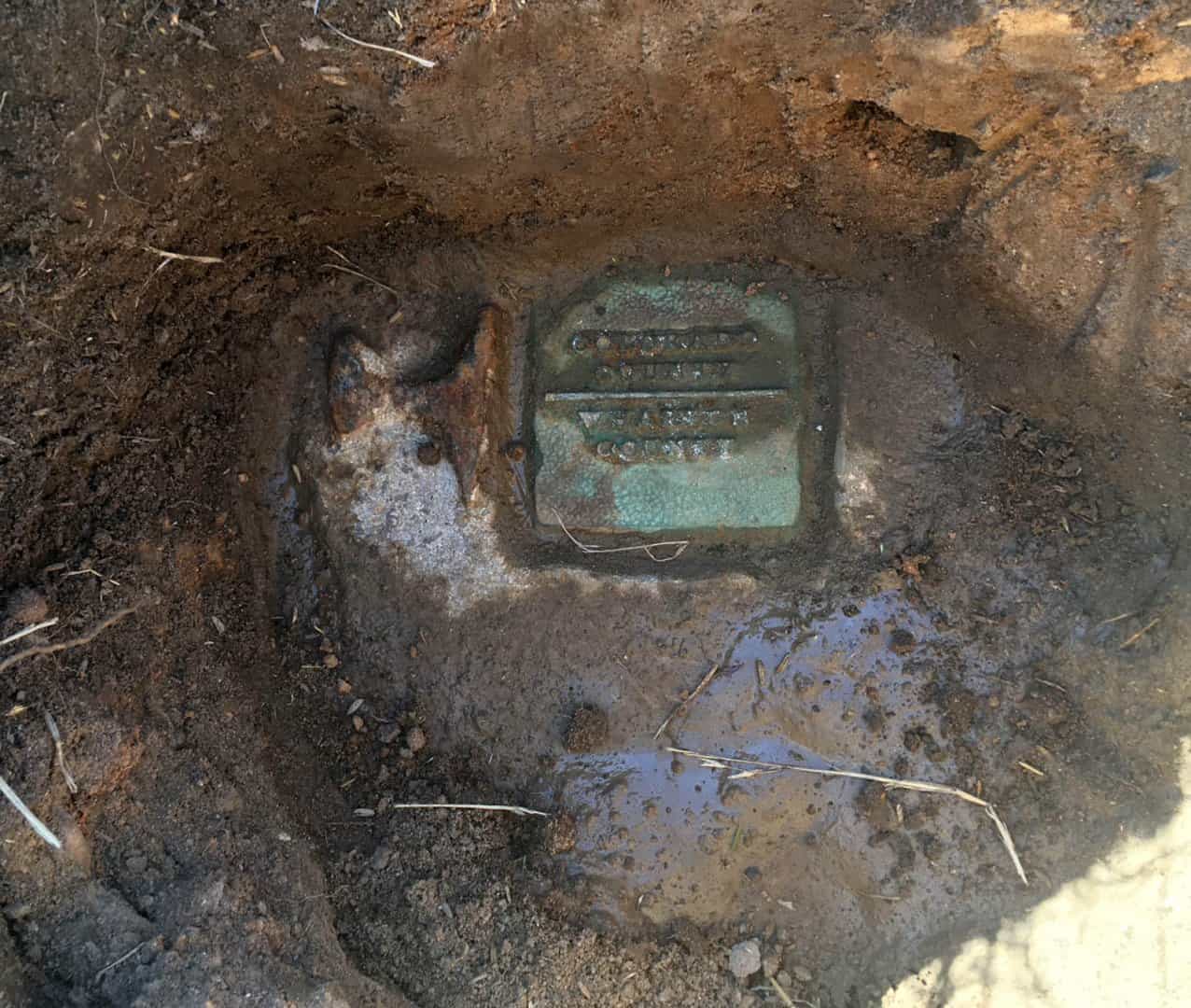
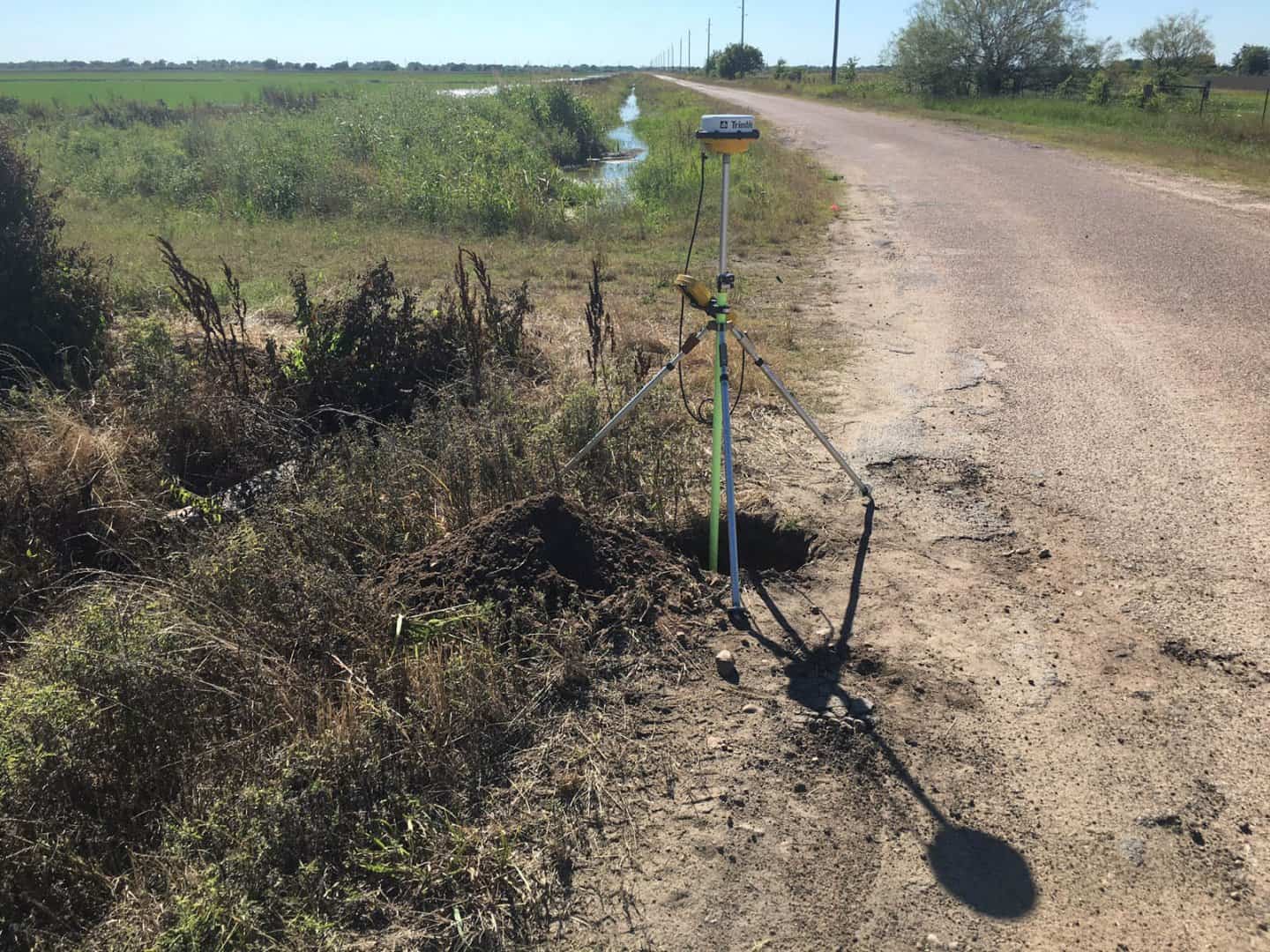
I spent the afternoon digging by the side of a county road passing through rice farms. I knew what I was looking for: a length of railroad rail that had been driven into the ground at some time before April 17, 1882 to mark a particular corner of a land grant made by the State of Texas to a railroad company in 1873.
Ever the optimist, I had previously scouted the vicinity of the corner, or at least where I had thought it might be based upon various clues in aerial photos. The 1882 surveyor had described the thing as "a Post of Railroad Iron". That sounded like something obvious, sticking well above grade, a post. The easy way didn't go very far, so this morning was spent locating other corners more than a mile distant from where the rail ought to be to then calculate from them where I might yet find the rail.
That involved first digging out the stump of a broken fence post on the theory that perhaps it had replaced the railroad iron, which I knew existed as recently as 1950. I thought the odds were still in favor of it remaining, but it wasn't exactly looking at me and one possible scenario was that the "post" had been replaced with something else, hence the investigation of the stump of the fence post.
Digging out the broken post turned out to be just for practice because after spending a good bit more time chopping through the road base at the edge of a public road, the rail appeared, 15 inches under the surface. There wasn't much doubt about it, either, since a surveyor had left a magnificent cast bronze tablet identifying the thing, probably in about 1951, and it was now set in concrete for posterity.
Posted : May 24, 2017 8:25 pm
Topic starter
Translate
▼
English
Spanish
French
German
Italian
Portuguese
Russian
Chinese
Japanese
Korean
Arabic
Hindi
Dutch
Polish
Turkish
Vietnamese
Thai
Swedish
Danish
Finnish
Norwegian
Czech
Hungarian
Romanian
Greek
Hebrew
Indonesian
Malay
Ukrainian
Bulgarian
Croatian
Slovak
Slovenian
Serbian
Lithuanian
Latvian
Estonian
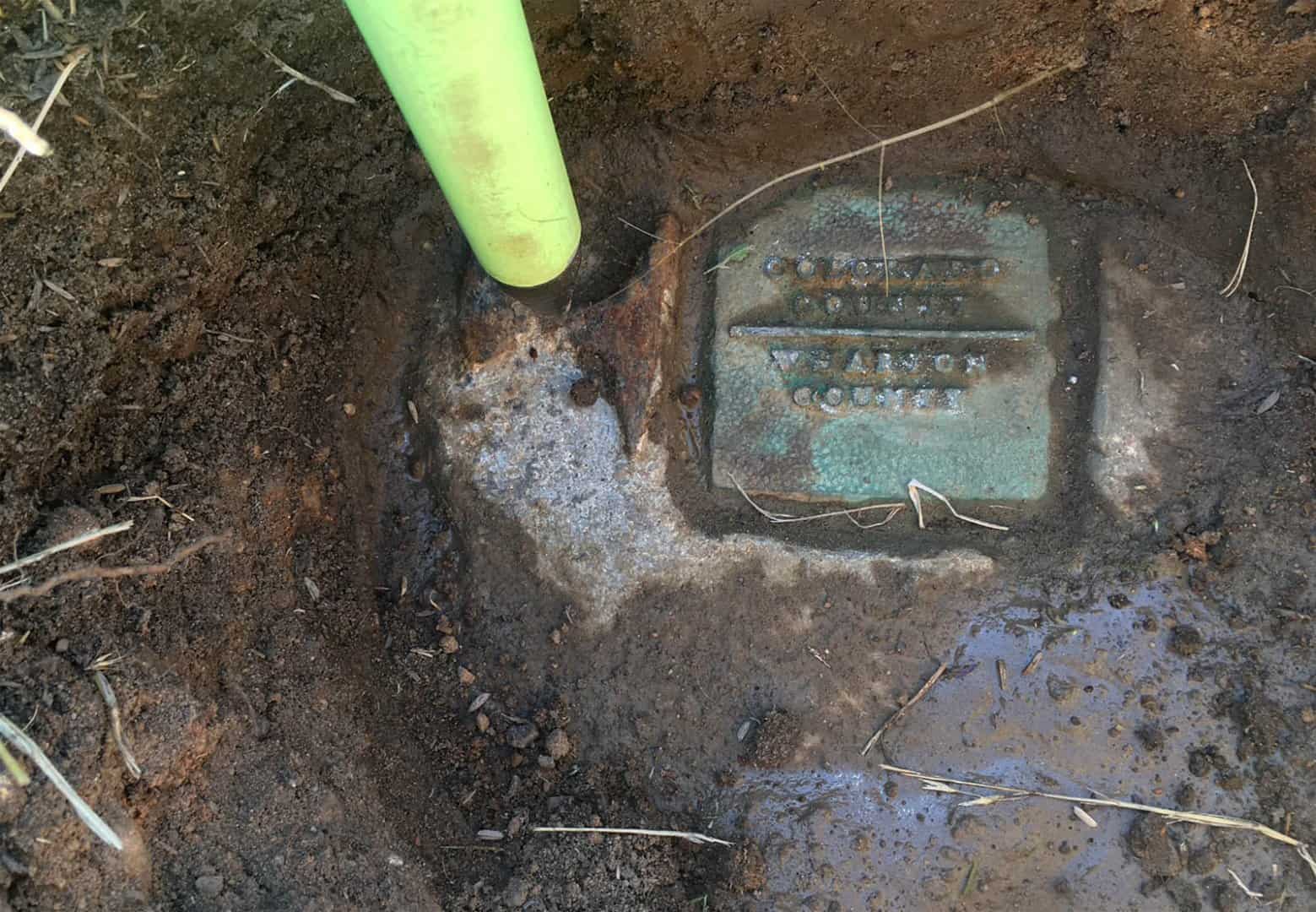
Oh, where on the rail was the corner? I used the center of the cross-section, which fell on the web of the rail, midway between the top of the rail and the bottom of the foot.
Posted : May 24, 2017 8:31 pm

Translate
▼
English
Spanish
French
German
Italian
Portuguese
Russian
Chinese
Japanese
Korean
Arabic
Hindi
Dutch
Polish
Turkish
Vietnamese
Thai
Swedish
Danish
Finnish
Norwegian
Czech
Hungarian
Romanian
Greek
Hebrew
Indonesian
Malay
Ukrainian
Bulgarian
Croatian
Slovak
Slovenian
Serbian
Lithuanian
Latvian
Estonian
Did you place a dimple there?
I would have.
N
Posted : May 24, 2017 9:34 pm
Topic starter
Translate
▼
English
Spanish
French
German
Italian
Portuguese
Russian
Chinese
Japanese
Korean
Arabic
Hindi
Dutch
Polish
Turkish
Vietnamese
Thai
Swedish
Danish
Finnish
Norwegian
Czech
Hungarian
Romanian
Greek
Hebrew
Indonesian
Malay
Ukrainian
Bulgarian
Croatian
Slovak
Slovenian
Serbian
Lithuanian
Latvian
Estonian
Nate The Surveyor, post: 429848, member: 291 wrote: Did you place a dimple there?
I would have.
N
The rail is more than 135 years old and I didn't particularly want to discover how deep the rust went by giving the web a smart rap with a center punch. The web was more eroded than the foot or top of the the rail, which suggested heavy corrosion. The "dimple" is the reference monument I set about 15 ft. away from the rail.
Posted : May 24, 2017 9:42 pm

Translate
▼
English
Spanish
French
German
Italian
Portuguese
Russian
Chinese
Japanese
Korean
Arabic
Hindi
Dutch
Polish
Turkish
Vietnamese
Thai
Swedish
Danish
Finnish
Norwegian
Czech
Hungarian
Romanian
Greek
Hebrew
Indonesian
Malay
Ukrainian
Bulgarian
Croatian
Slovak
Slovenian
Serbian
Lithuanian
Latvian
Estonian
Cool find, Kent!
Sent from my SAMSUNG-SM-N920A using Tapatalk
Posted : May 24, 2017 10:31 pm

Translate
▼
English
Spanish
French
German
Italian
Portuguese
Russian
Chinese
Japanese
Korean
Arabic
Hindi
Dutch
Polish
Turkish
Vietnamese
Thai
Swedish
Danish
Finnish
Norwegian
Czech
Hungarian
Romanian
Greek
Hebrew
Indonesian
Malay
Ukrainian
Bulgarian
Croatian
Slovak
Slovenian
Serbian
Lithuanian
Latvian
Estonian
Kent McMillan, post: 429841, member: 3 wrote: I thought the odds were still in favor of it remaining, but it wasn't exactly looking at me and one possible scenario was that the "post" had been replaced with something else, hence the investigation of the stump of the fence post.
What did Mr. Schonstedt say about it? That chunk of iron, if of any significant length should have screamed.
Posted : May 25, 2017 3:16 am

Translate
▼
English
Spanish
French
German
Italian
Portuguese
Russian
Chinese
Japanese
Korean
Arabic
Hindi
Dutch
Polish
Turkish
Vietnamese
Thai
Swedish
Danish
Finnish
Norwegian
Czech
Hungarian
Romanian
Greek
Hebrew
Indonesian
Malay
Ukrainian
Bulgarian
Croatian
Slovak
Slovenian
Serbian
Lithuanian
Latvian
Estonian
I do think that your success was based on a few factors
Firstly, not much road development over time and secondly, it appears to an official county line marker for whatever reason.
Plus the recovery in 1951 must have addded immensely to the effort.
That would be a long shot if a recovery here but one never knows until they look.
Posted : May 25, 2017 5:54 am
Topic starter
Translate
▼
English
Spanish
French
German
Italian
Portuguese
Russian
Chinese
Japanese
Korean
Arabic
Hindi
Dutch
Polish
Turkish
Vietnamese
Thai
Swedish
Danish
Finnish
Norwegian
Czech
Hungarian
Romanian
Greek
Hebrew
Indonesian
Malay
Ukrainian
Bulgarian
Croatian
Slovak
Slovenian
Serbian
Lithuanian
Latvian
Estonian
Bill93, post: 429858, member: 87 wrote: What did Mr. Schonstedt say about it? That chunk of iron, if of any significant length should have screamed.
The magnetic signal was not as strong as I was expecting. The 1950 surveyor who evidently set the thing in concrete with the bronze plaque used a ferrous something as the form for the edge of the concrete and that may well have altered the field enough to matter.
Posted : May 25, 2017 7:03 am
Topic starter
Translate
▼
English
Spanish
French
German
Italian
Portuguese
Russian
Chinese
Japanese
Korean
Arabic
Hindi
Dutch
Polish
Turkish
Vietnamese
Thai
Swedish
Danish
Finnish
Norwegian
Czech
Hungarian
Romanian
Greek
Hebrew
Indonesian
Malay
Ukrainian
Bulgarian
Croatian
Slovak
Slovenian
Serbian
Lithuanian
Latvian
Estonian
Robert Hill, post: 429865, member: 378 wrote: I do think that your success was based on a few factors
Firstly, not much road development over time and secondly, it appears to an official county line marker for whatever reason.
Plus the recovery in 1951 must have addded immensely to the effort.That would be a long shot if a recovery here but one never knows until they look.
The recovery 67 years ago was helpful in confirming that the thing was in place at that time and I would expect that the County Surveyor who did the work probably had more detailed records that would have helped locate the thing. They just didn't make their way to the GLO as they should have and what did was fairly unhelpful in that the nearest tie was to a stone miles away.
As for road development, I'm pretty sure that the road was built after 1950. So the marker survived that and the construction of various nearby canals against all ordinary odds.
Posted : May 25, 2017 7:09 am

Translate
▼
English
Spanish
French
German
Italian
Portuguese
Russian
Chinese
Japanese
Korean
Arabic
Hindi
Dutch
Polish
Turkish
Vietnamese
Thai
Swedish
Danish
Finnish
Norwegian
Czech
Hungarian
Romanian
Greek
Hebrew
Indonesian
Malay
Ukrainian
Bulgarian
Croatian
Slovak
Slovenian
Serbian
Lithuanian
Latvian
Estonian
Kent McMillan, post: 429870, member: 3 wrote: As for road development, I'm pretty sure that the road was built after 1950. So the marker survived that and the construction of various nearby canals against all ordinary odds.
Could it be that the marker was cut down in 1950, that what remains is a stub of the original? Or possibly driven or dug out and reburied at a depth that conformed to the road base? I suppose that is unknowable.
Posted : May 25, 2017 7:26 am
Translate
▼
English
Spanish
French
German
Italian
Portuguese
Russian
Chinese
Japanese
Korean
Arabic
Hindi
Dutch
Polish
Turkish
Vietnamese
Thai
Swedish
Danish
Finnish
Norwegian
Czech
Hungarian
Romanian
Greek
Hebrew
Indonesian
Malay
Ukrainian
Bulgarian
Croatian
Slovak
Slovenian
Serbian
Lithuanian
Latvian
Estonian
Forgot to add that a RR iron like that is very difficult to destroy or remove by grading etc
Usually only a backhoe will destroy the monument.
Posted : May 25, 2017 7:36 am
Topic starter
Translate
▼
English
Spanish
French
German
Italian
Portuguese
Russian
Chinese
Japanese
Korean
Arabic
Hindi
Dutch
Polish
Turkish
Vietnamese
Thai
Swedish
Danish
Finnish
Norwegian
Czech
Hungarian
Romanian
Greek
Hebrew
Indonesian
Malay
Ukrainian
Bulgarian
Croatian
Slovak
Slovenian
Serbian
Lithuanian
Latvian
Estonian
Mark Mayer, post: 429873, member: 424 wrote: Could it be that the marker was cut down in 1950, that what remains is a stub of the original? Or possibly driven or dug out and reburied at a depth that conformed to the road base? I suppose that is unknowable.
I think that's a reasonable conclusion since it simply is isn't plausible that what was described as a "Post of Railroad Iron" in 1882 wasn't sticking up well above grade on treeless prairie. However, I strongly doubt that the rail was other than something like a cut end of a rail much shorter than a full length. I'll have to take a look at aerial photos from 1952 again to see whether I'm mistaken as to whether the road was in place then or not.
Posted : May 25, 2017 7:45 am

Translate
▼
English
Spanish
French
German
Italian
Portuguese
Russian
Chinese
Japanese
Korean
Arabic
Hindi
Dutch
Polish
Turkish
Vietnamese
Thai
Swedish
Danish
Finnish
Norwegian
Czech
Hungarian
Romanian
Greek
Hebrew
Indonesian
Malay
Ukrainian
Bulgarian
Croatian
Slovak
Slovenian
Serbian
Lithuanian
Latvian
Estonian
[USER=3]@Kent McMillan[/USER]
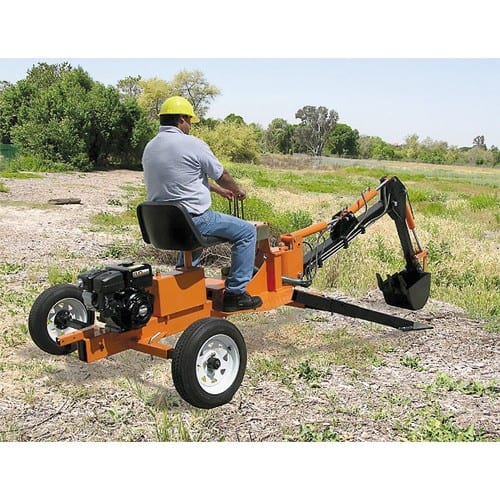
Great post. However, considering the amount of finesse you've inherited, why not add one of these to your survey toolbox. 😉
Posted : May 25, 2017 7:56 am
Topic starter
Translate
▼
English
Spanish
French
German
Italian
Portuguese
Russian
Chinese
Japanese
Korean
Arabic
Hindi
Dutch
Polish
Turkish
Vietnamese
Thai
Swedish
Danish
Finnish
Norwegian
Czech
Hungarian
Romanian
Greek
Hebrew
Indonesian
Malay
Ukrainian
Bulgarian
Croatian
Slovak
Slovenian
Serbian
Lithuanian
Latvian
Estonian
FL/GA PLS., post: 429876, member: 379 wrote: [USER=3]@Kent McMillan[/USER]
Great post. However, considering the amount of finesse you've inherited, why not add one of these to your survey toolbox.
Not for me, but renting a tractor with a box blade has been handy in some situations.
Posted : May 25, 2017 8:35 am

Translate
▼
English
Spanish
French
German
Italian
Portuguese
Russian
Chinese
Japanese
Korean
Arabic
Hindi
Dutch
Polish
Turkish
Vietnamese
Thai
Swedish
Danish
Finnish
Norwegian
Czech
Hungarian
Romanian
Greek
Hebrew
Indonesian
Malay
Ukrainian
Bulgarian
Croatian
Slovak
Slovenian
Serbian
Lithuanian
Latvian
Estonian
Kent McMillan, post: 429875, member: 3 wrote: I think that's a reasonable conclusion since it simply is isn't plausible that what was described as a "Post of Railroad Iron" in 1882 wasn't sticking up well above grade on treeless prairie..
Of course practice in Oklahoma can very different. There are many depot locations and other railroad properties that are still marked today with what has been noted as "a vertical rail" in the descriptions. If they are unmolested most are 3 or so feet above grade, some shorter. Almost every one I have found has the top cut at a sharp angle (an almost foreboding site). The ones placed by RR personnel are substantial. Although I never excavated to the bottom, I have seen them used for barbed wire fence pull posts, giving me an indication there is as much or more of the rail subgrade than super.
And I have found a few that were torched off at ground level. I've even seen a few that apparently got in an argument with a large vehicle or piece of equipment. The outcome was predictable.
Posted : May 25, 2017 11:54 am
Topic starter
Translate
▼
English
Spanish
French
German
Italian
Portuguese
Russian
Chinese
Japanese
Korean
Arabic
Hindi
Dutch
Polish
Turkish
Vietnamese
Thai
Swedish
Danish
Finnish
Norwegian
Czech
Hungarian
Romanian
Greek
Hebrew
Indonesian
Malay
Ukrainian
Bulgarian
Croatian
Slovak
Slovenian
Serbian
Lithuanian
Latvian
Estonian
paden cash, post: 429903, member: 20 wrote: There are many depot locations and other railroad properties that are still marked today with what has been noted as "a vertical rail" in the descriptions. If they are unmolested most are 3 or so feet above grade, some shorter. Almost every one I have found has the top cut at a sharp angle (an almost foreboding site).
I've often wondered what a "point" looked like. You see them occasionally in written descriptions. :>
Posted : May 25, 2017 12:34 pm

Translate
▼
English
Spanish
French
German
Italian
Portuguese
Russian
Chinese
Japanese
Korean
Arabic
Hindi
Dutch
Polish
Turkish
Vietnamese
Thai
Swedish
Danish
Finnish
Norwegian
Czech
Hungarian
Romanian
Greek
Hebrew
Indonesian
Malay
Ukrainian
Bulgarian
Croatian
Slovak
Slovenian
Serbian
Lithuanian
Latvian
Estonian
Lots of adaptive reuse of rails by railroad companies. I was waiting for a train in Tokyo back in February when it dawned on me that the platform cover I was standing under was largely composed of recycled rail. At least seven different pieces in this shot.

Sorry to sidetrack the thread.
Posted : May 25, 2017 1:20 pm

Translate
▼
English
Spanish
French
German
Italian
Portuguese
Russian
Chinese
Japanese
Korean
Arabic
Hindi
Dutch
Polish
Turkish
Vietnamese
Thai
Swedish
Danish
Finnish
Norwegian
Czech
Hungarian
Romanian
Greek
Hebrew
Indonesian
Malay
Ukrainian
Bulgarian
Croatian
Slovak
Slovenian
Serbian
Lithuanian
Latvian
Estonian
Andy Nold, post: 429910, member: 7 wrote: ...Sorry to sidetrack the thread.
Well, at least it was just sidetracked on a tangent, and not totally derailed......
Posted : May 25, 2017 1:34 pm

Translate
▼
English
Spanish
French
German
Italian
Portuguese
Russian
Chinese
Japanese
Korean
Arabic
Hindi
Dutch
Polish
Turkish
Vietnamese
Thai
Swedish
Danish
Finnish
Norwegian
Czech
Hungarian
Romanian
Greek
Hebrew
Indonesian
Malay
Ukrainian
Bulgarian
Croatian
Slovak
Slovenian
Serbian
Lithuanian
Latvian
Estonian
Most descriptions in these parts call for "rail end" when referring to RR rails.
They come in a variety of sizes from small gauge rail to some rather heavy duty full sized rail.
The one in the picture appears to be small gauge and has rusting away in the middle of all that fertilized farming ground.
I found a pile of 8ft small gauge rails in the 70s and set them as monuments for Headright Survey corners.
40?ñ years ago at an intersection south of Lacey Bridge crossing Black Cypress Bayou a stop sign post is made from a full rail set in concrete with approximately 8ft out of the ground. It was placed there to put a stop to large trucks taking a shortcut across private property. It has claimed many bumpers and front ends of all sized vehicles and has not suffered any damage.
Posted : May 25, 2017 4:10 pm

Translate
▼
English
Spanish
French
German
Italian
Portuguese
Russian
Chinese
Japanese
Korean
Arabic
Hindi
Dutch
Polish
Turkish
Vietnamese
Thai
Swedish
Danish
Finnish
Norwegian
Czech
Hungarian
Romanian
Greek
Hebrew
Indonesian
Malay
Ukrainian
Bulgarian
Croatian
Slovak
Slovenian
Serbian
Lithuanian
Latvian
Estonian
Someone told me that the majority of metal "T" fence posts were all made out of old rail road track.
Posted : May 26, 2017 10:12 am
Page 1 / 2
Next