Reading RPLS is free for the whole profession. Members post, reply, and get the members-only rooms.

Notifications
Clear all
Strictly Surveying
220
Posts
32
Users
0
Reactions
6,915
Views

Topic starter
Translate
▼
English
Spanish
French
German
Italian
Portuguese
Russian
Chinese
Japanese
Korean
Arabic
Hindi
Dutch
Polish
Turkish
Vietnamese
Thai
Swedish
Danish
Finnish
Norwegian
Czech
Hungarian
Romanian
Greek
Hebrew
Indonesian
Malay
Ukrainian
Bulgarian
Croatian
Slovak
Slovenian
Serbian
Lithuanian
Latvian
Estonian
For Texas and Oklahoma surveyors who are interested in this ongoing case:
Posted : February 1, 2017 4:17 pm

Translate
▼
English
Spanish
French
German
Italian
Portuguese
Russian
Chinese
Japanese
Korean
Arabic
Hindi
Dutch
Polish
Turkish
Vietnamese
Thai
Swedish
Danish
Finnish
Norwegian
Czech
Hungarian
Romanian
Greek
Hebrew
Indonesian
Malay
Ukrainian
Bulgarian
Croatian
Slovak
Slovenian
Serbian
Lithuanian
Latvian
Estonian
Someone needs to step up and B-slap the BLM on this. They are acting like nothing but THIEVES.
Glenn,
Would you like to run the 116 miles of Gradient Boundary? Looks like a long term job if you do not saturate it with field parties.
Posted : February 1, 2017 6:08 pm

Translate
▼
English
Spanish
French
German
Italian
Portuguese
Russian
Chinese
Japanese
Korean
Arabic
Hindi
Dutch
Polish
Turkish
Vietnamese
Thai
Swedish
Danish
Finnish
Norwegian
Czech
Hungarian
Romanian
Greek
Hebrew
Indonesian
Malay
Ukrainian
Bulgarian
Croatian
Slovak
Slovenian
Serbian
Lithuanian
Latvian
Estonian
Okay, so nothing in Cornyn's bill will effect the Red River Compact (Texas Natural Resources Code Chapter 12) but the Red River Compact specifically states that "the permanent political boundary line between the states of Texas and Oklahoma along the Red River is the vegetation line along the south bank of the Red River except for the Texoma area, where the boundary does not change." In other words, the Red River Compact specifically abandons the gradient boundary theory in favor of a visible boundary that should be readily determinable by just about anyone.
http://www.statutes.legis.state.tx.us/Docs/NR/htm/NR.12.htm
Posted : February 1, 2017 7:51 pm

Translate
▼
English
Spanish
French
German
Italian
Portuguese
Russian
Chinese
Japanese
Korean
Arabic
Hindi
Dutch
Polish
Turkish
Vietnamese
Thai
Swedish
Danish
Finnish
Norwegian
Czech
Hungarian
Romanian
Greek
Hebrew
Indonesian
Malay
Ukrainian
Bulgarian
Croatian
Slovak
Slovenian
Serbian
Lithuanian
Latvian
Estonian
You really didn't expect Senators and Congressmen to understand the details did you?
Posted : February 1, 2017 7:54 pm
Translate
▼
English
Spanish
French
German
Italian
Portuguese
Russian
Chinese
Japanese
Korean
Arabic
Hindi
Dutch
Polish
Turkish
Vietnamese
Thai
Swedish
Danish
Finnish
Norwegian
Czech
Hungarian
Romanian
Greek
Hebrew
Indonesian
Malay
Ukrainian
Bulgarian
Croatian
Slovak
Slovenian
Serbian
Lithuanian
Latvian
Estonian
paden cash, post: 411994, member: 20 wrote: You really didn't expect Senators and Congressmen to understand the details did you?
The gradient boundary was a theory adopted by Arthur A. Stiles to determine where the South bank of the Red River was on one particular bend in the river in the vicinity of a whole bunch of good oil wells where the bank was not well defined.
It's a ridiculous waste of money to try to apply that same theory to 120 miles of the Red River since (a) the gradient boundary will continue to move to another invisible location and (b) the vegetation line is actually something that all parties, including law enforcement and other lay people should be able to identify for purposes of practical adminstration.
Posted : February 1, 2017 8:06 pm
Translate
▼
English
Spanish
French
German
Italian
Portuguese
Russian
Chinese
Japanese
Korean
Arabic
Hindi
Dutch
Polish
Turkish
Vietnamese
Thai
Swedish
Danish
Finnish
Norwegian
Czech
Hungarian
Romanian
Greek
Hebrew
Indonesian
Malay
Ukrainian
Bulgarian
Croatian
Slovak
Slovenian
Serbian
Lithuanian
Latvian
Estonian
Here, for example are two digital orthophotos of the exact same area (at the same scale) along the Red River. Wilbarger County, Texas is on one side and Sonicburger County, Oklahoma is on the other.
Photo from 2004 :
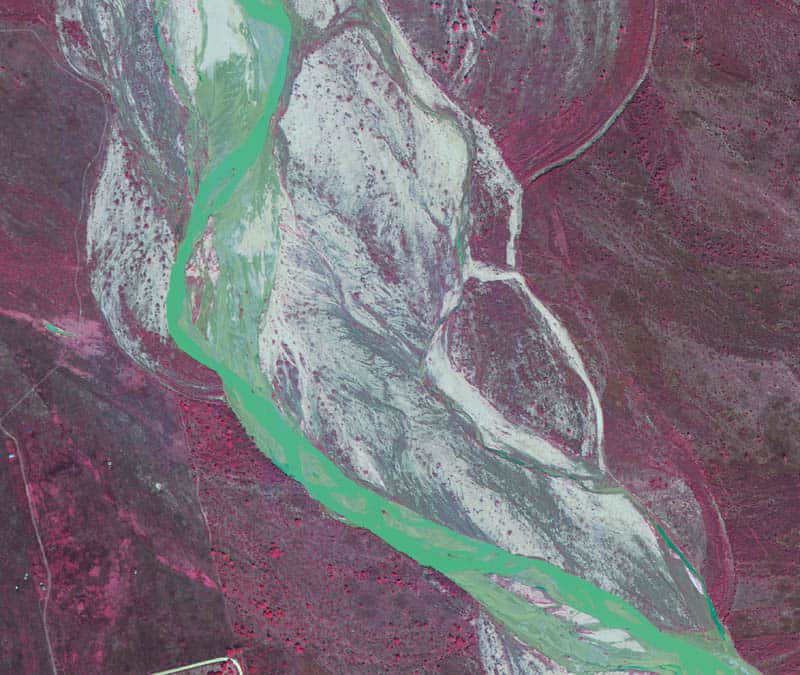
Photo from 2015 :

So, if the gradient boundary had been carefully surveyed in 2004, by 2015 (actually sooner than that) the boundary would have shifted by hundreds of feet, presumably still requiring the gradient boundary to be resurveyed whenever anyone needed to know where the boundary between Texas and Oklahoma was. It looks like idiocy to pretend otherwise.
Posted : February 1, 2017 8:36 pm
Translate
▼
English
Spanish
French
German
Italian
Portuguese
Russian
Chinese
Japanese
Korean
Arabic
Hindi
Dutch
Polish
Turkish
Vietnamese
Thai
Swedish
Danish
Finnish
Norwegian
Czech
Hungarian
Romanian
Greek
Hebrew
Indonesian
Malay
Ukrainian
Bulgarian
Croatian
Slovak
Slovenian
Serbian
Lithuanian
Latvian
Estonian
Kent McMillan, post: 412003, member: 3 wrote: ...So, if the gradient boundary had been carefully surveyed in 2004, by 2015 (actually sooner than that) the boundary would have shifted by hundreds of feet, presumably still requiring the gradient boundary to be resurveyed whenever anyone needed to know where the boundary between Texas and Oklahoma was. It looks like idiocy to pretend otherwise.
This is a good example of why I (and almost every other Oklahoma surveyor) won't touch a survey on the river. Most of us won't live long enough to see this get settled.
Posted : February 1, 2017 8:46 pm
Translate
▼
English
Spanish
French
German
Italian
Portuguese
Russian
Chinese
Japanese
Korean
Arabic
Hindi
Dutch
Polish
Turkish
Vietnamese
Thai
Swedish
Danish
Finnish
Norwegian
Czech
Hungarian
Romanian
Greek
Hebrew
Indonesian
Malay
Ukrainian
Bulgarian
Croatian
Slovak
Slovenian
Serbian
Lithuanian
Latvian
Estonian
paden cash, post: 412006, member: 20 wrote: This is a good example of why I (and almost every other Oklahoma surveyor) won't touch a survey on the river. Most of us won't live long enough to see this get settled.
Wouldn't the easy solution for the Oklahoma side be just to plot all the locations that the Red River has had for the last twenty years or more and make it clear that anyone buying (or leasing) land along a meandering river like the Red is can ultimately expect to be disappointed.
Posted : February 1, 2017 8:53 pm

Translate
▼
English
Spanish
French
German
Italian
Portuguese
Russian
Chinese
Japanese
Korean
Arabic
Hindi
Dutch
Polish
Turkish
Vietnamese
Thai
Swedish
Danish
Finnish
Norwegian
Czech
Hungarian
Romanian
Greek
Hebrew
Indonesian
Malay
Ukrainian
Bulgarian
Croatian
Slovak
Slovenian
Serbian
Lithuanian
Latvian
Estonian
I have surveyed near a series of a bends along the Red River that was a disputed area many decades ago.
33å¡33'51.5N, 94å¡14'25.5W and on google earth shows the many locations once representing where the river did flow.
It is strange to find 4x4 cedar post out in the middle of perfectly good bottom land and nearly half mile away from the Red River south bank that marks the Texas - Oklahoma boundary,
Posted : February 1, 2017 9:23 pm
Translate
▼
English
Spanish
French
German
Italian
Portuguese
Russian
Chinese
Japanese
Korean
Arabic
Hindi
Dutch
Polish
Turkish
Vietnamese
Thai
Swedish
Danish
Finnish
Norwegian
Czech
Hungarian
Romanian
Greek
Hebrew
Indonesian
Malay
Ukrainian
Bulgarian
Croatian
Slovak
Slovenian
Serbian
Lithuanian
Latvian
Estonian
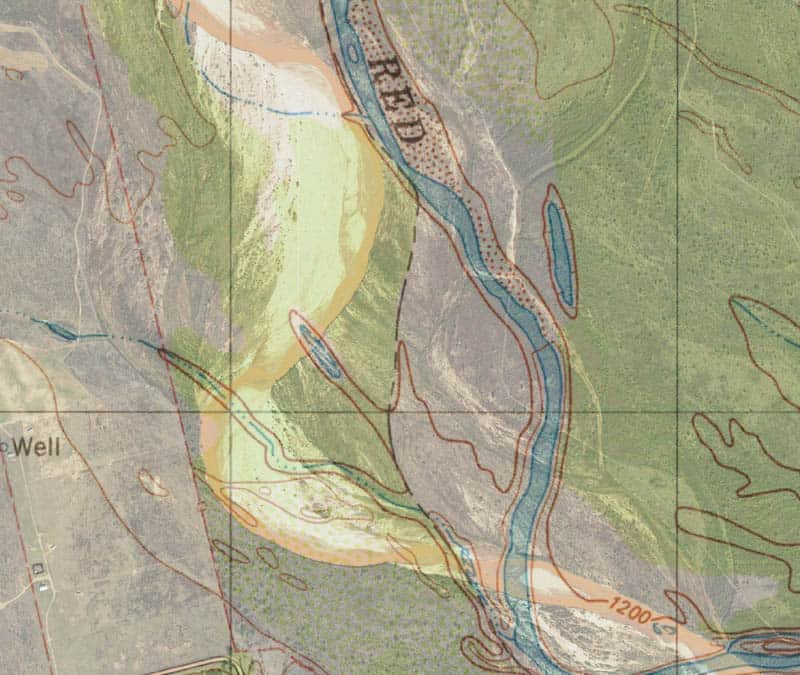
Here's the Red River as mapped by the USGS from aerial photography taken in 1978 superimposed upon the 2015 digital orthos shown above. Basically, the Red River has meandered across a wide floodplain and will continue to do so. The best that a survey of the gradient boundaries of the Red River can hope to do is to obtain a snapshot that is good for less time than the average residential mortgage loan inspection will be.
Yes, that's the 1000m grid on the USGS map.
Posted : February 1, 2017 10:50 pm
Translate
▼
English
Spanish
French
German
Italian
Portuguese
Russian
Chinese
Japanese
Korean
Arabic
Hindi
Dutch
Polish
Turkish
Vietnamese
Thai
Swedish
Danish
Finnish
Norwegian
Czech
Hungarian
Romanian
Greek
Hebrew
Indonesian
Malay
Ukrainian
Bulgarian
Croatian
Slovak
Slovenian
Serbian
Lithuanian
Latvian
Estonian
Having slept on it I had an epiphany after I woke this morning while watching the national news on tv: Since all the previous government administrations have failed miserably in keeping the Red River in its proper place possibly a harder stand on the issue might provide resolve.
First an executive order should be decreed commanding the Red River to cease its aimless liberal wandering and a ban on waters migrating back and forth will be in effect for at least 90 days and administered by the Department of Homeland Security. During this time migrating waters should be detained until a procedure of extreme vetting can be put in place to determine which waters are beneficial and which are subversive. If the River fails to comply all its federal funding should be stripped and taunted on Twitter.
And if those means still don't provide any stability in the river bed a wall will be built at the expense of the river. Not just any wall; but a bigly wall...a great wall. It will be huge and so, so beautiful.
Did I say the river would pay for the wall? Well, I meant to say the river will eventually pay for the wall. The US taxpayers will write the initial check, but will have the authority of an executive order to send the bill to the river.
case closed...man, that was easy.
Posted : February 2, 2017 4:55 am

Translate
▼
English
Spanish
French
German
Italian
Portuguese
Russian
Chinese
Japanese
Korean
Arabic
Hindi
Dutch
Polish
Turkish
Vietnamese
Thai
Swedish
Danish
Finnish
Norwegian
Czech
Hungarian
Romanian
Greek
Hebrew
Indonesian
Malay
Ukrainian
Bulgarian
Croatian
Slovak
Slovenian
Serbian
Lithuanian
Latvian
Estonian
I believe the executive order should be expanded to include all boundaries within the US and real estate holdings of US citizens overseas. We will need to abandoned this Board and go to Twitter to get the straight scoop. What a simple solution. Paden you are a genius.
Posted : February 2, 2017 6:09 am

Translate
▼
English
Spanish
French
German
Italian
Portuguese
Russian
Chinese
Japanese
Korean
Arabic
Hindi
Dutch
Polish
Turkish
Vietnamese
Thai
Swedish
Danish
Finnish
Norwegian
Czech
Hungarian
Romanian
Greek
Hebrew
Indonesian
Malay
Ukrainian
Bulgarian
Croatian
Slovak
Slovenian
Serbian
Lithuanian
Latvian
Estonian
Glenn Breysacher, post: 411957, member: 188 wrote: For Texas and Oklahoma surveyors who are interested in this ongoing case:
Looks like their appropriation for the survey is going to limit your proposal to about $8600 per mile. Best get the RTK gear out.
https://www.govtrack.us/congress/bills/115/s90/text/is
Posted : February 2, 2017 7:56 am
Translate
▼
English
Spanish
French
German
Italian
Portuguese
Russian
Chinese
Japanese
Korean
Arabic
Hindi
Dutch
Polish
Turkish
Vietnamese
Thai
Swedish
Danish
Finnish
Norwegian
Czech
Hungarian
Romanian
Greek
Hebrew
Indonesian
Malay
Ukrainian
Bulgarian
Croatian
Slovak
Slovenian
Serbian
Lithuanian
Latvian
Estonian
The US Supreme Court determined that the boundary between Oklahoma and Texas was the south bank of the Red River. I've linked that decision below. However, the whole matter gets even more convoluted over time when the changes in the course of the river are considered. If by the gradual processes of erosion and accretion, then the boundary moves. If by avulsion after 1821, the effective date of the treaty of 1819, not, regardless of where the gradient boundary might be found to be along the present south bank today.
https://www.law.cornell.edu/supremecourt/text/261/340
I would think that the most important question at issue is which changes in the course of the Red River after 1821 can be proven to have been avulsive. If not avulsive, then the doctrine of alluvion is presumed to apply.
Posted : February 2, 2017 8:04 am
Translate
▼
English
Spanish
French
German
Italian
Portuguese
Russian
Chinese
Japanese
Korean
Arabic
Hindi
Dutch
Polish
Turkish
Vietnamese
Thai
Swedish
Danish
Finnish
Norwegian
Czech
Hungarian
Romanian
Greek
Hebrew
Indonesian
Malay
Ukrainian
Bulgarian
Croatian
Slovak
Slovenian
Serbian
Lithuanian
Latvian
Estonian
Duane Frymire, post: 412062, member: 110 wrote: Looks like their appropriation for the survey is going to limit your proposal to about $8600 per mile. Best get the RTK gear out.
https://www.govtrack.us/congress/bills/115/s90/text/is
For surveying the gradient boundary, an airplane would probably be the best choice. You'd identify the stage of the river when the water surface was at the height of the gradient boundary and just fly the river to produce aerial orthophotos that would capture every twist and turn. The ground work would be restricted to ground control to support the airborne mapping, determining the gradient boundary heights at wide intervals, and checking gaging stations when the river was in flood.
Posted : February 2, 2017 8:39 am

Translate
▼
English
Spanish
French
German
Italian
Portuguese
Russian
Chinese
Japanese
Korean
Arabic
Hindi
Dutch
Polish
Turkish
Vietnamese
Thai
Swedish
Danish
Finnish
Norwegian
Czech
Hungarian
Romanian
Greek
Hebrew
Indonesian
Malay
Ukrainian
Bulgarian
Croatian
Slovak
Slovenian
Serbian
Lithuanian
Latvian
Estonian
Kent McMillan, post: 412031, member: 3 wrote: Here's the Red River as mapped by the USGS from aerial photography taken in 1978 superimposed upon the 2015 digital orthos shown above. Basically, the Red River has meandered across a wide floodplain and will continue to do so. The best that a survey of the gradient boundaries of the Red River can hope to do is to obtain a snapshot that is good for less time than the average residential mortgage loan inspection will be.
Yes, that's the 1000m grid on the USGS map.
Just looking at Google Maps, there is some pretty wild stuff along that river. In some places there are double ox-bows. The Google state boundary meanders all over without regard to where the River is obviously located in the aerial photo.
It is also the Texas-Arkansas border for a short distance.
Posted : February 2, 2017 8:50 am
Topic starter
Translate
▼
English
Spanish
French
German
Italian
Portuguese
Russian
Chinese
Japanese
Korean
Arabic
Hindi
Dutch
Polish
Turkish
Vietnamese
Thai
Swedish
Danish
Finnish
Norwegian
Czech
Hungarian
Romanian
Greek
Hebrew
Indonesian
Malay
Ukrainian
Bulgarian
Croatian
Slovak
Slovenian
Serbian
Lithuanian
Latvian
Estonian
Stephen Johnson, post: 411978, member: 53 wrote: Someone needs to step up and B-slap the BLM on this. They are acting like nothing but THIEVES.
Glenn,
Would you like to run the 116 miles of Gradient Boundary? Looks like a long term job if you do not saturate it with field parties.
Stephen,
No thank you. I'll bet that I know who a few of those surveyors will be though, if this happens.
Posted : February 2, 2017 8:52 am
Translate
▼
English
Spanish
French
German
Italian
Portuguese
Russian
Chinese
Japanese
Korean
Arabic
Hindi
Dutch
Polish
Turkish
Vietnamese
Thai
Swedish
Danish
Finnish
Norwegian
Czech
Hungarian
Romanian
Greek
Hebrew
Indonesian
Malay
Ukrainian
Bulgarian
Croatian
Slovak
Slovenian
Serbian
Lithuanian
Latvian
Estonian
Dave Karoly, post: 412072, member: 94 wrote: Just looking at Google Maps, there is some pretty wild stuff along that river. In some places there are double ox-bows. The Google state boundary meanders all over without regard to where the River is obviously located in the aerial photo.
Yes. Wanting to apply the doctrine of avulsion to wildly meandering rivers like the Red River and parts of the Rio Grande creates problems that wouldn't be present if all changes were presumed to have been gradual. Otherwise, you're left with historical positions of the South bank of the Red River that exist only as squiggles on topographic maps and of very limited practical use.
Posted : February 2, 2017 9:11 am
Translate
▼
English
Spanish
French
German
Italian
Portuguese
Russian
Chinese
Japanese
Korean
Arabic
Hindi
Dutch
Polish
Turkish
Vietnamese
Thai
Swedish
Danish
Finnish
Norwegian
Czech
Hungarian
Romanian
Greek
Hebrew
Indonesian
Malay
Ukrainian
Bulgarian
Croatian
Slovak
Slovenian
Serbian
Lithuanian
Latvian
Estonian
@ paden Cash
Ask Louisiana, they have been trying for centuries to hold back the Red River back with no solution at all.
At some times it simply goes where it wants to go.
The sifting sands are on the move 24/7 between Texas and Oklahoma along the Red River making it unfit to wade in or swim because it will swallow up most anything.
It narrows and deepens at the bend around Fulton, Arkansas to where you could throw a rock across from bank to bank and I have done that.
Between Fulton and the Gulf of Mexico they have built levees, locks and dams when it decides to get out of its banks not much will stop that from happening.
There are some portions of the bank that you just want to have a long rope tied around your waste for the crew to pull you to safety if you get swept away.
Posted : February 2, 2017 9:12 am
Translate
▼
English
Spanish
French
German
Italian
Portuguese
Russian
Chinese
Japanese
Korean
Arabic
Hindi
Dutch
Polish
Turkish
Vietnamese
Thai
Swedish
Danish
Finnish
Norwegian
Czech
Hungarian
Romanian
Greek
Hebrew
Indonesian
Malay
Ukrainian
Bulgarian
Croatian
Slovak
Slovenian
Serbian
Lithuanian
Latvian
Estonian
BTW, here's a link to the paper by Arthur A. Stiles that appeared in "Texas Law Review" in 1952 in which he discussed the rationale by which the gradient boundary theory had been adopted along the so-called Big Bend in the Red River that was the center of the dispute in Oklahoma v. Texas.
http://www.abslandtx.com/archives/ArthurAStilesonGradientBoundary.pdf
Posted : February 2, 2017 9:18 am
Page 1 / 11
Next