Reading RPLS is free for the whole profession. Members post, reply, and get the members-only rooms.

Notifications
Clear all
Strictly Surveying
10
Posts
5
Users
0
Reactions
1,079
Views

Topic starter
Translate
▼
English
Spanish
French
German
Italian
Portuguese
Russian
Chinese
Japanese
Korean
Arabic
Hindi
Dutch
Polish
Turkish
Vietnamese
Thai
Swedish
Danish
Finnish
Norwegian
Czech
Hungarian
Romanian
Greek
Hebrew
Indonesian
Malay
Ukrainian
Bulgarian
Croatian
Slovak
Slovenian
Serbian
Lithuanian
Latvian
Estonian
I went out for half a day today to continue the work on a survey of a ranch which is a remainder of a couple of original land grants made by the State of Texas at different times in the middle 19th and in the early 20th centuries. Being a remainder, part of the exercise is locating the boundaries of the pieces conveyed out of the original grants, one of which was a 19.8 acre tract conveyed in 1956 to a development company using a metes and bounds description evidently based upon a contemporaneous survey.
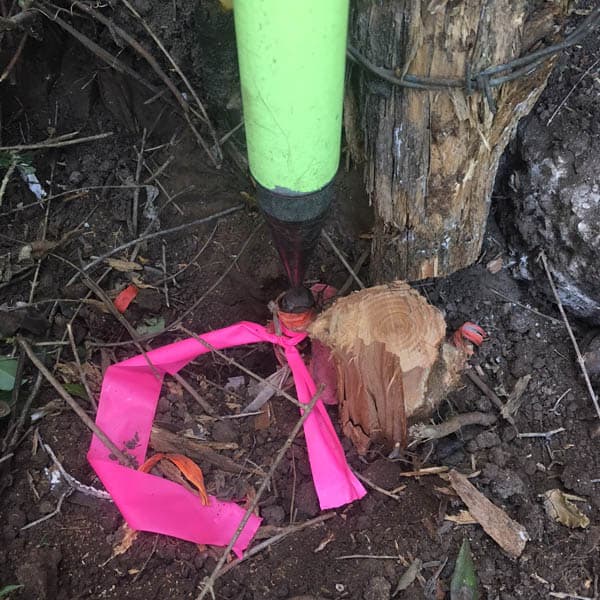
The 5/8" Iron Rod in the photo below is evidently what in 1956 was described as the "iron stake" marking the Point of Beginning in the deed to the 19.8 acres. The metes and bounds description makes no reference to cedar post and wire pasture fences, but judging by other evidence, they probably were in place then and in fact were the basis by which the shape and location of the 19.8 acres were determined. That is, the 1956 surveyor just ran lines approximately parallel with the average lines of the existing pasture fence and what was within those lines was what was conveyed, with no mention of the fence.
A common practice by surveyors at one time was to drive boundary markers as close as possible to existing fence posts and this was fairly clearly what was done at the corner below. Fortunately, the fence old post and wire fence is no longer maintained and it was light work to just saw through the remaining 2 inches of the post diameter below ground to make the actual corner marker much easier to find and tie. I consider leaving existing markers in a condition that they are easier to find and more likely to be stable an essential part of boundary maintenance.
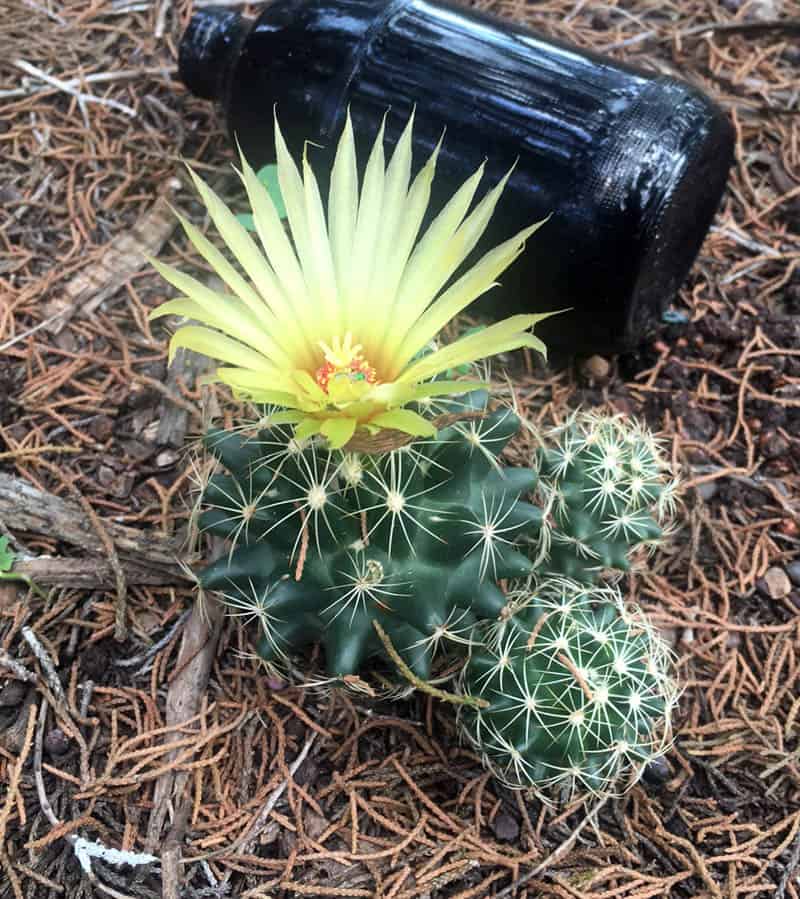
This cactus (and vintage stubby) was a couple of thousand feet uphill from there, hiding in the shade of a Cedar (juniper) tree:
Posted : July 2, 2017 8:30 pm

Translate
▼
English
Spanish
French
German
Italian
Portuguese
Russian
Chinese
Japanese
Korean
Arabic
Hindi
Dutch
Polish
Turkish
Vietnamese
Thai
Swedish
Danish
Finnish
Norwegian
Czech
Hungarian
Romanian
Greek
Hebrew
Indonesian
Malay
Ukrainian
Bulgarian
Croatian
Slovak
Slovenian
Serbian
Lithuanian
Latvian
Estonian
Kent McMillan, post: 434993, member: 3 wrote: I went out for half a day today to continue the work on a survey of a ranch which is a remainder of a couple of original land grants made by the State of Texas at different times in the middle 19th and in the early 20th centuries. Being a remainder, part of the exercise is locating the boundaries of the pieces conveyed out of the original grants, one of which was a 19.8 acre tract conveyed in 1956 to a development company using a metes and bounds description evidently based upon a contemporaneous survey.
The 5/8" Iron Rod in the photo below is evidently what in 1956 was described as the "iron stake" marking the Point of Beginning in the deed to the 19.8 acres. The metes and bounds description makes no reference to cedar post and wire pasture fences, but judging by other evidence, they probably were in place then and in fact were the basis by which the shape and location of the 19.8 acres were determined. That is, the 1956 surveyor just ran lines approximately parallel with the average lines of the existing pasture fence and what was within those lines was what was conveyed, with no mention of the fence.
A common practice by surveyors at one time was to drive boundary markers as close as possible to existing fence posts and this was fairly clearly what was done at the corner below. Fortunately, the fence old post and wire fence is no longer maintained and it was light work to just saw through the remaining 2 inches of the post diameter below ground to make the actual corner marker much easier to find and tie. I consider leaving existing markers in a condition that they are easier to find and more likely to be stable an essential part of boundary maintenance.
This cactus (and vintage stubby) was a couple of thousand feet uphill from there, hiding in the shade of a Cedar (juniper) tree:
Who,
Who,
Who let the cows out.
Who
Who
Who let the cows out...
Posted : July 3, 2017 1:39 am
Topic starter
Translate
▼
English
Spanish
French
German
Italian
Portuguese
Russian
Chinese
Japanese
Korean
Arabic
Hindi
Dutch
Polish
Turkish
Vietnamese
Thai
Swedish
Danish
Finnish
Norwegian
Czech
Hungarian
Romanian
Greek
Hebrew
Indonesian
Malay
Ukrainian
Bulgarian
Croatian
Slovak
Slovenian
Serbian
Lithuanian
Latvian
Estonian
Nate The Surveyor, post: 435000, member: 291 wrote: Who,
Who,
Who let the cows out.
Who
Who
Who let the cows out...
Per my post:
"Fortunately, the old post and wire fence is no longer maintained ..." In other words, the fence is down in many places and they aren't running livestock in the pasture anymore.
Posted : July 3, 2017 5:55 am

Translate
▼
English
Spanish
French
German
Italian
Portuguese
Russian
Chinese
Japanese
Korean
Arabic
Hindi
Dutch
Polish
Turkish
Vietnamese
Thai
Swedish
Danish
Finnish
Norwegian
Czech
Hungarian
Romanian
Greek
Hebrew
Indonesian
Malay
Ukrainian
Bulgarian
Croatian
Slovak
Slovenian
Serbian
Lithuanian
Latvian
Estonian
Kent McMillan, post: 435005, member: 3 wrote: Per my post:
"Fortunately, the old post and wire fence is no longer maintained ..." In other words, the fence is down in many places and they aren't running livestock in the pasture anymore.
I think that was Nate's point.
ps -I'd pay money to sit and listen to Kent and Nate have a conversation. 😉
Posted : July 3, 2017 8:31 am
Topic starter
Translate
▼
English
Spanish
French
German
Italian
Portuguese
Russian
Chinese
Japanese
Korean
Arabic
Hindi
Dutch
Polish
Turkish
Vietnamese
Thai
Swedish
Danish
Finnish
Norwegian
Czech
Hungarian
Romanian
Greek
Hebrew
Indonesian
Malay
Ukrainian
Bulgarian
Croatian
Slovak
Slovenian
Serbian
Lithuanian
Latvian
Estonian
paden cash, post: 435021, member: 20 wrote: I think that was Nate's point.
I should have explained that there are no working ranches that I'm aware of around Austin that are worth about $113k per acre as this one is. Obviously, $113k isn't enough to retire to the South of France on, but when you have hundreds of acres at that value, it does add up.
Livestock typically are used to get an agricultural exemption for property tax purposes. However, the open space exemption saves the land owner the trouble of having to even run livestock.
Posted : July 3, 2017 8:45 am

Translate
▼
English
Spanish
French
German
Italian
Portuguese
Russian
Chinese
Japanese
Korean
Arabic
Hindi
Dutch
Polish
Turkish
Vietnamese
Thai
Swedish
Danish
Finnish
Norwegian
Czech
Hungarian
Romanian
Greek
Hebrew
Indonesian
Malay
Ukrainian
Bulgarian
Croatian
Slovak
Slovenian
Serbian
Lithuanian
Latvian
Estonian
Wow, I'm moving to Austin, you have a low cost of living there.
Posted : July 3, 2017 8:47 am
Translate
▼
English
Spanish
French
German
Italian
Portuguese
Russian
Chinese
Japanese
Korean
Arabic
Hindi
Dutch
Polish
Turkish
Vietnamese
Thai
Swedish
Danish
Finnish
Norwegian
Czech
Hungarian
Romanian
Greek
Hebrew
Indonesian
Malay
Ukrainian
Bulgarian
Croatian
Slovak
Slovenian
Serbian
Lithuanian
Latvian
Estonian
Kent McMillan, post: 435024, member: 3 wrote: I should have explained that there are no working ranches that I'm aware of around Austin that are worth about $113k per acre as this one is. Livestock typically are used to get an agricultural exemption for property tax purposes. However, the open space exemption saves the land owner the trouble of having to even run livestock.
see what I mean ?!!....;)
Posted : July 3, 2017 8:47 am

Translate
▼
English
Spanish
French
German
Italian
Portuguese
Russian
Chinese
Japanese
Korean
Arabic
Hindi
Dutch
Polish
Turkish
Vietnamese
Thai
Swedish
Danish
Finnish
Norwegian
Czech
Hungarian
Romanian
Greek
Hebrew
Indonesian
Malay
Ukrainian
Bulgarian
Croatian
Slovak
Slovenian
Serbian
Lithuanian
Latvian
Estonian
[USER=3]@Kent McMillan[/USER]
Is that a "Nipple Cactus" flower in the 2nd pic? The blooms on Texas cactus are amazing.
Posted : July 3, 2017 8:59 am
Topic starter
Translate
▼
English
Spanish
French
German
Italian
Portuguese
Russian
Chinese
Japanese
Korean
Arabic
Hindi
Dutch
Polish
Turkish
Vietnamese
Thai
Swedish
Danish
Finnish
Norwegian
Czech
Hungarian
Romanian
Greek
Hebrew
Indonesian
Malay
Ukrainian
Bulgarian
Croatian
Slovak
Slovenian
Serbian
Lithuanian
Latvian
Estonian
FL/GA PLS., post: 435030, member: 379 wrote: [USER=3]@Kent McMillan[/USER]
Is that a "Nipple Cactus" flower in the 2nd pic?
Yes, that's https://www.wildflower.org/plants/result.php?id_plant=COSU7&apos ;">Coryphantha sulcata . It was unusual to find it in flower in July, but the fact that it was growing under a cedar may have delayed flowing time. Recent rains probably didn't hurt, either.
Posted : July 3, 2017 9:12 am
Translate
▼
English
Spanish
French
German
Italian
Portuguese
Russian
Chinese
Japanese
Korean
Arabic
Hindi
Dutch
Polish
Turkish
Vietnamese
Thai
Swedish
Danish
Finnish
Norwegian
Czech
Hungarian
Romanian
Greek
Hebrew
Indonesian
Malay
Ukrainian
Bulgarian
Croatian
Slovak
Slovenian
Serbian
Lithuanian
Latvian
Estonian
Kent McMillan, post: 435034, member: 3 wrote: flowing time. Recent rains probably didn't hurt, either
He probably meant "flowering", but, if you sit on one, all bets are off...
Posted : July 3, 2017 10:20 am