Reading RPLS is free for the whole profession. Members post, reply, and get the members-only rooms.

Notifications
Clear all
Strictly Surveying
12
Posts
7
Users
0
Reactions
2,889
Views

Topic starter
Translate
▼
English
Spanish
French
German
Italian
Portuguese
Russian
Chinese
Japanese
Korean
Arabic
Hindi
Dutch
Polish
Turkish
Vietnamese
Thai
Swedish
Danish
Finnish
Norwegian
Czech
Hungarian
Romanian
Greek
Hebrew
Indonesian
Malay
Ukrainian
Bulgarian
Croatian
Slovak
Slovenian
Serbian
Lithuanian
Latvian
Estonian
Hi all
I am trying to understand instrument standard deviations for precision.
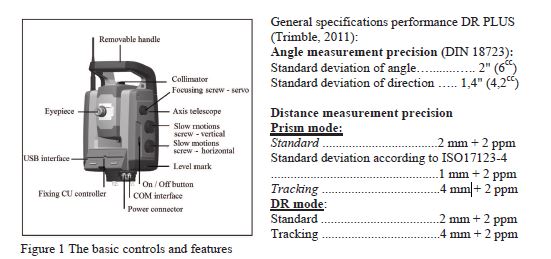
I am using a Trimble S8 Total station, the angle precision based on DIN 18723 is a Standard Deviation of 2". See below for screen shot of my data sheet of
my instrument.
I know what a standard deviation is i.e. a statistical tool to determine the spread of values above and below the mean, so a high value standard deviation shows that the data is widely spread (less reliable) and a low standard deviation shows that the data is clustered closely around the mean (more reliable).
Am I correct in thinking that Trimble have determined, through the DIN 18723 standard, experimentation, repeated observations etc, that the standard deviation of angle measurements is 2" for this instrument- is this correct?
Now that I have purchased this instrument and I have taken 20 repeated angle observations of the same angle, then am I correct in thinking that if I calculated the mean of my 20 angle observations, all 20 of my angle observations will be within 2" of the mean - have I interpreted this correctly?
Finally if I observed a single angle observation for example between two points and measured an angle of 67 Degrees 12 Minutes 20 Seconds then how does my instrument standard deviation of 2" relate to my observed angle of 67 Degrees 12 Minutes 20 Seconds then - can anyone explain?
Any insight would be very helpful.
Thank you.
Posted : August 3, 2017 5:42 pm

Translate
▼
English
Spanish
French
German
Italian
Portuguese
Russian
Chinese
Japanese
Korean
Arabic
Hindi
Dutch
Polish
Turkish
Vietnamese
Thai
Swedish
Danish
Finnish
Norwegian
Czech
Hungarian
Romanian
Greek
Hebrew
Indonesian
Malay
Ukrainian
Bulgarian
Croatian
Slovak
Slovenian
Serbian
Lithuanian
Latvian
Estonian
A 2 second gun should be able to obtain angle accuracy with no more than 2 seconds of error in one direct angle reading.
Posted : August 3, 2017 6:14 pm

Translate
▼
English
Spanish
French
German
Italian
Portuguese
Russian
Chinese
Japanese
Korean
Arabic
Hindi
Dutch
Polish
Turkish
Vietnamese
Thai
Swedish
Danish
Finnish
Norwegian
Czech
Hungarian
Romanian
Greek
Hebrew
Indonesian
Malay
Ukrainian
Bulgarian
Croatian
Slovak
Slovenian
Serbian
Lithuanian
Latvian
Estonian
When you take 20 repeated angle observations, it will NOT be within 2" because of site conditions and prism types. All these 2" were taken during lab conditions where everything is controlled.
Posted : August 3, 2017 6:15 pm

Translate
▼
English
Spanish
French
German
Italian
Portuguese
Russian
Chinese
Japanese
Korean
Arabic
Hindi
Dutch
Polish
Turkish
Vietnamese
Thai
Swedish
Danish
Finnish
Norwegian
Czech
Hungarian
Romanian
Greek
Hebrew
Indonesian
Malay
Ukrainian
Bulgarian
Croatian
Slovak
Slovenian
Serbian
Lithuanian
Latvian
Estonian
The error in an angle is given by the equation:
[INDENT][INDENT][INDENT]E = (2 x Edin)
[INDENT] ??n[/INDENT][/INDENT][/INDENT][/INDENT]
ie/ the error in an angle is two times the DIN spec divided by the root of the number of angles turned. For each set of F/R angles 2 angles are turned (one with the scope right side up and one with it reversed). For a single (non-doubled) angle n=1.
So, for a 2" Din spec instrument:
[INDENT][INDENT]1. a non doubled angle has an error of 4"
2. one set of F/R angles has an error of 2.8"
3. two sets of F/R angles has an error of 2" (equal to the DIN spec)
4. three sets of F/R angles has an error of 1.6"
[/INDENT][/INDENT]
This, of course, is for the instrument only under laboratory conditions. In the real world there will be many other sources of error in the operation.
This equation is from Ghilani/ Wolf Elementary Surveying. I have the 12th edition at hand.
Posted : August 3, 2017 7:01 pm

Translate
▼
English
Spanish
French
German
Italian
Portuguese
Russian
Chinese
Japanese
Korean
Arabic
Hindi
Dutch
Polish
Turkish
Vietnamese
Thai
Swedish
Danish
Finnish
Norwegian
Czech
Hungarian
Romanian
Greek
Hebrew
Indonesian
Malay
Ukrainian
Bulgarian
Croatian
Slovak
Slovenian
Serbian
Lithuanian
Latvian
Estonian
Mark Mayer, post: 440012, member: 424 wrote: The error in an angle is given by the equation:
[INDENT][INDENT][INDENT]E = (2 x Edin)
??n
[/INDENT][/INDENT][/INDENT]
ie/ the error in an angle is two times the DIN spec divided by the root of the number of angles turned. For each set of F/R angles 2 angles are turned (one with the scope right side up and one it reversed). For a single (non-doubled) angle n=1.So, for a 2" Din spec instrument:
[INDENT][INDENT]1. a non doubled angle has an error of 4"
2. one set of F/R angles has an error of 2.8"
3. two sets of F/R angles has an error of 2" (equal to the DIN spec)
4. three sets of F/R angles has an error of 1.6"
[/INDENT][/INDENT]
This, of course, is for the instrument only under laboratory conditions.In the real world there will be many other sources of error in the operation.
First of all, it's worth pointing out that the DIN spec is for the standard error of a DIRECTION, s.e.dir taken as the mean of face left and face right. Since an ANGLE is computed by subtracting two DIRECTIONS, the s.e. of an angle is SQRT(2) X s.e.dir = s.e.ang.
Second of all, while it may well be that instruments with dual-axis compensators give angles measured on only one face that are free of collimation errors, it is an open question whether the graduation of the circle places strict limits on the improvement in the s.e.ang from multiple repetitions.
Conrad posted his results of an investigation of the Leica circle reading system and discovered that the circle reading system in effect adds a pseudo-random error to the direction reading so that a nearly perfectly graduated circle appears to give directions with random-appearing errors with an s.e. specified for the instrument.
The rub, of course, was that the errors were not truly random, but were generated for some absolute value of the circle reading and actually varied sinusoidally around the 360?ø of the circle with a period of 45?ø (if I remember correctly). What that meant was that you could measure the same direction 100 times and each direction as read by the instrument would have the identical error generated by the circle reading system. So negliglible improvements resulted.
Posted : August 3, 2017 7:15 pm
Translate
▼
English
Spanish
French
German
Italian
Portuguese
Russian
Chinese
Japanese
Korean
Arabic
Hindi
Dutch
Polish
Turkish
Vietnamese
Thai
Swedish
Danish
Finnish
Norwegian
Czech
Hungarian
Romanian
Greek
Hebrew
Indonesian
Malay
Ukrainian
Bulgarian
Croatian
Slovak
Slovenian
Serbian
Lithuanian
Latvian
Estonian
Kent McMillan, post: 440015, member: 3 wrote: the circle reading system in effect adds a pseudo-random error
In other words, "your mileage may vary".
Posted : August 3, 2017 7:39 pm
Translate
▼
English
Spanish
French
German
Italian
Portuguese
Russian
Chinese
Japanese
Korean
Arabic
Hindi
Dutch
Polish
Turkish
Vietnamese
Thai
Swedish
Danish
Finnish
Norwegian
Czech
Hungarian
Romanian
Greek
Hebrew
Indonesian
Malay
Ukrainian
Bulgarian
Croatian
Slovak
Slovenian
Serbian
Lithuanian
Latvian
Estonian
Mark Mayer, post: 440018, member: 424 wrote: In other words, "your mileage may vary".
Yes, I find it difficult to believe that the other instrument manufacturers aren't following some version of the Leica method of using the exact same circle in a line of instruments with a range of specified accuracies and then degrading the performance of the lower spec instruments by software.
Or, in the case of Leica, using a circle with known periodic errors in its graduations that is either partially or entirely removed by the reading system software, depending upon the instrument accuracy spec. In other words the difference in price buys the exact same instrument, but with a few more lines of code active in the internal software.
Posted : August 3, 2017 8:02 pm

Translate
▼
English
Spanish
French
German
Italian
Portuguese
Russian
Chinese
Japanese
Korean
Arabic
Hindi
Dutch
Polish
Turkish
Vietnamese
Thai
Swedish
Danish
Finnish
Norwegian
Czech
Hungarian
Romanian
Greek
Hebrew
Indonesian
Malay
Ukrainian
Bulgarian
Croatian
Slovak
Slovenian
Serbian
Lithuanian
Latvian
Estonian
Topcon 5" instruments have one encoder and 2" instruments have 2 encoders is what I was told, hence the big price bump from 5" to 2",
Posted : August 3, 2017 8:59 pm

Translate
▼
English
Spanish
French
German
Italian
Portuguese
Russian
Chinese
Japanese
Korean
Arabic
Hindi
Dutch
Polish
Turkish
Vietnamese
Thai
Swedish
Danish
Finnish
Norwegian
Czech
Hungarian
Romanian
Greek
Hebrew
Indonesian
Malay
Ukrainian
Bulgarian
Croatian
Slovak
Slovenian
Serbian
Lithuanian
Latvian
Estonian
As I recall the DIN 18723 result is for an angle after mean adjustment of a 2D & 2R set. It is a test done with equipment that negates the personal pointing error of the instrument man. If you are lucky and without pointing error one may expect individual reading results within +/- 4" of the mean angle.
Paul in PA
Posted : August 3, 2017 9:56 pm
Translate
▼
English
Spanish
French
German
Italian
Portuguese
Russian
Chinese
Japanese
Korean
Arabic
Hindi
Dutch
Polish
Turkish
Vietnamese
Thai
Swedish
Danish
Finnish
Norwegian
Czech
Hungarian
Romanian
Greek
Hebrew
Indonesian
Malay
Ukrainian
Bulgarian
Croatian
Slovak
Slovenian
Serbian
Lithuanian
Latvian
Estonian
Paul in PA, post: 440051, member: 236 wrote: As I recall the DIN 18723 result is for an angle after mean adjustment of a 2D & 2R set. It is a test done with equipment that negates the personal pointing error of the instrument man. If you are lucky and without pointing error one may expect individual reading results within +/- 4" of the mean angle.
The only problem with that is that the commonly quoted values of pointing error (the uncertainty with which an observer can point a theodolite/total station telescope at a well defined target) which experience shows to be realistic are well under 1" for 28x to 32X telescopes and mainly a function of the telescope magnification.
Now, if a surveyor is using poorly defined targets in poor seeing condititions, sure, all bets are off.
Posted : August 3, 2017 10:08 pm
Translate
▼
English
Spanish
French
German
Italian
Portuguese
Russian
Chinese
Japanese
Korean
Arabic
Hindi
Dutch
Polish
Turkish
Vietnamese
Thai
Swedish
Danish
Finnish
Norwegian
Czech
Hungarian
Romanian
Greek
Hebrew
Indonesian
Malay
Ukrainian
Bulgarian
Croatian
Slovak
Slovenian
Serbian
Lithuanian
Latvian
Estonian
Kent McMillan, post: 440053, member: 3 wrote: The only problem with that is that the commonly quoted values of pointing error (the uncertainty with which an observer can point a theodolite/total station telescope at a well defined target) which experience shows to be realistic are well under 1" for 28x to 32X telescopes and mainly a function of the telescope magnification.
Now, if a surveyor is using poorly defined targets in poor seeing condititions, sure, all bets are off.
Sad fact, too many surveyors use poorly defined targets. Too many surveyors no longer do angle sets.
That 1" error factors into every pointing in an angle reading. As well as not keeping your prism rods and tribrach in top adjusted shape.
Kent, I guess you forget that you are an anomaly.
Paul in PA
Posted : August 3, 2017 11:14 pm
Translate
▼
English
Spanish
French
German
Italian
Portuguese
Russian
Chinese
Japanese
Korean
Arabic
Hindi
Dutch
Polish
Turkish
Vietnamese
Thai
Swedish
Danish
Finnish
Norwegian
Czech
Hungarian
Romanian
Greek
Hebrew
Indonesian
Malay
Ukrainian
Bulgarian
Croatian
Slovak
Slovenian
Serbian
Lithuanian
Latvian
Estonian
Paul in PA, post: 440060, member: 236 wrote: Sad fact, too many surveyors use poorly defined targets.
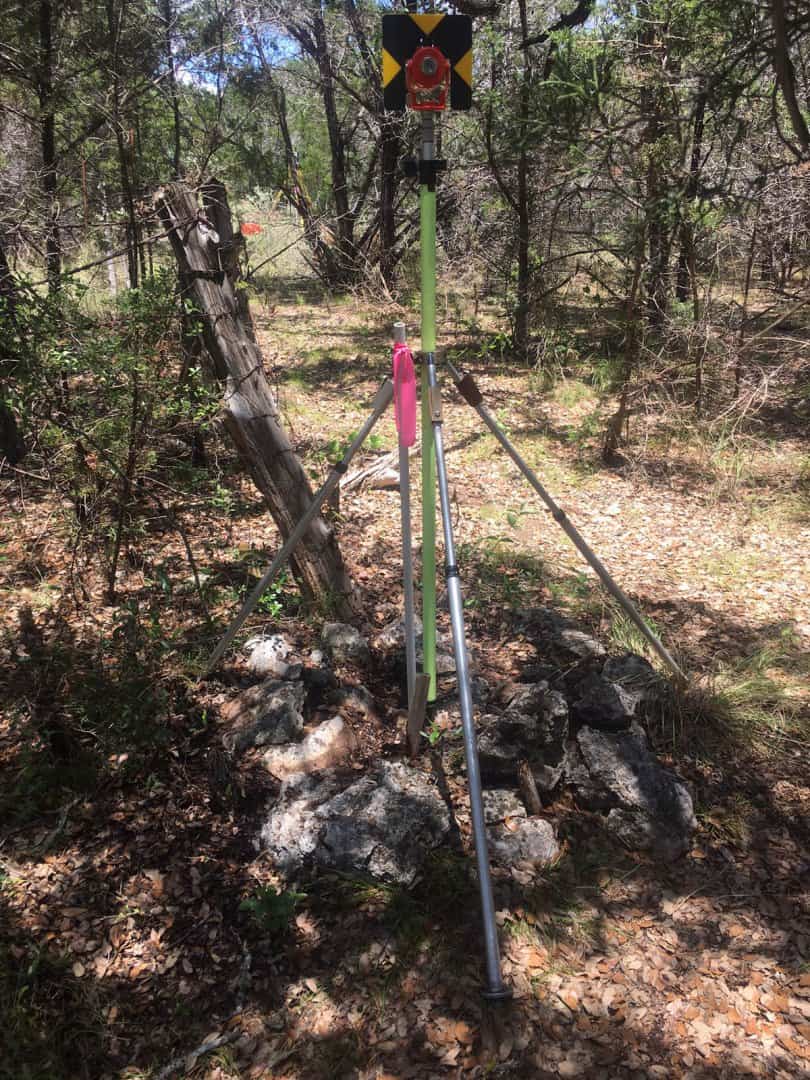
Yes, the most fundamental and easy way to upgrade angular accuracy is just to use well-designed targets that are up to the task and use methods that actually center them over the ground marks they are nominally occupying.
Posted : August 3, 2017 11:22 pm