Reading RPLS is free for the whole profession. Members post, reply, and get the members-only rooms.

Notifications
Clear all

Topic starter
Translate
▼
English
Spanish
French
German
Italian
Portuguese
Russian
Chinese
Japanese
Korean
Arabic
Hindi
Dutch
Polish
Turkish
Vietnamese
Thai
Swedish
Danish
Finnish
Norwegian
Czech
Hungarian
Romanian
Greek
Hebrew
Indonesian
Malay
Ukrainian
Bulgarian
Croatian
Slovak
Slovenian
Serbian
Lithuanian
Latvian
Estonian
So, in the course of planning the weekend's task list, which include expanding a control network, this afternoon I scouted a station I created very early last spring, using (I thought) a nice long spike driven into some fairly hard turf. I remember seeing it and thought I'd missed it when I was flail mowing the area with my wife's tractor this summer. I was....pretty sure....I didn't hit it, so was surprised when I couldn't find it (well, maybe not that surprised).
I just last week returned a friend of mine's really nice metal detector, so that's off the table. Therefore, my options appear to include:
1. Make my own metal detector with a powerful, low mass Neodymium magnet on the end of a long string, and walk around slowly until I find it.
2. Set up on a known point and "stake out" the missing point, hoping to get close enough to find it.
3. Do a resection to an arbitrary point close by, then try staking it out from there.
4. Assume it's gone; pincushion myself and just push another hub or spike (longer than the previous one) near by where I know I can see my two other points I want to use, and call it a new point.
5. ???
Posted : October 16, 2015 4:16 pm

Translate
▼
English
Spanish
French
German
Italian
Portuguese
Russian
Chinese
Japanese
Korean
Arabic
Hindi
Dutch
Polish
Turkish
Vietnamese
Thai
Swedish
Danish
Finnish
Norwegian
Czech
Hungarian
Romanian
Greek
Hebrew
Indonesian
Malay
Ukrainian
Bulgarian
Croatian
Slovak
Slovenian
Serbian
Lithuanian
Latvian
Estonian
One man operation, solo, I would do resection and look.
Posted : October 16, 2015 4:31 pm

Translate
▼
English
Spanish
French
German
Italian
Portuguese
Russian
Chinese
Japanese
Korean
Arabic
Hindi
Dutch
Polish
Turkish
Vietnamese
Thai
Swedish
Danish
Finnish
Norwegian
Czech
Hungarian
Romanian
Greek
Hebrew
Indonesian
Malay
Ukrainian
Bulgarian
Croatian
Slovak
Slovenian
Serbian
Lithuanian
Latvian
Estonian
A Harris, post: 340819, member: 81 wrote: One man operation, solo, I would do resection and look.
Agreed. Last time I had trouble finding an old point, I sat up and resected from a visible stake, a power pole, and a building corner. It got me close enough to find what I was looking for.
Posted : October 16, 2015 6:07 pm

Translate
▼
English
Spanish
French
German
Italian
Portuguese
Russian
Chinese
Japanese
Korean
Arabic
Hindi
Dutch
Polish
Turkish
Vietnamese
Thai
Swedish
Danish
Finnish
Norwegian
Czech
Hungarian
Romanian
Greek
Hebrew
Indonesian
Malay
Ukrainian
Bulgarian
Croatian
Slovak
Slovenian
Serbian
Lithuanian
Latvian
Estonian
2 or 3 and then try a carpenter's stud finder?
Posted : October 16, 2015 6:14 pm

Translate
▼
English
Spanish
French
German
Italian
Portuguese
Russian
Chinese
Japanese
Korean
Arabic
Hindi
Dutch
Polish
Turkish
Vietnamese
Thai
Swedish
Danish
Finnish
Norwegian
Czech
Hungarian
Romanian
Greek
Hebrew
Indonesian
Malay
Ukrainian
Bulgarian
Croatian
Slovak
Slovenian
Serbian
Lithuanian
Latvian
Estonian
Finding such control points that have seemed to disappear is not uncommon at all. It's no different than searching for a monument that may or may not still exist that is shown on an old survey by someone else that you are using to get started on your own project. You use the best information you have to shoot a "possible" location then get out the metal detector, shovel or probe and work outward from there until you find it or give up until you have corroborating information.
Posted : October 17, 2015 10:08 am
Topic starter
Translate
▼
English
Spanish
French
German
Italian
Portuguese
Russian
Chinese
Japanese
Korean
Arabic
Hindi
Dutch
Polish
Turkish
Vietnamese
Thai
Swedish
Danish
Finnish
Norwegian
Czech
Hungarian
Romanian
Greek
Hebrew
Indonesian
Malay
Ukrainian
Bulgarian
Croatian
Slovak
Slovenian
Serbian
Lithuanian
Latvian
Estonian
Holy Cow, post: 340856, member: 50 wrote: Finding such control points that have seemed to disappear is not uncommon at all. It's no different than searching for a monument that may or may not still exist that is shown on an old survey by someone else that you are using to get started on your own project. You use the best information you have to shoot a "possible" location then get out the metal detector, shovel or probe and work outward from there until you find it or give up until you have corroborating information.
Stud finder sounded cool; tried a test in dry sand and it worked fine. Not so good with wet turf (no discrimination). I raked the area in question and found a stake flag I'd placed there. I've really got to "up my game" with regard to choosing locations for these points that are accessible, but "out of traffic". I've been my own worst enemy trashing my control points.
Thanks for the suggestions.
Posted : October 18, 2015 7:37 pm
Topic starter
Translate
▼
English
Spanish
French
German
Italian
Portuguese
Russian
Chinese
Japanese
Korean
Arabic
Hindi
Dutch
Polish
Turkish
Vietnamese
Thai
Swedish
Danish
Finnish
Norwegian
Czech
Hungarian
Romanian
Greek
Hebrew
Indonesian
Malay
Ukrainian
Bulgarian
Croatian
Slovak
Slovenian
Serbian
Lithuanian
Latvian
Estonian
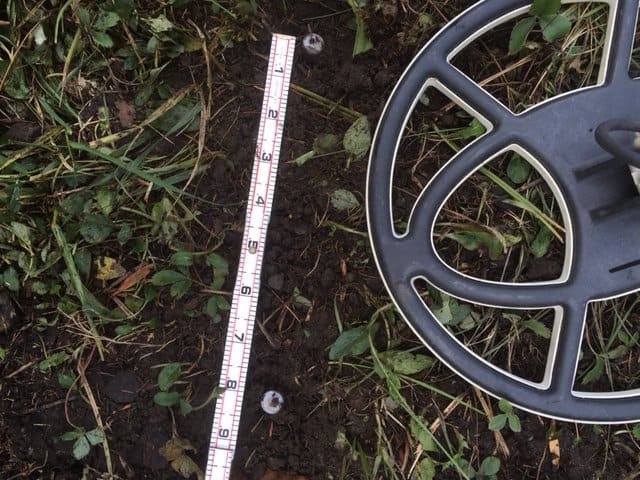
Did number 2 (stake out the point from another known point); borrowed my friend's metal detector (a very nice one), and found the missing point about 8 tenths away.:-)
Posted : October 24, 2015 2:53 pm

Translate
▼
English
Spanish
French
German
Italian
Portuguese
Russian
Chinese
Japanese
Korean
Arabic
Hindi
Dutch
Polish
Turkish
Vietnamese
Thai
Swedish
Danish
Finnish
Norwegian
Czech
Hungarian
Romanian
Greek
Hebrew
Indonesian
Malay
Ukrainian
Bulgarian
Croatian
Slovak
Slovenian
Serbian
Lithuanian
Latvian
Estonian
Buy a good metal detector. They save time.
Posted : October 24, 2015 3:09 pm

Translate
▼
English
Spanish
French
German
Italian
Portuguese
Russian
Chinese
Japanese
Korean
Arabic
Hindi
Dutch
Polish
Turkish
Vietnamese
Thai
Swedish
Danish
Finnish
Norwegian
Czech
Hungarian
Romanian
Greek
Hebrew
Indonesian
Malay
Ukrainian
Bulgarian
Croatian
Slovak
Slovenian
Serbian
Lithuanian
Latvian
Estonian
If you're coming off of a known control network and staking out to find the point using record information, 8 tenths seems pretty high to me... We're talking control... I'd expect a few hundredths, no?
Posted : October 29, 2015 5:47 am
Topic starter
Translate
▼
English
Spanish
French
German
Italian
Portuguese
Russian
Chinese
Japanese
Korean
Arabic
Hindi
Dutch
Polish
Turkish
Vietnamese
Thai
Swedish
Danish
Finnish
Norwegian
Czech
Hungarian
Romanian
Greek
Hebrew
Indonesian
Malay
Ukrainian
Bulgarian
Croatian
Slovak
Slovenian
Serbian
Lithuanian
Latvian
Estonian
A fair question indeed. As the title of the thread implies though, this control network (over hilly, sometimes steep wooded terrain), is a Grasshopper's work in progress. The station I used to find this one was set over a year ago, and was itself somewhat suspect. A lot of practice has occurred since.
I've discovered the achilles heal of my ways however: elevation. An H.I. or H.R. mis-entered into the DC is all it takes to move things a foot or more away from where they should be at 250-300'. The help and ideas I've gotten here on how to do better in that regard have been invaluable.
In my current re-do of the network (now my 3rd or 4th), I'm hitting the stations I've created recently (and adjusted in Star*net), within a couple of hundredths with regularity. Baby steps all the way.
Posted : October 29, 2015 9:40 am

Translate
▼
English
Spanish
French
German
Italian
Portuguese
Russian
Chinese
Japanese
Korean
Arabic
Hindi
Dutch
Polish
Turkish
Vietnamese
Thai
Swedish
Danish
Finnish
Norwegian
Czech
Hungarian
Romanian
Greek
Hebrew
Indonesian
Malay
Ukrainian
Bulgarian
Croatian
Slovak
Slovenian
Serbian
Lithuanian
Latvian
Estonian
I have followed your progress and am impressed. You have learned more about surveying in the past year than I have in the past ten.
Posted : October 29, 2015 9:52 am
Topic starter
Translate
▼
English
Spanish
French
German
Italian
Portuguese
Russian
Chinese
Japanese
Korean
Arabic
Hindi
Dutch
Polish
Turkish
Vietnamese
Thai
Swedish
Danish
Finnish
Norwegian
Czech
Hungarian
Romanian
Greek
Hebrew
Indonesian
Malay
Ukrainian
Bulgarian
Croatian
Slovak
Slovenian
Serbian
Lithuanian
Latvian
Estonian
Thank you Sir, for the kind comment. I'm humbled though, by the depth of knowledge here, which really speaks to how much more there is to learn than walking around the woods with a total station.
Posted : October 29, 2015 11:05 am