

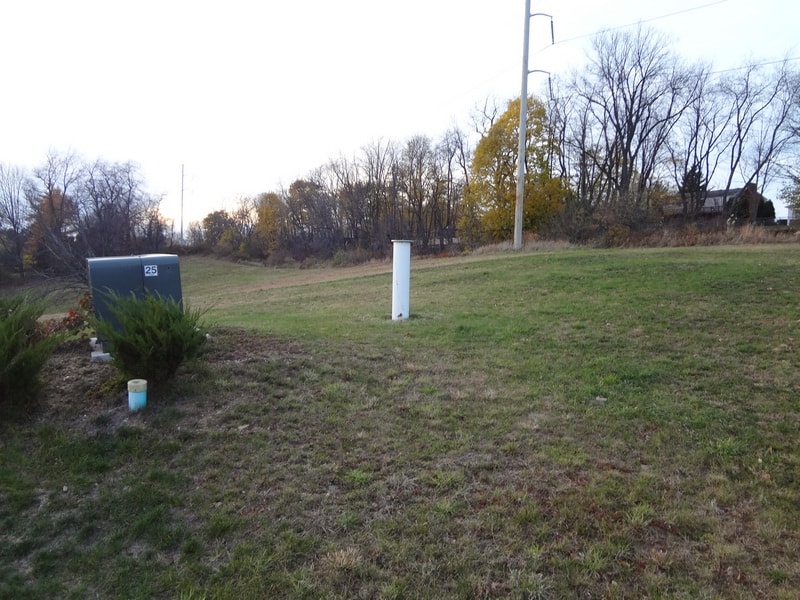
Looking at Loyal's original post here, I am going to compile a similar history using the local VRS. I have a pedestal outside that usually has a receiver running on it collecting hourly files. I will try to get a quick 3 minute occupied control (OC) shot on as many days as I can. The advantage here is that it is always the same HI as long as I don't change the tribrach, which I cannot easily do since I cannot get it off of the 5/8" bolt.
I believe it is a pretty stable monument, it is a 8 foot concrete filled pipe (8" diameter) that is 5 feet in the ground and about 3 feet out of the ground. It could conceivably be affected by mine subsidence (mine is 400 feet below).
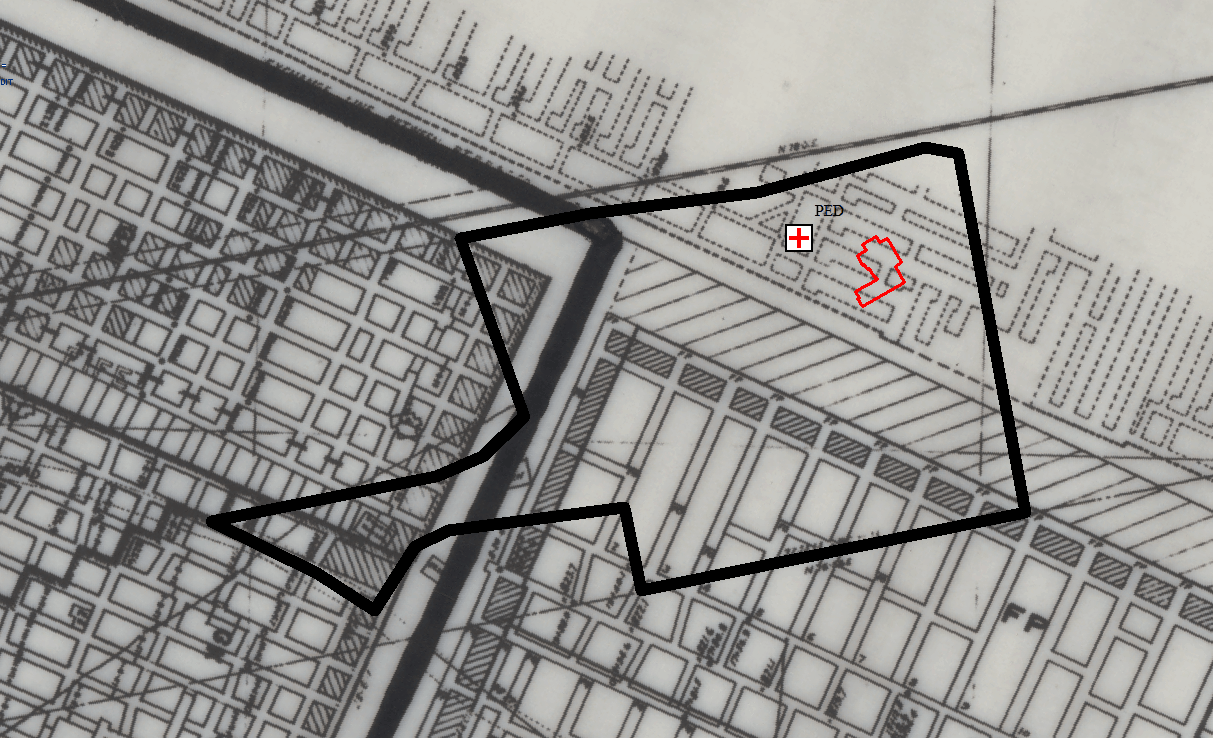
As an aside, I recently attended a workshop on how to get mine maps in PA. Today I downloaded the maps for mines that are underneath my property. It turns out that I am definitely undermined, probably 100 years ago or so. The mine floor is 830 feet elevation, my house/office is at 1230 feet. So I have 400 feet of overburden. The map below shows my property, the pedestal, and my house footprint. This map is pretty accurately georeferenced (done by the state), as the south boundary of the railroad is my north boundary.
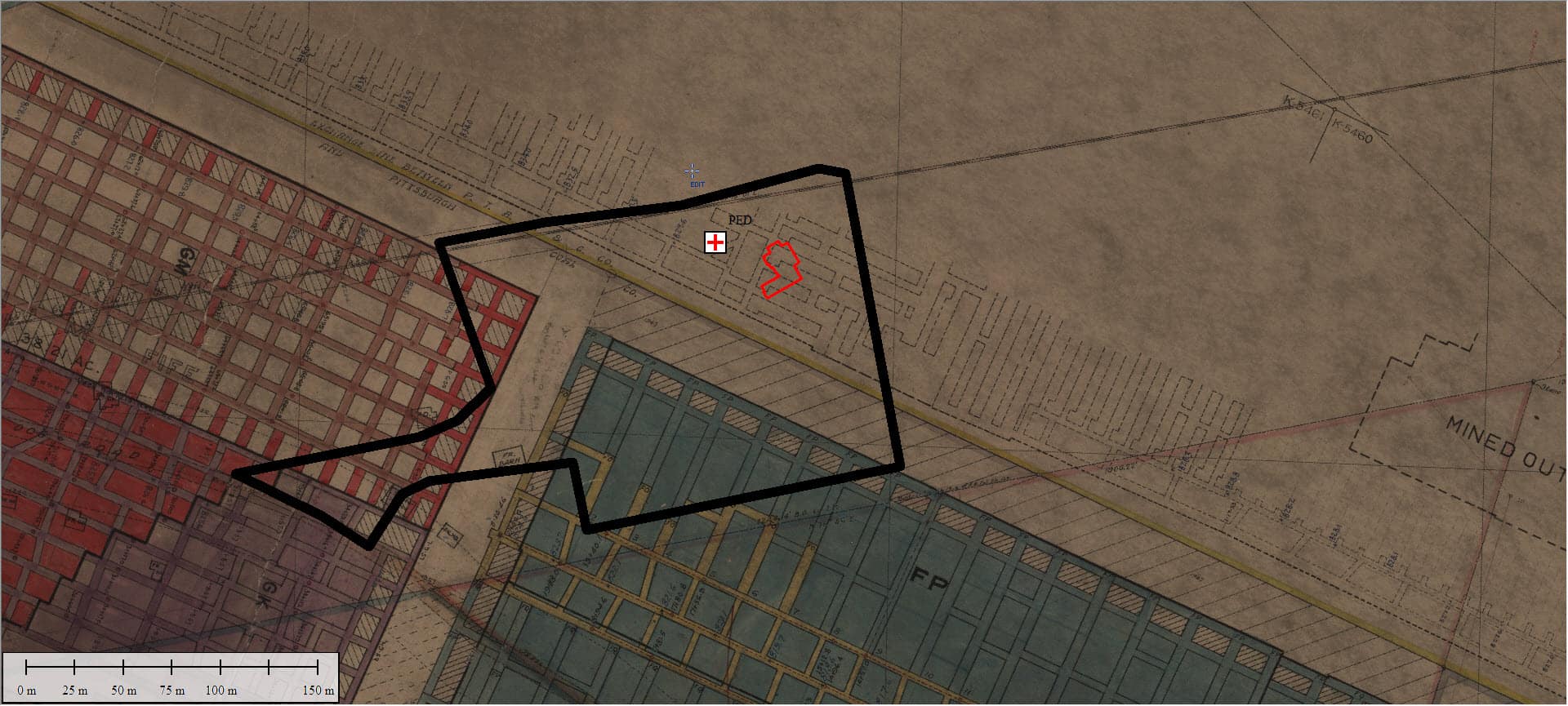
The map below is of the same mine, and, while "prettier", is not as accurately georeferenced.
My property spans two separate mines. What is interesting about the above map is that they did not mine under my barn (or where the house used to be on an adjacent property. They left a buffer between this mine and the adjacent mine (that was the problem at QueCreek mine). The map below is the adjacent mine map.
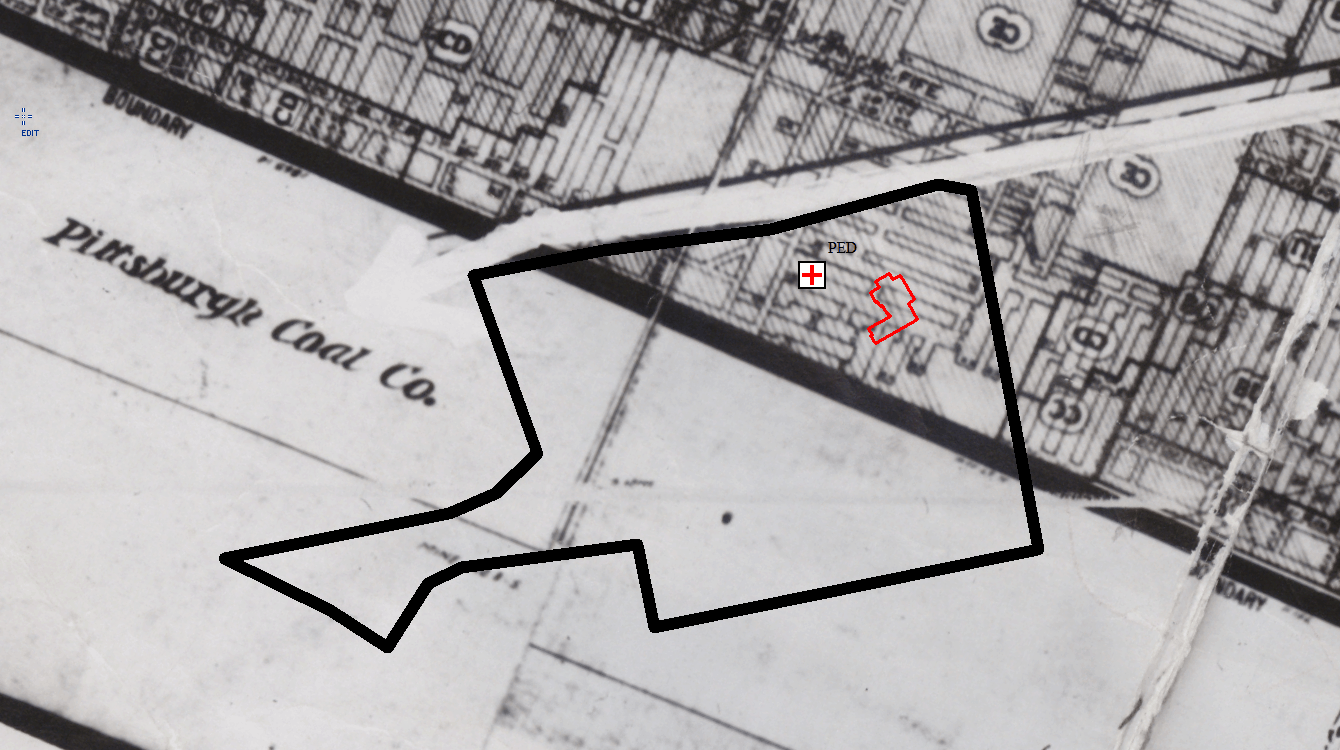
If it does have mine subsidence occur, i will probably know by the damage it does to my house.

Lee D, post: 447563, member: 7971 wrote: but the verticals are still all over the place
I thought that vertical was the primary motivator for VRS in LA. How does that work?
To use his statement, "the verticals are all over the place", I would apply that to the existing benchmarks. So really to do any heighting down there you must rely on the CORS rather than on physical benchmarks. I would imagine they constantly monitor and update the heights at the CORS to account for subsidence. Depending on how often the coordinates are updated I could see how there could be more noise in the vertical.

Jim Frame, post: 447594, member: 10 wrote: I thought that vertical was the primary motivator for VRS in LA. How does that work?
Subsidence was the primary motivator for the LSU reference network. As I understand it, the subsidence problem became apparent when NGS started tracking the national CORS; we had a Coast Guard Nav Beacon station in New Orleans, among other coastal locations. Dr. Dokka set up the initial network, which I believe consisted of 12 - 14 stations, in order to study subsidence. After Hurricane Katrina, the data from the network was invaluable in helping to re-establish survey control in damaged areas, and it became apparent what a useful tool it could be to the community in general. This was also at about the time that VRS was really emerging, and the original network was expanded and began selling VRS subscriptions in 2006. I'm a little fuzzy on my dates, but somewhere in there the Height Modernization was completed and all but about 100 vertical benchmarks in South Louisiana were invalidated; the ones that remained (that were part of the Height Mod survey) all dropped anywhere from a half foot to a foot and a half. NGS came out and said they weren't going to do any more high order vertical surveys on the ground; Gulfnet is now written into the LA statutes as the primary vertical control.
However, none of the above changes the fact that VRS real-time vertical positions can and do fluctuate by every bit of a couple tenths over the course of the day. And I witnessed one incident where they were having major latency problems with the station in Belle Chasse; a surveyor buddy of mine checked into a known point very near the station's location and missed it by six feet in the vertical.
The Gulfnet network is definitely the long term answer to studying subsidence and maintaining the vertical; the VRS came after as both a public service and a means to fund the Center for Geoinformatics at LSU, which operates on a non-profit basis.
John Hamilton, post: 447597, member: 640 wrote: Depending on how often the coordinates are updated I could see how there could be more noise in the vertical.
John - I'm not sure what they do internally; as far as the coordinates that are provided to the public via the VRS and the C4G web site, they're aligned with the coordinates used by NGS in the national CORS. It was decided early on that to do otherwise would create chaos; they wanted the Gulfnet positions to align with OPUS, etc.
What's crazy is that I use CORS stations in LA and TX all the time to externally control networks and they don't agree with one another in the vertical very well at all. Sometime when you're bored pull a couple days of data from ENG5, DSTR, LWES, LMCN, and GRIS into TBC with the precise orbits and run a network adjustment (If you're REALLY bored include BVHS, AMER, MARY, SBCH, INRI, and AWES). You'd think that NGS would have the relative positions nailed down pretty tightly at this point. Heck, for DSTR they don't even have the name of the station spelled correctly (Destrehan) and the RINEX file comes in with a bogus antenna height (0.281' - several LA CORS stations are like that - should be 0.000').
I have found a few problems like that. especially in height, where adjacent CORS don't really match as well as they should.
As for what is in the rinex files...in the early days of CORS the city of Pittsburgh were doing code GPS, and using the nearest CORS in Gaithersburg to correct the data. They processed a bunch of data, then tried to import it into a GIS, and everything was 600 feet off. They contacted the company where I was working at the time, as they had done the base mapping. Turns out they were just using the position that was in the rinex header, and it was nowhere near being correct. Hmmm...maybe that is why surveyors are needed in GIS...