Jack Chiles, post: 436186, member: 24 wrote: So now you're paraphrasing Ervin Drake? Niiice.
"It Was a Very Good Year"

are you sure its the right axle? isn't there a few other axles buried nearby?
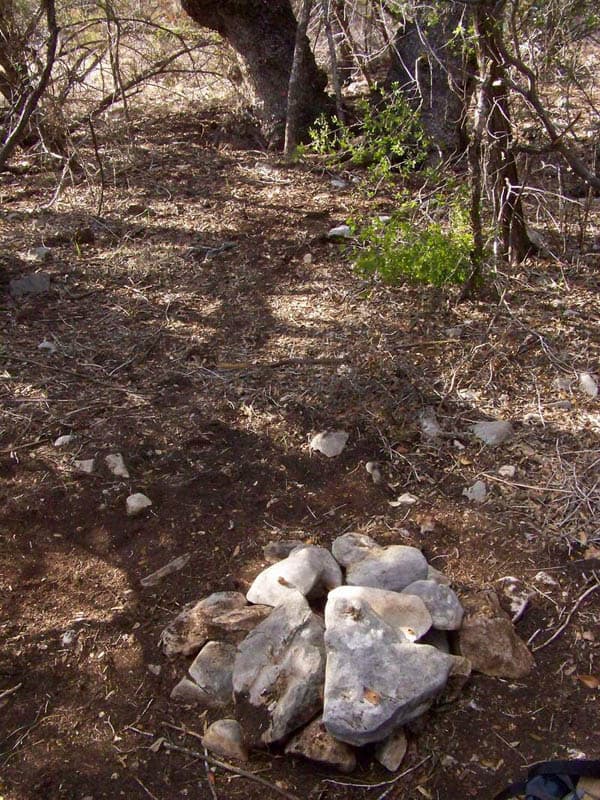
Kent McMillan, post: 436195, member: 3 wrote: As a general rule, I don't because it tends to destroy the evidences of the age of the mound and to produce something that looks to be of more recent origin.
The exception to that rule is the case where the location of the corner can be determined with little uncertainty from bearing trees or some other similar evidence and where the mound is so scattered that it doesn't provide a basis for locating the corner. In that situation, I have rebuilt the mound around a new rod and cap marker at the corner and have noted that fact in the written description. With some care, you can leave the patinates surfaces of the rocks exposed so that the mound doesn't look newly made.
Building rock mounds is a useful exercise as a way to discover what sort of configuration works best given the material available in a particular location if the objectives are making the most obvious, stable mark for the least effort, which the 19th and early 20th-century surveyors seem generally to have had in mind. Some of the rock mounds that surveyors built were fairly tall stacks of flat rocks that were chosen to be obvious, rather than stable over the long term. Those are more typical of West Texas than Central Texas, where marked lines through the timber were typical. In both cases, an artificial appearance was the constant objective.
for 33/38th of my most active carer I had Corner Records, Record of Surveys, and Subdivision Maps available (and mandatory recording of them). And mostly I had the budget to do a proper job with little pain.
I never hesitated to rebuild monuments if needed. For me, this is one of those cases.
Yep, weaving all of those things into a description is great, but that description may never get publicly recorded.
I am glad for my experience in the West. Texas is so so different.

Peter Ehlert, post: 436236, member: 60 wrote: for 33/38th of my most active carer I had Corner Records, Record of Surveys, and Subdivision Maps available (and mandatory recording of them). And mostly I had the budget to do a proper job with little pain.
I never hesitated to rebuild monuments if needed. For me, this is one of those cases.
The problem, of course is that a rebuilt rock mound can look like no evidence at all since the rocks have sides that have obviously been exposed to the weather for more than a century and have others that have no patina at all. In limestone, the contrast between weathered side and unweathered is striking. So collecting the 15 or 20 rocks that are now scattered around where the corner was originally made and building a mound out of them produces a result that can be indistinguishable from collecting any 15 or 20 rocks and doing the same. The scatter showed evidence of age by state of weathering and embedment in the shallow soil, as well as the non-existence of vegetation under them.
Besides destroying evidence, rebuilding the mound serves no real purpose since the location of the corner will be designated by a permanent mark at the center of the mound in any event, but can produce a fake-looking result that calls into question what was actually done. For example, a careless field party might build the mound on top of existing vegetation, thereby making the whole business appear to be an obvious bit of fakery. For similar reasons, it's worse than foolish to try to "freshen up" the old cut marks in bearing trees to make them easier to spot.
warren ward PLS CO OK, post: 436234, member: 12536 wrote: are you sure its the right axle? isn't there a few other axles buried nearby?
Amazingly enough, axles in the limestone hills are unusual boundary markers. There were relatively few surveyors in the area who set them and this particular company probably set the vast majority of them.
You are making my case for Corner Records, Record of Surveys, and Subdivision Maps.
Consumers don't notice, Professionals read the record.
Peter Ehlert, post: 436281, member: 60 wrote: You are making my case for Corner Records, Record of Surveys, and Subdivision Maps.
Consumers don't notice, Professionals read the record.
I've read enough Corner Records that were obviously works of wishful fiction to be unimpressed by the idea of destroying evidence and leaving only an I.O.U. in the basket of records. The superior longterm strategy is to both preserve the evidence and leave a record as I will do in the form of a metes and bounds description that sets out the details of my work for posterity. The detailed metes and bounds description has the advantage over corner records in that it actually gives all of the connections to other markers and evidence from which the corner was determined. In a metes and bounds state like Texas, that also makes more sense since the metes and bounds description delivers the whole enchilada instead of one shred of cheese at a time.

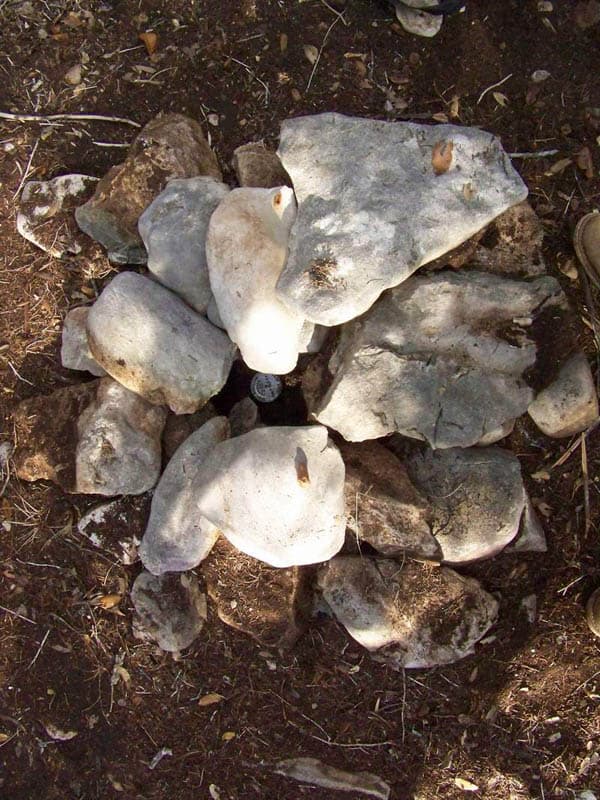
After thorough examination it's apparent the location of the "corner" should be placed under the black dot.

😎
Method of documentation aside... how does the brilliance of the determination get into the public records?
Peter Ehlert, post: 436313, member: 60 wrote: Method of documentation aside... how does the brilliance of the determination get into the public records?
In Texas, the tradition among the better surveyors is to write metes and bounds descriptions that also contain narrative asides and that contain both the logic of the construction and any necessary amplications and details.
For example, if a corner falls along a senior line, the metes and bounds description is expected to recite ties to the evidence from which the position of the senior line was determined. It really is the whole enchilada, not just a bunch of bearings and distances stripped of any other information that probably are more familiar in PLSSia.

In Okla
Kent McMillan, post: 436340, member: 3 wrote: In Texas, the tradition among the better surveyors is to write metes and bounds descriptions that also contain narrative asides and that contain both the logic of the construction and any necessary amplications and details.
For example, if a corner falls along a senior line, the metes and bounds description is expected to recite ties to the evidence from which the position of the senior line was determined. It really is the whole enchilada, not just a bunch of bearings and distances stripped of any other information that probably are more familiar in PLSSia.
In Oklahoma the tradition among better surveyors is to stick within an area of expertise in which they are licensed.
paden cash, post: 436342, member: 20 wrote: In Oklahoma the tradition among better surveyors is to stick within an area of expertise in which they are licensed.
So, they don't survey outside of Oklahoma even if they have a brother-in-law in Kansas who bought the registration seal of a Kansas surveyor at a flea market?
Kent McMillan, post: 436340, member: 3 wrote: In Texas, the tradition among the better surveyors is to write metes and bounds descriptions that also contain narrative asides and that contain both the logic of the construction and any necessary amplications and details.
For example, if a corner falls along a senior line, the metes and bounds description is expected to recite ties to the evidence from which the position of the senior line was determined. It really is the whole enchilada, not just a bunch of bearings and distances stripped of any other information that probably are more familiar in PLSSia.
You avoided the question and changed the subject: how does the description get into the public records?
Peter Ehlert, post: 436346, member: 60 wrote: You avoided the question and changed the subject: how does the description get into the public records?
It will be attached to the deed of conveyance and so will be readily accessible in the chain of title. In Texas, the common practice is to modernize old descriptions to produce a constantly improving picture of what is actually there instead of endlessly recycling old, faulty descriptions.

Kent McMillan, post: 436340, member: 3 wrote: In Texas, the tradition among the better surveyors is to write metes and bounds descriptions that also contain narrative asides and that contain both the logic of the construction and any necessary amplications and details.
For example, if a corner falls along a senior line, the metes and bounds description is expected to recite ties to the evidence from which the position of the senior line was determined. It really is the whole enchilada, not just a bunch of bearings and distances stripped of any other information that probably are more familiar in PLSSia.
Kent, please. You know NOTHING about the PLSS or what requirements a licensed professional land surveyor in any state other than Texas is required to place on a land survey plat. Sure, you have read about bad examples of plats, corner or monument records, record of survey, etc. that other professionals post here. That is no different from any of us PLSS surveyors reading your survey noirs detailing the substandard surveys of quicky-dicky, fixed fee nitwits in Texas who only use RTK for boundary work. And let's not forget your story of a fellow Texas surveyor who lazily placed a junior corner off of the intended senior line by 0.22 ft. You proudly announced that you obliging tapped his pin onto the senior line as a "professional courtesy". IIRC you pounded over two of his pins.
You posted in this thread that you carefully reassembled a stone mound around your precisely positioned monument. The corner position was based on your uber precise determination of the centroid of the stone mound. You seemed to take delight in making sure that the buttered patinaed side of each stone faced up. If you really did this, why is this not a cadastral fraud? I'm shocked that you would even suggest this as an appropriate way to rehabilitate the corner.
I hope your client allows you to post here the, "metes and bounds description that also contains a "narrative aside" that describes that rebuilt stone mound. I really am interested in reading how you will spin that rehabilitation. If you do not fully describe and explain your rationale, anyone following your footsteps would likely conclude that you carefully nudged the existing stones aside by a few millimeters to set your monument. While you are at it, I'd love to read your "narrative aside" regarding when a leaning bare axle is to be accepted or rejected based on whether the exquisitely machined dimple will support the pointy end of your rod. That "narrative aside" should be a simple cut-and-paste from this thread.
If a surveyor from another state had suggested doing any of the above, you would most likely have spouted several vituperative opprobria about the substandard survey practices of his/her state along with a pejorative or three about PLSSia added for good measure. I've always regarded your corner rehabilitations to be excellent examples of professional practice. Your defense of not upgrading a leaning bare steel rod with a modern monument and stamped metal cap is far beneath that standard. I mean, you never limit your professional work product to the ethical confines of a fixed price survey, so upgrading the rusty axle should make the project more profitable.
I recognize that Texas is not a recording state, but to somehow believe that splattering a bunch of "narrative asides" throughout a metes and bounds description seems like a poor substitute. Haven't you heard of a surveyor's report? Heck, you could even include photos of the field evidence, the found condition of each stone mound and what you left at each corner (with circles and arrows and a paragraph on the back of each photo).
Oops, sorry. I work in a PLSS state and that is what i do. I also file monument records for each of my metes and bounds corners, each with a minimum of two accessories.
Best regards,
Gene

Gene Kooper, post: 436353, member: 9850 wrote: (with circles and arrows and a paragraph on the back of each photo).
purty soon we was both jumpin up and down, yellin "kill! kill!"
Apparently in Texas surveyors can also be expected to report on their magical dirt (that is surely nowhere else on the planet). "Clay soil migration" can bend survey pins in less than 70 years don't you know? On page 12 of Kent's report he attributes this soil migration as the reason an original pin was found out of place. Please read where this magical "moving soil" disturbed the pin in only one direction, but apparently kept in line with whatever convenience the reporting surveyor was attempting to explain.
I mean, c'mon Kent...really? 😉
ps - in PLSSia the better surveyors are NOT full of more crap than a Christmas turkey...
paden cash, post: 436358, member: 20 wrote: Apparently in Texas surveyors can also be expected to report on their magical dirt (that is surely nowhere else on the planet). "Clay soil migration" can bend survey pins in less than 70 years don't you know? On page 12 of Kent's report he attributes this soil migration as the reason an original pin was found out of place. Please read where this magical "moving soil" disturbed the pin in only one direction, but apparently kept in line with whatever convenience the reporting surveyor was attempting to explain.
I mean, c'mon Kent...really?
No magic to that one. That whole hillside was a material known as Del Rio Clay that is both highly corrosive and has an extremely high plasticity index and low bearing capacity. The mechanism of downslope movement of the upper layers of the soil subject to wet and dry cycles is well known. It isn't mysterious that a long, thin rebar set in Del Rio Clay would both move downslope and even be bent downslope by the forces present, including the large blocks of heavy clay soil attached to it. The rebar that I recovered was very reduced in cross-section by corrosion, so if you're thinking that was a rebar right from the mill that was bent, that isn't the case.
Why did the sidelines of the lot run in a downslope direction? Basic land planning. The street front was more or less level and the lots and their sidelines ran downhill from there.
I realize that in Oklahoma where everything is flat, gravity is less of a factor in soil movement, but Austin has hills and slopes. Here is a description of the Del Rio Claystone that produced that hillside of clay in Austin, along Shoal Creek:
DEL RIO CLAYSTONE
The Del Rio Claystone is a formation that crops out in more or less discontinuous areas along Shoal Creek as the result of faulting in Barton Hills and along Barton Springs Road. It is a shrink-swell clay, and because of this, successful construction of building and streets on the Del Rio requires special engineering designs.
Localities - The Del Rio is about 25 meters (75 feet) of dark olive to bluish-gray to yellow-grown pyritic, gypsiferous clay. The clay contains illite, montmorillonite, and kaolinite. Ilymatoqyra arietina (Rmer), sometimes mentioned as "E arietina by authors, commonly occurs within this for
Boundaries - The lower boundary of the Del Rio is gradational with the Georgetown Limestone, and the transition occurs through one to two meters (several feet). The upper boundary in the Austin area is scoured by, and therefore disconformable with, the basal beach limestone of the Buda Formation.
Environments of deposition - The Del Rio Claystone contains many very small species, and lacks a normal bottom assemblage. It is therefore interpreted to have been deposited in a lagoon with abnormal bottom conditions, as indicated by the large amounts of pyrite. Upon weathering, the pyrite reacts with water to produce sulfuric acid, which in turn reacts with calcite to produce the selenite (crystalline gypsum) that occurs in the weathered zone.
Localities - The Del Rio can be observed along Shoal Creek. It can best be observed along Barton Springs Road.
The location along Barton Springs Road that the author mentions is across the street from the Green Mesquite Barbecue.
Gene Kooper, post: 436353, member: 9850 wrote: You posted in this thread that you carefully reassembled a stone mound around your precisely positioned monument. The corner position was based on your uber precise determination of the centroid of the stone mound.
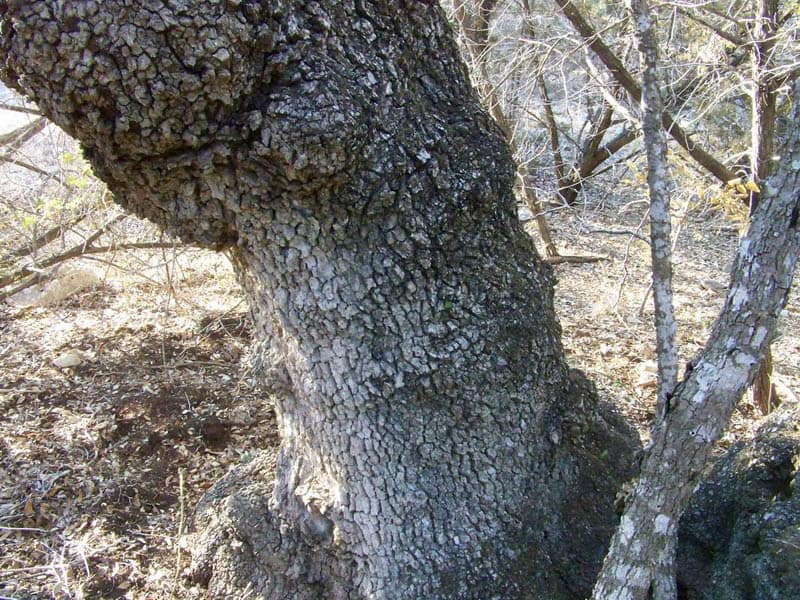
Once again, we are reminded that reading is FUNDAMENTAL and an essential skill for a surveyor. What I actually posted was that I had replaced an original land grant corner from two large, marked live oak bearing trees that that were near enough to the corner that the replacement was with so little uncertainty that I was confident where the corner had originally been marked in 1853. I've posted photos of both the trees and the scatter of the stones of the original mound before.
So, the situation was that I could determine where the corner was located without having to rely upon the information that the scatter of stones provided. The superior evidence was the bearing trees and another original corner that I found more than a quarter of a mile distant from which the North direction used by the 1853 surveyor could be determined and from it the bearings he took to the marks on the live oaks corrected.
Knowing pretty much EXACTLY where the corner was marked meant that there was no reason not to rebuild the mound as the proof of the corner did not rest upon the scatter of stones. I did rebuild the mound in a way that preserved its original appearance, but the reconstruction was harmless and did not destroy evidence that might show the corner to have been elsewhere.
This is Texas Surveying 101, but obviously in Colordo your mileage may vary, possibly due in part to lower oxygen content of the air.
BTW, since photos are always fun to see, here's a photo of one of the Live Oak bearing trees from which I replaced a corner that had been originally located in 1854 (I cheated and checked. It was 1854, not 1853.) The mark is so clear that you can even see it quite plainly in the photo.
This is what the scatter of stones looked like that was evidently what remained of the original stone mound from 1854. The whitening is limestone dust from drilling a hole at what I judged to probably be the center of the mound based upon examination of the scatter, a location that the bearing trees 7 varas distant showed to be 1.23 ft. distant from where the corner had actually been located in 1854.
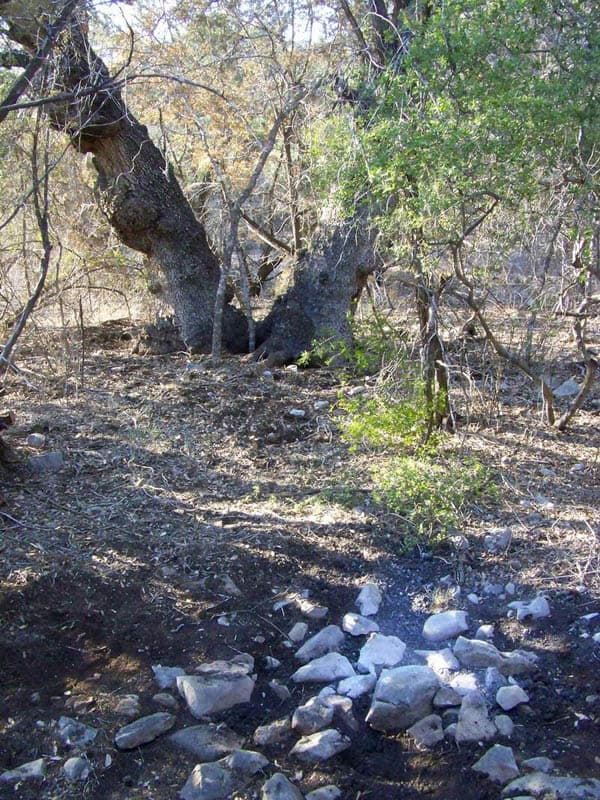
I set a rod and cap to mark the corner and rebuilt the mound around it using the stones in the scatter. A couple of years later, when I took a group of folks from a local historical society to visit the corner and see the bearing trees, the rock mound looked surprisingly good.