

Mark Mayer, post: 367565, member: 424 wrote: So when you finally got your precise data this time was there any difference?
That project happened about 2 years ago, so without digging through the files I can't say anything definitive. My recollection is that any differences were of mm magnitude, and thus below the noise level in the data.

There is some delay in getting the data to the NGS OPUS server. I had a session that ended before UTC midnight last evening. I checked the NASA web link today after the advertised 17 hour delay and it said Rapid was available for Monday. So I submitted to OPUS at 1726 UTC today but got Ultra-rapid back.
Is there a web link to check which OPUS will use, so I don't ask for duplicate/useless OPUS reports?

I've found that everything that can be found is at SOPAC. Their data archives are complete to the extreme. So if an ephemeris, or clock file, or earth parameter file, is available, you'll find it there. Ultra rapid, rapid, precise, and final. Data from receivers where no one expect to find them.
Scripps Orbital and Permanent Array Center.
http://sopac.ucsd.edu/dataBrowser.shtml
There are those out there that believe anything short of final is just wrong. And by comparison, the differences are hard to observe, let alone quantify.

For those interested, the IGS analysis center provides weekly monitoring of the agreement between rapid and final as well as each individual analysis center.
The recent quality of the rapid vs final orbits can be seen here:
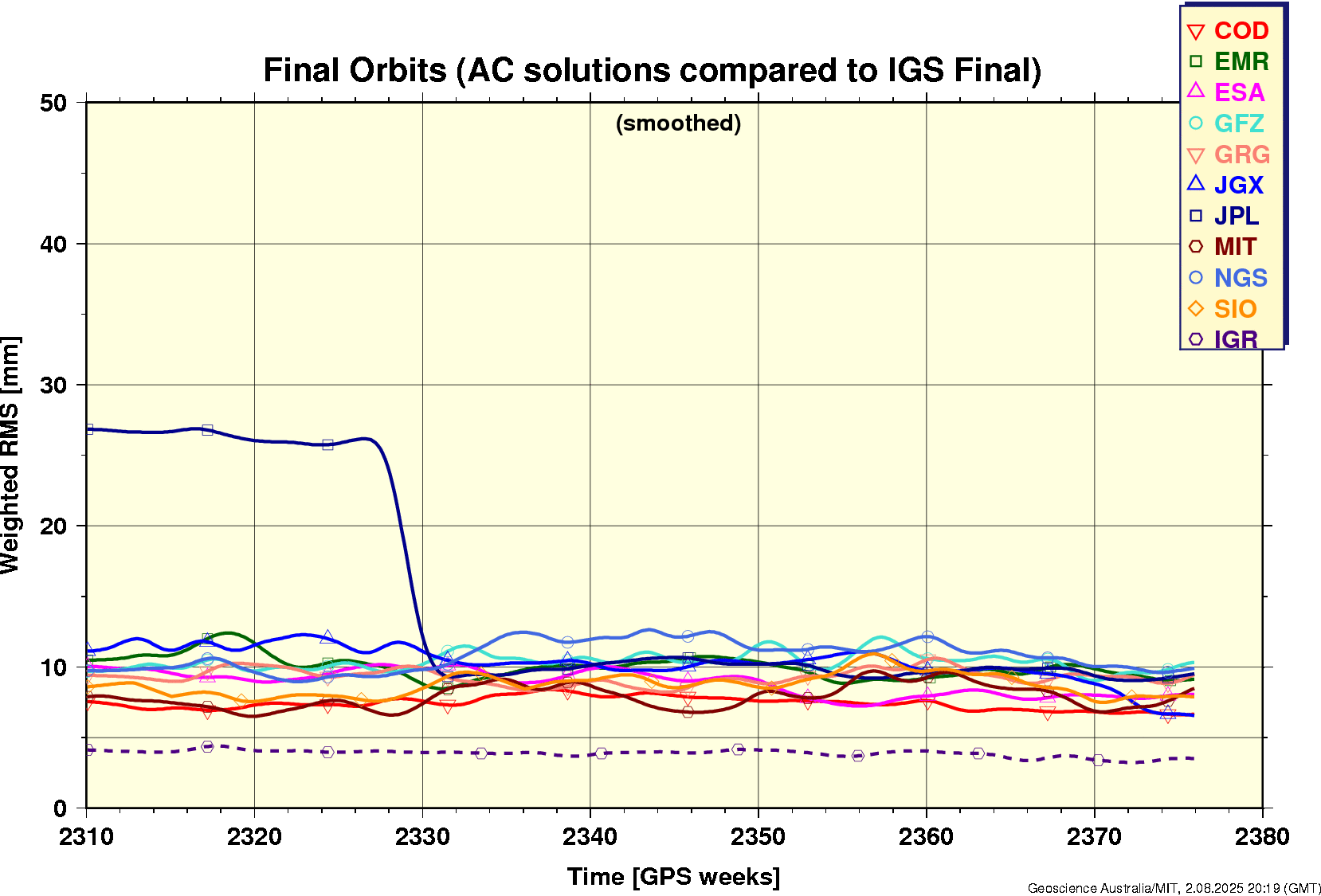
The rapid orbits agree to the Final at a 0.5 mm level
The comparison for the clocks is also available here:
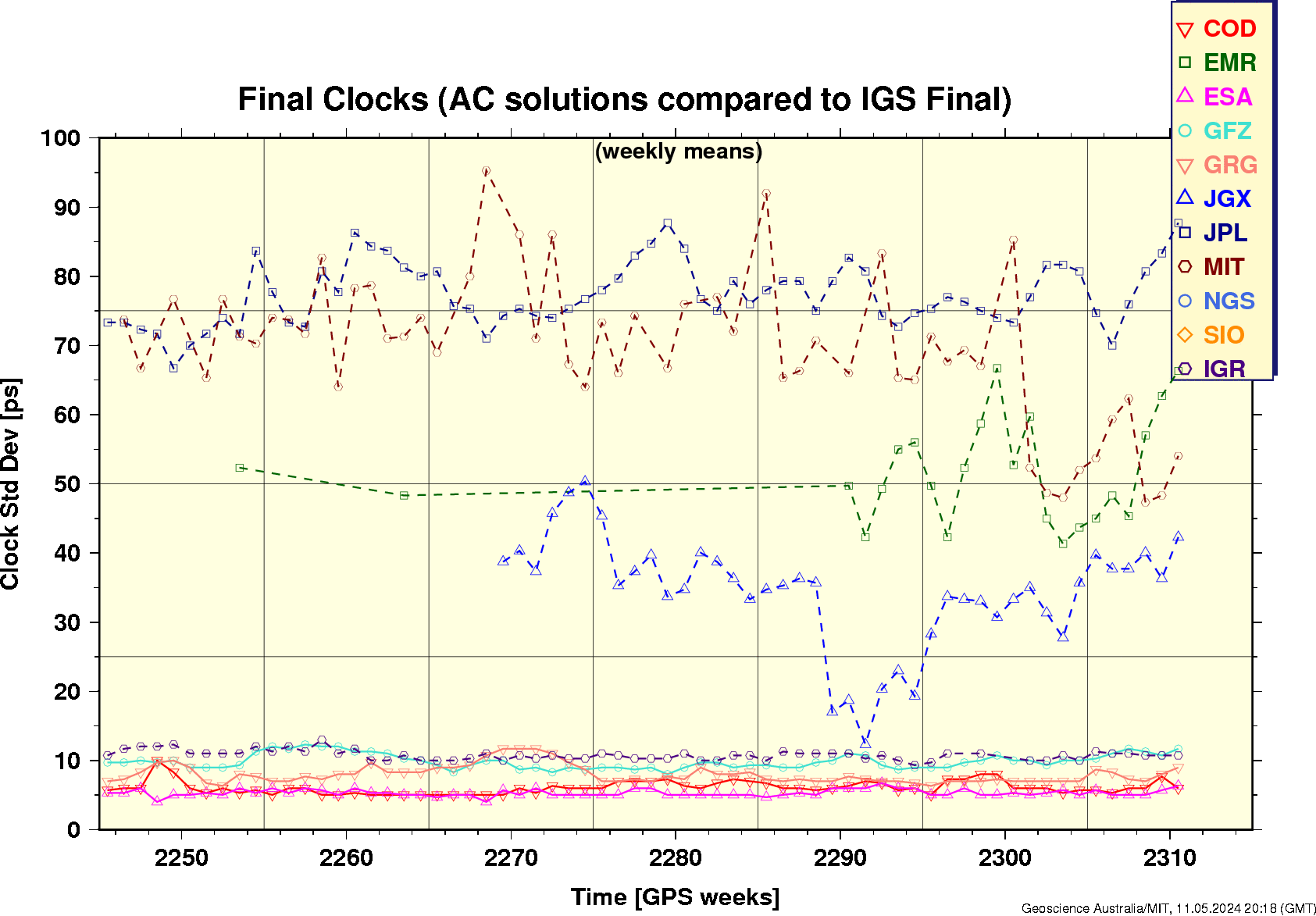
And they agree on the ~5 mm level.
For position applications the clock std is more important than the RMS statistics, as noted on the AC homepage.
You can also see the impact of final vs rapid on Precise Point Position here:
http://acc.igs.org/index_igsacc_ppp.html