Reading RPLS is free for the whole profession. Members post, reply, and get the members-only rooms.

Notifications
Clear all
Strictly Surveying
16
Posts
11
Users
0
Reactions
1,130
Views

Topic starter
Translate
▼
English
Spanish
French
German
Italian
Portuguese
Russian
Chinese
Japanese
Korean
Arabic
Hindi
Dutch
Polish
Turkish
Vietnamese
Thai
Swedish
Danish
Finnish
Norwegian
Czech
Hungarian
Romanian
Greek
Hebrew
Indonesian
Malay
Ukrainian
Bulgarian
Croatian
Slovak
Slovenian
Serbian
Lithuanian
Latvian
Estonian
With a nod to the "Oldest Monument" thread below, here's another.
I've got two interesting pre-Revolutionary houses:
1730
King Manor is the centerpiece of an 11-acre historic park in Jamaica, Queens. The house takes its name from Rufus King, a signer of the United States Constitution. In 1805, King bought an existing farm that included an 18th-century Dutch-style house with an attached Long Island-style "half house." It is believed that this section of the house was built in 1730. A year after moving in, he added a kitchen to the rear of the Dutch-style house. Four years later he converted the style to Federal, adding a dining room and two bedrooms.
After representing Massachusetts at the Constitutional Convention, King went on to serve as Ambassador to Great Britain under Adams and Jefferson, U.S. Senator from New York and Vice-Presidential and Presidential candidate for the Federalist party. After King's death in 1827, his son John lived in the house and added Greek Revival exterior details, including a classical portico and entranceway. The house was purchased by the Village of Jamaica in 1896, and two years later, it was transferred to the newly incorporated City of New York. Rufus King Park was created and the house remains standing in the center of the park to this day.
Back in 1981, the firm I worked for was contracted to produce a topographical map of the entire park, and we surveyed the house. After a major restoration/renovation, the house was re-opened to the public as the King Manor Museum in 1994.


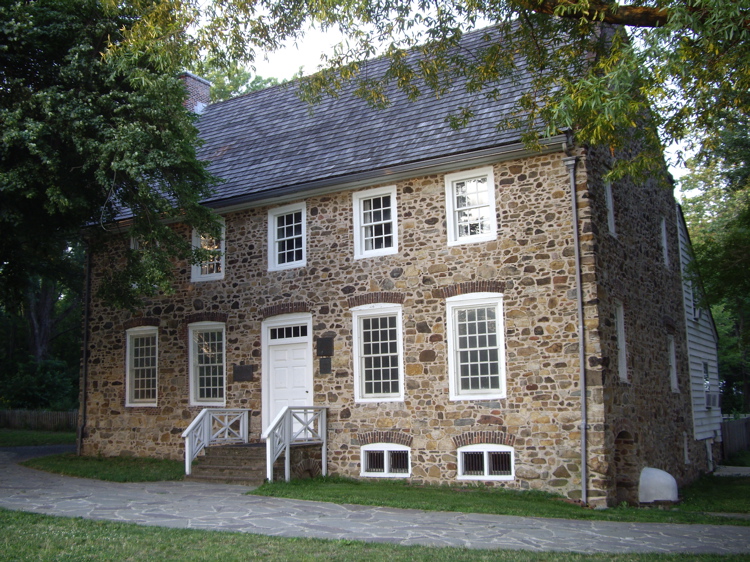
1680
At the southernmost tip of Staten Island—and New York State—stands the Conference House, a 17th-century stone manor. In 1676, British naval captain Christopher Billop was granted a 932-acre property known as the Manor of Bentley. Billop built his house, a solid, two-story structure of local fieldstones, in about 1680. According to legend, Billop was the man who circumnavigated Staten Island in less than one day, thus allowing New York to claim the island over New Jersey. During the American Revolution, the owner of the house was Captain Billop's great-grandson, a Tory colonel also called Christopher Billop.
On September 11, 1776, the house was the site of peace negotiations between British Lord Admiral Richard Howe and Benjamin Franklin, John Adams, and Edward Rutledge. Howe traveled south from New York Harbor, two weeks after he and his brother William defeated Washington in the Battle of Long Island (aka, the Battle of Brooklyn), while the colonists came up from Philadelphia. The three hour meeting was unsuccessful, and the British capture of Manhattan came four days later, causing Washington’s forces to regroup temporarily at White Plains, north of Manhattan. After the Revolution, the house was confiscated by the State of New York; it served as a multi-family dwelling, a 19th-century hotel, and as a rat-poison factory before being deeded to the City of New York in 1926.
In 1929, the Conference House Association took over operation of the house and has taken care of it since that time. Conference House Park, consisting of 226 acres along the southern shoreline of Staten Island, surrounds the house, which is open to visitors. The house is the sixth oldest structure in New York City. In the late 1980’s the firm I worked for performed topographical surveys for the installation of sanitary sewers in the streets in front of the house and we needed the location and first floor elevation for design purposes.

Posted : December 28, 2011 2:59 pm

Translate
▼
English
Spanish
French
German
Italian
Portuguese
Russian
Chinese
Japanese
Korean
Arabic
Hindi
Dutch
Polish
Turkish
Vietnamese
Thai
Swedish
Danish
Finnish
Norwegian
Czech
Hungarian
Romanian
Greek
Hebrew
Indonesian
Malay
Ukrainian
Bulgarian
Croatian
Slovak
Slovenian
Serbian
Lithuanian
Latvian
Estonian
Did a survey at a cliff overhang with pictographs and another old camp upstream about a quarter of a mile from it, again protected by a cliff overhang, that one was almost filled with sand and debris, any pictographs that might be there are covered. Did that for a Conservatory group so they could obtain the title which gave them the needed authority to protect the sites. Those native housing units predated Columbus. Not very fancy housing by today's standards, but in the day they were probably looked upon as high end housing, the roof of those homes have lasted thousands of years. Lots of those camp sites around here under overhangs that are mostly filled in today. Another thing I watch for are tepee circle sites, lots of clay, where there was soil that would drain and offer some protection, the Indians would camp there every year during their wanderings and would use the same tepee locations, which resulted in hollows that can still be seen by those looking. Haven't surveyed any of those old tepee circles, but know a few locations of the old camps and have found several areas overlooking streams where they must have had many a napping party as evidenced from the large amount of obsidian chips.
jud
Posted : December 28, 2011 5:38 pm

Translate
▼
English
Spanish
French
German
Italian
Portuguese
Russian
Chinese
Japanese
Korean
Arabic
Hindi
Dutch
Polish
Turkish
Vietnamese
Thai
Swedish
Danish
Finnish
Norwegian
Czech
Hungarian
Romanian
Greek
Hebrew
Indonesian
Malay
Ukrainian
Bulgarian
Croatian
Slovak
Slovenian
Serbian
Lithuanian
Latvian
Estonian
Well, I haven't surveyed it, but I've seen pictures of Karoly's house before his father got a job. Dang, that thing looked old.
Don
Posted : December 28, 2011 5:45 pm

Translate
▼
English
Spanish
French
German
Italian
Portuguese
Russian
Chinese
Japanese
Korean
Arabic
Hindi
Dutch
Polish
Turkish
Vietnamese
Thai
Swedish
Danish
Finnish
Norwegian
Czech
Hungarian
Romanian
Greek
Hebrew
Indonesian
Malay
Ukrainian
Bulgarian
Croatian
Slovak
Slovenian
Serbian
Lithuanian
Latvian
Estonian
> Well, I haven't surveyed it, but I've seen pictures of Karoly's house before his father got a job. Dang, that thing looked old.
>
> Don
In this holiday season it seems appropriate that we give thanks for the "gift that keeps on giving."
Posted : December 28, 2011 6:10 pm

Translate
▼
English
Spanish
French
German
Italian
Portuguese
Russian
Chinese
Japanese
Korean
Arabic
Hindi
Dutch
Polish
Turkish
Vietnamese
Thai
Swedish
Danish
Finnish
Norwegian
Czech
Hungarian
Romanian
Greek
Hebrew
Indonesian
Malay
Ukrainian
Bulgarian
Croatian
Slovak
Slovenian
Serbian
Lithuanian
Latvian
Estonian
This is an excellent question. Tough, too.
I did a survey of what was a dormitory of sorts for a small church college that dated to about the 1860's. Surveyed across the street from the 1842 military fort. As for a normal house, probably somewhere in the 1880's as most all built prior to that were replaced later or burned. The house where I spent my first 11 years was built in the 1890's to replace what was originally little more than a shack.
Posted : December 28, 2011 7:42 pm

Translate
▼
English
Spanish
French
German
Italian
Portuguese
Russian
Chinese
Japanese
Korean
Arabic
Hindi
Dutch
Polish
Turkish
Vietnamese
Thai
Swedish
Danish
Finnish
Norwegian
Czech
Hungarian
Romanian
Greek
Hebrew
Indonesian
Malay
Ukrainian
Bulgarian
Croatian
Slovak
Slovenian
Serbian
Lithuanian
Latvian
Estonian
It was a church survey, Paramus Reformed Church, which is in Ho-Ho-Kus, NJ, but the houase for the minister was about 1780 or so. The church had burned and been rebuilt about 1815. Many of Bergen County's founding faters are buried in the church cemetary, not the cemetary across the street and so prominent from Route 17 South.
The Demarest's, Dumont's, etc.
Also some British and American soldiers. Many of the stones are weathered beyond reading so that history is lost.
Posted : December 29, 2011 4:54 am

Translate
▼
English
Spanish
French
German
Italian
Portuguese
Russian
Chinese
Japanese
Korean
Arabic
Hindi
Dutch
Polish
Turkish
Vietnamese
Thai
Swedish
Danish
Finnish
Norwegian
Czech
Hungarian
Romanian
Greek
Hebrew
Indonesian
Malay
Ukrainian
Bulgarian
Croatian
Slovak
Slovenian
Serbian
Lithuanian
Latvian
Estonian
Not strictly 'houses' any more at 5000 or so years old, but I was involved in a survey here for coastal protection, which we tied to existing survey control points around the houses. Only the chosen few are allowed into the houses, a couple of years ago government surveyors laser scanned the entire site.
http://www.orkneyjar.com/history/skarabrae/skarab1.htm
Posted : December 29, 2011 7:16 am
Translate
▼
English
Spanish
French
German
Italian
Portuguese
Russian
Chinese
Japanese
Korean
Arabic
Hindi
Dutch
Polish
Turkish
Vietnamese
Thai
Swedish
Danish
Finnish
Norwegian
Czech
Hungarian
Romanian
Greek
Hebrew
Indonesian
Malay
Ukrainian
Bulgarian
Croatian
Slovak
Slovenian
Serbian
Lithuanian
Latvian
Estonian
I learn something new every day on this forum. Had never heard of the Orkney Islands.
Posted : December 29, 2011 7:21 am
Translate
▼
English
Spanish
French
German
Italian
Portuguese
Russian
Chinese
Japanese
Korean
Arabic
Hindi
Dutch
Polish
Turkish
Vietnamese
Thai
Swedish
Danish
Finnish
Norwegian
Czech
Hungarian
Romanian
Greek
Hebrew
Indonesian
Malay
Ukrainian
Bulgarian
Croatian
Slovak
Slovenian
Serbian
Lithuanian
Latvian
Estonian
Mr. Artie Kay
What on Earth have you chosen as an avatar? If you were in the southern US one might guess it to be the legendary chupacabra.
Posted : December 29, 2011 7:23 am
Translate
▼
English
Spanish
French
German
Italian
Portuguese
Russian
Chinese
Japanese
Korean
Arabic
Hindi
Dutch
Polish
Turkish
Vietnamese
Thai
Swedish
Danish
Finnish
Norwegian
Czech
Hungarian
Romanian
Greek
Hebrew
Indonesian
Malay
Ukrainian
Bulgarian
Croatian
Slovak
Slovenian
Serbian
Lithuanian
Latvian
Estonian
Mr. Artie Kay
> What on Earth have you chosen as an avatar? If you were in the southern US one might guess it to be the legendary chupacabra.
Holy Cow - I wasn't aware I had an avatar! I haven't fixed one up yet!
Just in case you think the orkney Islands are all ancient history, just down the coast from that prehistoric village we've got this:
http://www.emec.org.uk/wave_site.asp
Believe it or not I was working there one day on some pipe alignments and the contractor had flown in a guy from the US to do the special fusion welding of high pressure plastic pipes. Down in the hole he introduced himself to me a 'Peter Griffin' - I didn't believe that until I saw his ID!
Posted : December 29, 2011 7:33 am
Translate
▼
English
Spanish
French
German
Italian
Portuguese
Russian
Chinese
Japanese
Korean
Arabic
Hindi
Dutch
Polish
Turkish
Vietnamese
Thai
Swedish
Danish
Finnish
Norwegian
Czech
Hungarian
Romanian
Greek
Hebrew
Indonesian
Malay
Ukrainian
Bulgarian
Croatian
Slovak
Slovenian
Serbian
Lithuanian
Latvian
Estonian
Mr. Artie Kay
Must have been having postarousal nightmares. I swear you had one and now it's gone.
Capturing wave energy would seem to be a very logical source for solving what some refer to as the energy crisis.
Posted : December 29, 2011 7:45 am

Translate
▼
English
Spanish
French
German
Italian
Portuguese
Russian
Chinese
Japanese
Korean
Arabic
Hindi
Dutch
Polish
Turkish
Vietnamese
Thai
Swedish
Danish
Finnish
Norwegian
Czech
Hungarian
Romanian
Greek
Hebrew
Indonesian
Malay
Ukrainian
Bulgarian
Croatian
Slovak
Slovenian
Serbian
Lithuanian
Latvian
Estonian
St. Gaudens home and studio and boundary in Cornish New Hampshire.
This was a very interesting job that I participated in while I was working out of Maine. The house was supposedly built "in the early 1800's". We started the project some miles away by occupying a geodetic monument on the top of Mt. Ascutney in Vermont, and running in the control from there. At that time there was a covered bridge across the Connecticut river purported to be the largest remaining in the USA. Was a really memorable job.
http://crjc.org/heritage/N08-22.htm
Posted : December 29, 2011 9:54 am

Translate
▼
English
Spanish
French
German
Italian
Portuguese
Russian
Chinese
Japanese
Korean
Arabic
Hindi
Dutch
Polish
Turkish
Vietnamese
Thai
Swedish
Danish
Finnish
Norwegian
Czech
Hungarian
Romanian
Greek
Hebrew
Indonesian
Malay
Ukrainian
Bulgarian
Croatian
Slovak
Slovenian
Serbian
Lithuanian
Latvian
Estonian
I have a book with a plan for one of those chair tables, the table top rotates up 90° to vertical and there is a chair you can sit in.
I did some work at Sutter's Fort in Midtown Sacramento. The original was built beginning in about 1840. Most of the Fort is a reproduction built in 1891 to 1893. The central building, however, is original. It served as more than a private home, though.

I also did some topography work at a few adobe buildings in Monterey. The so-called Robert Louis Stevenson House Adobe was built in the 1830s. It is named after Robert Louis Stevenson who stayed there for a few months in 1879 when the building was being operated as a hotel.
Posted : December 29, 2011 10:34 am

Translate
▼
English
Spanish
French
German
Italian
Portuguese
Russian
Chinese
Japanese
Korean
Arabic
Hindi
Dutch
Polish
Turkish
Vietnamese
Thai
Swedish
Danish
Finnish
Norwegian
Czech
Hungarian
Romanian
Greek
Hebrew
Indonesian
Malay
Ukrainian
Bulgarian
Croatian
Slovak
Slovenian
Serbian
Lithuanian
Latvian
Estonian
Only 'surveyed' by eyeball my great great grandparent's home:
http://www.toronto.ca/culture/museums/gibson-house.htm
Cheers
Derek
Posted : December 29, 2011 2:43 pm
Translate
▼
English
Spanish
French
German
Italian
Portuguese
Russian
Chinese
Japanese
Korean
Arabic
Hindi
Dutch
Polish
Turkish
Vietnamese
Thai
Swedish
Danish
Finnish
Norwegian
Czech
Hungarian
Romanian
Greek
Hebrew
Indonesian
Malay
Ukrainian
Bulgarian
Croatian
Slovak
Slovenian
Serbian
Lithuanian
Latvian
Estonian
My apologies
Somehow, someway I managed to reply to the wrong thread. I was intending to reply to Richard in the irrigation thread about his Tasmanian Devil avatar.
Posted : December 30, 2011 7:17 am

Translate
▼
English
Spanish
French
German
Italian
Portuguese
Russian
Chinese
Japanese
Korean
Arabic
Hindi
Dutch
Polish
Turkish
Vietnamese
Thai
Swedish
Danish
Finnish
Norwegian
Czech
Hungarian
Romanian
Greek
Hebrew
Indonesian
Malay
Ukrainian
Bulgarian
Croatian
Slovak
Slovenian
Serbian
Lithuanian
Latvian
Estonian
We didn't survey the entire house, per se, as we were doing road topography for MDOT, but we did locate the front of this house:

1775 was scribed into the granite foundation block at the southwesterly corner closest to the road.
MDOT decided it would be best NOT to straighten the road in that particular location...
Posted : December 30, 2011 10:20 am