Reading RPLS is free for the whole profession. Members post, reply, and get the members-only rooms.

Notifications
Clear all
Strictly Surveying
9
Posts
3
Users
0
Reactions
837
Views

Topic starter
Translate
▼
English
Spanish
French
German
Italian
Portuguese
Russian
Chinese
Japanese
Korean
Arabic
Hindi
Dutch
Polish
Turkish
Vietnamese
Thai
Swedish
Danish
Finnish
Norwegian
Czech
Hungarian
Romanian
Greek
Hebrew
Indonesian
Malay
Ukrainian
Bulgarian
Croatian
Slovak
Slovenian
Serbian
Lithuanian
Latvian
Estonian
This is a slightly unusual land surveying project that I worked on a couple of years ago that has some features that are probably unique to Texas surveying. The work consisted entirely of research without ever setting foot on the land involved.
The diagram below shows shows the situation reasonably well. The claim was being made by the State of Texas that a couple of hundred acres of Survey 215 (in magenta) were actually owned by the State by reason of being a part of Survey 4 (in orange) that had supposedly been appropriated for the Permanent School Fund by virtue of a survey made prior to that which located Survey 215.
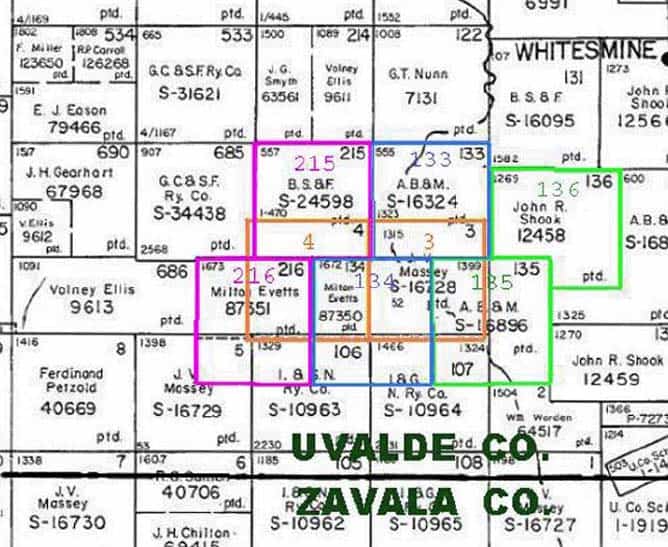
The net result of the State's claim was that if the facts were as alleged, the landowner who had the area of conflict enclosed within his fences and whose predecessors had been using it at least since 1895 as if they were the land's rightful owners would need to write a large enough check to buy the roughly 200 acres of land from the Permanent School Fund of the State of Texas.
Considering that the surveys in question were made in 1876, this was a situation that had existed for about 137 years. During that time, it turned out that different regimes at the GLO had even formed differing opinions about the status of the conflict.
After reviewing the GLO patent files, reading the various pieces of correspondence that had passed between the GLO and interested parties, and examining it all in the light of the statues in force at various times, I wrote it all up as a report that I thought would lead a person to the same conclusion that I had reached, which in fact it did. The State withdrew its claim.
In case anyone is interested in how far into the weeds of history some of these surveying projects can get in Texas, I've attached a copy of the report with a name or two redacted.
Posted : June 30, 2016 4:48 pm

Translate
▼
English
Spanish
French
German
Italian
Portuguese
Russian
Chinese
Japanese
Korean
Arabic
Hindi
Dutch
Polish
Turkish
Vietnamese
Thai
Swedish
Danish
Finnish
Norwegian
Czech
Hungarian
Romanian
Greek
Hebrew
Indonesian
Malay
Ukrainian
Bulgarian
Croatian
Slovak
Slovenian
Serbian
Lithuanian
Latvian
Estonian
Kent McMillan, post: 379617, member: 3 wrote: In case anyone is interested in how far into the weeds of history some of these surveying projects can get in Texas, I've attached a copy of the report
I'm reading it now.
Fascinating.

Posted : June 30, 2016 9:23 pm
Topic starter
Translate
▼
English
Spanish
French
German
Italian
Portuguese
Russian
Chinese
Japanese
Korean
Arabic
Hindi
Dutch
Polish
Turkish
Vietnamese
Thai
Swedish
Danish
Finnish
Norwegian
Czech
Hungarian
Romanian
Greek
Hebrew
Indonesian
Malay
Ukrainian
Bulgarian
Croatian
Slovak
Slovenian
Serbian
Lithuanian
Latvian
Estonian
Mike Berry, post: 379635, member: 123 wrote: I'm reading it now. Fascinating.
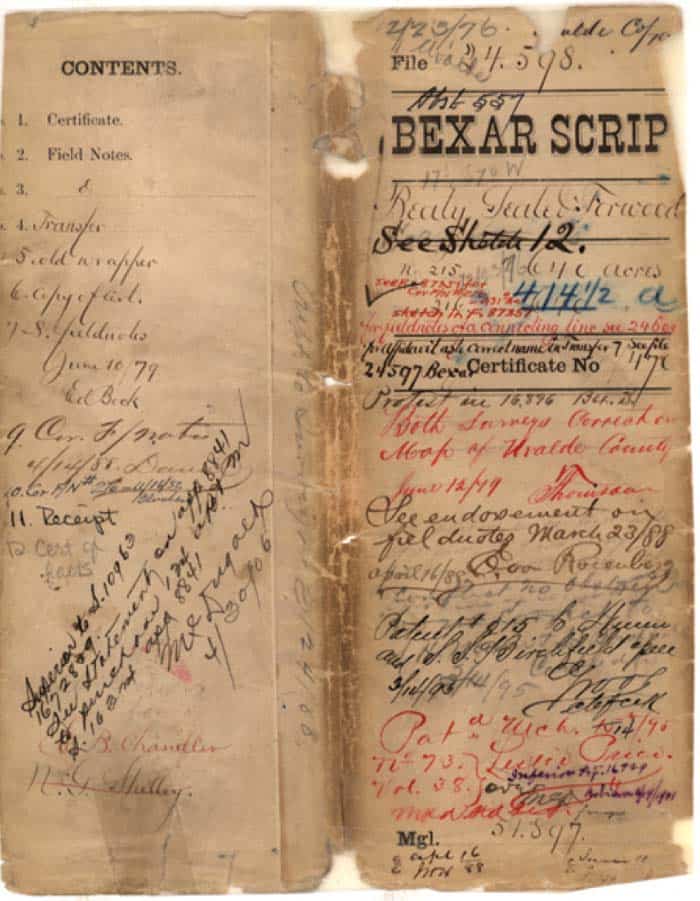
The old file jackets for Survey 215 have a blizzard of notations made over time by GLO staff that pretty much tell many of the major twists and turns of the plot, although in administrative shorthand. There are at least five different regimes represented.
Posted : June 30, 2016 10:02 pm

Translate
▼
English
Spanish
French
German
Italian
Portuguese
Russian
Chinese
Japanese
Korean
Arabic
Hindi
Dutch
Polish
Turkish
Vietnamese
Thai
Swedish
Danish
Finnish
Norwegian
Czech
Hungarian
Romanian
Greek
Hebrew
Indonesian
Malay
Ukrainian
Bulgarian
Croatian
Slovak
Slovenian
Serbian
Lithuanian
Latvian
Estonian
That looks a lot like our County Road Pouches. A group of landowners would petition the Board of Supervisors to lay out a public road. The Board would appoint Viewers, hold public hearings, adopt an alignment, accept Grant Deeds, Declare a Public Highway, and voila - a 'simple' road dedication.
The process of performing a Swamp & Overflow survey, submitting to the the State Surveyor General, and issuing Patents followed the same pattern.
The common theme was the scrivener's Bureaucratese that accompanied each document. That is where the gold can be mined.
Posted : June 30, 2016 10:38 pm
Translate
▼
English
Spanish
French
German
Italian
Portuguese
Russian
Chinese
Japanese
Korean
Arabic
Hindi
Dutch
Polish
Turkish
Vietnamese
Thai
Swedish
Danish
Finnish
Norwegian
Czech
Hungarian
Romanian
Greek
Hebrew
Indonesian
Malay
Ukrainian
Bulgarian
Croatian
Slovak
Slovenian
Serbian
Lithuanian
Latvian
Estonian
My point being that it is not so much the origin of title, as that of the political etymology of jurisdictional control as directed by statutory authorization.
Your narrative is an excellent example of sorting out the chronology of delegated authority by the state legislature to its political subdivisions.
Good work!
Posted : June 30, 2016 11:04 pm
Topic starter
Translate
▼
English
Spanish
French
German
Italian
Portuguese
Russian
Chinese
Japanese
Korean
Arabic
Hindi
Dutch
Polish
Turkish
Vietnamese
Thai
Swedish
Danish
Finnish
Norwegian
Czech
Hungarian
Romanian
Greek
Hebrew
Indonesian
Malay
Ukrainian
Bulgarian
Croatian
Slovak
Slovenian
Serbian
Lithuanian
Latvian
Estonian
Warren Smith, post: 379637, member: 9900 wrote: The common theme was the scrivener's Bureaucratese that accompanied each document. That is where the gold can be mined.
Yes, and where multilple colors of ink and pencil are used, there is no substitute for color images. As more and more of the patent files of the Texas GLO are scanned and available on line for download (in color) that isn't much of a problem, but there are still many unscanned files that must be copied from the originals. Unless one specifically asks for color copies, he will most likely get black and white which are not nearly as useful. I pretty much always order color copies of everything just because.
Posted : June 30, 2016 11:05 pm
Topic starter
Translate
▼
English
Spanish
French
German
Italian
Portuguese
Russian
Chinese
Japanese
Korean
Arabic
Hindi
Dutch
Polish
Turkish
Vietnamese
Thai
Swedish
Danish
Finnish
Norwegian
Czech
Hungarian
Romanian
Greek
Hebrew
Indonesian
Malay
Ukrainian
Bulgarian
Croatian
Slovak
Slovenian
Serbian
Lithuanian
Latvian
Estonian
Warren Smith, post: 379638, member: 9900 wrote: Your narrative is an excellent example of sorting out the chronology of delegated authority by the state legislature to its political subdivision.
The practical implication for Texas surveying practice is that one should always note the capacity of the original surveyor who located a land grant. In the example, the problem surveys were the work of a Deputy of the Bexar District Surveyor whose authority was limited by law to specific geographic areas beyond which he had strayed. While there were a number of curative acts passed later for the purpose of validating various surveys that had been made without proper authority, many of the laws have specific exceptions.
Fast forward 140 years or more and the framework of the early laws relating to surveys and land grants is not something that many suveyors deal with very often and attorneys virtually never.
Posted : June 30, 2016 11:15 pm
Translate
▼
English
Spanish
French
German
Italian
Portuguese
Russian
Chinese
Japanese
Korean
Arabic
Hindi
Dutch
Polish
Turkish
Vietnamese
Thai
Swedish
Danish
Finnish
Norwegian
Czech
Hungarian
Romanian
Greek
Hebrew
Indonesian
Malay
Ukrainian
Bulgarian
Croatian
Slovak
Slovenian
Serbian
Lithuanian
Latvian
Estonian
Agreed. It is a sub species of research that is often overlooked.
Posted : June 30, 2016 11:17 pm
Topic starter
Translate
▼
English
Spanish
French
German
Italian
Portuguese
Russian
Chinese
Japanese
Korean
Arabic
Hindi
Dutch
Polish
Turkish
Vietnamese
Thai
Swedish
Danish
Finnish
Norwegian
Czech
Hungarian
Romanian
Greek
Hebrew
Indonesian
Malay
Ukrainian
Bulgarian
Croatian
Slovak
Slovenian
Serbian
Lithuanian
Latvian
Estonian
Warren Smith, post: 379641, member: 9900 wrote: Agreed. It is a sub species of research that is often overlooked.
A knowledge of the early laws related to aspects of land surveying turns out to be an area where the practice of professional surveying and the practice of law overlap. However, since I have yet to meet an attorney with any interest in occupying the territory, it is much more likely to continue to fall mainly within the practical scope of land surveying.
Posted : June 30, 2016 11:35 pm