Reading RPLS is free for the whole profession. Members post, reply, and get the members-only rooms.

Notifications
Clear all

Topic starter
Translate
▼
English
Spanish
French
German
Italian
Portuguese
Russian
Chinese
Japanese
Korean
Arabic
Hindi
Dutch
Polish
Turkish
Vietnamese
Thai
Swedish
Danish
Finnish
Norwegian
Czech
Hungarian
Romanian
Greek
Hebrew
Indonesian
Malay
Ukrainian
Bulgarian
Croatian
Slovak
Slovenian
Serbian
Lithuanian
Latvian
Estonian
Not all of the disputes I work on are in rural Texas. One came in last year that was in one of the oldest parts of Houston, in an area known as the W.R. BAKER ADDITION, NORTH SIDE OF BUFFALO BAYOU in the old First Ward. The matter in question was the line between two lots in a block that had been sold in 1862 by the subdivider, one W.R. Baker, a railroad executive and future mayor of Houston, describing the land by block number and by reference to "the Map of the City of Houston made by S.C. West".
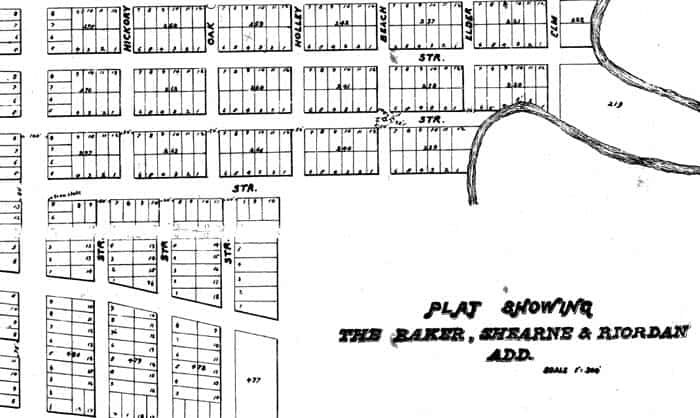
There was a Samuel C. West who was County Surveyor of Harris County around 1857, so at the face of things the conveyance described the conveyance of the block by reference to a map made by him. Unfortunately the plat was apparently never recorded in the Harris County Deed Records and so that and other conveyances made by W.R. Baker made reference to a "Map of the City of Houston made by S.C. West" that is not presently known to appear of record in the County Clerk's Office or in the records of the Houston City Engineer.
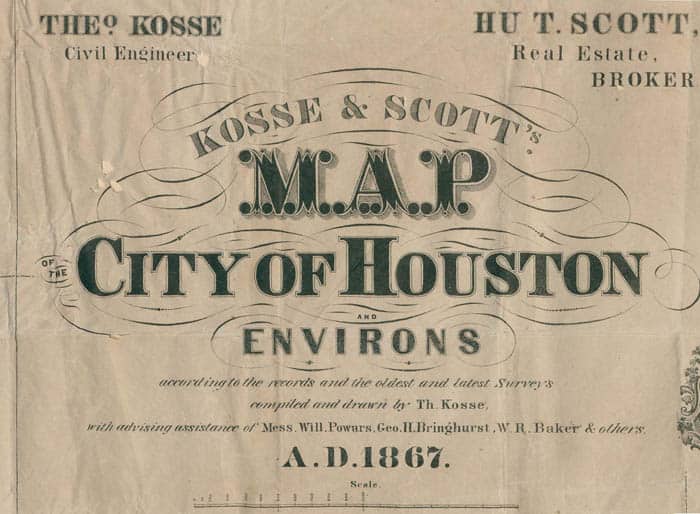
The addition appears on a map made in 1867 by others.
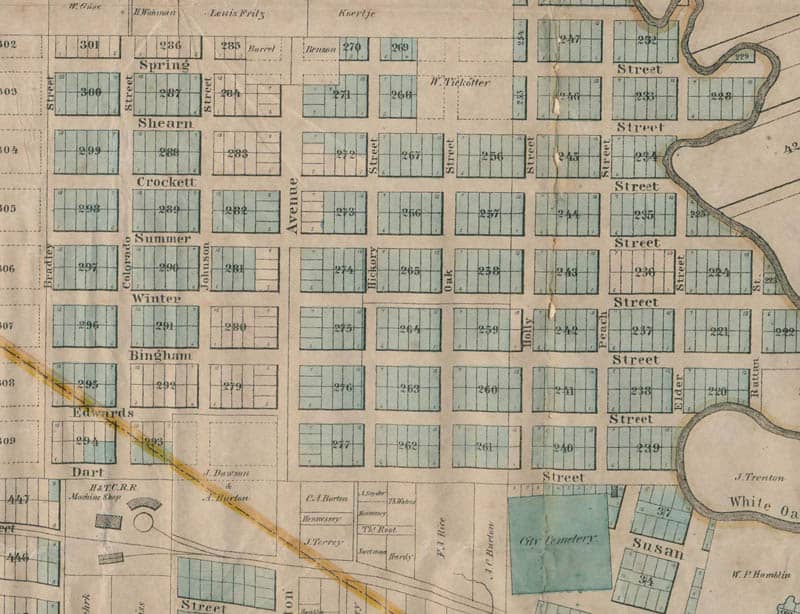
In 1868, a City Surveyor and Engineer made a report to the Houston City Council in which he reported that Mr. Baker had not (as of that date) placed the map of his addition of record. So there is reason to think that it existed mainly in the subdivider's hands at that point in time. Generally, later conveyances glossed over the fact that the map existed as a phantom drifting somewhere in 19th century history by simply describing the map as "unrecorded".
Some inquiries turned up no clue as to where S.C. West's map of the City of Houston might be. However, the records of the Houston City Engineering Department turned out to hold a scanned image of a map entitled "Plat Showing the Baker, Shearne & Riordan Add." with no date or author that has a mixture of attributes that could date it.
The research consisted of examining those clues appearing on the map as well as what are clearly some later annotations which turn out to most likely date from the 1890s. In the absence of a map of known provenance from the hand of S.C. West, the effort was a bit like examining any other document for the clues it provides as to authorship and time. The attached report describes the process by which the creation of the otherwise unidentified map was narrowed to a particular time period that left it as the only really plausible candidate among various maps known to exist. When you consider that something nearly always beats nothing, that is no small thing.
Posted : July 1, 2016 8:12 pm
Topic starter
Translate
▼
English
Spanish
French
German
Italian
Portuguese
Russian
Chinese
Japanese
Korean
Arabic
Hindi
Dutch
Polish
Turkish
Vietnamese
Thai
Swedish
Danish
Finnish
Norwegian
Czech
Hungarian
Romanian
Greek
Hebrew
Indonesian
Malay
Ukrainian
Bulgarian
Croatian
Slovak
Slovenian
Serbian
Lithuanian
Latvian
Estonian
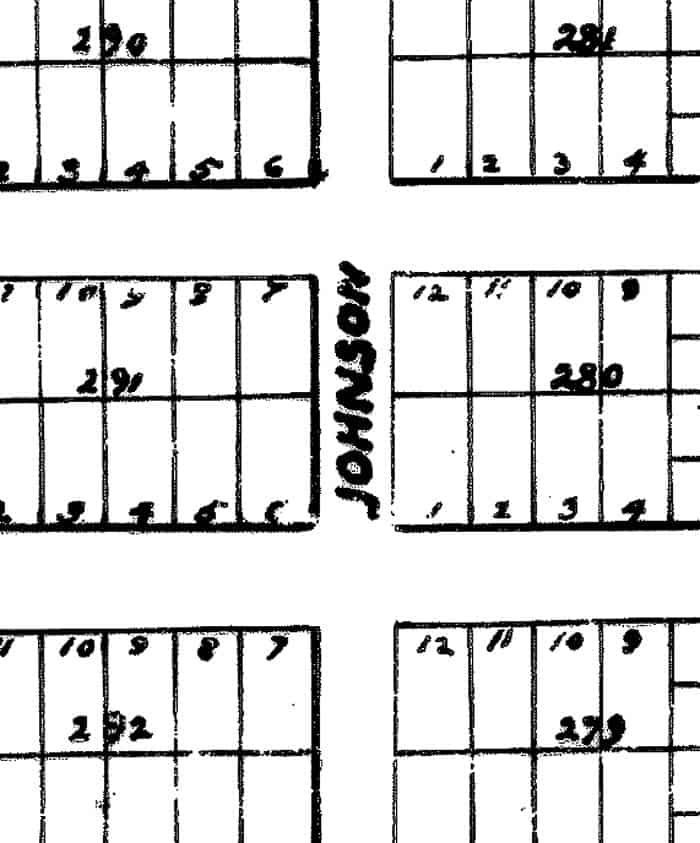
I've attached a pdf of the "Plat Showing the Baker, Shearne & Riordan Add." This is apparently all that remains of the actual document, the original tracing having vanished.
I've concluded that the map was most likely a tracing made from W.R. Baker's copy of S.C. West's map that dated from about 1856 or so, but a tracing made nearer to the time of Baker's death in 1890. The map has details that are consistent with a date before 1857, but the drawing style is not of that era. In particular, the wide-nibbed pen that the lettering was done with seems more consistent with drafting room practice from the 1890s than the 1850s.
Posted : July 1, 2016 8:57 pm
Topic starter
Translate
▼
English
Spanish
French
German
Italian
Portuguese
Russian
Chinese
Japanese
Korean
Arabic
Hindi
Dutch
Polish
Turkish
Vietnamese
Thai
Swedish
Danish
Finnish
Norwegian
Czech
Hungarian
Romanian
Greek
Hebrew
Indonesian
Malay
Ukrainian
Bulgarian
Croatian
Slovak
Slovenian
Serbian
Lithuanian
Latvian
Estonian
The subdivider, William R. Baker, pretty much captures the 19th-century history of Houston in his career.
https://tshaonline.org/handbook/online/articles/fba42&apos ;">W.R. Baker bio in Handbook of Texas
Posted : July 1, 2016 9:15 pm
Topic starter
Translate
▼
English
Spanish
French
German
Italian
Portuguese
Russian
Chinese
Japanese
Korean
Arabic
Hindi
Dutch
Polish
Turkish
Vietnamese
Thai
Swedish
Danish
Finnish
Norwegian
Czech
Hungarian
Romanian
Greek
Hebrew
Indonesian
Malay
Ukrainian
Bulgarian
Croatian
Slovak
Slovenian
Serbian
Lithuanian
Latvian
Estonian
The plat would appear to be generally undimensioned, aside from some street widths, unless you know that the standard lot size was 50 ft. x 100 ft. unless OTHERWISE stated. Early deeds provide that clue.
Fast forward to 2014 and there are 50 ft. x 100 ft. lots being resubdivided to make three (count'em, THREE) lots.
Posted : July 1, 2016 10:52 pm

Translate
▼
English
Spanish
French
German
Italian
Portuguese
Russian
Chinese
Japanese
Korean
Arabic
Hindi
Dutch
Polish
Turkish
Vietnamese
Thai
Swedish
Danish
Finnish
Norwegian
Czech
Hungarian
Romanian
Greek
Hebrew
Indonesian
Malay
Ukrainian
Bulgarian
Croatian
Slovak
Slovenian
Serbian
Lithuanian
Latvian
Estonian
Kent McMillan, post: 379754, member: 3 wrote: The plat would appear to be generally undimensioned, aside from some street widths, unless you know that the standard lot size was 50 ft. x 100 ft. unless OTHERWISE stated. Early deeds provide that clue.
Gre-e-a-a-t-t, we're back to surveying with tax maps again. 🙂
Posted : July 2, 2016 6:37 am
Topic starter
Translate
▼
English
Spanish
French
German
Italian
Portuguese
Russian
Chinese
Japanese
Korean
Arabic
Hindi
Dutch
Polish
Turkish
Vietnamese
Thai
Swedish
Danish
Finnish
Norwegian
Czech
Hungarian
Romanian
Greek
Hebrew
Indonesian
Malay
Ukrainian
Bulgarian
Croatian
Slovak
Slovenian
Serbian
Lithuanian
Latvian
Estonian
R.J. Schneider, post: 379760, member: 409 wrote: Gre-e-a-a-t-t, we're back to surveying with tax maps again.
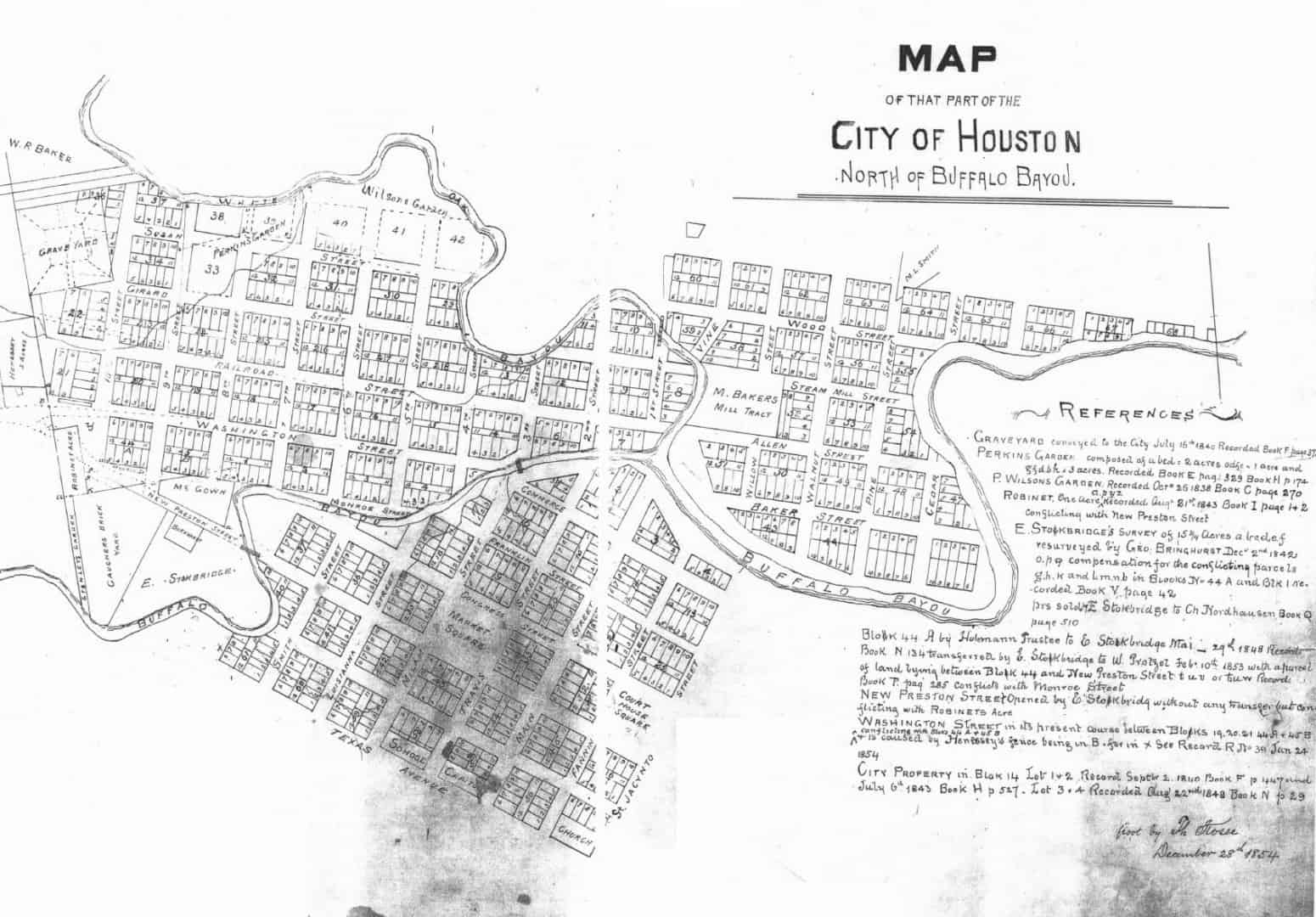
That was a common standard for the day not to fully dimension lots of some regular size. For example, here is a map by the Houston City Surveyor, Theodore Kosse, in 1854 showing the new addition to the City on the North side of Buffalo Bayou. There was no need to dimension the 50 ft. x 100 ft. lots since their sizes were common knowledge. W.R. BAKER ADDITION, NORTH SIDE OF BUFFALO BAYOU occupies the land labeled "Baker" at the upper left and had evidently not been laid out as of 1854
Posted : July 2, 2016 8:19 am
Translate
▼
English
Spanish
French
German
Italian
Portuguese
Russian
Chinese
Japanese
Korean
Arabic
Hindi
Dutch
Polish
Turkish
Vietnamese
Thai
Swedish
Danish
Finnish
Norwegian
Czech
Hungarian
Romanian
Greek
Hebrew
Indonesian
Malay
Ukrainian
Bulgarian
Croatian
Slovak
Slovenian
Serbian
Lithuanian
Latvian
Estonian
Kent McMillan, post: 379768, member: 3 wrote: There was no need to dimension the 50 ft. x 100 ft. lots since their sizes were common knowledge.
well the tax maps have all the distances penciled in. so there's that.
Posted : July 2, 2016 11:48 am
Topic starter
Translate
▼
English
Spanish
French
German
Italian
Portuguese
Russian
Chinese
Japanese
Korean
Arabic
Hindi
Dutch
Polish
Turkish
Vietnamese
Thai
Swedish
Danish
Finnish
Norwegian
Czech
Hungarian
Romanian
Greek
Hebrew
Indonesian
Malay
Ukrainian
Bulgarian
Croatian
Slovak
Slovenian
Serbian
Lithuanian
Latvian
Estonian
R.J. Schneider, post: 379782, member: 409 wrote: well the tax maps have all the distances penciled in. so there's that.
Except that the plat of the subdivision was prepared by the surveyor who laid it out, S.C. West, and so is evidence of his survey, whereas the tax maps are not really evidence of much of anything other than where the tax assessor thinks that the land might be.
This is an area where the Houston City Engineer created a large confusion that exists to this day. About the time that the street paving projects kicked off in the late 1890s and early 1900s, the City Engineer sent his surveying staff out to run reference lines that were then used by later City Engineers as if they were the correct locations of certain streets, although by 1905 nearly the entire addition was built out with structures on most lots and fences along the rights-of-way.
What specifically went wrong in the case of W.R. BAKER'S ADDITION, NORTH SIDE OF BUFFALO BAYOU is that one guy, a fellow named Louis H. Gillespie proceeded to survey according to the record calls upon the 1856 plat shown above without regard to where prior City Engineers had almost certainly surveyed the lines of streets. As a result, Gillespie's work beginning in about 1907 introduced discrepancies as large as about 10 ft, between the locations as claimed by him and the consistent patterns of certain blocks as occupied on the the ground.
There is one particular Houston ordinance that is claimed to be the basis for the theory that Gillespie followed that turns out on closer examination to amount to a whole lot less than is claimed. I'll post a bit about that since it is something that anyone surveying in Houston should be aware of even if few apparently are.
Posted : July 2, 2016 12:41 pm
Translate
▼
English
Spanish
French
German
Italian
Portuguese
Russian
Chinese
Japanese
Korean
Arabic
Hindi
Dutch
Polish
Turkish
Vietnamese
Thai
Swedish
Danish
Finnish
Norwegian
Czech
Hungarian
Romanian
Greek
Hebrew
Indonesian
Malay
Ukrainian
Bulgarian
Croatian
Slovak
Slovenian
Serbian
Lithuanian
Latvian
Estonian
Kent McMillan, post: 379783, member: 3 wrote: Except that the plat of the subdivision was prepared by the surveyor who laid it out, S.C. West, and so is evidence of his survey, whereas the tax maps are not really evidence of much of anything other than where the tax assessor thinks that the land might be.
Well what good are the tax maps if the land isn't really there?? :confused:
Posted : July 2, 2016 5:30 pm
Topic starter
Translate
▼
English
Spanish
French
German
Italian
Portuguese
Russian
Chinese
Japanese
Korean
Arabic
Hindi
Dutch
Polish
Turkish
Vietnamese
Thai
Swedish
Danish
Finnish
Norwegian
Czech
Hungarian
Romanian
Greek
Hebrew
Indonesian
Malay
Ukrainian
Bulgarian
Croatian
Slovak
Slovenian
Serbian
Lithuanian
Latvian
Estonian
R.J. Schneider, post: 379801, member: 409 wrote: Well what good are the tax maps if the land isn't really there??
All the Tax Assessor cares about is everyone getting a tax bill. The appraisers don't make a boundary survey to put a value on a tract. They just pick a high number and wait for the person getting the bill to protest.
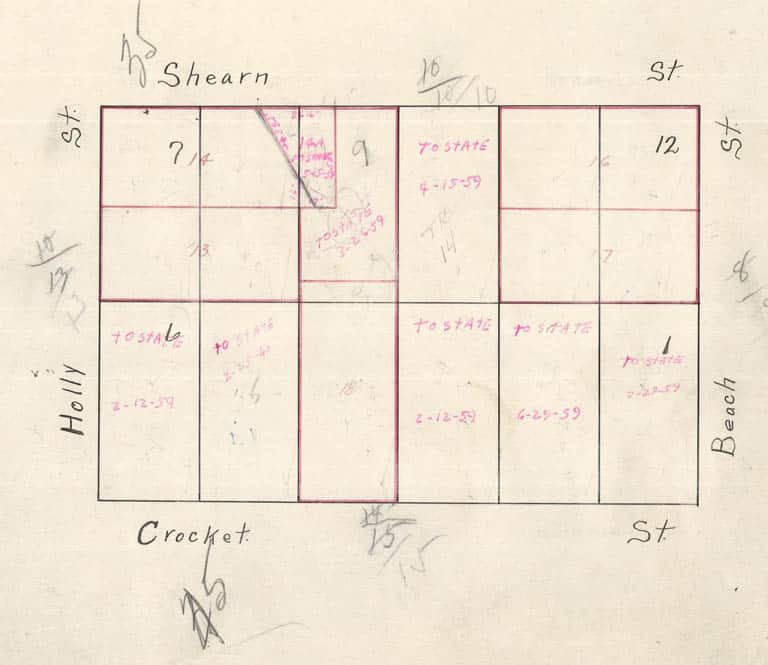
Don't get me wrong, I'm sure that plenty of Houston surveyors don't have any time to do any actual "research" and so a good, solid tax map like this one below would be great! :>
Posted : July 2, 2016 6:15 pm
Translate
▼
English
Spanish
French
German
Italian
Portuguese
Russian
Chinese
Japanese
Korean
Arabic
Hindi
Dutch
Polish
Turkish
Vietnamese
Thai
Swedish
Danish
Finnish
Norwegian
Czech
Hungarian
Romanian
Greek
Hebrew
Indonesian
Malay
Ukrainian
Bulgarian
Croatian
Slovak
Slovenian
Serbian
Lithuanian
Latvian
Estonian
Kent McMillan, post: 379803, member: 3 wrote: Houston surveyors don't have any time to do any actual "research" and so a good, solid tax map like this one below would be great! :>
Yeah, you can say that, but it's probably only fair show a bit of gratitude to our civil servants who are tasked with making sense of the whole mess. And the economy of being able to juggle this; keeping a running tally on a post-it note is no easy feat. Not to mention they don't actually get out into the field to suss out the apparent train wrecks, and even if they were able to, you know, what a mess that would be. Can you imagine having to call the fire department because the office types got tangled in a hundred foot tape and are strangling themselves, or any of the other unreal calamities that could possibly come from their hitting the field.
They're a great source of data, when you can get what you need to shed light on what's actually on the ground, but past that they really just hold an official capacity and do the best job they can. I'm grateful for our tax office and county clerk.
Posted : July 2, 2016 6:54 pm
Translate
▼
English
Spanish
French
German
Italian
Portuguese
Russian
Chinese
Japanese
Korean
Arabic
Hindi
Dutch
Polish
Turkish
Vietnamese
Thai
Swedish
Danish
Finnish
Norwegian
Czech
Hungarian
Romanian
Greek
Hebrew
Indonesian
Malay
Ukrainian
Bulgarian
Croatian
Slovak
Slovenian
Serbian
Lithuanian
Latvian
Estonian
It's the economy of being able to juggle parcel accounts on a post-it note that probably deserves some credit here.
Posted : July 2, 2016 7:39 pm

Translate
▼
English
Spanish
French
German
Italian
Portuguese
Russian
Chinese
Japanese
Korean
Arabic
Hindi
Dutch
Polish
Turkish
Vietnamese
Thai
Swedish
Danish
Finnish
Norwegian
Czech
Hungarian
Romanian
Greek
Hebrew
Indonesian
Malay
Ukrainian
Bulgarian
Croatian
Slovak
Slovenian
Serbian
Lithuanian
Latvian
Estonian
Kent McMillan, post: 379783, member: 3 wrote: Except that the plat of the subdivision was prepared by the surveyor who laid it out, S.C. West, and so is evidence of his survey, whereas the tax maps are not really evidence of much of anything other than where the tax assessor thinks that the land might be.
This is an area where the Houston City Engineer created a large confusion that exists to this day. About the time that the street paving projects kicked off in the late 1890s and early 1900s, the City Engineer sent his surveying staff out to run reference lines that were then used by later City Engineers as if they were the correct locations of certain streets, although by 1905 nearly the entire addition was built out with structures on most lots and fences along the rights-of-way.
What specifically went wrong in the case of W.R. BAKER'S ADDITION, NORTH SIDE OF BUFFALO BAYOU is that one guy, a fellow named Louis H. Gillespie proceeded to survey according to the record calls upon the 1856 plat shown above without regard to where prior City Engineers had almost certainly surveyed the lines of streets. As a result, Gillespie's work beginning in about 1907 introduced discrepancies as large as about 10 ft, between the locations as claimed by him and the consistent patterns of certain blocks as occupied on the the ground.
There is one particular Houston ordinance that is claimed to be the basis for the theory that Gillespie followed that turns out on closer examination to amount to a whole lot less than is claimed. I'll post a bit about that since it is something that anyone surveying in Houston should be aware of even if few apparently are.
There is a reason Justice Cooley gave his speech in 1880...the practice of fixing things was widespread in the 19th century by City Surveyors. I found an early 20th century case where the Sacramento County Surveyor, J.C. Boyd, explained in open court that the sacred P.I. stones in Sacramento were not original, they came later in the 1870s.
Posted : July 2, 2016 8:08 pm
Topic starter
Translate
▼
English
Spanish
French
German
Italian
Portuguese
Russian
Chinese
Japanese
Korean
Arabic
Hindi
Dutch
Polish
Turkish
Vietnamese
Thai
Swedish
Danish
Finnish
Norwegian
Czech
Hungarian
Romanian
Greek
Hebrew
Indonesian
Malay
Ukrainian
Bulgarian
Croatian
Slovak
Slovenian
Serbian
Lithuanian
Latvian
Estonian
Dave Karoly, post: 379824, member: 94 wrote: There is a reason Justice Cooley gave his speech in 1880...the practice of fixing things was widespread in the 19th century by City Surveyors. I found an early 20th century case where the Sacramento County Surveyor, J.C. Boyd, explained in open court that the sacred P.I. stones in Sacramento were not original, they came later in the 1870s.
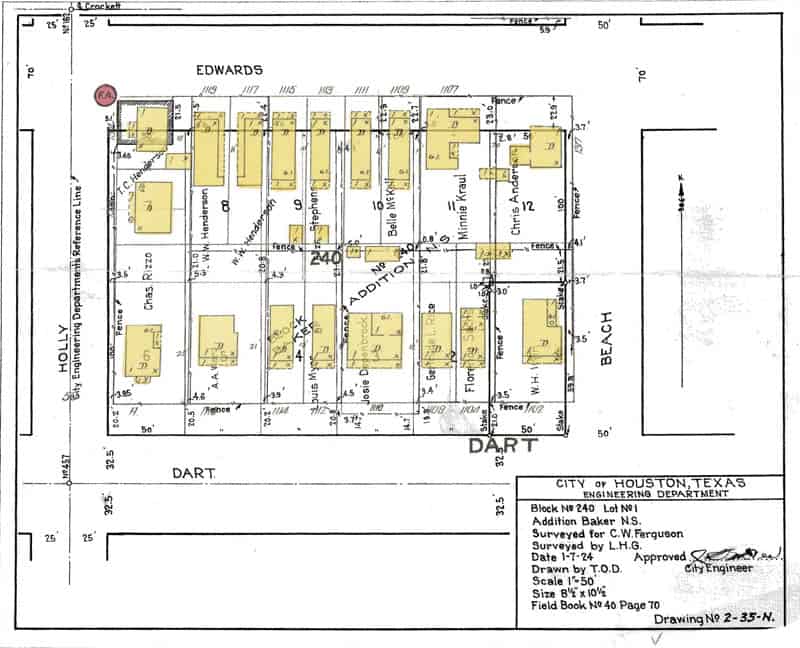
In the case of Houston, there were various individuals holding the post of City Surveyor, City Engineer and Surveyor, and, then, City Engineer pretty much continuously from the early 1840s. There were ordinances in place that imposed heavy fines on anyone building a structure or a fence on a street line without having the City Engineer/Surveyor mark the lines first. So, it is safe to assume that where the City Engineer's surveying staff in 1919 found fences 50.0 ft. apart on both sides of a street originally platted as a 50 ft. right-of-way in 1856 and more or less completely developed for at least 30 years prior, that the fences had been built to lines established by one of his predecessors.
What happened was that by 1919 the Houston City Engineer was involved in all sorts of things and was much more interested in municipal improvements than worrying about making surveys of residential parcels. The work was delegated to his subordinates, one of whom, was a fellow named Louis H. Gillespie, a younger son of a surveyor named J.J. Gillespie. Louis apparently was completely unbothered by running lines that placed an entire street's length of houses out in the street right-of-way as located by him.
Posted : July 2, 2016 8:23 pm

Translate
▼
English
Spanish
French
German
Italian
Portuguese
Russian
Chinese
Japanese
Korean
Arabic
Hindi
Dutch
Polish
Turkish
Vietnamese
Thai
Swedish
Danish
Finnish
Norwegian
Czech
Hungarian
Romanian
Greek
Hebrew
Indonesian
Malay
Ukrainian
Bulgarian
Croatian
Slovak
Slovenian
Serbian
Lithuanian
Latvian
Estonian
Fantastic research Mr. McMillan. That sounds like the way it should always be done. It's unfortunate that your research is probably the exception, not the norm. Thanks for sharing.
Posted : July 6, 2016 7:49 am
Topic starter
Translate
▼
English
Spanish
French
German
Italian
Portuguese
Russian
Chinese
Japanese
Korean
Arabic
Hindi
Dutch
Polish
Turkish
Vietnamese
Thai
Swedish
Danish
Finnish
Norwegian
Czech
Hungarian
Romanian
Greek
Hebrew
Indonesian
Malay
Ukrainian
Bulgarian
Croatian
Slovak
Slovenian
Serbian
Lithuanian
Latvian
Estonian
Travis Tabor, post: 380122, member: 11806 wrote: It's unfortunate that your research is probably the exception, not the norm. Thanks for sharing.
The Houston case is an interesting one because it is such a deep dive into forgotten history.
Posted : July 6, 2016 9:02 am

Translate
▼
English
Spanish
French
German
Italian
Portuguese
Russian
Chinese
Japanese
Korean
Arabic
Hindi
Dutch
Polish
Turkish
Vietnamese
Thai
Swedish
Danish
Finnish
Norwegian
Czech
Hungarian
Romanian
Greek
Hebrew
Indonesian
Malay
Ukrainian
Bulgarian
Croatian
Slovak
Slovenian
Serbian
Lithuanian
Latvian
Estonian
This problem is causing new home owners in the area some serious problems.?ÿ I built a preconstruction home between Holly and Edwards?ÿin the First Ward closing in Feb 2014.?ÿ Me and my neighbors were served with a lawsuit as soon as we closed.?ÿ Apparently our homes were built on the neighboring property (to be developed) by 2 ft.?ÿ This is when?ÿmess of the "WR Baker Addition" surfaced and created a multi-party suit.?ÿ We were able to settle the suit with the neighbor after three years (East - West issue).?ÿ We now have to contend with the North / South issue with a suit?ÿagainst the City of Houston (suit against the Mayor) and replat the homes.
The point is these problems have been well known for some time but nobody warns the new homeowners about a pending problem.?ÿ Inspection Office of the City of Houston should have caught and addressed this problem before allowing the foundation to be laid.
How do realtors, builders, and city officials allow this to happen?
It was a huge mess.
Thank god it is finally settling.
KJ
Posted : July 22, 2018 1:24 pm

Translate
▼
English
Spanish
French
German
Italian
Portuguese
Russian
Chinese
Japanese
Korean
Arabic
Hindi
Dutch
Polish
Turkish
Vietnamese
Thai
Swedish
Danish
Finnish
Norwegian
Czech
Hungarian
Romanian
Greek
Hebrew
Indonesian
Malay
Ukrainian
Bulgarian
Croatian
Slovak
Slovenian
Serbian
Lithuanian
Latvian
Estonian
This problem is causing new home owners in the area some serious problems.?ÿ I built a preconstruction home between Holly and Edwards?ÿin the First Ward closing in Feb 2014.?ÿ Me and my neighbors were served with a lawsuit as soon as we closed.?ÿ Apparently our homes were built on the neighboring property (to be developed) by 2 ft.?ÿ This is when?ÿmess of the "WR Baker Addition" surfaced and created a multi-party suit.?ÿ We were able to settle the suit with the neighbor after three years (East - West issue).?ÿ We now have to contend with the North / South issue with a suit?ÿagainst the City of Houston (suit against the Mayor) and replat the homes.
The point is these problems have been well known for some time but nobody warns the new homeowners about a pending problem.?ÿ Inspection Office of the City of Houston should have caught and addressed this problem before allowing the foundation to be laid.
How do realtors, builders, and city officials allow this to happen?
It was a huge mess.
Thank god it is finally settling.
KJ
Preconstruction home??ÿ?ÿ
It is allowed to happen because no one, including the city, wishes to incur the cost of paying land surveyors like McMillan to perform the research and measurements required to resolve all of the conflicts.?ÿ Apparently you didn't either so you blame the city.?ÿ I'm not saying you are wrong because I have no idea but I'll bet that if they had been so bold as to require a comprehensive survey as part of your permitting process then you might have sued them for that as well.?ÿ?ÿ
I drove through this part of Houston last winter it is a dramatic model of gentrification with three story no setback homes nestled in with 100 year old 800 square feet shacks.?ÿ Houston is an interesting experiment in land development and this part of town is rich in 19th century history.
It appears that someone wised up, maybe as a result of your struggle, and brought in an expert to render an opinion of the lot lines.?ÿ Should it have been done in the first place, prior to development??ÿ Yes.
Will the same situation happen on the next block? Very likely.?ÿ Unless it involves the same builder who got burnt on your project.
Moral:?ÿ always know where your lot lines are before you pour concrete.?ÿ Especially true for a big house on a small lot
?ÿ
Posted : July 23, 2018 11:09 am

Translate
▼
English
Spanish
French
German
Italian
Portuguese
Russian
Chinese
Japanese
Korean
Arabic
Hindi
Dutch
Polish
Turkish
Vietnamese
Thai
Swedish
Danish
Finnish
Norwegian
Czech
Hungarian
Romanian
Greek
Hebrew
Indonesian
Malay
Ukrainian
Bulgarian
Croatian
Slovak
Slovenian
Serbian
Lithuanian
Latvian
Estonian
The point is these problems have been well known for some time but nobody warns the new homeowners about a pending problem.?ÿ Inspection Office of the City of Houston should have caught and addressed this problem before allowing the foundation to be laid.
How do realtors, builders, and city officials allow this to happen?
It was a huge mess.
Thank god it is finally settling.
KJ
KJackson,
Sorry you have to go through this ordeal, I wouldn't wish that on anyone. Your warning should have come in the form of a survey. Typically the City of Houston requires a form survey that shows the location of your foundation forms, in reference to your lot boundaries before allowing your builder to pour concrete. If I was you, I would be very curious to see that form survey.?ÿ
Posted : July 23, 2018 12:27 pm